Movement · Central & East Asia
Meiji Restoration
At a glance
- Economic strain, the Perry Expedition and the unequal treaties that followed undermined the Tokugawa shogunate, and many lower and middle-ranking samurai became shishi, “men of spirit”, devoted to the Emperor.
- Led by Satsuma and Chōshū, an alliance of domains overthrew the shogunal system; on 3 January 1868 Emperor Meiji declared political power restored to the Imperial House, and the Boshin War ended Tokugawa resistance.
- The new government abolished the domains and the samurai class, built schools, a conscript army and industries, and laid the foundations of the Empire of Japan.
Timeline
- 1853Commodore Matthew C. Perry’s American expedition reaches Japan with documents requesting an end to Japanese isolation
- 1858Ii Naosuke approves the Treaty of Amity and Commerce against the Emperor’s wishes and launches the Ansei Purge
- 1866Sakamoto Ryōma brings Kido Takayoshi and Saigō Takamori together to form the Satsuma–Chōshū Alliance
- 1867Tokugawa Yoshinobu, the 15th shōgun, returns power to the Imperial Court and resigns the title of shōgun
- 1868Domain troops seize the Imperial Palace and the Emperor declares the restoration of his authority, setting off the Boshin War
- 1871The daimyō are told that the domains are abolished, and the 302 domains become 72 prefectures in January 1872
- 1873Nationwide conscription extends the right to bear arms, once a samurai privilege, to every man
- 1889The Meiji Constitution is adopted; it remains in place until the Allied occupation after the Second World War
Background
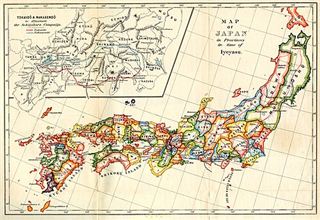
In the Edo period Japan was governed by a rigid order of inherited rank: the Emperor and his Court at the top, then the shōgun with the rōjū and the daimyō, then the samurai, farmers, artisans and merchants. Historian Marius B. Jansen calls it a system of “feudal autonomy”, in which the Tokugawa shogunate left the daimyō to run their own domains. About 100 tozama daimyō, descendants of those who had fought the Tokugawa at the Battle of Sekigahara, held just under 38% of the land, many of them in western Japan. William G. Beasley sees a tension between an official ideology of enlightened, meritocratic rule and a class structure that kept lower and middle-ranking samurai from rising.
The economy strained the system. Famine and unrest spread in the 1830s and 1840s, the bakufu’s gold deficit grew to over half a million ryō by 1837, and the Tenpō Reforms (1841–1843) revealed a deep divide between the shogunate and the daimyō. Samurai on fixed rice stipends fell into debt, and some domains sold samurai status.
Since 1633 the policy of sakoku had kept Japan closed, with only the Dutch trading at Dejima. A Shintō revival and kokugaku, national learning, turned attention to the Emperor, and the Mito School spoke of fukoku kyōhei, “rich nation, strong army”. News of Britain’s victory in the First Opium War was taken as a severe military and cultural disaster.
Aims
The movement drew on several currents. In the Mito School, Aizawa Seishisai’s Shinron (“New Theses”) of 1825 argued that sonnō jōi, “revere the Emperor, expel the barbarian”, would unite the people, with the Emperor revered as the symbol of the kokutai, the national polity. Sakuma Shōzan, a mid-ranking samurai of Matsushiro Domain, coined the phrase “Eastern ethics, Western science”, and his call to promote men of talent and reorganise the army influenced pupils such as Katsu Kaishū and Yoshida Shōin. Opening the country and resisting the foreigners were not exclusive: supporters of both saw the value of Western technology for repelling them.
The shishi, “men of spirit”, were low and middle-ranking samurai filled with reverence for the Imperial Court at Kyōto, in which lay the essence of national purity, and they held loyalty to the Emperor to be of the utmost importance. After 1864 the anti-Tokugawa movement shifted from expelling the foreigners to fukoku kyōhei. Sakamoto Ryōma’s Eight Point Plan of 1867 called for a larger military, reform of the law, a bicameral legislature and the return of political power to the Imperial Court.
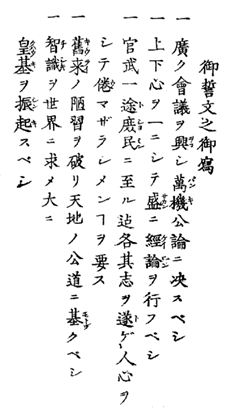
The Charter Oath, issued on 6 April 1868, called for rejecting the old administration, enriching the country and adopting Western technology. Beasley argues that until their victory the Court’s supporters sought not to change the institutions of power but to displace those who wielded it.
Course of Events
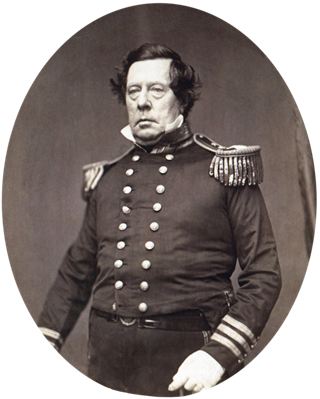
Commodore Matthew C. Perry’s American expedition reached Japan in 1853 and returned with large warships to conclude the Convention of Kanagawa in 1854, which opened Shimoda and Hakodate. When the court of Emperor Kōmei rebuffed the Treaty of Amity and Commerce, Ii Naosuke, appointed tairō in 1858, signed it anyway and launched the Ansei Purge against over one hundred political enemies. Yoshida Shōin was executed in 1859, and Ii was assassinated in 1860.
In March 1863 the Imperial Court ordered the expulsion of the barbarians; Chōshū fired on foreign ships, beginning the Shimonoseki campaign, and the British bombarded Kagoshima. Chōshū became the last refuge of the loyalists: its march on Kyōto in the Hamaguri Gate Rebellion failed, and the bakufu sent the First Chōshū expedition against it in 1864. In 1865 Takasugi Shinsaku and the Kiheitai militia ousted Chōshū’s conservatives, and on 7 March 1866 Sakamoto Ryōma brought Kido Takayoshi and Saigō Takamori together in the Satsuma–Chōshū Alliance. The Second Chōshū expedition failed, and the shōgun Tokugawa Iemochi died.
On 8 November 1867 Tokugawa Yoshinobu returned power to the Imperial Court, and on 3 January 1868 domain troops seized the Imperial Palace as the Emperor declared his authority restored. In the Boshin War that followed, Satsuma and Chōshū won at Toba–Fushimi on 27 January, the Tokugawa surrendered Edo by agreement, the Northern Alliance was defeated, and the Republic of Ezo fell at the Battle of Hakodate in May 1869.
People
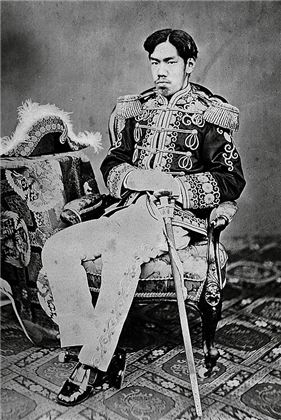
Emperor Meiji, the teenager Mutsuhito, came to the throne when Emperor Kōmei died in February 1867, and the restoration was carried out in his name. The court noble Iwakura Tomomi urged full imperial restoration and, with Saigō Takamori and Ōkubo Toshimichi of Satsuma, organised a coup within the Imperial Court in late 1867. Kido Takayoshi and Takasugi Shinsaku, pupils of Yoshida Shōin, led the loyalists of Chōshū, whose Kiheitai militia, under Yamagata Aritomo, helped seize the domain government; Itō Hirobumi, Inoue Kaoru and Ōmura Masujirō joined them.
Sakamoto Ryōma of Tosa Domain helped Chōshū buy weapons from British merchants through his firm in Nagasaki, brokered the Satsuma–Chōshū Alliance and drafted the Eight Point Plan; he was assassinated in Kyōto after the shōgun’s resignation. On the other side, Tokugawa Yoshinobu, the 15th Tokugawa shōgun, gave up his powers and, seeking to avoid a full civil war, refused to counter-attack after Toba–Fushimi; Katsu Kaishū negotiated the Tokugawa surrender with Saigō. Enomoto Takeaki led the remnants of the bakufu navy to Hokkaidō.
Many shishi paid with their lives: Yoshida Shōin was executed in 1859, Takechi Hanpeita of Tosa was compelled to commit seppuku, and Kusaka Genzui died in the Hamaguri Gate Rebellion. Beasley notes that the shishi, mostly lower-ranking samurai of the rural elite, were abandoned by the local peasantry in the Mito Rebellion of 1864.
Outcomes
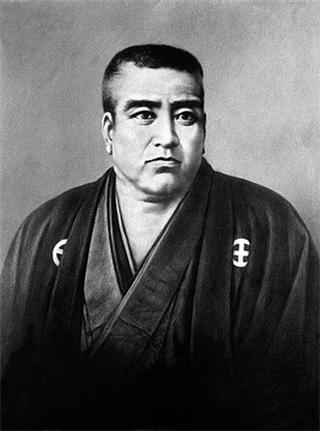
The new government centralised authority. From June 1868 the lands of the shōgun and his supporters became prefectures; on 5 March 1869 Satsuma, Chōshū, Tosa and Hizen placed their lands at the Emperor’s disposal; and in August 1871 the daimyō in Tōkyō were told, without consultation, that the domains were abolished. In January 1872 the 302 domains became 72 prefectures, and the daimyō and court nobles were joined in a new aristocracy. Beasley writes that the feudal system dissolved even as a parallel social system arose to replace it.
The samurai lost their place. Their stipends were cut, and conversion into government bonds, optional in 1874, was made compulsory in 1876. Conscription from 1873 made every man serve four years from the age of 21, extending the right to bear arms to all, and samurai could no longer go about town with a sword. Discontent led to the Saga Rebellion and the Satsuma Rebellion led by Saigō Takamori, put down by the new Imperial Japanese Army; yet most samurai found new work as officials, teachers and officers.
Japan industrialised under the slogan fukoku kyōhei. Raw silk became the chief export and paid for machinery, and the state built shipyards, iron smelters and spinning mills, then sold them to well-connected entrepreneurs. The cost fell heavily on peasant farmers, whose land tax took about 30 percent of their harvests. By 1895 Japan had risen as a military power.
Legacy

The Meiji Restoration laid the foundation for the institutions of the Empire of Japan, and the Meiji Constitution of 1889 remained in place until the Allied occupation after the Second World War. Japan became the first Asian state to modernise on the Western model, replacing the Confucian hierarchical order once dominated by China with one based on modernity, and its pursuit of colonial interests against its neighbours had far-reaching consequences in East Asia. After the First Sino-Japanese War and the Russo-Japanese War the military came to see itself as a growing world power.
The state built a national system of free public schools that taught reading, writing, mathematics and “moral training” in duty to the Emperor, and spread a standard language, hyōjungo, based on the speech of Tokyo’s samurai classes. The changes also destroyed heritage: most Japanese castles were partly or wholly dismantled, tens of thousands of Buddhist images and temples were smashed during the separation of Shintō and Buddhism, shinbutsu bunri, and tens of thousands of old Shinto shrines were closed. The ideal of samurai military spirit lived on in romanticised form and served as propaganda in the Empire’s wars of the early 20th century.
The era lives on in fiction, from Shimazaki Tōson’s novel Before the Dawn to Akira Kurosawa’s film Yojimbo (1961) and Rurouni Kenshin: The Beginning (2021).
Songs in history
The Meiji Restoration ended the Tokugawa shogunate and restored power to the Emperor of Japan in 1868, after an alliance of domains led by Satsuma and Chōshū overthrew the shogunal system. The new government abolished the domains and the samurai class, built a conscript army, schools and industries, and laid the foundations of the Empire of Japan, whose Meiji Constitution of 1889 lasted until after the Second World War.
Test yourself
5 questions on this page, from its key events and facts.
The questions open here once the page has loaded.
References
- W. G. Beasley, The Meiji Restoration (Stanford University Press, 1972)
- Marius B. Jansen, Sakamoto Ryōma and the Meiji Restoration (Columbia University Press, 1994)
- Marius B. Jansen, The Making of Modern Japan (Belknap Press of Harvard University Press, 2000)
- Donald Keene, Emperor of Japan: Meiji and His World, 1852–1912 (Columbia University Press, 2002)
- Alistair D. Swale, The Meiji Restoration: Monarchism, Mass Communication and Conservative Revolution (Palgrave Macmillan, 2009)
- Albert M. Craig, Chōshū in the Meiji Restoration (Harvard University Press, 1961)