
Movement · Central & East Asia
Taiping Rebellion
At a glance
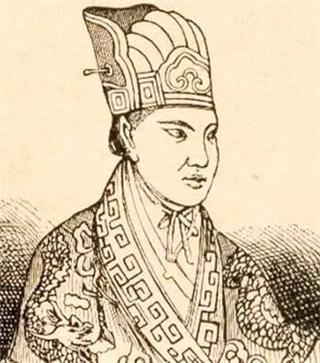
- Hong Xiuquan, a Hakka who had failed the imperial examinations, came to believe from visions and Christian pamphlets that he was the younger brother of Jesus Christ, sent to rid the world of demons, among them the Qing.
- From Nanjing, renamed Tianjing, the Taiping Heavenly Kingdom ruled nearly 30 million people at its peak and announced radical reforms: strict separation of the sexes, the abolition of foot binding, land socialisation and a ban on opium.
- Fought as a total war with extreme brutality on both sides, it was the deadliest civil war in history: the most widely cited estimates give 20 to 30 million dead, others as many as 100 million.
Timeline
- 1837Hong Huoxiu fails the imperial examination for the third time and has the visions in which he is given the name Hong Xiuquan
- 1844Hong’s follower Feng Yunshan founds the God Worshipping Society in Guangxi
- 1851After routing Qing forces at Jintian, Hong declares himself Heavenly King of the Taiping Heavenly Kingdom
- 1853The Taipings capture Nanjing, rename it Tianjing and kill its Manchu population
- 1856In the Tianjing Incident Yang Xiuqing and his followers are slaughtered on Hong Xiuquan’s orders
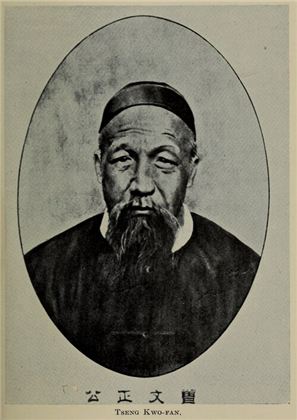
- 1861Zeng Guofan’s Xiang Army captures Anqing, helped by a Royal Navy blockade
- 1864Hong Xiuquan dies during the siege, and Nanjing falls to the imperial armies in the Third Battle of Nanjing
- 1871The last Taiping army, led by Li Fuzhong, is wiped out on the borders of Hunan, Guizhou and Guangxi
Background
In the 19th century the Qing dynasty suffered famines, natural disasters, economic trouble and defeats by foreign powers. China’s population had nearly doubled between 1766 and 1833 while the cultivated land stayed the same; farmers were heavily overtaxed, rents rose and peasants deserted their land in droves. Defeat in the First Opium War and the illicit importation of opium harmed the economy, banditry became common, and secret societies and self-defence units multiplied. The government, commanded by Manchus, had grown corrupt and was weak in the south, where anti-Manchu feeling was strongest among the Hakka, a Han Chinese subgroup, and where Christian missionaries were active.
In 1837 Hong Huoxiu, a Hakka from a poor village in Guangdong, failed the imperial examination for the third time and suffered a breakdown, in which he dreamed of visiting Heaven and meeting a celestial family; his heavenly father gave him the name Hong Xiuquan. After a fourth and final failure in 1843 he read Christian pamphlets he had received from a Protestant missionary and concluded that his father in the dream was God the Father, his elder brother Jesus Christ, and that he was to rid the world of demons, among them the corrupt Qing government and Confucian teachings. In 1847 he studied the Bible in Guangzhou with the American Baptist missionary Issachar Jacox Roberts, who refused to baptise him.
Aims
Hong sought the religious conversion of the Han people to his syncretic Christianity, the political overthrow of the Qing dynasty and a general transformation of the state; rather than replace China’s ruling class, the Taiping sought to upend the social order. The God Worshipping Society joined Christianity with Taoism, Confucianism and indigenous millenarianism, which Hong presented as a restoration of the ancient Chinese faith in Shangdi. It held that Hong was the second son of God and the younger brother of Jesus, and it called the Manchus demons, against whom a holy war would establish paradise on earth.
The Heavenly Kingdom announced social reforms: strict separation of the sexes, even of married couples, the abolition of foot binding, land socialisation and the suppression of private trade, and it outlawed the importation of opium. Its faith replaced Confucianism, Buddhism and Chinese folk religion; idols were destroyed, Buddhist and Confucian libraries burned, temples defaced or turned to the new religion, and sellers of Confucian works executed. The rebels refused to shave their foreheads and wear the queue, and so were called the Long-Hairs. In modern China the war is often called the Taiping Heavenly Kingdom Movement, and the scholar Jian Youwen speaks of a “Taiping Revolutionary Movement”, because it worked toward a complete change of the political and social system.
Course of Events

The rising began in Guangxi when local officials persecuted the God Worshipping Society. In early January 1851 a rebel army of 10,000 organised by Feng Yunshan and Wei Changhui routed Qing forces at Jintian, and on January 11 Hong declared the Taiping Heavenly Kingdom. Marching north into Hunan and down the Yangtze, the Taipings took Wuchang in December 1852 and Anqing in February 1853, and on March 19, 1853 they captured Nanjing. The Northern Expedition against Beijing failed completely; the Western Expedition had limited success.
Hong withdrew to rule by proclamation, and his suspicion of Yang Xiuqing ended in the Tianjing Incident of 1856, when Yang and his followers were slaughtered on Hong’s orders. Zeng Guofan’s Xiang Army retook Wuchang in December 1856 and Jiujiang in 1858. In 1860 the Taipings broke the imperial siege of Nanjing and took Changzhou and Suzhou, but their attacks on Shanghai were repulsed with the help of the Ever Victorious Army. Zeng took Anqing in 1861 and besieged Nanjing from May 1862. Hong died in June 1864, and Nanjing fell in July after street-by-street fighting. Resistance went on in the highlands of the south until 1866, and the last Taiping army was wiped out in August 1871.
People
Hong Xiuquan, the Heavenly King, was a Hakka villager who had failed the imperial examinations four times; from 1853 he lived in luxury with many women in his inner chamber and ruled by written proclamations. Feng Yunshan founded the God Worshipping Society, and two other God Worshippers claimed to speak for the Celestial Family, Yang Xiuqing as God the Father and Xiao Chaogui as Jesus Christ. Wei Changhui and Qin Rigang killed Yang in 1856 and were executed by Hong. Shi Dakai, whose family Wei and Qin had killed, led his army west and was executed by slow slicing near Chengdu in 1863. Hong’s cousin Hong Rengan came to Nanjing in 1859 with plans to expand the kingdom, and Li Xiucheng, the Loyal King, advised the Qing before his execution to buy and copy the best foreign cannon.
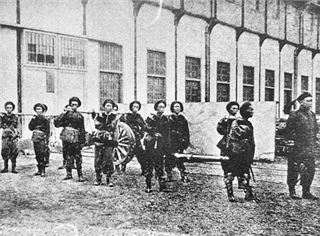
The rebels came almost entirely from the lowest classes: Hakka, people of Guangdong and Zhuang at first, many of them former miners, and later the people of the Yangtze delta. Women served in large numbers in the early years, led by commanders such as Hong Xuanjiao, Su Sanniang and Qiu Ersao. Against them stood Zeng Guofan, who recruited, paid and drilled village soldiers for the Xiang Army, Zuo Zongtang and Li Hongzhang, and the Ever Victorious Army of Frederick Townsend Ward and Charles George Gordon.
Outcomes
The Taiping were defeated by decentralised provincial armies such as the Xiang Army. The kingdom had been weakened by its internal conflicts after the failed campaign against Beijing and the killings of 1856, and its later leaders failed both to widen their support and to win alliances with the European powers, which stayed officially neutral while European advisers served with the Qing. The landowning class, alarmed by the Taiping ideology and the separation of the sexes, sided with the government, and traditionalist rural classes resisted its hostility to Confucian values. Jonathan Spence counts its failure to coordinate with other rebellions as a key reason for its defeat.
The cost was immense. It was a total war, fought with extreme brutality on both sides, each destroying the other’s farmland and butchering the people of captured cities. The Taiping killed the Manchu population of every area they took, about 40,000 Manchu civilians at Nanjing alone; the Qing massacred civilians, above all at Nanjing, and after the kingdom’s collapse one million are reported to have been executed in Guangdong in massacres of Hakkas. With no reliable census, the most widely cited estimates give 20 to 30 million dead, most of them from plague and famine, and others as many as 73 to 100 million; thirty million people fled.
Legacy
The rebellion is widely considered the most important event in 19th-century Chinese history. By destroying most of the Manchu quarters of southern China, it forced the Qing court to rely on Han gentry and their Yong Ying militias; power was decentralised to a limited extent, and Han officials held high posts more widely than before. By 1865 five of the eight viceroys were Hunanese. The war prompted the Self-Strengthening Movement, and Franz H. Michael saw the gentry militias as the forerunners of the private armies of the warlords who dominated China after the Qing, a claim that Diana Lary cited studies doubting.
Famine, disease and massacres depopulated the Yangtze delta, which was resettled by migrants from Henan; labour became more valuable than land, and refugees helped the economic rise of Shanghai. The Taiping mix of Christianity and radical social equality influenced Sun Yat-sen, and Chinese Communist historians, following Mao Zedong, called the rising proto-communist; John King Fairbank compared the Taiping with Mao’s communists. Its name is still debated: Tobie Meyer-Fong and Stephen Platt argued in 2013 that “rebellion” favours the Qing and that the war should be called a civil war, and Jürgen Osterhammel calls it the Taiping Revolution. Only about a tenth of the Taiping records survive.
The Taiping Rebellion (1850–1864) was a civil war between the Qing dynasty and the Taiping Heavenly Kingdom of Hong Xiuquan, who believed himself the younger brother of Jesus Christ and set out to overthrow the Qing and remake Chinese society. Ruling much of southern China from Nanjing, the kingdom was defeated by provincial armies such as Zeng Guofan’s Xiang Army, in a war that killed an estimated 20 to 30 million people or more.
Test yourself
5 questions on this page, from its key events and facts.
The questions open here once the page has loaded.