
Movement · Americas
Women's suffrage movement
At a glance
- The organised campaign for women’s votes, usually dated from the Seneca Falls Convention in New York in 1848, won its first national victory in New Zealand in 1893.
- Suffragists used petitions, conventions, lobbying and marches; in Britain the militant suffragettes smashed windows, set fires and went on hunger strike in prison.
- Much of Europe and North America gave women the vote around the First World War, but many women of colour and colonial subjects waited decades longer.
Timeline
- 1848The Seneca Falls Convention in New York adopts the Declaration of Sentiments, which demands the vote for women
- 1869Wyoming Territory gives women the vote; the American movement splits into two rival national associations
- 1893New Zealand becomes the first self-governing country to give all adult women the vote in national elections
- 1903Emmeline Pankhurst founds the Women’s Social and Political Union in Manchester
- 1906Finland gives women both the vote and the right to stand for parliament, the first European country to do so
- 1918Britain gives the vote to women over 30 who meet a property qualification
- 1920The Nineteenth Amendment to the United States Constitution is ratified
- 1971Swiss men vote to give women the vote in federal elections
Background

For most of history, voting, where it existed at all, belonged to men, and usually to men of property. The revolutions of the late 18th century proclaimed the rights of man and the consent of the governed but left women out. In France Olympe de Gouges answered with her Declaration of the Rights of Woman and of the Female Citizen in 1791; she was guillotined during the Terror in 1793. In England Mary Wollstonecraft’s A Vindication of the Rights of Woman (1792) argued that women were rational beings who deserved the same education as men. In one American state women voted for a time: the New Jersey constitution of 1776 gave the vote to inhabitants with enough property, and propertied single women and widows voted there until a law of 1807 confined the franchise to free white men.
Under the common law of England and the United States, a married woman’s legal identity was merged into her husband’s, a doctrine called coverture: her property and earnings passed under his control, and the law gave him custody of their children. When Britain’s Great Reform Act of 1832 widened the franchise, it defined voters as “male persons”, the first British statute to exclude women from voting in so many words. As more and more men gained the vote during the 19th century, the exclusion of women rested ever more plainly on sex alone.
The movement grew out of other campaigns of reform. In the United States many of its founders learned to organise, speak and petition in the campaign against slavery and in temperance and church societies. When the World Anti-Slavery Convention in London in 1840 refused to seat the American women delegates, among them the Quaker minister Lucretia Mott, she and the young Elizabeth Cady Stanton, who was in London on her honeymoon, resolved, by Stanton’s later account, to hold a convention on the rights of women. It met eight years later. Industrialisation, the growth of towns and the slow opening of schools and colleges to women had meanwhile created a class of educated women who ran charities and reform societies yet had no say in the laws they lived under.
Aims
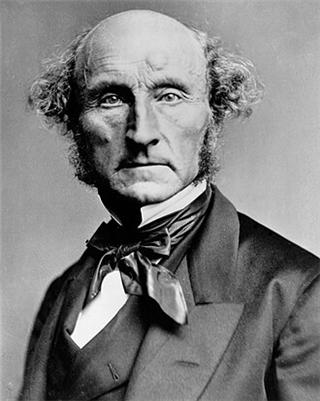
The movement’s central demand was that women should vote on the same terms as men. The Declaration of Sentiments, adopted at Seneca Falls in 1848 and modelled on the Declaration of Independence, declared “that all men and women are created equal”, listed the wrongs done to women by law and custom, and called on women to secure their “sacred right to the elective franchise”. In Britain the classic statement of the case was John Stuart Mill’s The Subjection of Women (1869), shaped by his partnership with Harriet Taylor Mill, which argued that the legal subordination of one sex to the other was wrong in itself and a hindrance to human improvement.
Two kinds of argument ran side by side. One was justice: women were citizens and taxpayers, bound by laws they had no part in making. The other was expediency: women’s votes would make politics cleaner, protect homes and children, curb drunkenness and improve schools and public health. The Woman’s Christian Temperance Union in the United States, under Frances Willard, sought the ballot as “home protection”, and many working women saw it as a means to better wages and conditions. Some white American suffragists also argued in ways that excluded others, claiming that educated native-born women deserved the vote more than immigrant or Black men; in the South some promised that white women’s votes would secure white supremacy.
What equality with men meant varied. In Britain, where men’s votes depended on property until 1918, the main societies asked for the vote on the same terms as men, which would have enfranchised propertied women first; socialists and adult suffragists wanted it for every adult. In the United States the aim shifted from changing state constitutions one by one to an amendment of the federal Constitution. The vote was rarely the only goal: married women’s property, divorce and custody law, education and entry to the professions belonged to the same programme. Opponents, women among them, held that politics belonged to men and the home to women, that wives were represented by their husbands and that the vote would coarsen women and divide families. Britain’s Women’s National Anti-Suffrage League, founded in 1908 with the novelist Mary Augusta Ward among its leaders, and the National Association Opposed to Woman Suffrage in the United States, founded in 1911, organised that opposition.
Course of Events
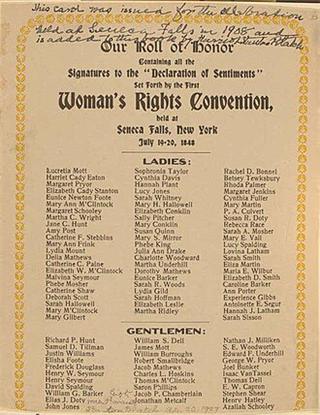
The Seneca Falls Convention met in the Wesleyan Chapel at Seneca Falls, New York, on 19–20 July 1848. About 300 people attended and 100, 68 women and 32 men, signed the Declaration of Sentiments; the resolution on the vote, the most radical, passed only after the abolitionist Frederick Douglass spoke for it. After the American Civil War the Fourteenth Amendment (1868) wrote the word “male” into the Constitution, and the Fifteenth (1870) forbade denying the vote on grounds of race but not of sex. The quarrel over it split the movement in 1869 between Stanton and Susan B. Anthony’s National Woman Suffrage Association and Lucy Stone’s American Woman Suffrage Association, which reunited in 1890 as the National American Woman Suffrage Association. Wyoming Territory gave women the vote in 1869 and Utah Territory in 1870.
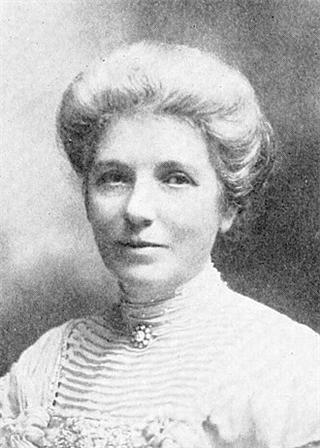
The first national victory came in New Zealand, where petitions organised by Kate Sheppard and the Women’s Christian Temperance Union persuaded Parliament: the Electoral Act of September 1893 gave women the vote, and they cast it that November. In 1894 South Australia’s parliament gave women both the vote and the right to stand for election, the new Commonwealth of Australia gave most women both rights in 1902, and Finland, then a grand duchy of the Russian Empire, became the first European country to do so in 1906. The International Woman Suffrage Alliance, founded in Berlin in 1904, linked the national campaigns. In Britain, Mill presented a women’s petition to Parliament in 1866 and in 1867 moved to replace “man” with “person” in the Reform Bill, without success. Local societies joined in 1897 in the National Union of Women’s Suffrage Societies. The Women’s Social and Political Union, founded in 1903, turned to disruption in 1905 and later to window-smashing and arson; imprisoned suffragettes went on hunger strike from 1909 and were force-fed. In 1913 Emily Wilding Davison was fatally injured when she ran in front of the King’s horse at the Derby.
The First World War and the revolutions that followed it brought a wave of victories, among them Denmark in 1915, Russia in 1917, Germany, Austria and Poland in 1918 and the Netherlands in 1919. Britain enfranchised women over 30 who met a property qualification in 1918. In the United States, President Woodrow Wilson, pressed by state campaigns and by pickets outside the White House, endorsed a federal amendment in 1918; Congress passed it in 1919, and ratification by Tennessee on 18 August 1920 made it law.
People
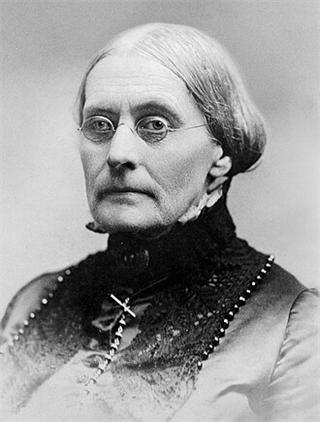
Elizabeth Cady Stanton, the movement’s leading thinker in America, drafted the Declaration of Sentiments and began, with Anthony and Matilda Joslyn Gage, the History of Woman Suffrage, which Ida Husted Harper completed in six volumes in 1922; her Woman’s Bible (1895–1898), a critique of the scriptures’ teaching on women, was formally disowned by the national association in 1896. Susan B. Anthony, a veteran of the temperance and anti-slavery campaigns, organised and lectured for half a century; arrested for voting in the presidential election of 1872, she was fined $100 at her trial in 1873 and refused to pay. Lucy Stone kept her own name after marriage and founded the Woman’s Journal in 1870. Sojourner Truth, who had freed herself from slavery, spoke at a women’s rights convention in Akron, Ohio, in 1851; the famous version of her speech, with its refrain “Ain’t I a woman?”, was published by Frances Dana Gage only in 1863 and differs from reports made at the time.
African American women built their own organisations, from the National Association of Colored Women, founded in 1896 with Mary Church Terrell as its president, to the Alpha Suffrage Club that the journalist Ida B. Wells founded in Chicago in 1913. The last generation in the United States was led by Carrie Chapman Catt, a formidable organiser who headed both the national association and the International Woman Suffrage Alliance, and Alice Paul, who had been imprisoned and force-fed with the British suffragettes and brought their tactics home.
In Britain, Lydia Becker of Manchester led the early societies and Millicent Garrett Fawcett the non-militant National Union from 1897 to 1919. Emmeline Pankhurst and her daughters Christabel, the chief strategist of the Women’s Social and Political Union, and Sylvia, who broke away to organise working women in the East End of London, led the militants; Annie Kenney, a former cotton-mill worker, was among their best-known speakers. In New Zealand Kate Sheppard wrote pamphlets and organised the petitions of 1891–1893. Elsewhere the leaders included Vida Goldstein in Australia, Aletta Jacobs in the Netherlands, Bertha Lutz in Brazil, Huda Sha’arawi in Egypt and Ichikawa Fusae in Japan. Most of the work, however, was done by people whose names are seldom remembered: women who carried petitions from door to door, sold newspapers on street corners, chalked pavements and marched, many of them textile workers in the north of England, and men such as Frederick Douglass who stood with them.
Outcomes
The movement won its central aim. Britain’s Equal Franchise Act of 1928 gave women the vote on the same terms as men. In Latin America, Ecuador wrote women’s suffrage into its constitution in 1929, and Brazil followed in 1932, Argentina in 1947, with Eva Perón as the law’s leading champion, and Mexico in 1953. France gave women the vote in 1944 and Italy and Japan in 1945, and India’s constitution, in force from 1950, enfranchised every adult at once. Women entered legislatures: Jeannette Rankin of Montana was elected to the United States Congress in 1916, and Nancy Astor became the first woman to take a seat in the British House of Commons in 1919.
The gains were unequal. Australia’s federal franchise of 1902 excluded most Aboriginal women and men, who gained the federal vote only in 1962. In the American South, poll taxes, literacy tests and intimidation kept most Black women, like Black men, from voting until the Voting Rights Act of 1965, and Asian immigrants were barred from citizenship, and so from voting, until the 1940s and 1950s. In much of Africa and Asia women gained the vote only at the end of colonial rule or with independence, usually together with the men of their countries. Nor did the vote bring the transformation that supporters hoped for or opponents feared: women did not vote as a bloc, and for decades few were elected. The organisations turned to other causes. The National American Woman Suffrage Association became the League of Women Voters in 1920, Alice Paul’s National Woman’s Party proposed an Equal Rights Amendment in 1923, and the International Woman Suffrage Alliance became the International Alliance of Women.
Switzerland, where every change to the federal constitution needed the approval of its male voters in a referendum, held out longer than any other democracy in Europe except Liechtenstein. Its men rejected women’s suffrage in 1959 and accepted it, by about two to one, on 7 February 1971, ending a campaign that the Swiss Alliance for Women’s Suffrage had waged since its foundation in 1909. Some holdouts remained: Liechtenstein enfranchised women in 1984, the canton of Appenzell Innerrhoden was compelled to admit them to its assembly by the Federal Supreme Court in 1990, and women first voted in Kuwait’s parliamentary elections in 2006 and in Saudi Arabia’s municipal elections in 2015.
Legacy
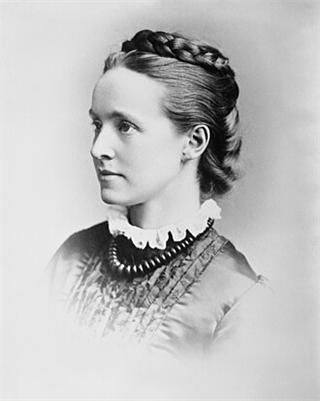
The suffrage movement changed the meaning of democracy. In the 19th century “universal suffrage” usually meant votes for all men; after the movement it came to mean votes for all adults. The Universal Declaration of Human Rights of 1948 called for universal and equal suffrage, and the United Nations Convention on the Political Rights of Women of 1952 committed its signatories to equal voting rights for women. The movement’s methods outlived it. Mass petitions, processions with banners and colours, such as the purple, white and green of the Women’s Social and Political Union, hunger strikes and deliberate law-breaking became part of the repertoire of later movements, and activists of the 1960s called their own campaigns a “second wave” of feminism, making the suffrage era the first.
The first histories were written by participants: the History of Woman Suffrage, Ray Strachey’s The Cause (1928) and Sylvia Pankhurst’s The Suffragette Movement (1931). They celebrated leaders and passed over many others, and Stanton and Anthony’s volumes made the Seneca Falls Convention the founding moment of the whole movement, a story historians have since examined critically. Since the 1970s historians have recovered the working-class radical suffragists of the Lancashire cotton towns, the campaigns of African American women and the racism they met within the movement, and the international networks that linked suffragists across empires and oceans.
Two debates continue. One concerns militancy: some historians argue that the suffragettes’ violence hardened opposition and delayed reform, while others hold that their courage made the question impossible to ignore. The other concerns the First World War. The old view that women were rewarded for their war work has given way to one that stresses the pressure built up before 1914 and political calculation, including the age limit of 30 in Britain’s act of 1918, which kept women a minority of the electorate. Centenaries have brought new memorials, among them the statue of Millicent Garrett Fawcett unveiled in Parliament Square in London in 2018, the first statue of a woman there.
The women’s suffrage movement campaigned from the Seneca Falls Convention of 1848 until Switzerland’s vote of 1971 to win women the right to vote. Beginning in the United States and Britain and first successful in New Zealand in 1893, it used petitions, marches and, in Britain, militant action, and it made votes for women a norm of democracy, though many women of colour waited longer.
Test yourself
5 questions on this page, from its key events and facts.
The questions open here once the page has loaded.
References
- DuBois, E.C. (1978) Feminism and Suffrage: The Emergence of an Independent Women's Movement in America, 1848–1869. Ithaca: Cornell University Press.
- Flexner, E. (1959) Century of Struggle: The Woman's Rights Movement in the United States. Cambridge, MA: Belknap Press of Harvard University Press.
- Liddington, J. and Norris, J. (1978) One Hand Tied Behind Us: The Rise of the Women's Suffrage Movement. London: Virago.
- Purvis, J. (2002) Emmeline Pankhurst: A Biography. London: Routledge.
- Rupp, L.J. (1997) Worlds of Women: The Making of an International Women's Movement. Princeton: Princeton University Press.
- Terborg-Penn, R. (1998) African American Women in the Struggle for the Vote, 1850–1920. Bloomington: Indiana University Press.