Movement · Islamic Caliphates & Middle East
Nahda
At a glance
- The Nahda, the “awakening”, was a movement of 19th-century Arab writers, translators and teachers, Muslim and Christian, who sought to renew Arabic culture and join it to modern knowledge.
- Through printing presses, newspapers, journals, dictionaries, schools and translations, centred in Cairo and Beirut, they created modern Arabic prose and Arabic journalism, drama and the novel.
- Its thinkers debated the reform of religion, government and education and the place of women, and their ideas fed both Islamic modernism and Arab nationalism.
Timeline
- 1820Muhammad Ali founds a government press at Bulaq, near Cairo, which prints its first book in 1822
- 1826Rifa’a al-Tahtawi goes to Paris as imam of an Egyptian student mission; his account of France appears in 1834
- 1847Marun al-Naqqash stages al-Bakhil in Beirut, the first play in Arabic
- 1863Butrus al-Bustani founds the National School in Beirut, open to pupils of every religion
- 1876The newspaper al-Ahram begins publication in Alexandria and the journal al-Muqtataf in Beirut
- 1892Jurji Zaydan founds al-Hilal in Cairo; Hind Nawfal launches al-Fatat, the first Arabic magazine for women
- 1899Muhammad Abduh becomes Grand Mufti of Egypt; Qasim Amin publishes The Liberation of Women
- 1908The Ottoman constitution is restored, loosening censorship, and the Egyptian University opens in Cairo
Background

In 1800 the Arabic-speaking lands from Iraq to Algeria were, at least in name, provinces of the Ottoman Empire, which had ruled Syria and Egypt since the conquests of Selim I in 1516–1517. Ottoman Turkish was the language of government, but Arabic remained the language of religion, law and learning: scholars studied grammar, law and theology at al-Azhar in Cairo and in the mosques and colleges of Damascus, Aleppo and other cities, copying and commenting on the classics. Writers of the Nahda would later describe the preceding centuries as an age of stagnation, but notable scholars worked in the 18th century, among them Murtada al-Zabidi, author of the great dictionary Taj al-'Arus, and the Cairene historian Abd al-Rahman al-Jabarti, whose chronicle runs into the 1820s. Printing in Arabic letters had made little headway among Muslims; the first Arabic presses in the Levant, set up by Christian churches in the 18th century at Aleppo and in the monasteries of Mount Lebanon, printed religious books.
The 19th century brought rapid change. The French expedition to Egypt of 1798–1801 brought, besides an army, a printing press and a commission of scholars whose work became the Description de l’Égypte; al-Jabarti recorded both his curiosity and his disdain. Muhammad Ali of Egypt, governor from 1805, built a conscript army and a centralised state that needed doctors, engineers, officers and translators. In the Ottoman Empire the Tanzimat reforms, from 1839, promised equality to subjects of every religion. Protestant missionaries from the United States settled in Beirut in the 1820s, and they and the Catholic orders, the Jesuits among them, opened schools and presses. Steamships, the telegraph and the Suez Canal, opened in 1869, drew the region into the world economy, and European influence, commercial and political, grew with them.
These changes posed the question that ran through the century: how Arabs could acquire the knowledge and techniques that had made Europe powerful without losing their language, faith and identity. Conflict made it sharper. The civil war of 1860 in Mount Lebanon and the massacre of Christians in Damascus that summer led to a new autonomous government for the mountain under the Règlement Organique of 1861, and moved some writers to call for unity across religious lines. Egypt’s debts led to European financial control and, after the revolt led by Ahmed Urabi, to British occupation in 1882, while France made Tunisia a protectorate by the Treaty of Bardo in 1881.
Aims

The word nahda means “rising” or “awakening”, and those who used it believed that Arabic culture had to rouse itself from a long sleep. Their first concern was the language. They wished to revive the classical Arabic of the Qur’an and of the great writers of the Abbasid age, in time freeing it from the elaborate ornament of later centuries, and to make it fit to express modern knowledge, coining or reviving words for new things and ideas. Dictionaries, grammars and printed editions of classical texts served this aim, as did translations of European works of science, history, law and literature.
Education and the spread of knowledge were the second aim. Schools for boys and, increasingly, for girls, learned societies and above all newspapers and journals, which the writers saw as instruments of public instruction, would form an informed public. The vocabulary of the age spoke of civilisation, tamaddun, and progress, taqaddum. Love of the homeland, the watan, became a theme: Rifa’a al-Tahtawi wrote of patriotic duty in Egypt, and Butrus al-Bustani appealed to the people of Syria, Christian, Muslim and Druze, to see themselves as children of one country.
Others turned to religion and government. Jamal al-Din al-Afghani and Muhammad Abduh argued that Islam, rightly understood, was a religion of reason, compatible with modern science, and called on Muslims to return to the principles of their faith and to exercise independent judgement, ijtihad, instead of following later authorities without question. Khayr al-Din al-Tunisi argued that Muslim states could adopt European institutions that agreed with the sharia, and Abd al-Rahman al-Kawakibi denounced despotism. Qasim Amin and women writers such as Aisha Taymur and Zaynab Fawwaz called for the education of women and debated their place in society. The movement included Muslims and Christians, believers and secularists, loyal Ottomans and early Arab nationalists, and its members disagreed about much.
Course of Events

In Egypt the movement grew from the state. The government press that Muhammad Ali founded at Bulaq in 1820 printed military manuals, textbooks and translations, and from 1828 the official gazette, al-Waqa’i' al-Misriyya. In 1826 Rifa’a al-Tahtawi, a young scholar of al-Azhar, went to Paris as imam of a mission of Egyptian students; his account of France, Takhlis al-ibriz fi talkhis Bariz, appeared in 1834, and from 1835 he directed the School of Languages in Cairo, which trained translators. Under Isma’il Pasha, who ruled from 1863, schools, a national library and new journals multiplied, and al-Ahram began publication in Alexandria in 1876.
In the Levant the centre was Beirut. There Butrus al-Bustani and the poet and grammarian Nasif al-Yaziji worked with American missionaries on a new Arabic translation of the Bible, completed in 1865, and in 1847 Marun al-Naqqash staged the first play in Arabic. After the civil war of 1860 Bustani published a series of appeals for concord, Nafir Suriyya, “The Clarion of Syria”, founded the National School in 1863, compiled the dictionary Muhit al-Muhit, edited the journal al-Jinan and in 1876 began the first modern Arabic encyclopedia. American missionaries opened the Syrian Protestant College, later the American University of Beirut, in 1866, and the Jesuits the Université Saint-Joseph in 1875; the scientific journal al-Muqtataf appeared in Beirut in 1876. In Istanbul Ahmad Faris al-Shidyaq published the widely read Arabic newspaper al-Jawa’ib from 1861.
From the 1870s many Syrian writers, most of them Christians, moved to Egypt, where the press was freer, above all after the British occupation of 1882, than under the censorship of Sultan Abdulhamid II. Al-Muqtataf moved to Cairo in 1884; Jurji Zaydan founded al-Hilal there in 1892, the year Hind Nawfal launched al-Fatat in Alexandria; and Rashid Rida began al-Manar in 1898. Muhammad Abduh, exiled after the Urabi revolt, published the journal al-'Urwa al-wuthqa with al-Afghani in Paris in 1884 and became Grand Mufti of Egypt in 1899, the year Qasim Amin published The Liberation of Women. The restoration of the Ottoman constitution in 1908 loosened censorship, and new newspapers and societies sprang up in Beirut, Damascus and Baghdad; the same year the Egyptian University opened in Cairo. The First World War closed the age with censorship, famine in Mount Lebanon and, in 1915–1916, the hanging of Arab nationalists in Beirut and Damascus under Djemal Pasha.
People
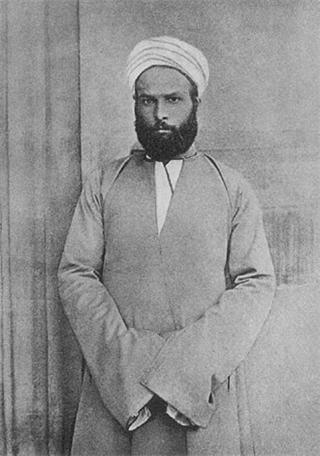
Rifa’a al-Tahtawi (1801–1873), from Tahta in Upper Egypt, was the first great figure: a scholar trained at al-Azhar who learned French in Paris, translated and supervised the translation of many books, and wrote on the education of girls and boys alike. Butrus al-Bustani (1819–1883), born to a Maronite family in Mount Lebanon, became a Protestant and taught, translated and founded schools, journals and works of reference; his family carried on the encyclopedia after his death. Nasif al-Yaziji (1800–1871) revived the classical maqama in his Majma' al-bahrayn, and his son Ibrahim and daughter Warda were writers in their turn. Ahmad Faris al-Shidyaq (c. 1805–1887), also born a Maronite in Mount Lebanon, worked in Cairo, Malta, England and France; his extraordinary book al-Saq 'ala al-saq, “Leg over Leg”, published in Paris in 1855, mixed autobiography, satire and play with words. He later became a Muslim and settled in Istanbul.
In the next generation Jamal al-Din al-Afghani (1838/9–1897), a restless teacher who lived in Cairo in the 1870s, and his disciple Muhammad Abduh (1849–1905) led the reform of Islamic thought, and Abduh’s pupil Rashid Rida (1865–1935) carried it on in al-Manar. Abd al-Rahman al-Kawakibi (1854–1902) of Aleppo wrote against tyranny. Jurji Zaydan (1861–1914), a Beiruti who settled in Cairo, edited al-Hilal and wrote popular historical novels and a history of Islamic civilisation; Ya’qub Sarruf and Faris Nimr edited al-Muqtataf, which brought modern science, Darwin’s theory among it, before Arab readers. The poets Mahmud Sami al-Barudi and Ahmad Shawqi renewed classical poetry. Women wrote and edited: the poet Aisha Taymur, the biographer Zaynab Fawwaz, the editor Hind Nawfal and, at the end of the period, Malak Hifni Nasif.
Behind them stood a wider public of teachers, printers, booksellers, subscribers and readers, members of learned and literary societies, and the pupils of the new schools. It remained a minority: most people in Egypt and Syria could not read, and the Nahda was at first the work of an urban elite, many of them Christians from Lebanon and Syria with access to mission schools and to foreign languages.
Outcomes
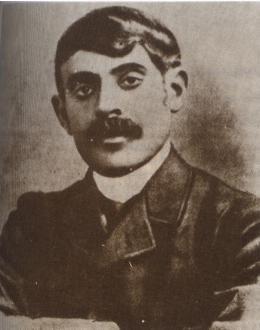
The Nahda’s achievements were large. It created a modern Arabic prose, plainer than the ornate style of earlier centuries, which became the standard written language of the Arab world, with new words for modern institutions and inventions. It brought new forms into Arabic: the newspaper article, the essay, the drama and, by the eve of the First World War, the novel, of which Muhammad Husayn Haykal’s Zaynab, a tale of the Egyptian countryside published in 1913, is often, though not without dispute, called the first. It laid the foundations of a publishing industry and a lively press, of modern schools and universities, and of a reading public. In religion it produced Islamic modernism, whose ideas of reform shaped Muslim thought far beyond the Arab lands.
In politics the Nahda spread new ideas of patriotism, constitutional government and national identity, which took organised form at its end. In Egypt Mustafa Kamil’s newspaper al-Liwa', founded in 1900, and his National Party demanded an end to the British occupation, while Ahmad Lutfi al-Sayyid’s al-Jarida, from 1907, argued for a liberal Egyptian nationhood. In the Ottoman provinces, after 1908, Arab societies asked for decentralisation and for the use of Arabic in schools and administration, demands voiced at an Arab Congress held in Paris in 1913. Most of their members still sought a reformed Ottoman state rather than independence, but the idea that speakers of Arabic, Muslim and Christian alike, formed one nation had been born.
It also had clear limits. Its readers were few, and its ideals of education reached the poor, the countryside and most women only slowly. Its writers disagreed about how much to borrow from Europe: critics then and since have charged some of them with imitating Europe uncritically, while others found the religious reformers too ready to compromise with European ideas. Its political hopes were repeatedly disappointed. Sultan Abdulhamid II suspended the Ottoman constitution in 1878 and kept the press under strict censorship, France occupied Tunisia and Britain Egypt, and religious strife, as in 1860, could set communities against one another. The First World War, with its censorship, famine and executions, closed the period, and after it the Ottoman Empire’s Arab provinces in the Levant and Iraq were divided between British and French mandates.
Legacy

The Nahda shaped Arab cultural life in the 20th century. Its prose is, with changes, the Modern Standard Arabic of books, newspapers and broadcasting across the Arab world; Cairo and Beirut remained the centres of Arabic publishing; and some of its journals, al-Hilal among them, long outlived their founders. Writers who emigrated to the Americas, among them Ameen Rihani and Kahlil Gibran, carried its spirit abroad, and the Pen League that Gibran and Mikhail Naimy led in New York from 1920 renewed Arabic poetry. Taha Husayn, the first to receive a doctorate from the Egyptian University, and the writers of the years between the wars saw themselves as its heirs, and the Egyptian Feminist Union of 1923, the Islamic reform movements and the Arab nationalist movement all looked back to it.
Its work on the language was carried on by academies founded to guard and enrich Arabic, at Damascus in 1919 and in Cairo in 1932, and by the dictionaries and schoolbooks of the following decades. The questions it raised, about the education of women, the relation of religion to science and to the state, and what to borrow from Europe and on what terms, remained at the centre of Arab debate through the 20th century. Many of its books have been reprinted, and some long-neglected works have found new readers in translation: al-Shidyaq’s Leg over Leg appeared complete in English, translated by Humphrey Davies, in 2014.
Historians have long debated how to understand it. Albert Hourani’s Arabic Thought in the Liberal Age, 1798–1939, published in 1962, traced its ideas from the French expedition to the eve of the Second World War, and the story of an East woken from sleep by its encounter with Europe in 1798 shaped many accounts. More recent scholars have questioned that story. Some, such as Peter Gran, point to the vitality of 18th-century Arabic scholarship. Others study the Nahda as one part of a wider 19th-century movement of print, translation and reform across the Ottoman Empire and beyond, stress the variety of its voices, including those of women and of popular literature, and treat the idea of a preceding age of decline as one of the Nahda’s own creations rather than a simple fact.
The Nahda was the Arab cultural renaissance of the 19th century, led from Cairo and Beirut by Muslim and Christian writers, translators and teachers. Through printing, the press, schools and translation they created modern Arabic prose and literature and debated the reform of religion, government and the place of women, laying foundations for Arab cultural and political life in the 20th century.
Test yourself
5 questions on this page, from its key events and facts.
The questions open here once the page has loaded.
References
- Ayalon, A. (1995) The Press in the Arab Middle East: A History. New York: Oxford University Press.
- Badawi, M.M. (1993) A Short History of Modern Arabic Literature. Oxford: Clarendon Press.
- Hanssen, J. and Weiss, M. (eds) (2016) Arabic Thought beyond the Liberal Age: Towards an Intellectual History of the Nahda. Cambridge: Cambridge University Press.
- Hourani, A. (1983) Arabic Thought in the Liberal Age, 1798–1939. Reissued edn. Cambridge: Cambridge University Press.
- Sheehi, S. (2004) Foundations of Modern Arab Identity. Gainesville: University Press of Florida.
- al-Tahtawi, R.R. (2004) An Imam in Paris. Translated by D.L. Newman. London: Saqi Books.