
Movement · Islamic Caliphates & Middle East
Tanzimat
At a glance
- Launched by the Edict of Gülhane in 1839, the Tanzimat promised all Ottoman subjects security of life, property and honour, fair taxation and conscription, public trials and an end to tax farming.
- Statesmen of the Sublime Porte such as Mustafa Reşid Pasha, Âli Pasha and Fuad Pasha rebuilt the ministries, courts, schools, law codes and army, and promoted Ottomanism, the equality of all subjects.
- The reforms culminated in the constitution of 1876 but left the empire bankrupt, while Balkan separatism, conservative opposition and foreign intervention grew; historians still dispute whether they strengthened the state or hastened its break-up.
Timeline
- 1826Mahmud II destroys the Janissaries in the Auspicious Incident, opening a period of Western-style reform and centralization
- 1839Sultan Abdulmejid I issues the Edict of Gülhane, guaranteeing all subjects security of life, honour and property and abolishing tax farming
- 1856The Imperial Reform Edict promises full legal equality for citizens of all religions and abolishes the jizya
- 1858The Land Code and a penal code modelled on the Napoleonic Code are promulgated
- 1864The Vilayet Law reorganizes the provinces and the secular Nizamiye Courts are established
- 1869A Nationality Law creates a common Ottoman citizenship irrespective of religion
- 1875Foreign borrowing ends in bankruptcy, and tax grievances help spark the Herzegovina Uprising
- 1876Midhat Pasha’s Ottoman Constitution sets up a Senate and a Chamber of Deputies, closing the Tanzimat
Background

Structural problems in Ottoman government that grew over the 1700s led to defeats in the Russo-Turkish Wars and the Greek War of Independence (1821–1830), and exposed the empire’s inability to compete with European armies. Provincial governors (ayans) and local leaders such as Muhammad Ali of Egypt increasingly defied the centre. Cautious reform under Selim III (r. 1789–1807) produced the Nizam-i Cedid, the New Order, but conservatives and the Janissaries revolted and, after a series of coups, installed Mahmud II.
Mahmud II was reform-minded but followed the conservatives until the Auspicious Incident of 1826, when he destroyed the Janissaries; from then on his reign was one of Western reform and centralization, on which the Tanzimat built. In 1838 the Sublime Porte signed the Treaty of Balta Liman with Britain, which dismantled Ottoman trade monopolies and flooded the markets with European goods.
On 1 July 1839 Mahmud II died suddenly and was succeeded by his son Abdul Mejid I. Reformists such as Mustafa Reşid Pasha, who had been ambassador in London and Paris, argued that European-style institutions could restore imperial power. Historians differ over where the programme came from: Butrus Abu-Manneh finds no Western influence in its founding edict, while Stanford Jay Shaw sees the direct influence of the French Declaration of the Rights of Man and of the Citizen of 1789.
Aims
The Tanzimat was meant to halt the slow decline of an empire whose borders had shrunk and whose strength had waned against the European powers. Its first purpose was military: the Janissaries had lost their prestige, and an army rebuilt on European lines was thought necessary. Its second was to rebalance a social order that had favoured Muslim subjects, in an empire where by the mid-19th century about 35% of the people were non-Muslim. Another key aim was to abolish iltizam, tax farming.
The Edict of Gülhane promised every subject security of life, property and honour, fair taxation and conscription, and public trials; the sultan said he wished “to bring the benefits of a good administration to the provinces of the Ottoman Empire through new institutions”. Its most significant clause applied the rule of law to all, non-Muslims included, ending the kul system under which the ruler’s servants could be executed or lose their property at his will.
Reformers hoped that ending the separate privileges of the millets, the self-governing religious communities, would centralize the state and give it direct control of its subjects. Greater equality and religious freedom, they expected, would ease strife between Muslims and non-Muslims, attract people to the empire and lessen the danger of foreign intervention on behalf of its Christians. This ideal of equality for all subjects was called Ottomanism.
Course of Events
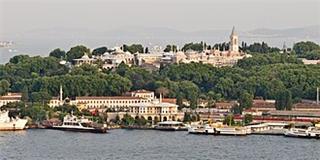
On 3 November 1839 Sultan Abdulmejid I issued the Edict of Gülhane, named after the rose house in the grounds of the Topkapı Palace. Statutes followed: a Ministry of Trade and Agriculture (1839), the first paper banknotes and post offices (1840), a Council of Public Education (1841), a regular system of army recruitment (1843–44), the first census, of men only, and national identity cards (1844), and provincial councils (1845). The Istanbul Slave Market was closed in 1847, telegraph lines spread from 1847, the first modern universities and teacher schools opened in 1848, and a Commerce Code of 1850 brought mixed commercial courts, the empire’s first secular legal system.
The Imperial Reform Edict of 1856 promised full legal equality for citizens of all religions and abolished the jizya, though a military exemption tax, the bedel-i askeri, replaced it. The Land Code and a new penal code followed in 1858, the Vilayet Law and the secular Nizamiye Courts in 1864, and constitutions for the Armenian millet (1863) and the Jewish millet (1865). A Nationality Law of 1869 created a common Ottoman citizenship, and the Mecelle civil code was published from 1869 to 1876.
After Âli Pasha’s death in 1871 came a period of chaos, as Mahmud Nedim Pasha’s absolutist agenda weakened the Council of State. Foreign loans brought bankruptcy in 1875, and during the Great Eastern Crisis ministers led by Midhat Pasha overthrew Sultan Abdul Aziz and introduced the constitution of 1876.
People
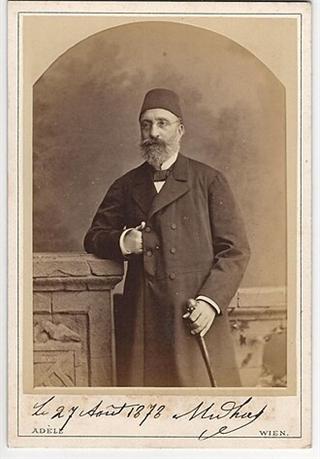
The Tanzimat was driven by reforming statesmen rather than by the sultans, and at its height the bureaucracy of the Sublime Porte overshadowed the throne. Mustafa Reşid Pasha, a former ambassador to London and Paris, argued for European-style institutions; Mehmed Emin Âli Pasha and Fuad Pasha carried the reforms forward under Sultans Abdul Mejid and Abdul Aziz. Liberal ministers and intellectuals such as Dimitrios Zambakos Pasha and Kabuli Mehmed Pasha contributed, as did the Young Ottomans, a secret society of reformers.
Midhat Pasha led the ministers who deposed Abdul Aziz and wrote the constitution of 1876. As grand vizier in 1872 he had repealed the commissions of Mahmud Nedim Pasha and restored the Council of State to its powers. Reform also reached the religious communities: the Armenian National Constitution of 1863, 150 articles drafted by the Armenian intelligentsia, defined the powers of the Armenian Patriarch and set up an Armenian National Assembly.
Many opposed the reforms. Conservative clerics feared that secular courts and schools would erode Islamic authority; Muslim peasants and artisans resented losing tax exemptions and competing with European goods, and artisans in cities such as Bursa protested the Commerce Code. Some officials formed secret committees against reforms that threatened their privileges. Abdul Hamid II, the sultan who signed the constitution, quickly turned against it.
Outcomes
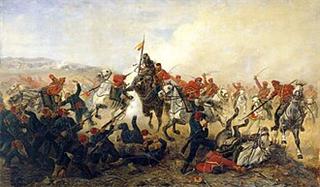
By its end the Tanzimat had given the empire a fairly modern conscripted army, reformed banking, replaced religious law with secular law in many fields and guilds with modern factories. Yet the Edict of Gülhane was not a constitution and did not replace the sultan’s authority. Conservatives won a victory in civil law: the Mecelle was a Hanefi sharia code adapted for a modern bureaucracy. Borrowing for infrastructure, some £200 million from British and French banks by 1875, ended in bankruptcy that year, and in 1881 the European powers set up the Ottoman Public Debt Administration to control revenues such as the tobacco taxes.
Equality did not unite the empire. Balkan Christians, seeking autonomy, refused to support a centralizing reform, and some provinces rebelled; it took strong British backing to hold Ottoman territory. Bosnia resisted Istanbul in 1850–1851, and in Mount Lebanon reform led to the Druze–Maronite conflict of 1860, as France claimed to protect the Maronites and Britain the Druze. Military service was required of non-Muslims in 1856, but exemptions could be bought, angering poorer Christians, and tax grievances helped spark the Herzegovina Uprising of 1875.
After the Russo-Turkish War of 1877–1878, the Treaty of Berlin formalized the loss of Bulgaria, Bosnia and Cyprus. In Palestine, the Land Law of 1858 let mukhtars register village lands in their own names and later sell them to Jewish immigrants of the First Aliyah.
Legacy
The Tanzimat’s legacy remains contested: some historians credit it with building a powerful national government, while others argue that it hastened the break-up of the empire. Reform did not stop in 1876 but continued into the Hamidian, Young Turk and one-party periods, and the Mecelle remained in force until 1926 in Turkey and longer in other post-Ottoman states. Many leading figures of the nation states that grew out of the empire were educated in Tanzimat schools.
Historian Hans-Lukas Kieser has described a “Tanzimat dualism”: “the rhetorical promotion of equality of non-Muslims with Muslims on paper vs. the primacy of Muslims in practice”. Some scholars argue that changing the status of non-Muslims from dhimmi, a subjugated population, to equal subjects clashed with the traditional values of the Muslim population and was in part responsible for the Hamidian massacres and the later Armenian genocide. Muslim elites who resented what they saw as favour to Christians turned to the pan-Islamic movements under Abdul Hamid II.
The cycle of reform and repression also radicalized the Committee of Union and Progress, the Young Turks, whose revolution of 1908 ended Abdul Hamid II’s autocracy but could not save the empire. Zeynep Çelik sums up the paradox of the age: “From 1838 to 1908, the Ottoman Empire staged its final but doomed struggle for survival.”
The Tanzimat was the age of Ottoman reform from the Edict of Gülhane of 1839 to the constitution of 1876, led by statesmen such as Mustafa Reşid Pasha, Âli Pasha and Fuad Pasha. It rebuilt the army, law, schools and administration and promised equality to all subjects, but it also brought bankruptcy, Balkan risings and foreign intervention, and its legacy is still debated.
Test yourself
5 questions on this page, from its key events and facts.
The questions open here once the page has loaded.
References
- William L. Cleveland and Martin P. Bunton, A History of the Modern Middle East, fifth edition (Boulder, CO, 2012)
- Roderic Davison, Reform in the Ottoman Empire, 1856–1876 (Princeton University Press, 1963)
- Stanford Shaw and Ezel Shaw, History of the Ottoman Empire and Modern Turkey, Vol. II (Cambridge University Press, 1977)
- James L. Gelvin, The Modern Middle East: A History, second edition (Oxford University Press, 2008)
- Evgeny Finkel and Scott Gehlbach, Reform and Rebellion in Weak States (Cambridge University Press, 2020)