
Movement · Europe
Chartism
At a glance
- The People’s Charter of 1838 asked for six reforms: a vote for every man over twenty-one, the secret ballot, no property qualification for MPs, payment of MPs, equal constituencies and annual elections.
- Petitions signed by 1.3 million people in 1839 and over three million in 1842 were rejected by the House of Commons, and the risings and strikes that followed were put down with arrests and transportation.
- Chartism directly won no reform, but its demands were enacted later by other reformers: the secret ballot in 1872, payment of MPs in 1911 and full manhood suffrage in 1918.
Timeline
- 1838The People’s Charter is published, setting out the movement’s six aims
- 1839A petition signed by 1.3 million working people is presented to the House of Commons, which votes not to hear the petitioners
- 1839John Frost leads several thousand marchers to the Westgate Hotel in Newport, where more than twenty Chartists are killed
- 1842A second petition of over three million signatures is rejected, and a wave of strikes spreads from the Staffordshire Potteries
- 1847Feargus O’Connor is elected for Nottingham, the only Chartist ever to become an MP
- 1848A peaceful mass meeting on Kennington Common sends the third petition to Parliament, while 100,000 special constables stand by
- 1858The final National Convention is attended by only a handful of delegates
Background
The Reform Act 1832 failed to extend the vote beyond those who owned property, and the political leaders of the working class spoke of a great act of betrayal. That sense was strengthened by the Whig governments of the 1830s, above all by the hated Poor Law Amendment of 1834, which deprived working people of outdoor relief and drove the poor into workhouses, where families were separated. The massive wave of opposition to it in the north of England in the late 1830s made Chartism a mass movement: it seemed that only the vote for working men would change things.
In 1836 William Lovett and Henry Hetherington founded the London Working Men’s Association, and in the autumn of that year the Carmarthen Working Men’s Association began Chartism in Wales. The movement was strongest where working people depended on single industries and suffered wild swings in economic activity, and weaker in places with more varied economies, such as Bristol.
A radical press prepared the ground. The Poor Man’s Guardian, edited by Hetherington in the 1830s, condemned the Reform Act and debated what its writers called moral against physical force. It was succeeded by the Northern Star, which in 1839 was the best-selling provincial newspaper in Britain, with a circulation of 50,000, and was often read aloud in coffeehouses, workplaces and the open air.
Aims
The People’s Charter set out six reforms: a vote for every man aged twenty-one and above, of sound mind and not undergoing punishment for a crime; the secret ballot; no property qualification for Members of Parliament; payment of Members, so that men of modest means could serve; equal constituencies; and annual parliamentary elections, as a check on bribery and intimidation. None of the demands was new, but the Charter became one of the most famous political manifestos of 19th-century Britain.
Chartists saw themselves as fighting political corruption and working for democracy in an industrial society, but many supported them for economic reasons, against wage cuts and unemployment. At Kersal Moor in 1838 Joseph Rayner Stephens called Chartism “a knife and fork, a bread and cheese question”. Its strategy was constitutional: petitions and mass meetings were to show such support that politicians would concede manhood suffrage, although some Chartists prepared for insurrection.
Christian Chartists held that faith had to be carried into political life; more than 20 Chartist churches existed in Scotland by 1841, and some called for the absolute separation of church and state. Chartist papers also denounced imperialism, condemning the First Opium War.
Course of Events
Chartism was launched in 1838 with large meetings in Birmingham, Glasgow and the north of England. A National Convention met in London early in 1839, and in June a petition signed by 1.3 million people was presented to the House of Commons, which voted by a large majority not to hear the petitioners. On the night of 3–4 November 1839 John Frost led several thousand marchers to the Westgate Hotel in Newport, which was held by soldiers; more than twenty Chartists were killed. Risings at Sheffield and Bradford the following January were betrayed by spies and easily quashed.
In early May 1842 a second petition of over three million signatures was rejected. A depression and wage cuts set off strikes in 14 English and 8 Scottish counties, known as the Plug Plot because strikers pulled the plugs from steam boilers; hundreds were imprisoned and dozens transported. From 1843 Feargus O’Connor promoted a Chartist Co-operative Land Company, which settled five estates between 1844 and 1848 before Parliament ordered it shut down.
News of revolution in Paris in February 1848 revived the movement. For a meeting on Kennington Common on 10 April 1848 the authorities recruited 100,000 special constables; O’Connor cancelled the procession, and the third petition went to Parliament in three cabs. The movement declined rapidly afterwards, and the last National Convention, in 1858, drew only a handful of delegates.
People
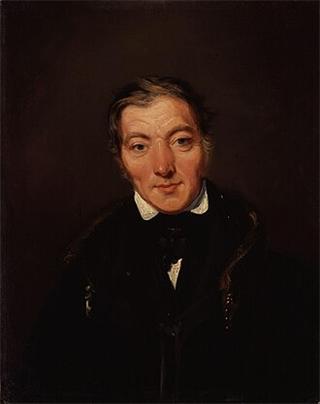
According to Dorothy Thompson, the preeminent historian of Chartism, its members, supporters and most of its leaders were working men, with a few shopkeepers, innkeepers and members of lesser professions. Feargus O’Connor, proprietor of the Northern Star, was its acknowledged leader and, in Thompson’s words, its “most well-loved man”: over six feet tall, with a voice that could carry to an open-air crowd of tens of thousands. In 1847 he became the only Chartist elected to Parliament. Early historians accused him of egotism, but he has lately been reassessed more favourably.
William Lovett sat on the committee that drew up the Charter and, like Robert Owen, sought an understanding with the middle classes. John Frost led the Newport Rising and was transported with Zephaniah Williams and William Jones. Samuel Holberry, leader of the Sheffield rising, died in prison and became a Chartist martyr. George Julian Harney, editor of the Northern Star from 1845 to 1850, was called by Tristram Hunt Chartism’s enfant terrible, an admirer of Robespierre who favoured physical force. Ernest Jones, born into the landed gentry and a barrister, gave the late movement a socialist direction; he and Harney knew Karl Marx and Friedrich Engels. Thomas Cooper wrote “The Purgatory of Suicides” in prison, and William Cuffay was transported to Australia after 1848.
Outcomes
In its own time Chartism failed. Parliament rejected all three petitions, and the state answered risings and strikes with soldiers, spies, trials and transportation. In 1842 O’Connor, Harney and Cooper were among the leaders arrested, though the Attorney General’s prosecution of O’Connor and 57 others won no conviction on the serious charges. In 1848 Parliament revived a statute of Charles II limiting how many could present a petition in person and made seditious acts felonies punishable by death or transportation. A joint conference with the middle-class National Complete Suffrage Union broke down in December 1842, when its leader Joseph Sturge withdrew.
Robert George Gammage, a veteran Chartist and later its historian, blamed the decline on O’Connor’s egotism and vanity; more recent historians, notably Dorothy Thompson, see the process as too complex to be put down to one man. Malcolm Chase argues that it was not a movement that failed but one marked by a multiplicity of small victories, and that Chartism collapsed but Chartists did not.
Chartism directly generated no reforms, but after 1848 its demands seemed less threatening and were gradually enacted by others. Part of the urban working men gained the vote under the Reform Act 1867, the secret ballot came in 1872, payment of MPs in 1911 and full manhood suffrage in 1918. Annual elections remain the only demand never implemented.
Legacy
Former Chartists carried the cause on: the Reform League campaigned for manhood suffrage in the 1860s with former Chartists in its ranks. In Manchester the movement had undermined the power of the old Tory-Anglican elite, and Chartism has been seen as a forerunner of the Labour Party. Taking part filled some working men with self-confidence: they learned to speak in public and to publish their writings, and many became journalists, poets, ministers and councillors.
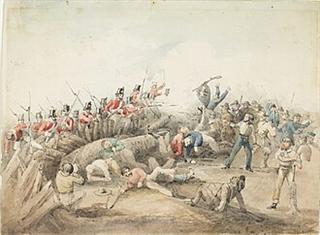
Leaders transported to Australia spread their beliefs there. In 1854 miners at the Eureka Stockade at Ballarat, Victoria, put forward Chartist demands, and within two years of the revolt’s suppression Victoria held its first elections with near-universal male suffrage and the secret ballot, which spread from Australia to the UK and Canada in the 1870s. It has been argued that Chartist influence lay behind later Australian reforms such as women’s suffrage and compulsory voting. In the African colonies after 1920 a “colonial Chartism” occasionally appeared, calling for welfare, education, free speech and representation for native people.
Cottages built by the Land Company are still lived in, and Rosedene at Dodford, Worcestershire, is kept by the National Trust. A large mural by Tony Hollaway on the Brandon Estate in Kennington, commissioned in the early 1960s, commemorated the meeting of 10 April 1848.
Chartism was a British working-class movement of 1838 to 1857 that demanded the six points of the People’s Charter, above all a vote for every man. Its mass petitions of 1839, 1842 and 1848 were rejected and its risings and strikes suppressed, but after it faded five of its six demands were enacted between 1867 and 1918.
Test yourself
4 questions on this page, from its key events and facts.
The questions open here once the page has loaded.
References
- Malcolm Chase, Chartism: A New History (Manchester University Press, 2007)
- Dorothy Thompson, The Chartists: Popular Politics in the Industrial Revolution (1984)
- Dorothy Thompson, The Early Chartists (1971)
- David J. V. Jones, The Last Rising: The Newport Insurrection 1839 (1985)
- R. G. Gammage, History of the Chartist Movement 1837–1854
- Asa Briggs, Chartist Studies (1959)