Social ladder · c. 121–52 BCE (free Gaul in the time of Julius Caesar)
Social Hierarchy of Ancient Gaul
From Kings to the Enslaved
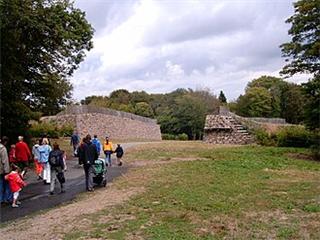
Gaul in the 1st century BCE was a land of many tribes, never united under a single ruler or government. Each tribe had a council of elders and at first a king; by Caesar’s day several, such as the Aedui and the Helvetii, were governed instead by magistrates elected every year. Julius Caesar, who conquered Gaul between 58 and 51 BCE, wrote that two classes were held in honour: the druids, the learned priests and judges, and the equites, the warrior nobility. He also described ties of patron and client much like those of Rome. Most ancient descriptions of the Celtic peoples divide them into three groups: a warrior aristocracy, a learned class of druids, poets and jurists, and everyone else. Below the free stood the enslaved. Nearly all that is known comes from Greek and Roman writers, above all Caesar, whose reliability is still debated, and from archaeology, for the Gauls left few writings of their own.
Period c. 121–52 BCE (free Gaul in the time of Julius Caesar)People c. 10–14 million (est.)Ranks 6Profile Celts, La Tène culture
The ladder
By rank, the ladder is drawn as a pyramid. To scale, each bar is as wide as that rank’s share of the people. Shares marked est. are estimates where no count survives; their boxes and bars are dashed.
Ruler · Fewer than 1 in 1,000 (est.)
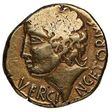
Vergobret (Kings and chief magistrates)
rex (king, in Caesar's Latin)
Each Gallic tribe had a council of elders and a leader, at first a king and later often a leader chosen every year.
The tribe, made up of one or more smaller units the Romans called pagi, was the basic unit of Gallic politics. Each tribe had a council of elders and, at first, a king. Later many tribes chose an executive magistrate every year: among the Aedui he held the title of vergobret, a post much like a king’s, but his powers were held in check by rules the council laid down. Kings still ruled elsewhere: Bituitus, king of the Arverni, led an army against Rome in 121 BCE and was defeated. Gaul as a whole stayed divided, and only in a time of crisis, Caesar’s invasion, did the Gauls unite under one leader, the Arvernian chieftain Vercingetorix, in 52 BCE.
Moving in or out. In many tribes the rule of kings gave way to magistrates elected for a year, whose powers the council of elders limited. In a time of crisis the tribes could unite under a single war leader, as they did under Vercingetorix, though even then the factions remained.
How many? Estimate: one king or chief magistrate in each tribe, with their families; the Gallic Wars are said to have subjugated some 300 clans, among 10–14 million people.
Religious and learned · c. 0.1–0.5% (est.)
Druides (Druids)
bards, vates (seers)
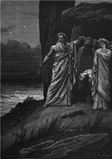
Druids were priests and teachers who learned everything by heart, settled quarrels and led the ceremonies for the gods.
The druids were the learned class: priests, judges, teachers and keepers of religious and legal tradition. According to Caesar they performed public and private sacrifices, judged nearly all disputes over crime, inheritance and boundaries, and could bar the disobedient from the sacrifices, the harshest of penalties. They had a single head, who held office for life, and met once a year at a sacred place in the land of the Carnutes, reckoned the centre of all Gaul. They paid no taxes and did no military service, educated the aristocracy, and taught that the soul does not die. Greek writers name bards and seers (vates) beside them. Cicero knew one druid, Diviciacus of the Aedui.
Moving in or out. Pupils might stay in training for up to twenty years, learning a great body of verse by heart, since the druids held it unlawful to write their teaching down. Caesar says their teaching came from Britain, and that Gauls who wished to study it closely went there.
How many? Estimate: no ancient figure survives; a learned order under one head for all Gaul, whose pupils might study for up to twenty years, with the bards and seers beside them.
Picture: The last druids, as imagined by Alphonse de Neuville for François Guizot's history of France · Alphonse de Neuville / François Pannemaker · Public domain · Wikimedia Commons
Nobility and officials · c. 1–3% (est.)
Warrior nobles
equites (horsemen, in Caesar's Latin)
Noble warriors rode horses into battle and wore metal neck rings called torcs, some of them made of gold.
The second honoured class, in Caesar’s account, was the equites, the “horsemen”: a warrior aristocracy. Caesar and other writers describe ties of patron and client among the Gauls much like those of Rome. Warfare between tribes was a regular part of life, a way to exert political control, to harass rivals and to win wealth. Greek writers say that the nobles shaved their cheeks but let their moustaches grow over the mouth, and that warriors hung the heads of enemies slain in battle from their horses’ necks and nailed them up outside their homes. The rich wore silk among their wool and linen, and the most famous ornament was the torc, a neck collar of metal, sometimes of gold.
Moving in or out. The sources say little of how a man entered the nobility. After the conquest the Gaulish upper class took up Roman ways quickly, and Gauls served Rome as horsemen.
How many? Estimate: no ancient figure survives; the warrior aristocracy of every tribe with their families, set somewhat above the knights of medieval Europe with their families (about 0.5–1.5 per cent), since each of the many tribes had a nobility of its own.
Soldiers, merchants and craftsmen · c. 3–8% (est.)
Smiths and craftsmen
-
Gallic smiths made beautiful things from gold and bronze, decorated with swirling patterns.
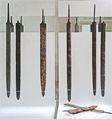
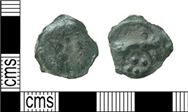
Gaul was rich in metals. Its lands held tin, lead, iron, silver and gold, and archaeologists know of at least 200 pre-Roman gold mines in the Pyrenees alone. Celtic smiths and metalworkers made weapons and jewellery for trade far afield, above all with the Romans. La Tène metalwork in bronze, iron and gold, with its leafy palmettes, spirals and S-scrolls, adorned fine vessels, helmets, shields, horse trappings and the torcs and brooches of the elite. From the 3rd century BCE the Gauls minted coins: gold for trade, and potin, a bronze with much tin, of low value. Large fortified towns, the oppida, such as Bibracte, Avaricum and Gergovia, were centres of population, and Roman merchants came to trade.
Moving in or out. The sources do not say how a smith learned his craft or whether it passed from father to son. As Rome’s demand for gold grew, gold production in the Celtic lands rose sharply.
How many? Estimate: no ancient figure survives; the smiths and metalworkers, the miners and the traders of the oppida and the countryside.
Picture: Iron weapons of the La Tène Celts (Laténium, Hauterive) · Jean-Pierre Dalbéra · CC BY 2.0 · Wikimedia Commons
Free commoners · About 85% (the rest, est.)
The free people
-
Most Gauls were ordinary free people who wore warm trousers and worshipped many gods of nature.
Of the free Gauls who were neither nobles nor druids, the great majority, the ancient writers say least. They lived in scattered settlements and in the large towns, with hill forts used as refuges in time of war. The druids kept the yearly farming calendar and set the seasonal festivals. People wore long-sleeved tunics and the trousers the Romans called braccae, of wool or linen, with cloaks in winter. They worshipped many gods, among them the thunder god Taranis, Lugus, a god of skills and crafts, and the horse goddess Epona, held ceremonies in sacred groves and offered treasured things in rivers, wetlands and shafts. Caesar’s wars fell on them hardest: as many as a million Gauls died.
Moving in or out. The sources record no path upward for ordinary Gauls. A free person could fall into slavery for debt or as a punishment, and the Romans enslaved about a million Gauls in the Gallic Wars.
How many? Everyone not counted in the other ranks: the free majority and their families. The other ranks are estimates, so this share is one too.
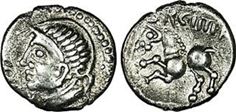
Picture: A potin coin of the Suessiones, a people of northern Gaul, 1st century BCE · Hampshire Cultural Trust, Katie Hinds · CC BY 2.0 · Wikimedia Commons


Enslaved · c. 5–10% (est.)
Enslaved people
-
Some people in Gaul were enslaved, often after being captured in war, and their children were enslaved too.
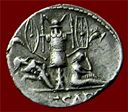
Slavery among the Celts was very likely much like that of Greece and Rome. People were enslaved in war and in raids, as punishment and for debt; slavery passed from parent to child, though slaves could be freed. The Old Irish and Welsh words for a slave, cacht and caeth, are related to the Latin captus, “captive”, which suggests that the slave trade was an early link between the Latin and Celtic worlds. Caesar reports human sacrifices by the druids, and the historian Bruce Lincoln argues that those killed were as a rule condemned criminals and prisoners of war. The Roman conquest made slaves on a vast scale: about a million Gauls were enslaved, among them most of the surviving Helvetii.
Moving in or out. Freedom came only by manumission, which was possible but is not described; a slave’s children were born into slavery.
How many? Estimate: no ancient figure survives. Celtic slavery is thought to have resembled the better documented slavery of Greece and Rome; the range is set below the 10–15 per cent modern scholars give for the Roman Empire, as nothing in the sources suggests slavery on the Roman scale.
Picture: A denarius of Julius Caesar, 46–45 BCE, with Gallic captives at the foot of a trophy · Anonymous · CC BY-SA 3.0 · Wikimedia Commons

Born into history
Where would you have stood? Chance places you on the ladder, as birth placed most people: weighted by how many each rank held.
Moving up and down
The sources describe the Gallic order more than movement within it. The great change of the 1st century BCE took place at the top: in many tribes the rule of kings gave way to magistrates elected each year and checked by a council of elders, such as the vergobret of the Aedui, while kings still ruled in other tribes, as Bituitus had among the Arverni in 121 BCE. Learning was a ladder of its own: the druids trained their pupils for as long as twenty years. War and debt worked the other way, carrying free people into slavery. The conquest overturned the whole order. As many as a million Gauls died, another million were enslaved, and 300 clans were subjugated; the upper class soon took up Roman ways, the druids lost their standing and were banned by the emperors in the 1st century CE, and the tribes became the civitates through which Rome governed Gaul. Some scholars argue that the druids were already a declining force before the conquest; others hold that the decline came after it.
Women on the ladder
Very few reliable sources survive on how the Gauls saw the roles of women and men, and archaeology suggests their views may have differed from the Greek and Roman. At Vix in north-eastern Gaul a person of high rank, buried with a woman’s jewellery and with weaponry, has raised questions about the gender of some people buried with weapons, though it has been suggested that weapons in such graves mark high rank rather than a man. Roman writers describe Celtic women urging on, joining and even leading battles, and Plutarch says that Celtic women acted as ambassadors to prevent a war among the Celts of the Po valley in the 4th century BCE; modern historians such as Barry Cunliffe and Lisa Bitel warn that such stories were often meant to show the “barbarians” as a world turned upside down. The classical accounts of the druids say nothing of women. Genetic studies of La Tène cemeteries suggest that the Gauls were patrilineal and patrilocal, with wives coming to their husbands’ families, in agreement with the archaeological and written evidence.
Compare with another society
Test yourself
4 questions on the ladder of Gaul.
The questions open here once the page has loaded.
Sources and further reading
- Birkhan, H. (1997) Die Kelten. Vienna.
- Drinkwater, J. F. (2014) [1983] Roman Gaul: The Three Provinces, 58 BC–AD 260. Abingdon: Routledge.
- Kendrick, T. D. (1927) The Druids.
- Piggott, S. (1968) The Druids.
The shares are of the whole population, children included. Where a scholar has counted or estimated a rank, its share follows that work, named on the rank; where no count survives, the share is an estimate, marked est. and drawn dashed, made from what the rank was and did, from related figures and from the same rank in comparable societies, and its note says what it rests on. Population: implied by the estimate that the one million people who died in Caesar's Gallic Wars were probably one Gaul in twelve.
Cite this page
- APA
- The Epoch Institute. (2026). Social Hierarchy of Gaul. In Social Ladders. https://the-epoch-institute.org/societies/gaul
- MLA
- “Social Hierarchy of Gaul.” Social Ladders, The Epoch Institute, 2026, https://the-epoch-institute.org/societies/gaul. Accessed .
- Chicago
- The Epoch Institute. “Social Hierarchy of Gaul.” Social Ladders. 2026. https://the-epoch-institute.org/societies/gaul.
- Harvard
- The Epoch Institute (2026) ‘Social Hierarchy of Gaul’, Social Ladders. Available at: https://the-epoch-institute.org/societies/gaul (Accessed: ).