Americas
Kingdom of Chimor
At a glance
- The largest Andean state before the Incas, ruling about 1,000 km of Peru’s desert coast from its capital, Chan Chan.
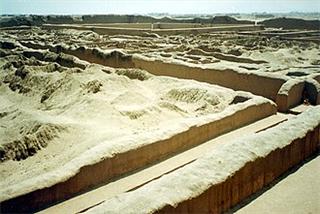
- Chan Chan’s walled royal compounds held palaces, storerooms and burial platforms; each new king seems to have built his own.
- Irrigation, conquest and skilled crafts made it rich; the Incas conquered it around 1470 and took its metalworkers to Cusco.
Rise & Fall
- c. 900–1000Chimú culture takes shape in the Moche valley and building begins at Chan Chan
- c. 1350A massacre at Punta Lobos near Huarmey is linked to Chimú expansion to the south
- c. 1370By tradition, Ñançenpinco conquers the coast from the Saña or Jequetepeque valley south to Santa
- c. 1375Chimor absorbs the Lambayeque valley and moves Sicán metalworkers to Chan Chan
- c. 1450About 140 children and 200 young llamas are sacrificed at Huanchaquito near Chan Chan
- c. 1470Inca forces under Topa Inca Yupanqui conquer Chimor; Minchançaman is taken to Cusco
- 1986Chan Chan becomes a UNESCO World Heritage Site and is listed as in danger
Foundation
The Kingdom of Chimor grew in the Moche valley of Peru’s north coast, the old heartland of the Moche, after the Moche centres there were abandoned around 800. A new tradition, known to archaeologists as Chimú, took shape in the following century, and monumental building began at Chan Chan, near the mouth of the valley, at some point between about 850 and 1000, depending on the radiocarbon dates used. The kingdom’s own account of its origins survives in an anonymous Spanish history of Trujillo written in 1604. It tells that a lord named Taycanamo arrived by sea on rafts, settled in the valley and founded the dynasty; his son Guacricaur extended his power over the valley, and his grandson Ñançenpinco began the conquest of neighbouring valleys. Archaeologists find no sign of a large-scale arrival of newcomers and treat the story as dynastic legend, but it preserves a list of about ten rulers ending with Minchançaman, the king conquered by the Incas. Dates for the early kings are estimates based on the number of reigns: Ñançenpinco is usually placed around 1370, which would leave the first centuries of Chan Chan without named rulers.
Socioeconomy
Chimor’s wealth rested on irrigation. Its engineers extended the canal systems of the Moche valley and began an intervalley canal some 70 kilometres long to bring water from the Chicama River to fields north of Chan Chan, though whether it ever carried water along its whole length is debated. Near the shore, sunken gardens dug down to the water table and walk-in wells supplemented the canals. Fishing communities worked the sea, and Chimú pottery and wall friezes are full of fish, seabirds and waves. Chan Chan, whose walled area covered some 20 square kilometres, was one of the largest cities of the pre-Columbian Americas, with perhaps 30,000–40,000 inhabitants at its height. Its population was sharply divided: royalty lived in great walled compounds, lesser nobles and officials in smaller enclosures, and thousands of craft workers in crowded quarters of small cane-walled rooms, where they made textiles, metalwork, beads and wooden objects for the court. Chimú potters mass-produced moulded, burnished black ware. According to colonial accounts, the Moon, Si, was the most powerful deity of the north coast, greater than the Sun, and offerings were made to the sea, Ni.
Military
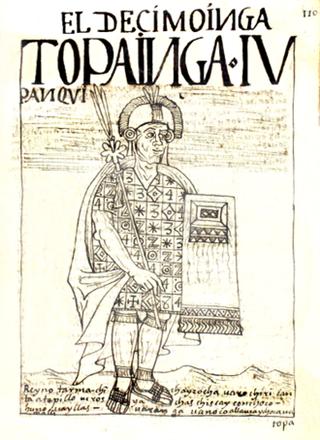
Chimor was built by conquest. Chimú provincial centres appeared in neighbouring valleys, among them Farfán in the Jequetepeque valley and Manchan in the Casma valley, and the dynastic tradition credits Ñançenpinco with conquests that reached north to the Saña or Jequetepeque valley and south to Santa. In the later fourteenth century, around 1375 on the usual reckoning, Chimor absorbed the Lambayeque valley, home of the wealthy Sicán culture, and brought its metalworkers to Chan Chan. The last independent king, Minchançaman, pushed the frontier north at least to Piura and possibly to Tumbes, and south almost to the Lima valley, giving Chimor some 1,000 kilometres of coastline and about two-thirds of the farmland of the desert coast. Conquest could be brutal: at Punta Lobos, near Huarmey, nearly two hundred bound and blindfolded men were killed around 1350, a massacre many archaeologists link to the Chimú advance. The fortress of Paramonga in the Fortaleza valley is often described as the kingdom’s southern frontier stronghold, but its builders and purpose are disputed. Chimor’s great rival proved to be the Incas, whose armies, led by Topa Inca Yupanqui, son of Pachacuti, overcame the kingdom around 1470.
Governance & Law
Chimor was a hereditary monarchy ruled from Chan Chan. The heart of the city consisted of nine or ten great rectangular compounds, the ciudadelas, each enclosed by high adobe walls with a single narrow entrance. Inside were courts decorated with friezes, rows of storerooms, small U-shaped structures called audiencias, long interpreted as offices of officials who controlled access to stored goods, although this is now debated, and a burial platform where a king was laid to rest with rich offerings. The compounds appear to have been built one after another, and many archaeologists, notably Geoffrey Conrad and Michael Moseley, explain this by split inheritance: a dead king kept his palace and wealth to support his cult, so each successor had to build a new palace and win new lands and tribute, a pressure that may have driven expansion. Below the king, nobles and officials lived in smaller compounds with their own storerooms and audiencias. Conquered valleys were run from provincial centres such as Farfán and Manchan, often through local lords who kept their positions. Control of water, labour and stored goods was the foundation of royal power.
Global & Regional Impact
Chimor was the largest Andean state before the Incas and the last great kingdom of the coast. Its craftsmen produced some of the finest metalwork of the ancient Americas, including gold and silver beakers, ear ornaments and ceremonial regalia, as well as featherwork, tapestry and the black moulded pottery that spread with Chimú rule. These skills outlived the kingdom: after the conquest the Incas carried Chimú metalworkers to Cusco to make gold and silver ornaments for their temples and palaces, and sent others to the region of Lake Titicaca. Many archaeologists believe that Chimor also gave the Incas a model for some of their own political and economic arrangements, and the Chimú practice of split inheritance has been compared with the Inca custom of preserving the palaces and estates of dead rulers. Because Chimor inherited much from the Moche and the Sicán, it carried north-coast traditions of irrigation, monumental adobe building and metalworking into the Inca and colonial periods. Chan Chan, damaged by looting, rain and modern building, was inscribed as a UNESCO World Heritage Site in 1986 and placed at the same time on the List of World Heritage in Danger.
Decline & Fall
Chimor’s end came from outside. As the Incas expanded from Cusco in the mid-fifteenth century, their armies conquered Cajamarca and other peoples of the northern highlands and then turned against the coast. Around 1470 Inca forces under Topa Inca Yupanqui overcame Chimor. Minchançaman was taken to Cusco, where he lived out his life as an honoured captive, and his son Chumun Caur was installed as ruler under Inca authority. The Incas carried off much of the kingdom’s treasure, moved many of its craftsmen and split its territory into smaller units, and, according to Spanish accounts, forbade the coastal peoples to bear arms after a failed rebellion. Chan Chan lost its role as a royal capital, although descendants of Taycanamo remained local lords of the Moche valley into the colonial period. The Spanish conquest of the 1530s brought further collapse: the Spanish founded the city of Trujillo nearby, and treasure hunters dug into the burial platforms of Chan Chan for gold in the sixteenth century. Of the kingdom there remain the ruins of its capital, traces of its canals and fields, the work of its craftsmen and the account of its kings preserved by colonial writers.
The Kingdom of Chimor was the largest Andean state before the Incas, ruling some 1,000 kilometres of the Peruvian coast from Chan Chan, a vast adobe city of walled royal compounds; its irrigation works, metalwork and administration impressed the Incas, who conquered it around 1470 and carried its craftsmen to Cusco.
References
- Keatinge, R.W. (ed.) (1988) Peruvian Prehistory: An Overview of Pre-Inca and Inca Society. Cambridge: Cambridge University Press.
- Moseley, M.E. (1992) The Incas and Their Ancestors: The Archaeology of Peru. New York: Thames and Hudson.
- Moseley, M.E. and Cordy-Collins, A. (eds) (1990) The Northern Dynasties: Kingship and Statecraft in Chimor. Washington, DC: Dumbarton Oaks Research Library and Collection.
- Moseley, M.E. and Day, K.C. (eds) (1982) Chan Chan: Andean Desert City. Albuquerque: University of New Mexico Press.
Connections
Open the full connections map →