Americas
Republic of Paraguay
At a glance
- Paraguay broke from Spanish rule and from Buenos Aires in 1811 and was isolated for decades under the dictator José Gaspar Rodríguez de Francia.
- The War of the Triple Alliance of 1864–1870 against Brazil, Argentina and Uruguay killed a large share of its people, by some estimates over half.
- It won the Chaco War against Bolivia in 1932–1935, lived under Stroessner from 1954 to 1989 and has been a democracy since the constitution of 1992.
Rise & Fall
- 1811Paraguay defeats Belgrano’s army and ends the Spanish governor’s authority
- 1814José Gaspar Rodríguez de Francia becomes supreme dictator
- 1842A congress formally declares Paraguay’s independence
- 1864–1870The War of the Triple Alliance against Brazil, Argentina and Uruguay
- 1932–1935Paraguay defeats Bolivia in the Chaco War
- 1954Alfredo Stroessner seizes power and rules until 1989
- 1984The Itaipú dam, shared with Brazil, begins generating power
- 1992A democratic constitution makes Guaraní an official language
Foundation
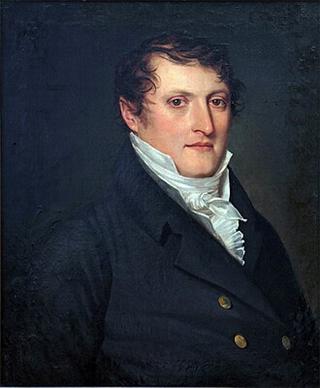
Paraguay grew out of the Spanish province governed from Asunción, founded in 1537, whose largely Guaraní-speaking mestizo population lived far from the centres of empire; from 1776 it belonged to the Viceroyalty of the Río de la Plata. When Buenos Aires set up its own junta in May 1810, a congress in Asunción refused to accept its authority. Buenos Aires sent an army under Manuel Belgrano, but Paraguayan forces defeated it at Paraguarí on 19 January and at Tacuarí on 9 March 1811. On the night of 14–15 May 1811 officers led by Pedro Juan Caballero and Vicente Ignacio Iturbe took control of Asunción and forced Governor Bernardo de Velasco to give up his authority, and a congress in June set up a governing junta under Fulgencio Yegros. One of its members, the lawyer José Gaspar Rodríguez de Francia, soon became its dominant figure. In October 1813 another congress adopted the name Republic of Paraguay and named Francia and Yegros consuls; in 1814 Francia became supreme dictator, and in 1816 a congress made him dictator for life. Paraguay refused union with Buenos Aires, but its independence was formally declared only by a congress on 25 November 1842, and the Argentine Confederation recognised it in 1852.
Socioeconomy
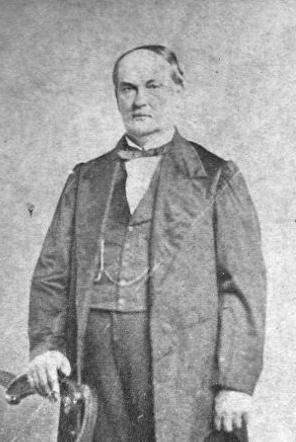
For most of its history Paraguay has been a rural country whose people speak Guaraní as well as, or more than, Spanish. Francia’s government secularised the property of the Church, turned large areas into state ranches or leased them to peasants and, by restricting foreign trade and creating state monopolies on exports such as timber, made the country largely self-sufficient. Carlos Antonio López reopened trade, hired foreign technicians, most of them British, and built a shipyard, an iron foundry at Ybycuí and a railway, opened in 1861. The War of the Triple Alliance shattered this society: a count of 1871 found about 221,000 inhabitants, among them some 106,000 women and fewer than 29,000 men, and in the 1880s governments sold off vast areas of public land, much of it to foreign buyers, leaving many peasants landless. In the twentieth century Mennonite colonists settled the Chaco from the 1920s, cotton and then soya became leading crops, the latter spread largely by settlers from Brazil, and the dams of Itaipú and Yacyretá, shared with Brazil and Argentina, made Paraguay one of the world’s largest exporters of electricity; real growth exceeded 10 per cent a year between 1976 and 1981. Today soya, beef and electricity lead its exports, and Ciudad del Este on the Brazilian border is a busy centre of cross-border commerce.
Military

Paraguay won its independence by defeating Belgrano’s expedition in 1811, and its rulers long kept a large militia to guard disputed frontiers. Carlos Antonio López built the river fortress of Humaitá to close the Paraguay River, and by 1864 his son Francisco Solano López had more than 60,000 trained men, 38,000 of them under arms, far more than any neighbour. After Brazil intervened in Uruguay, López seized a Brazilian steamer in November 1864 and invaded Mato Grosso and then Argentine Corrientes, and Brazil, Argentina and Uruguay joined against him in the Treaty of the Triple Alliance of 1 May 1865. Paraguay lost its fleet at Riachuelo in June 1865 and much of its army at Tuyutí on 24 May 1866, the largest battle ever fought in South America, but repulsed the Allied assault at Curupayty that September. Humaitá fell in July 1868 and Asunción was occupied on 1 January 1869; at Acosta Ñu in August 1869 boys fought beside old and wounded men, and López was killed at Cerro Corá on 1 March 1870. Sixty years later the army under José Félix Estigarribia won the Chaco War of 1932–1935 against Bolivia, fought in a dry, thorny land where water and supply decided campaigns, from the siege of Boquerón to the encirclements at Campo Vía and El Carmen; about 36,000 Paraguayans and more than 50,000 Bolivians died.
Governance & Law

Paraguay’s government has swung between personal rule and constitutional order. Francia governed alone from 1814 until his death in 1840 and called no congress after 1816; he had Fulgencio Yegros executed in 1821 after a conspiracy against him. Carlos Antonio López, consul from 1841, gave the country its first constitution in 1844, which made him president with near-absolute powers, and on his death in 1862 his son Francisco Solano López succeeded him. The liberal constitution of 1870, written under Allied occupation, introduced a separation of powers and abolished slavery, but power remained with the generals and factions that founded the Colorado and Liberal parties in 1887. The Colorados governed until the Liberal revolution of 1904, and the Liberals, amid frequent coups and two civil wars, until the February Revolution of 1936. After the corporatist constitution of 1940, General Higinio Morínigo ruled with the army and banned political parties, and the civil war of 1947 left the Colorado Party in control. General Alfredo Stroessner, in power from 1954 to 1989, governed through the army and the Colorado Party under a state of siege renewed every 90 days. The constitution of 1992 created a democratic republic of 17 departments whose president is elected for a single five-year term.
Global & Regional Impact
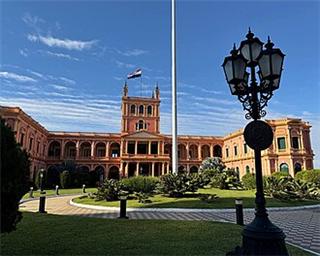
Francia’s closed state fascinated nineteenth-century writers, among them Thomas Carlyle, and inspired Augusto Roa Bastos’s novel I the Supreme (1974), while the railway, foundry and shipyard of the López era made Paraguay an early example of state-led development in South America. The War of the Triple Alliance was the deadliest war between states in Latin American history. Estimates of Paraguay’s losses range from under a tenth to more than half of its population; Thomas Whigham and Barbara Potthast concluded that 60 to 70 per cent died. The war also raised the political weight of the Brazilian army, one of the forces behind the fall of the Brazilian monarchy in 1889, and the Chaco War, by discrediting the governments that fought it, helped bring soldiers into politics in both countries. Paraguay is among the most bilingual nations in the world: Guaraní is spoken by most of the population, a rare case of an indigenous language used by a non-indigenous majority, and Paraguayan music, from the harp-led polka to the guarania created by José Asunción Flores in 1925, became a national symbol. In 1991 Paraguay was a founding member of Mercosur, created by the Treaty of Asunción, and the Archives of Terror found in 1992 documented Operation Condor, the cooperation of South American dictatorships against their opponents.
Into the Present
Stroessner’s long rule brought roads, the Itaipú dam and rapid growth in the 1970s, but also repression in which thousands of opponents were imprisoned and tortured and many were killed or disappeared. On 2–3 February 1989 General Andrés Rodríguez, his close associate, overthrew him in a coup, and Stroessner went into exile in Brazil. Rodríguez legalised opposition parties, and a constituent assembly produced the democratic constitution of 20 June 1992, which barred presidents from re-election. The transition was fragile: General Lino Oviedo attempted a coup in 1996, and in March 1999 the murder of Vice-President Luis María Argaña and the killing of protesters led President Raúl Cubas to resign. The Colorado Party kept winning elections until 2008, when the former bishop Fernando Lugo was elected; Congress removed him in a swift impeachment in June 2012, which neighbouring governments condemned as a coup, though the Organization of American States declined to suspend Paraguay. Colorado presidents have governed again since 2013: Horacio Cartes, Mario Abdo Benítez and, from August 2023, Santiago Peña. Today Paraguay is a democratic republic of more than six million people, with Asunción as its capital, Spanish and Guaraní as official languages and an economy based on soya, beef and the electricity of the dams it shares with Brazil and Argentina, while poverty, inequality, contraband and drug trafficking remain persistent problems.
The Republic of Paraguay, independent since 1811, passed from Francia’s isolation and the López state to near destruction in the War of the Triple Alliance, recovered to win the Chaco War, lived under Stroessner’s long dictatorship and since 1992 has been a bilingual democracy exporting soya, beef and hydroelectric power.
References
- Farcau, B.W. (1996) The Chaco War: Bolivia and Paraguay, 1932–1935. Westport, CT: Praeger.
- Lewis, P.H. (1980) Paraguay under Stroessner. Chapel Hill: University of North Carolina Press.
- Whigham, T.L. (2002) The Paraguayan War, Volume 1: Causes and Early Conduct. Lincoln: University of Nebraska Press.
- White, R.A. (1978) Paraguay’s Autonomous Revolution, 1810–1840. Albuquerque: University of New Mexico Press.
- Williams, J.H. (1979) The Rise and Fall of the Paraguayan Republic, 1800–1870. Austin: Institute of Latin American Studies, University of Texas at Austin.
Connections
Open the full connections map →