Great work · South & Southeast Asia

Borobudur

Periodc. 780 CE – present
Made byBegun under the Sailendra dynasty about 780 and completed under the Sanjaya about 833, in Jacques Dumarçay's dating; no record of its building survives, and its architect, Gunadharma, is named only in Javanese folk tales
FormA single great stupa of grey andesite on a natural hill, laid out as a mandala: nine stacked platforms, six square and three circular, rising to a central dome 35 m above the ground, with 2,672 relief panels and originally 504 Buddha statues
Where it is nowMagelang Regency, near Muntilan, northwest of Yogyakarta, Central Java, Indonesia; sculptures and Buddha heads taken from it are in the Bangkok National Museum, the Tropenmuseum, the Musée Guimet and the British Museum
Known forthe largest Buddhist temple in the world; 1,460 narrative relief panels; 72 Buddhas seated in perforated stupas; the hidden foot with the Karmavibhanga reliefs; the relief of the Borobudur Ship; the Vesak walk from Mendut and Pawon

6 min read · Last reviewed October 2026

At a glance

  • Borobudur was built as one great stupa in the form of a mandala, its stairways and corridors leading pilgrims upward past 1,460 narrative reliefs to 72 Buddhas in perforated stupas.
  • Abandoned at a date nobody knows and buried under volcanic ash and jungle, but never forgotten locally, it was cleared in 1814 for Stamford Raffles, who brought it to the world's attention.
  • The restoration of 1975–1982 by Indonesia and UNESCO took down and reset over one million stones, and the temple is again a place of pilgrimage at Vesak.

Timeline

  1. c. 780Building begins under the Sailendra dynasty, the first of five stages in Jacques Dumarçay's dating
  2. c. 833The Sanjaya complete the fifth and last stage of the temple
  3. c. 1365Mpu Prapanca's Nagarakretagama mentions "the vihara in Budur"
  4. 1814Hermann Cornelius and 200 men clear the monument for Stamford Raffles, who brings it to the world's attention
  5. 1885Jan Willem IJzerman finds that the temple base encloses a hidden foot carved with reliefs
  6. 1907Theodoor van Erp begins the first major restoration, completed in 1911
  7. 1975Indonesia and UNESCO begin the restoration that takes down and resets over one million stones
  8. 1991UNESCO lists the Borobudur Temple Compounds as a World Heritage Site

Origins

Kedu Plain
Kedu PlainOriginal uploader was Gunkarta at en.wikipedia, CC BY-SA 3.0

Borobudur stands on the Kedu Plain of Central Java, an elevated area between the twin volcanoes Sindoro-Sumbing and Merbabu-Merapi and the rivers Progo and Elo, which local myth calls a sacred place and "the garden of Java" for its fertility. Jacques Dumarçay reports de Casparis's conclusion that the Sailendra and Sanjaya dynasties shared power in central Java for a century and a half, with an alternating succession from 732 until 882. Many Hindu and Buddhist monuments rose around the Kedu Plain in that time, Borobudur in the same period as the Hindu Prambanan temple compound. The Kalasan Charter of 779 records that Rakai Panangkaran, Sanjaya's successor, gave the village of Kalasan to the Buddhist community, and some archaeologists conclude that Hindu and Buddhist kings could each patronise the other's monuments.

The design blends the Indonesian indigenous tradition of ancestor worship with the Buddhist idea of attaining nirvāṇa. Prehistoric Austronesian megalithic builders had raised stone step pyramids called punden berundak, from the belief that mountains and high places are the abode of ancestral spirits, and excavation suggests that followers of Hinduism or a pre-Indic faith had begun a large structure on Borobudur's hill before Buddhists took over the site. Two inscriptions from Kedu may refer to the temple: that of Karangtengah, dated 824, and that of Tri Tepusan, dated 842.

What It Is

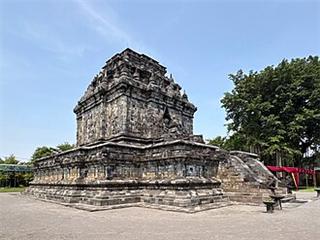
Borobudur is built as a single large stupa on a natural hill and, seen from above, takes the form of a giant tantric Buddhist mandala. Its nine platforms, the lower six square and the upper three circular, rise to a central dome whose top, 35 metres above the ground, is the highest point; 72 small bell-shaped stupas, pierced with openings and each holding a seated Buddha, ring the central one. Stairways in the middle of each side pass under gates carved with the head of Kala and with makaras, and pilgrims walk the corridors clockwise, in the ritual of pradaksina, past the reliefs. The common division of the terraces into the three realms of Buddhist cosmology, first proposed by Willem Frederik Stutterheim, has been criticised by later scholars as having no textual basis.

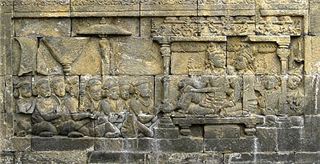
About 2,670 bas-reliefs, 1,460 narrative and 1,212 decorative, cover the walls and balustrades, the narrative panels arranged in 11 series over 3,000 metres. The hidden foot shows the law of karma (Karmavibhanga); the first gallery the life of the Buddha from the Lalitavistara and his former lives in the Jatakas and Avadanas; and 460 panels of the Gandavyuha, from the Avatamsaka Sutra, follow the youth Sudhana's search for the Highest Perfect Wisdom. The reliefs also show daily life in 8th-century Java, from palaces to villages and ships. The monument held 504 Buddha statues, 432 in niches and 72 in the stupas, their mudras varying by direction.
How It Was Made

Sailendra dynasty
Sailendra dynastyGunawan Kartapranata, CC BY-SA 3.0

No record of Borobudur's construction or purpose is known. Dumarçay dated the work in five stages by comparing the reliefs of the hidden foot with the scripts of 8th- and 9th-century royal charters: the Sailendra began about 780 and carried the second and third stages on from about 792, a fourth stage came during their decline about 824, and the Sanjaya completed the fifth about 833. Little is known of the architect Gunadharma, whose name comes from Javanese folk tales rather than inscriptions.

About 55,000 cubic metres of andesite were taken from nearby quarries or the bed of the Progo River, cut to size and laid without mortar, the stones joined by knobs, indentations and dovetails; the roofs of stupas, niches and gateways were corbelled, and the reliefs were carved in place once the building stood. A hundred spouts, each carved as a giant or makara, drained the heavy rains. The builders measured in tala, the length of a face from hairline to chin, and a survey of 1977 found the ratio 4:6:9 throughout the monument, as at the nearby temples of Pawon and Mendut. The hidden foot has 160 narrative panels, some unfinished, with short inscriptions that seem to instruct the sculptors; it was encased in an additional base for reasons still debated, perhaps for fear that the structure would slide outward.

Reception

Nagarakretagama
NagarakretagamaUnknown author, Public domain

Borobudur was a shrine to the Buddha and a place of pilgrimage, where worship took the form of a walk upward through the galleries, each platform standing for a stage of enlightenment. It is not known when its active use ceased. Between 928 and 1006 King Mpu Sindok moved the capital of the Mataram kingdom to East Java after a series of volcanic eruptions, and several sources take this as the most likely period of abandonment; Mpu Prapanca's Nagarakretagama, written in the Majapahit era around 1365, still mentions "the vihara in Budur". Raden Soekmono linked the abandonment to the population's conversion to Islam in the 15th century.

The monument was not forgotten, but folk stories came to tie it to bad luck and misery. The Babad Tanah Jawi makes it a fatal factor for a rebel against the king of Mataram in 1709, and the Babad Mataram tells how the crown prince of the Yogyakarta Sultanate broke a taboo in 1757 to visit "the knight who was captured in a cage", a Buddha in one of the perforated stupas, and died a day after returning to his palace. Since the restorations of the 20th century the temple has again been used for worship: once a year, at the full moon in May or June, Indonesian Buddhists keep Vesak by walking from Mendut to Pawon and on to Borobudur, where they circle the monument clockwise as they climb.

Survival & Rediscovery

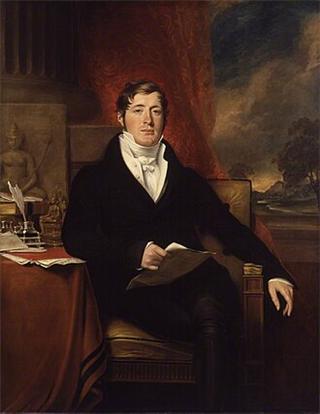
Stamford Raffles
Stamford RafflesGeorge Francis Joseph, Public domain

Borobudur lay for centuries under layers of volcanic ash and jungle. In 1814, under the British administration of Java, Stamford Raffles was told of a large monument near the village of Bumisegoro and sent the Dutch engineer Hermann Cornelius, whose 200 men spent two months clearing it. Raffles never visited, but he is credited with bringing it to the world's attention. Christiaan Lodewijk Hartmann had the whole complex unearthed by 1835; Isidore van Kinsbergen took the first photograph in 1872, and the first monograph appeared in 1873. Parts of its sculpture were taken as souvenirs, some with the colonial government's consent: in 1896 King Chulalongkorn of Siam took eight cartloads home. Of the original 504 Buddhas, over 300 are damaged and 43 missing.

Theodoor van Erp restored the monument from 1907 to 1911, rebuilding the three circular platforms, but did not solve its drainage, and his concrete leached salts into the stone. By the 1950s parts were in danger of collapse, and in 1968 Soekmono launched his "Save Borobudur" campaign. Between 1975 and 1982 Indonesia and UNESCO took down over one million stones, catalogued, cleaned and treated them, rebuilt the five square platforms with water channels embedded in the monument and reset the original stones by anastylosis, with around 600 people at a cost of US$6,901,243. Nine bombs damaged nine stupas on 21 January 1985, and ash from Merapi in 2010 and from Kelud in 2014 closed the temple to visitors.

Legacy

Mendut
MendutChainwit., CC BY 4.0

Borobudur ranks with Bagan in Myanmar and Angkor Wat in Cambodia among the great archaeological sites of Southeast Asia, and in 2012 it was recorded in the Guinness Book of World Records as the world's largest Buddhist temple. It has evoked grandeur and pride for most Indonesians: President Sukarno made a point of showing it to foreign dignitaries, the Suharto government restored it with UNESCO's help, and it has come to stand, with wayang and gamelan, for a classical Javanese past. It is the emblem of Central Java province and Magelang Regency and has appeared on Rupiah banknotes and stamps. In contemporary Indonesia it is often cited as an example of religious coexistence, a major Buddhist monument preserved within a predominantly Muslim country.

Indonesian Buddhists have hailed its rediscovery and reconstruction as a sign of the Buddhist revival in their country: in 1934 Narada Thera, a missionary monk from Sri Lanka, blessed the planting of a Bodhi tree there, and some upasakas were ordained as monks. A full-size replica of the ship carved on its reliefs sailed from Indonesia to Africa in 2004. Replicas of the temple are shown in the Louvre and other museums, and UNESCO listed the Borobudur Temple Compounds, with Mendut and Pawon, as a World Heritage Site in 1991. Its popularity has a cost: 1,028 of its 2,033 stair surfaces are severely worn, and since 2020 entry to the temple itself has been limited to at most 1,200 visitors a day, with guides.

Borobudur, built in Central Java between about 780 and 833, is the largest Buddhist temple in the world: a stupa in the form of a mandala whose galleries lead pilgrims past 1,460 narrative reliefs to the Buddhas at its summit. Abandoned at an unknown date and cleared in 1814, it was taken apart and rebuilt in 1975–1982 and is again a place of pilgrimage.

Test yourself

5 questions on this page, from its key events and facts.

The questions open here once the page has loaded.