Great work · Ancient Near East

Epic of Gilgamesh

Periodc. 1800 BCE – present
Made byMesopotamian scribes: five Sumerian poems about Gilgamesh, some perhaps from the Third Dynasty of Ur; an Akkadian combined epic in its Old Babylonian version; and the Standard Babylonian version compiled from earlier texts by Sîn-lēqi-unninni, thought to have lived between 1300 and 1000 BCE.
FormAn epic poem in Akkadian, with Sumerian forerunners, written in cuneiform on clay tablets; the Standard Babylonian version runs to twelve tablets, of which about two-thirds have been recovered, and uses much parallelism across two or three adjacent lines.
Where it is nowTablets and fragments from the library of Ashurbanipal at Nineveh, studied at the British Museum; Old Babylonian tablets named after where they are kept or were found, such as the Pennsylvania, Yale and Sippar tablets; the Gilgamesh Dream Tablet, returned to Iraq in 2021.
Known forthe friendship of Gilgamesh and Enkidu; the killing of Humbaba in the Cedar Forest; the Bull of Heaven; Gilgamesh's quest for eternal life; Utnapishtim's account of the flood; the plant of youth stolen by a serpent; parallels with the Genesis flood narrative

6 min read · Last reviewed October 2026

At a glance

  • The epic grew from five Sumerian poems about Gilgamesh, king of Uruk, into an Akkadian epic whose Old Babylonian version dates to the 18th century BCE and whose Standard Babylonian version was compiled by Sîn-lēqi-unninni.
  • It tells of Gilgamesh's friendship with the wild man Enkidu, their killing of Humbaba and the Bull of Heaven, Enkidu's death, and Gilgamesh's failed search for eternal life, which brings him to Utnapishtim, survivor of the flood.
  • Recovered from the library of Ashurbanipal at Nineveh in the 1850s, it has been compared with the Genesis flood narrative, with Homer and with the Alexander legends, and new fragments are still being joined to it.

Timeline

  1. c. 2100 BCESumerian poems about Gilgamesh, king of Uruk, are composed, some perhaps as early as the Third Dynasty of Ur
  2. 18th century BCEThe Old Babylonian version, Surpassing All Other Kings, is the first surviving version of the combined epic in Akkadian
  3. 1300–1000 BCESîn-lēqi-unninni compiles the twelve-tablet Standard Babylonian version, He Who Saw the Deep, from earlier texts
  4. 7th century BCESome of the best copies of the Standard Babylonian version are kept in the library of the Assyrian king Ashurbanipal at Nineveh
  5. 1853Hormuzd Rassam finds the Standard Babylonian version in the ruins of the library of Ashurbanipal
  6. 1872George Smith reads translated fragments of the epic before the Society of Biblical Archaeology
  7. 2003Andrew George publishes his two-volume critical edition with Oxford University Press
  8. 2021The Gilgamesh Dream Tablet, seized by US officials in 2019, is returned to Iraq

Origins

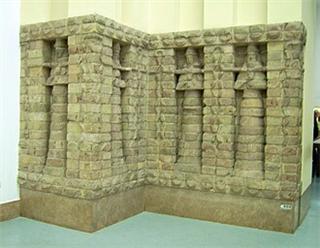
Uruk
UrukPicture taken by Marcus Cyron, CC BY-SA 3.0

The literary history of Gilgamesh begins with five poems in Sumerian about Gilgamesh, king of Uruk, some of which may date to the Third Dynasty of Ur (c. 2100 BCE). Scholars now generally treat them as distinct stories that circulated independently rather than as parts of a single epic. In them the hero is called Bilgames, Enkidu is his servant rather than his friend, and the stories differ: Gilgamesh and Huwawa and Ho, hurrah! tell of the Cedar Forest, Gilgamesh and the Bull of Heaven of the Bull, and Gilgamesh and Aga of a siege of Uruk by a Kish army under King Akka, whom Gilgamesh defeats and forgives.

Two more poems laid further foundations. Gilgamesh, Enkidu, and the Netherworld tells of Enkidu's journey to the world of the dead, and the Death of Gilgamesh of the king's burial under the Euphrates and his consecration as a semigod who gives judgement over the dead. The flood story later told by Utnapishtim has a close counterpart in the Babylonian epic of Atra-Hasis. Whether Gilgamesh himself lived is uncertain, but the discovery of artifacts (c. 2600 BCE) associated with Enmebaragesi of Kish, named in the legends as the father of one of Gilgamesh's adversaries, has lent credibility to his historical existence.

What It Is

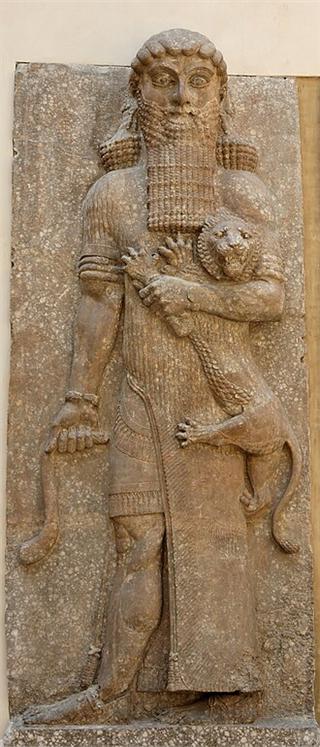
Gilgamesh
GilgameshUnknown artist, Public domain

In the Standard Babylonian version Gilgamesh, two-thirds god and one-third man, oppresses the people of Uruk, and the gods create Enkidu, a wild man of great strength, as his equal. Enkidu is tamed by Shamhat, learns human ways among shepherds, and comes to Uruk to stop Gilgamesh entering a wedding chamber; after a fierce fight the two become friends. Together they travel to the Cedar Forest, kill its guardian Humbaba and cut down its cedars. When Gilgamesh rejects the goddess Ishtar, she sends the Bull of Heaven against Uruk; the heroes kill it, and the gods decide that Enkidu must die.

Grief and fear of his own death drive Gilgamesh to seek Utnapishtim, who with his wife survived the great flood and was given eternal life. Utnapishtim tells how the god Enki warned him to build a boat, how after the storm all human beings had turned to clay, and how he released a dove, a swallow and a raven. Gilgamesh fails a challenge to stay awake for six days and seven nights, then wins from the bottom of the sea a plant that will make him young again, only for a serpent to steal it while he bathes. He returns to Uruk and praises its walls. A twelfth tablet, a near copy of an earlier Sumerian tale in which Enkidu is still alive, tells of the underworld.
How It Was Made

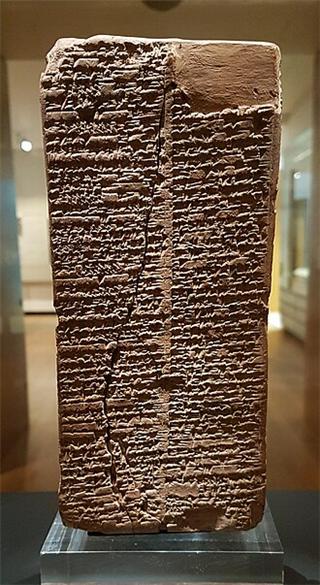
Ziusudra
ZiusudraGts-tg, CC BY-SA 4.0

Distinct sources survive from over a 2,000-year timeframe. The Sumerian poems were later used as source material for a combined epic in Akkadian. Its first surviving version, the Old Babylonian, dates to the 18th century BCE and is titled after its opening words, Shūtur eli sharrī (“Surpassing All Other Kings”). It is known from tablets and fragments of diverse origin, among them the Pennsylvania, Yale and Sippar tablets, many with sizable gaps. The Sippar tablet's Meissner fragment has led some scholars to suggest that an earlier form of the story may have ended with Siduri sending Gilgamesh back to Uruk, and that Utnapishtim was not originally part of the tale.

The Standard Babylonian version was compiled from earlier texts by Sîn-lēqi-unninni, who is thought to have lived between 1300 and 1000 BCE. It opens “He who saw the deep” (Sha naqba īmuru), runs to twelve tablets and was also known as the Series of Gilgamesh. Sîn-lēqi-unninni brought mortality to the foreground, so that the hero moves from adventurer to wise man. The twelfth tablet was probably appended later: the lines that open the first tablet are quoted at the end of the eleventh, giving the eleven-tablet epic circularity and finality. Its poetic conventions remain disputed, but parallelism across two or three adjacent lines is extensive, much as in the Hebrew Psalms.

Reception

Ashurbanipal
AshurbanipalKeyolTranslater, CC BY-SA 4.0

The epic was copied over many centuries. Some of its best copies come from the library of the 7th-century BCE Assyrian king Ashurbanipal at Nineveh, and a fragment of its first lines is dated to between 600 BCE and 100 BCE. Its story also travelled. One version of the Book of Giants found at Qumran names Gilgamesh and the monster Humbaba alongside the Watchers and giants, and the quest of Alexander the Great for the Fountain of Life in the Alexander Romance was inspired by Gilgamesh's search for eternal youth, though there the water of life replaces the plant and a fish returning to life replaces the serpent.

Modern readers met it through George Smith, whom the British Museum hired to study the Nineveh tablets: in 1872 he read translated fragments before the Society of Biblical Archaeology, and the fuller translation of 1876 was published as The Chaldaean Account of Genesis. Scholars first classed it as an epic in the Greek sense, though it predates Greek epic, and Alfred Jeremias tied it to Genesis with the title “Izdubar-Nimrod”. Translations followed in many languages, from the first direct Arabic translation by the Iraqi archaeologist Taha Baqir in the 1960s and N. K. Sandars's popular English version of 1960 to Andrew George's critical edition of 2003, which Eleanor Robson called the most significant critical work on Gilgamesh in the last 70 years.

Survival & Rediscovery

Hormuzd Rassam
Hormuzd RassamPhilip Henry Delamotte (England: 1820 - 1889), Public domain

About 15,000 fragments of Assyrian cuneiform tablets were found in the Library of Ashurbanipal in Nineveh by Austen Henry Layard, his assistant Hormuzd Rassam and W. K. Loftus in the early 1850s; Rassam found the Standard Babylonian version there in 1853. Paul Haupt collected the cuneiform text in 1891, Peter Jensen provided a comprehensive edition nine years later, and R. Campbell Thompson updated both in 1930, while over the next two decades Samuel Noah Kramer reassembled the Sumerian poems. About two-thirds of the twelve-tablet version have been recovered and the epic remains incomplete; the older tablets are mainly used to fill gaps in the later text.

Finds continue. In 1998 the Assyriologist Theodore Kwasman found in a British Museum storeroom a fragment, recovered in 1878 and unexamined for more than a century, believed to have held the epic's first lines. The Gilgamesh Dream Tablet was imported illegally into the United States in the early 2000s, sold in 2007 with a letter falsely stating that it came from a 1981 auction, and bought by Hobby Lobby in 2014 for the Museum of the Bible in Washington, D.C.; US officials seized it in 2019 and it was returned to Iraq in September 2021. Since 2015 the Fragmentarium project has used machine learning to join further pieces to known segments, and new segments entered English translations printed in 2020 and 2021.

Legacy

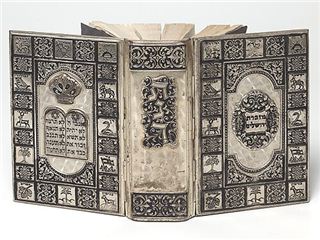
Hebrew Bible
Hebrew BibleLGLou, CC BY-SA 4.0

The epic is regarded as a foundational work in religion and in the tradition of heroic sagas, with Gilgamesh a prototype for later heroes such as Heracles. It has long been read beside the Hebrew Bible. Andrew George holds that the Genesis flood narrative follows the Gilgamesh flood tale “point by point and in the same order”, so closely that “few doubt” it derives from a Mesopotamian account, while the rabbinic scholar Robert Wexler thought it most likely that both drew on a common Mesopotamian flood tradition. Scholars have long compared Enkidu and Shamhat with Adam and Eve, and several suggest that the author of Ecclesiastes borrowed Siduri's advice; both books share the proverb “a triple-stranded rope is not easily broken”.

Numerous scholars also see a substantial influence on the two epics ascribed to Homer. Tzvi Abusch wrote that the poem “combines the power and tragedy of the Iliad with the wanderings and marvels of the Odyssey”, and Martin Litchfield West speculated that the memory of Gilgamesh reached the Greeks through a lost poem about Heracles. The epic reached a modern audience only after World War I and appeared in many genres after World War II; Hayao Miyazaki's 1997 film Princess Mononoke is partly based on its Cedar Forest episode, and new translations still appear, among them Sophus Helle's of 2021 and Simon Armitage's of 2026.

The Epic of Gilgamesh, the world's oldest surviving narrative literature, grew from Sumerian poems about a king of Uruk into an Akkadian epic of friendship, loss and the search for eternal life. Recovered from the library of Ashurbanipal at Nineveh in the 1850s, it has been read beside Genesis and Homer, and is still being pieced together from new fragments.

Test yourself

5 questions on this page, from its key events and facts.

The questions open here once the page has loaded.

References

  • Andrew R. George, The Babylonian Gilgamesh Epic: Introduction, Critical Edition and Cuneiform Texts, 2 vols (Oxford University Press, 2003)
  • Andrew R. George, The Epic of Gilgamesh: The Babylonian Epic Poem and Other Texts in Akkadian and Sumerian (Penguin Press, 1999)
  • Benjamin R. Foster, The Epic of Gilgamesh, second edition (W.W. Norton, 2019)
  • Sophus Helle, Gilgamesh: A New Translation of the Ancient Epic (Yale University Press, 2021)
  • David Damrosch, The Buried Book: The Loss and Rediscovery of the Great Epic of Gilgamesh (Henry Holt and Co., 2007)