What It Is
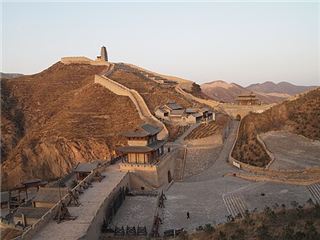
No formal definition of what makes up a “Great Wall” has been agreed, and its defensive lines include stretches of rampart, trenches, ditches and individual fortresses. Taken together, the fortifications run from Liaodong in the east to Lop Lake in the west and from the present-day Sino-Russian border in the north to the Tao River in the south, an arc that roughly follows the edge of the Mongolian steppe. In 2012 the National Cultural Heritage Administration counted 10,051 wall sections, 1,764 ramparts or trenches, 29,510 individual buildings and 2,211 fortifications or passes, with walls and trenches totalling 21,196.18 km; the Ming wall alone measures 8,850 km.
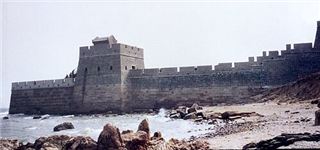
The Ming wall begins at Jiayu Pass in Gansu, runs down the Hexi Corridor and across the Ordos Desert, and at Piantou Pass in Shanxi splits into an Outer and an Inner Great Wall, which join again near Beijing; it ends at Shanhai Pass on the Bohai Gulf, the “First Pass Under Heaven”. Watchtowers, troop barracks, garrison stations and signals of smoke or fire made it a system of defence. It also served as a transport corridor and as a means of border control, regulating migration and trade and levying duties on goods carried along the Silk Road.