Americas
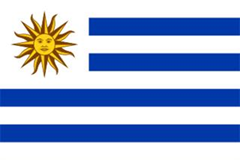
Oriental Republic of Uruguay
At a glance
- Uruguay became independent by the Treaty of Montevideo of 1828, brokered by Britain through Viscount John Ponsonby after the 500-day Cisplatine War between Brazil and the United Provinces of the Río de la Plata; its first constitution followed on 18 July 1830.
- The Colorados and the Blancos fought the thirteen-year Guerra Grande (1839–1851), during which Montevideo was besieged for nine years and Garibaldi led its Italian legion; their rivalry ended in a formula of co-participation after 1872.
- José Batlle y Ordóñez's reforms (1903–1915) made Uruguay the 'Switzerland of the Americas'; a civic-military dictatorship (1973–1985) gave it the world's highest proportion of political prisoners before democracy returned in 1985.
Rise & Fall
- 1828The Treaty of Montevideo, fostered by Britain through Viscount John Ponsonby, ends the Cisplatine War and creates Uruguay as an independent state.
- 1830On 18 July the first constitution is adopted; the country is officially the Oriental State of Uruguay.
- 1843–1851The Guerra Grande: an Argentine army on Manuel Oribe's behalf besieges Montevideo for nine years until Brazilian intervention and Urquiza's rising defeat Oribe.
- 1904The last Blanco rising ends at the Battle of Masoller with the death of Aparicio Saravia; President José Batlle y Ordóñez's reforms follow.
- 1933Gabriel Terra dissolves the General Assembly in a coup and governs by decree; a new constitution of 1934 strengthens the presidency.
- 1973At President Juan María Bordaberry's request the armed forces disband Parliament and establish a civilian-military regime.
- 1985Julio María Sanguinetti takes office after the elections of 1984, restoring democracy and full freedom of the press.
- 2013On 11 December Uruguay becomes the first country to fully legalise cannabis, after legalising abortion in 2012 and same-sex marriage in 2013.
Foundation

The land east of the Uruguay River was inhabited for 13,000 years by hunter-gatherers, and at the Spanish arrival in 1515 by some 9,000 Charrúa, 6,000 Chaná and a few Guaraní. Spain founded Soriano in 1624, Portugal a fort at Colonia del Sacramento in 1680, and Spain Montevideo in 1726 as a stronghold whose harbour soon rivalled Buenos Aires. In 1811 José Gervasio Artigas rose against Spain and won the Battle of Las Piedras on 18 May; championing federalism against the centralism of Buenos Aires, he took Montevideo in 1815 and organised the Federal League of six provinces. In 1816 10,000 Portuguese troops invaded from Brazil and after four years annexed the Banda Oriental as the province of Cisplatina.
On 25 August 1825 the Thirty-Three Orientals under Juan Antonio Lavalleja declared independence with the backing of the United Provinces of the Río de la Plata, and the 500-day Cisplatine War followed between Brazil and the United Provinces. Neither won, and in 1828 the Treaty of Montevideo, fostered by the United Kingdom through Viscount John Ponsonby, created Uruguay as an independent state; its first constitution was adopted on 18 July 1830. The new country had just under 75,000 people and two parties, the Blancos of the second president, Manuel Oribe and the Colorados of the first, Fructuoso Rivera, whose quarrel became the Guerra Grande in 1839.
Socioeconomy
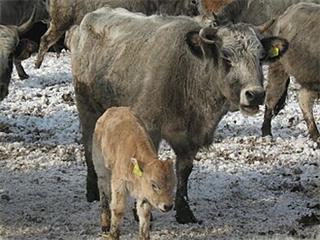
Uruguay is a land of rolling plains and low hills, 176,215 square kilometres rising no higher than the 514-metre Cerro Catedral. Cattle, introduced in 1603, have been its wealth ever since: after the Guerra Grande livestock exports rose steeply, Montevideo became a financial centre and entrepôt for Argentina, Brazil and Paraguay, and Italian and Spanish immigrants swelled the population from under 75,000 at independence to over 438,500 by 1879. In 2007 the country held 12 million cattle, 3.8 a head, the most per capita in the world; beef, the main export, passed US$1 billion in 2006. The population of almost 3.5 million is 86% of European descent; nearly 2 million live in metropolitan Montevideo, and a median age of 35.3 and fertility of 1.70 mark an ageing society.
Uruguay is a high-income economy ranked highly for per capita income, equality and transparency. Argentina's crisis brought a severe recession in 1999–2002, output falling 11%, unemployment reaching 21% and poverty passing 30%; growth of 6.7% a year followed from 2004 to 2008 while poverty fell from 33% to 21.7%, and Uruguay alone in the Americas avoided recession in 2007–2009. Since 2023 98% of its electricity has come from renewables, and in 2009 it was the first country to give every primary pupil a laptop under Plan Ceibal. Literacy approaches 100%, schooling is free and compulsory for 14 years, and 47% of Uruguayans profess no religion.
Military

Uruguay's first century was one of civil war and foreign intervention. On 15 June 1838 Rivera overthrew President Oribe, who fled to Manuel de Rosas in Argentina; Rivera declared war on Rosas in 1839 and the Guerra Grande lasted thirteen years. An Argentine army overran the country for Oribe in 1843 and besieged Montevideo for nine years; the city raised French and Italian legions, the latter under the exiled Giuseppe Garibaldi. Justo José de Urquiza's rising in Entre Ríos and Brazil's intervention in May 1851 defeated Oribe at the price of treaties confirming Brazil's right to intervene in Uruguay. In 1865 the Colorado general Venancio Flores joined them in the Triple Alliance against Paraguay's Francisco Solano López.
Blanco risings continued in 1870–72, 1875, 1886 and 1897, and the last in 1904, eight bloody months ended at the Battle of Masoller by the death of Aparicio Saravia. In 1973 the armed forces, at President Bordaberry's request, dissolved Parliament. Under the dictatorship Uruguay took part in the CIA-backed Operation Condor; about 180 Uruguayans were killed or disappeared, thousands detained and tortured. Today the forces number about 18,000 soldiers, 6,000 sailors and 3,000 airmen, voluntary in peacetime, and Uruguay sends more troops per head to UN peacekeeping than any country, 2,513 in ten missions.
Governance & Law

Uruguay is a unitary presidential republic: the president, head of state and government, is elected with a vice president by direct vote for five years without immediate re-election; the General Assembly has a Chamber of Representatives of 99 for the 19 departments and a Senate of 30 plus the vice president and a Supreme Court. The constitution of 1967, last reformed in 1997, lets citizens propose bills, call referendums to repeal laws and submit constitutional reforms.
That order was slow in the making. For most of its history the Colorados and the Blancos divided the country; the peace of 1872 after the Revolution of the Lances gave the Blancos four departments, the first formula of co-participation. José Batlle y Ordóñez, president in 1903–07 and 1911–15, ended co-participation after Masoller and built a welfare programme, state participation in the economy and a plural executive. Gabriel Terra's coup of 1933 and constitution of 1934 concentrated power in the presidency. The dictatorship of 1973–1985 ended when voters rejected the military's constitution in November 1980 and the elections of 1984 brought Julio María Sanguinetti to office; a referendum of 1989 endorsed amnesty for human rights abusers. Since 2004 the left-wing Broad Front under Tabaré Vázquez and José Mujica has alternated with the National Party's Luis Alberto Lacalle Pou (2020), returning under Yamandú Orsi on 1 March 2025.
Global & Regional Impact
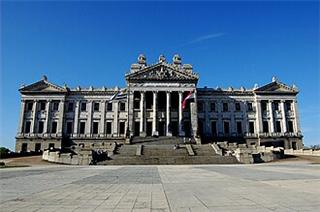
Uruguay's independence settled the long contest between Spain and Portugal, then Argentina and Brazil, for the mouth of the Río de la Plata, and Britain's part in brokering it made the small state a buffer and a free port for the region. Montevideo grew into the financial centre and entrepôt of the Platine trade and a refuge for Argentina's exiled Unitarios and for Garibaldi, who learned his trade in its siege. From the mid-19th century Spanish, Italian and French immigration remade the country into one of the most European societies of the Americas.
In the 20th century Uruguay became a model. Batlle y Ordóñez's reforms earned it the name 'Switzerland of the Americas' and an early welfare state, and the separation of church and state in 1918 made it the most secular country in the Americas. Its footballers won Olympic gold in 1924 and 1928 and the first World Cup, at home in 1930, and again in 1950 against Brazil, the smallest nation ever to win it. José Enrique Rodó's Ariel (1900), Horacio Quiroga, Juan Carlos Onetti, Mario Benedetti and Eduardo Galeano's Open Veins of Latin America gave it a literature read across the continent. Uruguay was the first country in the Americas with complete digital telephone coverage (1997), the first to give every schoolchild a laptop (2009) and the first in the world to legalise cannabis fully (2013), after abortion (2012) and same-sex marriage (2013).
Into the Present
Uruguay's crisis of the 20th century was the erosion of its democracy. Economic trouble and the Tupamaros led President Jorge Pacheco to declare a state of emergency in 1968 and suspend civil liberties in 1972, and in 1973 the armed forces, asked by President Juan María Bordaberry, disbanded Parliament. The twelve-year civic-military regime cut social spending, privatised state companies and took part in Operation Condor; about 180 Uruguayans were killed or disappeared, thousands were illegally detained and tortured, and Uruguay had the highest rate of political prisoners in the world. Voters rejected the military's draft constitution in November 1980, elections followed in 1984, and on his first day in office in March 1985 Sanguinetti restored full freedom of the press.
Since then the storms have been economic. Strikes against privatisation in 1991–92 ended in a referendum rejecting it; the Argentine collapse brought the recession of 1999–2002. Growth of 6.7% a year followed, debt fell from 79% to 60% of GDP, unemployment touched a record low of 5.4% in December 2010. Today Uruguay is a high-income 'full democracy', 15th in the world and first in Latin America in 2024, with 98% renewable electricity and a fertility rate of 1.70 that leaves it ageing. The Broad Front's return under Yamandú Orsi on 1 March 2025 continued the peaceful alternation that has marked the country since 1985.
The Oriental Republic of Uruguay, created in 1828 as a British-brokered buffer between Argentina and Brazil, spent its first century in civil wars between Colorados and Blancos, became the welfare-state 'Switzerland of the Americas' under Batlle y Ordóñez, suffered a dictatorship from 1973 to 1985, and is today Latin America's most complete democracy.
Test yourself
5 questions on this page, from its key events and facts.
The questions open here once the page has loaded.
References
- George Pendle, Uruguay, 3rd ed. (Oxford University Press, 1963)
- Milton I. Vanger, José Batlle y Ordóñez of Uruguay: The Creator of His Times, 1902–1907 (Harvard University Press, 1963)
Connections
Open the full connections map →