Great work · Americas

Popol Vuh

Periodc. 1550 CE – present
Made byThe Kʼicheʼ people, through oral tradition; a writer soon after the Spanish conquest, perhaps Diego Reynoso or Cristóbal Velasco, may have recorded it; the Dominican friar Francisco Ximénez transcribed it and translated it into Spanish in the early 18th century
FormNarrative in the Kʼicheʼ language written in Latin letters, in parallel columns with Ximénez's Spanish translation; undivided in the manuscript, it is usually edited as a preamble and four books
Where it is nowXiménez's manuscript, considered the one original, is in the Newberry Library in Chicago, part of Edward E. Ayer's donation; Ohio State University offers a facsimile online
Known forthe making of humans from earth, from wood and at last from maize; the Hero Twins Hunahpú and Xbalanqué; the ballgame in Xibalba; the defeat of Vucub-Caquix; the chronicle of the Kʼicheʼ people; Guatemala's intangible cultural heritage

6 min read · Last reviewed October 2026

At a glance

  • It tells of the creation of the world and of humans, who after failed attempts with earth and with wood were made from maize, and of the Hero Twins who defeat the lords of the underworld, Xibalba.
  • Its only known text is the parallel Kʼicheʼ and Spanish manuscript of the Dominican friar Francisco Ximénez, taken to France in the 1850s and now in the Newberry Library in Chicago.
  • Scenes from its stories appear on Maya ceramics, it remains part of the beliefs of many Kʼicheʼ, and in 2012 Guatemala declared it intangible cultural heritage.

Timeline

  1. 1524Pedro de Alvarado conquers the Kʼicheʼ; the recitation thought to lie behind the written text is given soon after, in or around Santa Cruz del Quiché
  2. 1554–1558The date Adrián Recinos and Dennis Tedlock suggest for the written text, from the genealogy at its end
  3. 1701Francisco Ximénez arrives in Santo Tomás Chichicastenango, where he is likely to have first recorded the work
  4. 1855Charles Étienne Brasseur de Bourbourg apparently takes Ximénez's manuscript from the university library in Guatemala to France
  5. 1911Edward E. Ayer's donation of 17,000 pieces, Ximénez's manuscript among them, to the Newberry Library in Chicago is completed
  6. 1941Adrián Recinos rediscovers the manuscript at the Newberry Library
  7. 2012The Guatemalan Ministry of Culture declares the Popol Vuh intangible cultural heritage of Guatemala

Origins

El Mirador
El MiradorKonjiki1, CC0

The Popol Vuh belongs to the Kʼicheʼ people of Guatemala, one of the Maya peoples, who also live in the Mexican states of Chiapas, Campeche, Yucatan and Quintana Roo and in parts of Belize, Honduras and El Salvador. It is a foundational sacred narrative from long before the Spanish conquest, and its name translates as “Book of the Community” or “Book of Counsel”: literally the book that pertains to the mat, since a woven mat served as a royal throne in ancient Kʼicheʼ society and symbolized the unity of the community.

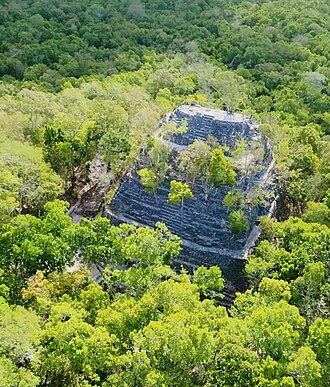
Its stories are far older than its text. Many versions of the legend of the Hero Twins circulated among the Maya peoples. Archaeologists, first of all Michael D. Coe, have found characters and episodes of the Popol Vuh on Maya ceramics and other objects, among them the Hero Twins, the Howler Monkey Gods and the shooting of Vucub-Caquix, and Richard D. Hansen found a stucco frieze at El Mirador with two floating figures that might be the Twins. Maya deities in the Post-Classic codices differ, however, from their earlier forms.

The text matters all the more because so few early accounts of Mesoamerican mythology survive: as part of the Spanish conquest, missionaries and colonists destroyed many documents.

What It Is

Maize
MaizeFranz Eugen Köhler, Köhler's Medizinal-Pflanzen, Public domain

The Popol Vuh covers creation, ancestry, history and cosmology. A preamble introduces Xpiyacoc and Xmucane, the purpose of the writing and the measuring of the earth. Book One tells of the creation of living beings: animals first, then humans, first of earth and mud, who crumbled, then of wood, who did not function well and were washed away in a flood and killed by animals; those who survived became monkeys. Vucub-Caquix then rises, and in Book Two the Hero Twins kill him and his sons, Zipacna and Cabracan, “restoring order and balance to the world.”

Book Three tells of the Twins' father and uncle, Hun Hunahpu and Vucub Hunahpu, who are invited to Xibalba, the underworld, to play a ballgame with its lords, and who fail its trials and are put to death. Hun Hunahpu's head, placed in a calabash tree, spits in the hand of Xquiq and makes her pregnant; she leaves the underworld for her mother-in-law, Xmucane, and her sons, Hunahpú and Xbalanqué, return to Xibalba, defeat its lords and become the sun and the moon. In Book Four humans are at last made from maize, given morality to keep them loyal and then wives; the book goes on to the movement of the Kʼicheʼ and introduces Gucumatz.

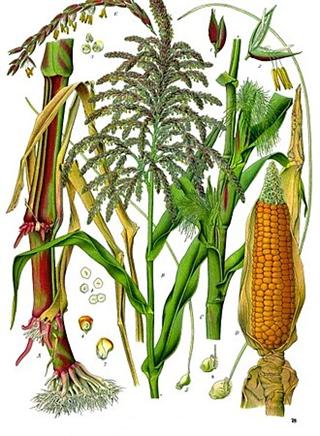
The making of mankind from white and yellow corn shows the crop's importance in Maya culture, and to the Classic Maya Hun Hunahpu may have represented the maize god.

How It Was Made

K'iche' people
K'iche' peopleBruno Rijsman, CC BY-SA 2.0

The Popol Vuh was preserved through oral tradition until it was recorded in writing, approximately 1550. It is generally believed that Ximénez worked from a phonetic manuscript borrowed from a parishioner, a rendering of an oral recitation given in or around Santa Cruz del Quiché soon after Pedro de Alvarado's conquest of 1524; yet, as Néstor Quiroa points out, no such manuscript has ever been found. Comparing the closing genealogy with dated colonial records, Adrián Recinos and Dennis Tedlock suggest a date between 1554 and 1558. One theory, first proposed by Rudolf Schuller, names Diego Reynoso, a signatory of the Título de Totonicapán, as its writer; Don Cristóbal Velasco has also been proposed.

The preamble shows the colonial setting: “This we shall write now under the Law of God and Christianity”, it says, because the Popol Vuh “cannot be seen any more”. From this Munro Edmonson theorized a pre-conquest glyphic codex, of which no evidence has been found. A minority doubts that any text existed before Ximénez: John Woodruff notes that Ximénez never disclosed his source and suggests that he or another missionary made the first written text from an oral recitation.

Ximénez, a Dominican, came to Santo Tomás Chichicastenango in 1701 and translated the work between 1700 and 1715, writing the Kʼicheʼ phonetically with Latin and Parra characters beside a Spanish column.

Reception

Ximénez himself put the Spanish text into book one, chapters 2 to 21, of his Historia de la provincia de San Vicente de Chiapa y Guatemala de la orden de predicadores, in or around 1714. The work reached Europe in the 1850s: Carl Scherzer, travelling with Moritz Wagner, found Ximénez's writings in the university library of Guatemala City in 1854, called one item “of the greatest interest” and, with the help of the historian Juan Gavarrete, copied and published the Spanish content of the manuscript's second half. Charles Étienne Brasseur de Bourbourg brought out another edition, and the division into a preamble and four books used by popular editions today is the one he imposed in 1861.

Since then the Popol Vuh has been translated into many languages. Adrián Recinos's Spanish edition remains a major reference, as does Delia Goetz's English translation of it; other English versions are by Victor Montejo, Munro Edmonson (1985) and Dennis Tedlock (1985, 1996), whose version builds on the commentary of a modern Kʼicheʼ daykeeper, Andrés Xiloj. Sam Colop (1999) and Allen J. Christenson (2004) published modern transcriptions and translations of the Kʼicheʼ text, Augustín Estrada Monroy a facsimile in the 1970s, and in 2018 The New York Times named Michael Bazzett's verse translation among the ten best books of poetry of the year.

Survival & Rediscovery

Francisco Morazán
Francisco MorazánAquiles Bigot, Public domain

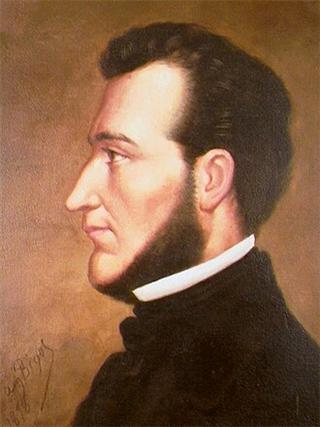
Ximénez's manuscripts stayed with the Dominican Order after his death until General Francisco Morazán expelled the clergy from Guatemala in 1829–30, when the Order's documents passed largely to the Universidad de San Carlos. There, in 1855, Brasseur de Bourbourg came across the manuscript; whereas Scherzer had copied it, Brasseur apparently stole the university's volume and took it to France.

After Brasseur's death in 1874 his collection passed to Alphonse Pinart, through whom it was sold to Edward E. Ayer. In 1897 Ayer decided to give his 17,000 pieces to the Newberry Library in Chicago, a gift not completed until 1911, and Ximénez's transcription and translation was among them. It then sank into obscurity until Adrián Recinos rediscovered it there in 1941, though Munro Edmonson and Carlos López credit Walter Lehmann with a first rediscovery in 1928. Experts including Allen Christenson, Néstor Quiroa, Rosa Helena Chinchilla Mazariegos, John Woodruff and Carlos López consider the Newberry volume to be Ximénez's one and only original, and it is the only source for scholarly study of the text.

Ohio State University now offers a facsimile and transcription online, a project its stewards describe as repatriating the Popol Vuh.

Legacy

Diego Rivera
Diego RiveraUnknown author, Public domain

The Popol Vuh remains an important part of the beliefs of many Kʼicheʼ. Catholicism is generally seen as the dominant religion, but some believe that many practise a blend of Christian and indigenous beliefs. Some of its stories are still told by modern Maya as folk legends, and versions recorded by anthropologists in the 20th century may preserve parts of the ancient tales in greater detail than the Ximénez manuscript. On August 22, 2012, the Guatemalan Ministry of Culture declared it intangible cultural heritage of Guatemala.

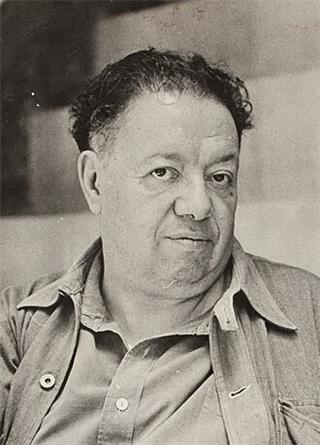
Since its rediscovery by Europeans in the 19th century it has drawn many artists. Diego Rivera painted watercolours to illustrate it in 1931; Edgard Varèse set words from it in Ecuatorial (1934); Alberto Ginastera began a symphonic work, Popol Vuh, in 1975 but did not finish it before his death in 1983. Madeleine L'Engle named the planet Camazotz in A Wrinkle in Time (1962) after its bat-god, and Louis L'Amour based the myths of The Haunted Mesa (1987) largely on it. Werner Herzog used it as narration in Fata Morgana (1971), and the Munich band Popol Vuh, formed by Florian Fricke in 1969, took its name from it. Patricia Amlin made an hour-long animated film of the Hero Twins' tale.

The Popol Vuh, the sacred narrative of the Kʼicheʼ Maya, tells of the making of the world and of maize-born humanity, of the Hero Twins' victory in Xibalba and of the Kʼicheʼ lineages. Written down after the Spanish conquest and known only through Francisco Ximénez's manuscript, now in Chicago, it is one of the few early accounts of Mesoamerican mythology to survive.

Test yourself

5 questions on this page, from its key events and facts.

The questions open here once the page has loaded.

References

  • Michael Bazzett (trans.), The Popol Vuh: A New Verse Translation (Seedbank Books, 2018)
  • Pamela Espinosa de los Monteros, “Decolonial Information Practices: Repatriating and Stewarding the Popol Vuh Online”, Preservation, Digital Technology & Culture 48 (3–4) (2019)