
Culture · Europe
Yamnaya culture
At a glance
- ‘Yamnaya’ is an archaeologists’ label from a Russian word meaning ‘related to pits’, after the pit graves under burial mounds that mark this herding culture of the steppe.
- Its people moved their herds across the steppe in carts and wagons and were organised in chiefdoms; whether they also rode horses is disputed.
- The widely accepted Kurgan hypothesis holds that they spoke a stage of Proto-Indo-European, and DNA links them to much later European and South Asian ancestry, though critics question how far.
Timeline
- c. 3750–3350 BCEThe core Yamnaya culture forms in the lower Dnieper–Don steppe
- c. 3400–3200 BCEThe early Yamnaya horizon spreads quickly across the Pontic–Caspian steppes, in David Anthony’s account
- c. 2800 BCEThe Catacomb culture begins to succeed the Yamnaya in its western range
- c. 2700 BCEThe Poltavka culture follows the Yamnaya on the middle Volga
- 1901–1903Vasily Gorodtsov excavates near the Donets River and defines the culture
- 2015Genetic studies model the Yamnaya as a roughly equal mix of Eastern European and Caucasus hunter-gatherer ancestry
- 2025Higher-resolution modelling traces about 80% of Yamnaya ancestry to a Caucasus–Lower Volga population
Origins

The Yamnaya culture, also called the Pit Grave or Ochre Grave culture, is the name archaeologists give to a late Copper Age to early Bronze Age culture of the Pontic–Caspian steppe, between the Southern Bug, Dniester and Ural rivers, dated to about 3300–2600 BCE. Vasily Gorodtsov discovered it during excavations near the Donets River in 1901–1903 and defined it to distinguish it from the later Catacomb and Srubnaya cultures of the same area. The name comes from yamnaya, a Russian adjective meaning “related to pits”, after the simple pit chambers dug under burial mounds, or kurgans.
Its origins are still debated. Earlier steppe cultures preceded it: the Khvalynsk culture on the middle Volga (4700–3800 BCE), the Repin culture on the Don (c. 3950–3300 BCE) and the closely related Sredny Stog culture in the western steppe (c. 4500–3500 BCE). David Anthony (2007) placed its beginning in the Don–Volga area around 3400 BCE, noting that late Khvalynsk and Repin pottery can barely be told apart from early Yamnaya pottery. Parpola (2015) instead linked it to the late Trypillia culture, while Dmytro Telegin saw Sredny Stog and Yamnaya as one continuum, a view that genetic analyses have recently supported. The Mikhailovka culture of the lower Dnieper and Don (c. 3600–3400 BCE) bridges the gap between them. Archaeological and genetic data indicate that the core Yamnaya culture (3750–3350 BCE) arose in the lower Dnieper–Don steppe.
Pavel Dolukhanov suggested in 1996 that the culture grew out of several local cultures as social stratification and nomadic chiefdoms emerged. Anthony saw it as the visible expression of a social adjustment to high mobility: the political arrangements needed to manage larger herds from mobile homes on the steppe. In his account the early Yamnaya horizon spread quickly across the steppes between about 3400 and 3200 BCE.
Society
The people of the Yamnaya culture were nomads or semi-nomads whose economy rested on animal husbandry, fishing and foraging, together with making pottery, tools and weapons. Some agriculture was practised near rivers, and there were a few fortified sites, the largest at Mikhailovka. Stable isotopes from individuals in the Dnieper valley suggest a diet based on land animals, with little from rivers or other waters. Anthony speculates that they ate meat, milk, yogurt, cheese and soups of seeds and wild vegetables, and probably drank mead.
Herds were managed over long distances. The Yamnaya used two-wheeled carts and four-wheeled wagons, thought to have been drawn by oxen at this time, and several skeletons show bone changes that may have been caused by long-term horse riding. This is disputed: the archaeozoologist William T. Taylor argues that the horse was domesticated long after the Yamnaya culture, and recent genetic studies place horse domestication after about 2700 BCE.
Society was organised in chiefdoms. Metalworkers and other craftsmen held a special status. Mallory and Adams suggested that Yamnaya society may have had three differentiated classes, but the available evidence does not demonstrate specific classes such as priests, warriors and farmers. The geneticist David Reich argues that the genetic evidence shows an oligarchy dominated by a small number of elite men, and he describes them as a “single, genetically coherent group”; studies of 2024 and 2025 confirmed that most Yamnaya genomes cluster tightly together.
Beliefs & Worldview
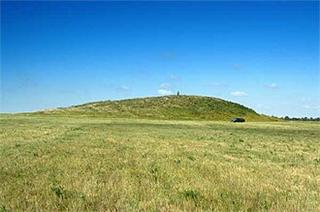
No writing survives from the Yamnaya culture, so what is known of its beliefs comes from its graves. The dead were laid on their backs with their knees bent and covered in ochre, in simple pits under kurgans, often with animal offerings. Some kurgans hold stratified sequences of graves, added one above another. Kurgan burial may have been rare, perhaps reserved for special adults, who were predominantly male.
Some graves contain large stone stelae carved in human form, with heads, arms, hands, belts and weapons. Status and gender were marked by grave goods and by the position of the body, and in some areas elite individuals were buried with complete wooden wagons. Metal objects are sometimes found in large quantities in elite graves. Grave goods are more common in the east, where burials also include a higher share of men and more male-centred rituals than in the west.
Arts & Knowledge
Yamnaya craftsmen made pottery, tools and weapons, and the culture saw new metalworking technologies and weapon designs. Pottery helps archaeologists trace the culture’s roots: late Khvalynsk and Repin pots can barely be distinguished from early Yamnaya ones.
Wheeled vehicles were central to Yamnaya life. Two-wheeled carts and four-wheeled wagons let herders travel long distances, and whole wooden wagons were placed in some elite graves. The large anthropomorphic stelae, carved with human heads, arms, hands, belts and weapons, are among the culture’s most striking works.
Contact & Exchange

The Yamnaya stand at the centre of a long debate about migration. Genetic studies of 2015 by Jones and colleagues and Haak and colleagues modelled the Yamnaya as a mix, in roughly equal parts, of Eastern European hunter-gatherers and Caucasus hunter-gatherers, an ancestry often called “steppe ancestry” or Western Steppe Herder ancestry, with some further ancestry from Anatolian and Levantine farmers. Recent work finds that the Anatolian-like part came from the Caucasus Neolithic population, not from European farmers, and higher-resolution modelling in 2025 traced about 80% of Yamnaya ancestry to a distinct Caucasus–Lower Volga population. The commonest Y-DNA haplogroup among Yamnaya men is R1b, specifically its Z2103 branch.
Populations of the Corded Ware, Bell Beaker, Sintashta and Andronovo cultures drew large parts of their ancestry from the Yamnaya or a closely related population, with up to 75% Yamnaya-like ancestry in Corded Ware skeletons. Yamnaya-related ancestry makes up about 38.8–50.4% of the ancestry of modern Central and Northern Europeans, the most in Finland, and it reached South Asia through a later, secondary expansion. Yet the commonest Yamnaya male lineage is absent from Corded Ware men and from modern Western Europeans, so Heyd and colleagues (2023) think direct descent of the Corded Ware culture from the Yamnaya unlikely, at least along the paternal line. Leo Klejn and Balanovsky and colleagues have questioned the Yamnaya’s role in spreading Indo-European languages for the same reason.
To the east, Yamnaya material culture was very similar to that of the Afanasievo culture of southern Siberia, and the two populations are genetically indistinguishable. Either Yamnaya groups migrated to the Altai region and founded the Afanasievo culture, or both developed from an earlier shared source.
Legacy
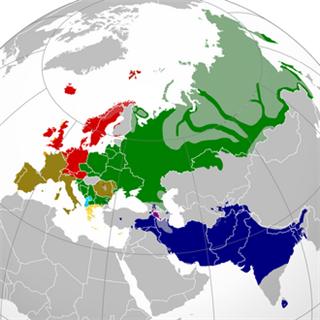
The Yamnaya culture was succeeded in its western range by the Catacomb culture (2800–2200 BCE) and in its eastern range by the Poltavka culture (2700–2100 BCE), both later followed by the Srubnaya culture (18th–12th centuries BCE). Its people, or a closely related population, contributed a large share of the ancestry of the Corded Ware and Bell Beaker cultures of Europe and of the Sintashta and Andronovo cultures further east, and Iron Age Scythian nomads can be described as a mixture of Yamnaya-related and East Asian-related ancestry.
Its importance today lies above all in the question of the Indo-European languages. In her Kurgan hypothesis Marija Gimbutas identified the Yamnaya with the late Proto-Indo-Europeans, and this hypothesis is widely accepted. David Anthony regards the Pontic–Caspian steppe as the strongest candidate for the homeland of Proto-Indo-European, with the possible exception of the Anatolian languages, while Colin Renfrew has argued for a Near Eastern origin. Guus Kroonen and colleagues (2022) placed the early core Indo-European speakers in the westernmost Yamnaya horizon, around and west of the Dnieper. David Reich’s group has suggested that the common source of the Anatolian and other Indo-European languages lay in West Asia and that the Yamnaya spread the latter, and studies of 2024 and 2025 shifted the origins of Proto-Indo-European towards the Caucasus–Lower Volga region.
The genetic case is therefore strong but not settled. Klejn has argued that steppe ancestry is lowest around the Danube in Hungary, near the Yamnaya’s western limit, and highest in Northern Europe, the opposite of what a Yamnaya migration would predict. A 2022 study found that the typical Yamnaya individual had brown eyes, brown hair and intermediate skin colour, unlike some later steppe-descended groups.
The Yamnaya culture was a herding culture of the Pontic–Caspian steppe, c. 3300–2600 BCE, named by archaeologists after its pit graves under kurgans. Its people lived as nomads or semi-nomads with carts and wagons. Under the widely accepted Kurgan hypothesis they spoke a stage of Proto-Indo-European, and DNA studies trace much later European and Asian ancestry to them, though the details are still debated.
References
- Anthony, D. W. (2007) The Horse, the Wheel, and Language: How Bronze-Age Riders from the Eurasian Steppes Shaped the Modern World. Princeton: Princeton University Press.
- Haak, W. et al. (2015) Massive migration from the steppe was a source for Indo-European languages in Europe. Nature 522: 207–211.
- Jones, E. R. et al. (2015) Upper Palaeolithic genomes reveal deep roots of modern Eurasians. Nature Communications 6: 8912.
- Narasimhan, V. M. et al. (2019) The formation of human populations in South and Central Asia. Science 365 (6457).
- Kroonen, G. et al. (2022) Indo-European cereal terminology suggests a Northwest Pontic homeland for the core Indo-European languages. PLOS ONE 17 (10): e0275744.