South & Southeast Asia
East Timor
At a glance
- Indonesia invaded on 7 December 1975, nine days after Fretilin's declaration of independence; the occupation that followed caused at least 102,800 conflict-related deaths between 1974 and 1999, by one estimate as many as 200,000.
- A UN-supervised referendum in August 1999 voted clearly for independence, met by a punitive campaign of violence by pro-integration militias backed by elements of the Indonesian military, before UNTAET took over the territory on 25 October 1999.
- Timor-Leste became independent on 20 May 2002; its Petroleum Fund, set up in 2005, received $23 billion from oil sales by 2021 and funds 80% of government spending, but is at risk of exhaustion as the Bayu-Undan field runs out.
Rise & Fall
- 1975On 28 November Fretilin unilaterally declares independence; nine days later, on 7 December, the Indonesian military invades East Timor.
- 1991The Indonesian military massacres more than 200 demonstrators, a turning point that brings international pressure on Indonesia.
- August 1999A UN-supervised referendum votes clearly for independence; pro-integration militias backed by the Indonesian military answer with a campaign of violence, and INTERFET lands to restore order.
- 2002On 20 May the Constitution comes into force and Timor-Leste is recognised as independent by the UN, with Xanana Gusmão as its first president; it joins the UN on 27 September.
- 2005The Timor-Leste Petroleum Fund is established to turn oil and gas revenue into lasting wealth.
- 2006A crisis of unrest and factional fighting drives 155,000 people from their homes; UN security forces return to restore order.
- 2018Timor-Leste and Australia settle their maritime boundary by treaty after conciliation before the Permanent Court of Arbitration.
- 2025ASEAN announces that Timor-Leste will be admitted as its 11th full member at the October summit in Kuala Lumpur.
Foundation
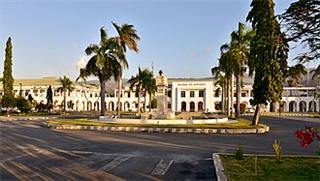
Timor was settled by Papuan and then Austronesian peoples. It held polities governed by customary law, kingdoms led by a liurai whose power was balanced by the spiritual authority of a rai nain. Sandalwood drew Chinese, Indian and Southeast Asian traders and, in the early sixteenth century, the Portuguese, who founded Dili only in 1769 and left the colony a neglected trading post.
The Portuguese revolution of 1974 opened a debate on independence that became civil war in 1975. The Revolutionary Front for an Independent East Timor (Fretilin) declared independence on 28 November 1975; on 7 December the Indonesian military invaded, and in July 1976 Indonesia declared East Timor its 27th province. The occupation was marked by violence and brutality: a report for the Commission for Reception, Truth and Reconciliation counted at least 102,800 conflict-related deaths between 1974 and 1999, other estimates reaching 200,000. After the massacre of more than 200 demonstrators in 1991 and Suharto's fall, a UN-supervised referendum in August 1999 voted clearly for independence; pro-integration militias backed by elements of the Indonesian military answered with violence until UNTAET took over on 25 October 1999. A Constituent Assembly elected in 2001 approved the Constitution on 22 March 2002, and on 20 May 2002 Timor-Leste became the first new sovereign state of the 21st century.
Socioeconomy
Timor-Leste is a poor country on great natural wealth. Its 1.44 million people (2026 census) live mainly on the coasts. Just over 40% live below the national poverty line and over half of children are stunted. Two-thirds of families depend partly on subsistence farming or fishing, yet the country imports food; the economy, which uses the United States dollar, grew only 2.5% a year from 2011 to 2021. Coffee made up 90% of non-fossil-fuel exports from 2013 to 2019, about US$20 million a year, and remittances add some $100 million.
At independence the per-capita value of natural resources matched an upper-middle-income country, over half in oil and a quarter in gas. The Timor-Leste Petroleum Fund, established in 2005, took in $23 billion from oil sales by 2021; it funds 80% of government spending and held $19 billion in 2021, ten times the budget, but withdrawals have exceeded sustainable levels almost every year since 2009, the Bayu-Undan field is running out and Greater Sunrise is undeveloped. Tax revenue is under 8% of GDP, investment in schools, health and water is negligible, and in 2010 only 38.2% of households had electricity. Life expectancy nonetheless rose from 48.5 in 1990 to 69.5 in 2019 and adult literacy reached 68% in 2021. Catholics are 97.6% of the population; Portuguese and Tetun are official, with many indigenous languages.
Military
Timor-Leste's arms were born in resistance. Fretilin met the Indonesian invasion of December 1975 as an army, holding territory until November 1978, and then as the guerrilla force Falintil through two decades of an occupation whose torture and massacres are named the East Timor genocide. The vote of August 1999 brought a last campaign of destruction by pro-integration militias supported by elements of the Indonesian military, and the multinational force INTERFET was allowed in to restore order. Five UN missions followed from 1999, the last running from the 2006 crisis to 2012.
The Timor-Leste Defence Force (F-FDTL) was established in 2001 to replace Falintil and restructured after the 2006 crisis, when factional fighting drove 155,000 people from their homes and UN forces returned. In February 2008 President José Ramos-Horta was critically wounded in an attempted assassination; Australian reinforcements were sent at once. The force is small, 2,200 regular soldiers and 80 in a naval component with a single aircraft and seven patrol boats, and shares the fight against violent crime with the National Police; since 2008 the two have held a monopoly on violence, with very few guns outside them. The one great external contest, with a far stronger Australia over the oil and gas of the Timor Sea, was fought by public diplomacy and international law and settled by a maritime boundary treaty in 2018.
Governance & Law
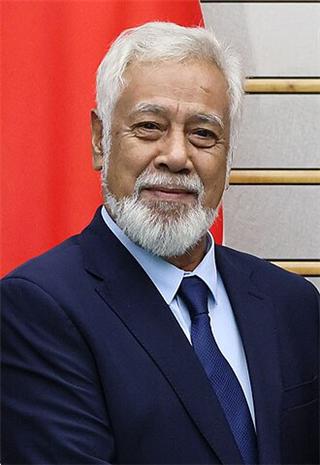
The Democratic Republic of Timor-Leste is a semi-presidential republic on the Portuguese model. A president elected by popular vote for five years, renewable once, is head of state with a veto, the power to dissolve a deadlocked parliament, and great informal influence. The prime minister, chosen by the unicameral National Parliament of 52 to 65 members, heads the government. One candidate in three must be a woman, and women hold over a third of the seats. Turnout runs from 70% to 85% and changes of government are peaceful, though parties follow personalities more than ideology.
Fretilin, which led the resistance, governed first and saw itself as the natural party of government; the National Congress for Timorese Reconstruction (CNRT), formed so that Xanana Gusmão could run for prime minister in 2007, became its rival. Gusmão was first president (2002–2007), José Ramos-Horta followed, Francisco Guterres took office in 2017 and Ramos-Horta returned on 20 May 2022. Administration is centralised in Dili: fourteen municipalities led since 2016 by appointed civil servants and 442 sucos, treated as communities rather than levels of state though their elected leaders settle disputes by custom. Oecusse became a Special Administrative Region in 2015 and Atauro a municipality in 2022. The Catholic Church, whose part in national liberation the constitution acknowledges, has strong influence.
Global & Regional Impact
Timor-Leste's independence was a landmark of the post-Cold War order: the first new sovereign state of the 21st century, born of a UN-sponsored act of self-determination and a people's resistance that outlasted an occupation the Security Council had condemned. It joined the Philippines as one of only two predominantly Catholic states in Asia and is the only sovereign country in Asia with Portuguese as an official language. The Church, whose membership rose from 20% of East Timorese at the invasion to 95% within a decade under Indonesia's demand that every citizen believe in God, became a bond across the country's many ethnolinguistic groups.
The new state normalised relations with Indonesia in its first year, and Indonesia came to back its entry into ASEAN: applied for in 2011, accepted in principle in November 2022 and, as announced on 27 May 2025, completed at the October 2025 summit in Kuala Lumpur as the 11th member. It belongs to the Community of Portuguese Language Countries, observes the Pacific Islands Forum and the Melanesian Spearhead Group and leads the g7+ group of fragile states. Its case against Australia over the Timor Sea, pressed through conciliation before the Permanent Court of Arbitration and settled by treaty in 2018, showed a small state winning by law against a powerful neighbour. Its first feature film, Beatriz's War (2013), told of life under the occupation.
Into the Present
The young republic's gravest trial came in 2006, when unrest and factional fighting drove 155,000 people from their homes and UN forces had to return. Since then politics has settled into peaceful contests between Fretilin and the CNRT, both led by an 'old guard' of the resistance; the UN mission ended in 2012, Xanana Gusmão is prime minister and José Ramos-Horta, elected again in 2022, president. A civic identity has grown around national democracy and the public story has shifted from resistance to development, though west and east remain divided.
The present danger is economic. Oil and gas gave the state its revenue, and their decline has pulled the Human Development Index down since 2010, when gross national income per head peaked. The Petroleum Fund has been drawn down faster than is sustainable almost every year since 2009, Bayu-Undan is expected to run out soon, Greater Sunrise is undeveloped. The private sector shrank between 2014 and 2018, agriculture and manufacturing are less productive per head than at independence, non-oil sectors have failed to develop, and the dependence on oil shows signs of a resource curse. Over 40% of the people are poor, malnutrition is common, and the third-largest male youth bulge in the world waits for work. ASEAN membership, sought since before independence for economic and security reasons, is the chosen road out.
East Timor, the Democratic Republic of Timor-Leste, won independence on 20 May 2002 after four centuries of Portuguese neglect, a 24-year Indonesian occupation that killed at least 102,800 people, and a UN-run transition. A poor, young, Catholic nation of 1.4 million, it lives on a dwindling Petroleum Fund and has joined ASEAN.
Test yourself
5 questions on this page, from its key events and facts.
The questions open here once the page has loaded.
References
- James Dunn, East Timor: A Rough Passage to Independence (Longueville Books, 2003)
- Clinton Fernandes, The Independence of East Timor: Multi-Dimensional Perspectives (Sussex Academic Press, 2011)
Connections
Open the full connections map →