South & Southeast Asia
Singapore
At a glance
- Singapore joined the Federation of Malaysia on 16 September 1963 and was expelled from it two years later: on 9 August 1965 the Malaysian Parliament voted 126 to 0 to separate it, leaving a city-state without a hinterland.
- Growth averaged about 6 percent a year from 1965 to 1995 and about 8 percent through the 1980s and 1990s, making Singapore one of the Four Asian Tigers, the only Asian state with a AAA rating from all the major agencies and the country with the highest PPP-adjusted GDP per head in the world.
- The People's Action Party has won every election since 1959; the Workers' Party took 10 of 93 seats in 2020, when Pritam Singh became the first de jure leader of the opposition, and Lawrence Wong, the first prime minister born after independence, took office on 15 May 2024.
Rise & Fall
- 1965Expelled from Malaysia, Singapore becomes an independent republic on 9 August, with Lee Kuan Yew as prime minister and Yusof bin Ishak as president.
- 1967Singapore co-founds the Association of Southeast Asian Nations and begins interchanging its dollar at par with Brunei's.
- 1971Britain withdraws its forces in October, leaving a token British, Australian and New Zealand presence; the Singapore Armed Forces, built with Israeli instructors, must guarantee independence.
- 1981Changi Airport opens, replacing Paya Lebar, as the Port of Singapore grows into one of the world's busiest and the economy turns to high-technology industry.
- 1990Goh Chok Tong succeeds Lee Kuan Yew as prime minister after 31 years; Nominated Members of Parliament are introduced the same year.
- 2004Lee Hsien Loong, Lee Kuan Yew's eldest son, becomes the third prime minister.
- 2015Lee Kuan Yew dies on 23 March and the nation mourns for a week; in September the PAP wins 69.9 percent of the vote.
- 2024Lawrence Wong becomes the fourth prime minister on 15 May, the first born after independence; his party wins 65.5 percent and 87 of 97 seats in 2025.
Foundation
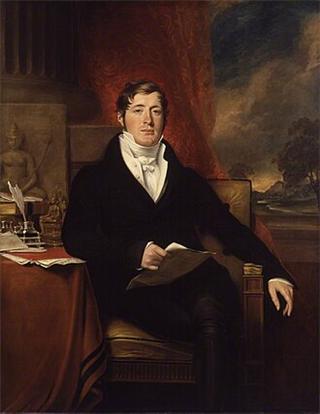
Singapore was the trading port of Temasek in the fourteenth century; Portuguese raiders burned the settlement in 1613 and the island faded into obscurity. Stamford Raffles arrived on 28 January 1819 and by the Treaty of Singapore of 6 February 1819 won the right to a trading post; a treaty of 1824 gave Britain the whole island, which joined the Straits Settlements in 1826 and came under direct British rule in 1867. A population of about a thousand grew to over 80,000 by 1860, more than half Chinese. Churchill's 'Gibraltar of the East', the naval base, did not save it: 60,000 British troops surrendered on 15 February 1942, and between 5,000 and 25,000 Chinese were killed in the Sook Ching massacre under Japanese occupation.
Singapore became a separate crown colony on 1 April 1946, lived through communist insurgency and the riots of 1954–1956, and won full internal self-government on 3 June 1959, days after the People's Action Party under Lee Kuan Yew took the first election held with universal suffrage. The PAP led Singapore into the Federation of Malaysia on 16 September 1963. Indonesia answered with Konfrontasi, whose saboteurs bombed MacDonald House in March 1965, and quarrels with Kuala Lumpur over trade and race brought the 1964 riots. On 9 August 1965 the Malaysian Parliament voted 126 to 0 to separate Singapore, and the Republic of Singapore was born.
Socioeconomy
Singapore's economy grew from entrepôt trade into a highly developed market economy: growth averaged about 6 percent a year between 1965 and 1995, and it has outstripped its fellow Asian Tigers to hold the highest PPP-adjusted GDP per head in the world, the only AAA credit rating in Asia from all the major agencies and fourth place in the 2023 World Competitiveness Ranking. The port is the world's second-busiest by tonnage and containers, 37.2 million TEUs in 2019, and the busiest for transshipment and refuelling; the city is the third-largest foreign exchange centre, the sixth financial centre, and its 60 semiconductor firms hold 11 percent of the world market. Government-linked companies contribute 22 percent of GDP and 44 percent of the workforce is foreign.
In mid-2025 the population was 6,110,200, of whom 3,660,200 were citizens; residents are 74.3 percent Chinese, 13.5 percent Malay and 9.0 percent Indian, English is the home language of 58.1 percent, and 78.7 percent of households live in public Housing and Development Board flats. Life expectancy reached 84.8 years in 2019, the longest in the world, and infant mortality is the lowest. The fertility rate has sat at 1.1 since 2010, the median age was 42.8 in 2022, and immigration fills the gap. Some 13.6 million tourists came in 2023, and the city has repeatedly been rated the world's most expensive.
Military
The Singapore Armed Forces, among the smallest but most technologically advanced in Southeast Asia, comprise the Army, Navy, Air Force and Digital and Intelligence Service, and in 2024 took 2.7 percent of GDP, the highest share in the region. At independence the state had two infantry regiments under British officers, and in October 1971 Britain withdrew its forces, leaving a token British, Australian and New Zealand presence. The government turned to Israel: IDF commanders built the SAF from scratch, and conscription with long reserve service on the Israeli model remains the rule for every able-bodied man at 18.
Short of land, the forces train on outlying islands and abroad, and the Air Force keeps squadrons at Pearce and Oakey in Australia, Cazaux in France and in the United States. Singapore belongs to the Five Power Defence Arrangements with Australia, Malaysia, New Zealand and the United Kingdom, and has sent forces to Iraq, Afghanistan and East Timor and ships to the Gulf of Aden since 2009. Its only war came before independence: Indonesia's Konfrontasi against Malaysia brought at least 42 bomb incidents, the deadliest at MacDonald House on 10 March 1965, which killed three people. Disputes with Malaysia over water and airspace, with Indonesia over sand and over Pedra Branca, settled by the International Court of Justice, have never come to arms, and the 2024 Global Peace Index ranks Singapore fifth in the world.
Governance & Law
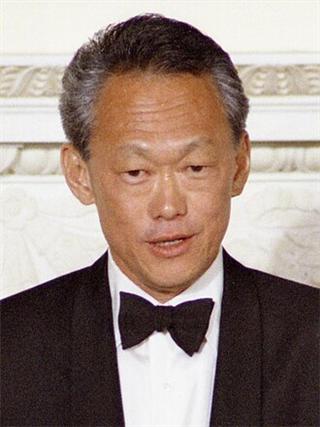
Singapore is a parliamentary republic on the Westminster model. The prime minister heads the executive; the president, directly elected since the constitutional amendment of 1991 for a six-year term, holds veto powers over the use of past reserves and key appointments; qualifications are so stringent that in the reserved election of 2017 Halimah Yacob became the first woman president unopposed. The unicameral Parliament has 108 members: 97 elected by first-past-the-post from 33 constituencies, two Non-constituency Members from the best-losing opposition under a scheme of 1984, and nine Nominated Members since 1990. Law follows English common law; trial by jury was abolished in 1970, and caning and hanging remain in use.
The People's Action Party has governed since 1959, a de facto one-party dominant state that academics call an illiberal democracy or soft authoritarianism. Lee Kuan Yew ruled until 1990, Goh Chok Tong until 2004, Lee Hsien Loong until 15 May 2024, when Lawrence Wong took office. The party's vote fell to 60 percent in 2011, rose to 69.9 in 2015 and 61 in 2020, when the Workers' Party won 10 seats, and reached 65.5 percent in 2025. Public gatherings of five or more need a police permit, protests are allowed only at Speakers' Corner, Reporters Without Borders ranked the press 129th of 180 in 2023, yet it is among the least corrupt states on earth. Section 377A, criminalising sex between men since 1938, was repealed on 3 January 2023.
Global & Regional Impact
A founding member of ASEAN in 1967, Singapore hosts the secretariats of APEC and the Pacific Economic Cooperation Council, belongs to the Commonwealth, the Non-Aligned Movement and the East Asia Summit and keeps diplomatic relations with more than 180 states. China has been its largest trading partner since 2013 and the United States a close partner in defence, and because it talks to both Washington and Pyongyang it hosted the first meeting of a sitting American president and a North Korean leader, Donald Trump and Kim Jong-un, in June 2018. Its dollar has been interchangeable with Brunei's since 1967.
Singapore's reach is commercial. Changi Airport connects over 100 airlines to some 300 cities, carried three of the ten busiest international routes in 2023 and is the most-awarded airport in the world; Singapore Airlines has twelve times been named the world's best; the port is the world's busiest for transshipment and bunkering; the city is the second-largest foreign investor in India and the 14th-largest exporter. More than 80,000 international students and about 200,000 medical tourists a year come to it, its hawker stalls were the first street food to win Michelin stars, the Botanic Gardens are a World Heritage Site, and since 2008 it has staged Formula One's first night race. The 'Singapore model' of soft-authoritarian meritocracy is studied, admired and contested far beyond the island.
Into the Present
Singapore's present is a question of succession and sustainability rather than decline. The PAP's worst result, 60 percent in 2011, reflected anger over immigration and the cost of living; the pandemic election of 2020 gave the Workers' Party 10 seats and the country its first de jure leader of the opposition; and Lawrence Wong, the first prime minister born after independence, passed his first test in 2025 with 65.5 percent of the vote and 87 of 97 seats. Critics still point to a press ranked 129th, gatherings that need permits and a death penalty, used above all against drug trafficking, that human rights groups condemn and the government defends as saving lives.
The deeper challenges are demographic and physical. Fertility has stood at 1.1 since 2010, the median age is 42.8, and 40 percent of the 6.1 million people are non-citizens, so that immigration carries the working-age population. The low-lying island expects to spend $100 billion over the coming century against rising seas: a $5 billion Coastline and Flood Protection Fund was set aside in 2020 and a bill of February 2026 obliges coastal landowners to build defences, while neighbours' bans on sand exports have pushed reclamation towards Dutch-style polders at Tekong and another 100 square kilometres by 2040. In 2025 nearly 245 million people crossed its borders and the state ranked fifth in the Global Innovation Index: the most expensive city in the world remains one of its most capable.
The Republic of Singapore, cast out of Malaysia on 9 August 1965, built under Lee Kuan Yew and the People's Action Party a city-state with the world's highest GDP per head, its second-busiest port and a conscript army on the Israeli model, governed by one party since 1959 in a 'Singapore model' of order, meritocracy and limited liberty, and now facing an ageing people and a rising sea.
Test yourself
5 questions on this page, from its key events and facts.
The questions open here once the page has loaded.
References
- John N. Miksic, Singapore & the Silk Road of the Sea, 1300–1800 (NUS Press, 2013)
- Romen Bose, The End of the War: Singapore's Liberation and the Aftermath of the Second World War (Marshall Cavendish, 2010)
- Colin Smith, Singapore Burning: Heroism and Surrender in World War II (Penguin Books, 2006)
- John Toland, The Rising Sun: The Decline and Fall of the Japanese Empire, 1936–1945 (Random House, 1970)
- Lionel Wigmore, The Japanese Thrust (Australian War Memorial, 1957)
Connections
Open the full connections map →