Sub-Saharan Africa
Rhodesia
At a glance
- Ian Smith's cabinet declared independence on 11 November 1965 to forestall Britain's policy of no independence before majority rule; no state ever recognised Rhodesia, and United Nations Security Council Resolution 216 called on all states to deny it recognition and assistance.
- In 1976 the country held 270,000 white Rhodesians and six million black Africans, yet under the 1961 constitution whites held 50 of the 66 seats in the Assembly and the republican constitution of 1969 reserved the majority of seats for whites.
- ZANU's ZANLA and ZAPU's ZIPRA fought the Rhodesian Bush War from the Sinoia engagement of April 1966; by 1978–79 defence took 47% of the budget, and the Lancaster House Agreement of late 1979 ended the rebellion.
Rise & Fall
- 1965On 11 November the Cabinet of Rhodesia issues a unilateral declaration of independence from the United Kingdom; Governor Sir Humphrey Gibbs dismisses Ian Smith and his ministers, who ignore him.
- 1965On 12 November United Nations Security Council Resolution 216 calls on all states not to recognise 'this illegal racist minority regime in Southern Rhodesia'.
- 1966On 28 April seven ZANLA insurgents are cornered and killed near Sinoia, the first engagement of the Rhodesian Bush War, kept by ZANU as Chimurenga Day.
- 1970On 2 March Rhodesia declares itself a republic after a referendum of 1969 severed the last ties with the Crown by 61,130 votes to 14,327.
- 1972On 21 December ZANLA insurgents under Rex Nhongo cross from Mozambique and raid a commercial farm, opening the raids on white farmers across the north-east.
- 1975The end of Portuguese rule in Mozambique after the Carnation Revolution leaves Rhodesia almost surrounded by hostile states.
- 1978On 3 September ZIPRA fighters shoot down the Air Rhodesia Viscount Hunyani near Kariba with a surface-to-air missile and kill 10 of its 18 survivors.
- 1979On 1 June under the Internal Settlement Abel Muzorewa becomes the first black prime minister of the renamed Zimbabwe Rhodesia; the Lancaster House Agreement ends UDI in December.
Foundation
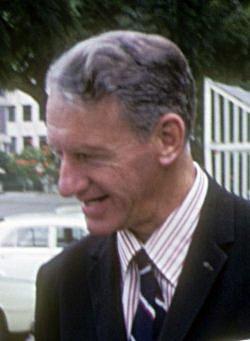
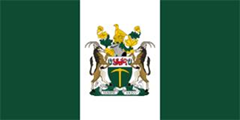
Rhodesia was the name the self-governing British colony of Southern Rhodesia took when its white cabinet declared independence in 1965; in British law the territory remained Southern Rhodesia, the name given in 1898 under the British South Africa Company. In a referendum of 1922 the electorate rejected joining the Union of South Africa as a fifth province; the United Kingdom annexed the territory on 12 September 1923, and a constitution in force from 1 October gave it an elected thirty-member legislature, a premier and a cabinet, while the British government kept a veto over measures affecting Africans. From August 1953 to the end of December 1963 it belonged to the Federation of Rhodesia and Nyasaland.
The decolonisation of Africa alarmed much of the white population. Britain adopted a policy of no independence before majority rule, and after Northern Rhodesia became Zambia in October 1964 the Salisbury government dropped the word Southern. White anger at the negotiations brought down Winston Field in 1964; Ian Smith, chairman of the Rhodesian Front and the colony's first Rhodesian-born leader, replaced him. Promised maximum support by Portugal's António de Oliveira Salazar in September 1964, and knowing that Harold Wilson would not use force against white 'kith and kin', Smith rejected the five principles set out by Sir Alec Douglas-Home, and on 11 November 1965 his cabinet issued the unilateral declaration of independence.
Socioeconomy
Southern Rhodesia had grown into one of the most industrialised economies in sub-Saharan Africa. Chromium and manganese, tobacco farming and an immigrant workforce — in 1951 over 90% of white Southern Rhodesians were in occupations the British government classed as skilled — supported a manufacturing sector and iron and steel industries. The post-war boom drew about 200,000 white immigrants between 1945 and 1970, raising the white population to 307,000. The economy still rested narrowly on a few primary products, and in 1976 the country held 270,000 whites and six million black Africans.
In December 1966 the United Nations made its sanctions mandatory, barring purchases of Rhodesian tobacco, chromium, copper, asbestos, sugar and beef. Incentives for domestic production expanded industrial output, and companies evaded the embargo through subsidiaries and a clandestine trade network: West Germany remained the largest Western European trading partner until 1973, Japan the chief market outside Africa, Iran supplied oil, Portugal re-exported goods through Mozambique with false certificates of origin, and the Byrd Amendment of 1971 let American firms import chromium and nickel. Rhodesia was a racially segregated society with separate schools for African and non-African children; only the University of Rhodesia was not segregated. White settlement was transient: between 1955 and 1979 the country took in 255,692 white immigrants and lost 246,583.
Military
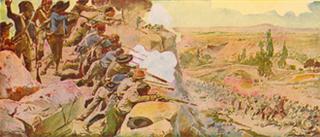
Southern Rhodesia had long financed its own security forces. The standing army numbered 3,400, about a third of them black volunteers, organised as light infantry for counter-insurgency; the Royal Rhodesian Air Force had 1,000 personnel, Hawker Hunter and de Havilland Vampire strike aircraft and Canberra bombers; the British South Africa Police fielded paramilitary units and the Central Intelligence Organisation gathered intelligence. The first ZANLA group, trained at Nanjing, was destroyed at Sinoia in April 1966, and ZIPRA columns from Zambia were annihilated in Operation Nickel in 1967 and again in 1968 and 1969. From December 1972 ZANLA, with sanctuaries in Mozambique and an alliance with FRELIMO, raided farms in the north-east, and from 1976 guerrillas struck roads, railways and economic targets deep inside the country.
The state answered with protected villages, which the guerrillas compared to concentration camps, with raids into neighbouring states such as Operation Dingo in 1977, and with chemical and biological agents. Manpower was its weakness: of 3,000 white men liable for call-up in 1973 only about 1,000 reported, national service was extended to all white males up to sixty, and by 1978–79 up to 70% of the regular army was black. In December 1978 a ZANLA unit burnt Salisbury's oil depot for five days, destroying 500,000 barrels; defence spending rose from 8.5% of the budget in 1971–72 to 47% in 1978–79.
Governance & Law
Rhodesia kept a Westminster system with a racial franchise. The constitution of 1961 used separate voter rolls with property and education qualifications, under which whites held 50 of the 66 seats in the Legislative Assembly and blacks 16. The republican constitution of 1969 created a bicameral Parliament, an indirectly elected Senate and a directly elected House of Assembly, reserving the majority of seats for whites, with a ceremonial president and an executive prime minister. Governor Sir Humphrey Gibbs, whose dismissal of the cabinet was ignored, stayed in Government House until 1970; in September 1968 the Appellate Division of the High Court under Chief Justice Sir Hugh Beadle ruled the Smith administration the de jure government.
The government banned ZAPU and, in August 1964, ZANU, passed security laws restricting assembly and introduced the death sentence for political acts involving arson or explosives; Smith called the insurgents 'gangsters' and presented them as Soviet-directed agitators. A proposed settlement of 1971 was tested by the Pearce Commission in 1972, which found whites in favour and the black response resoundingly negative, and Britain withdrew it. The Internal Settlement of 3 March 1978 with African parties outside the war led to elections in April 1979 and a constitution reserving 28 of 100 seats for whites while police, security forces, civil service and judiciary stayed in white hands.
Global & Regional Impact
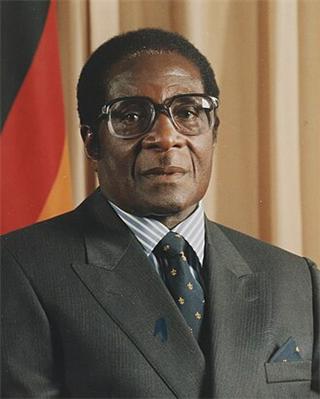
Rhodesia was one of two states in Africa ruled by a white minority, the other South Africa, and the second case shaped the first. Portugal under Salazar gave covert support and a channel through Mozambique, and the three governments shared intelligence under the Alcora Exercise, but after the Carnation Revolution of 1974 Portugal downgraded its mission and John Vorster, pursuing détente with black African states, held up fuel and ammunition and withdrew South African forces. In 1976 Henry Kissinger's initiative, backed by Pretoria, brought Smith to accept the principle of majority rule within two years. Zambia, dependent on Rhodesian routes for its copper, fuel and power, worked unofficially with Salisbury; the United States kept a consulate as a conduit until 1970; Rhodesia House in London closed in 1969.
The war made the country a Cold War theatre: ZIPRA drew arms and training from the Soviet Union, ZANLA from China, and both from FRELIMO's Mozambique and from Zambia and Botswana. Rhodesia's institutions outlasted it: the bicameral parliament was retained in Zimbabwe after 1980, the Lancaster House constitution reserved 20 of 100 seats in the House of Assembly and 8 of 40 in the Senate for whites until 1987. The Sinoia action is commemorated by ZANU as Chimurenga Day, and the ex-insurgents' victory in 1980 made Robert Mugabe's ZANU the ruling party.
Songs in history
Decline & Fall

The end of Portuguese rule in Mozambique in 1975 made indefinite white minority rule untenable, as even Vorster concluded in a country where black people outnumbered whites 22 to 1; talks at Victoria Falls in August 1975 never passed the procedural stage. The government gave up defending the borders and held key economic areas and lines of communication to South Africa while the countryside became a patchwork of no-go areas. White emigration grew with each call-up, and the guerrillas attacked economic targets and killed white civilians, estimating that each death drove about twenty whites to leave. The shooting down of the Hunyani on 3 September 1978, and of a second Viscount, the Umniati, in 1979, is widely held to have broken the will to fight.
The Internal Settlement of 1978 excluded ZANU and ZAPU; Abel Muzorewa's government of Zimbabwe Rhodesia, in office from 1 June 1979, won no recognition and the war went on. Margaret Thatcher's government called all parties to Lancaster House in late 1979, where three months of talks nearly failed over land reform. Under the Agreement UDI ended, the country reverted to the Colony of Southern Rhodesia under Lord Soames, a ceasefire was followed by supervised elections in February 1980 won by Mugabe's ZANU, and a planned military coup, Operation Quartz, was abandoned. On 18 April 1980 the Republic of Zimbabwe became independent; Salisbury was renamed Harare two years later.
Rhodesia was the state proclaimed by Southern Rhodesia's white minority on 11 November 1965 to escape majority rule. Recognised by no one and under United Nations sanctions, it fought the Bush War against ZANU and ZAPU until the Lancaster House Agreement of 1979 brought supervised elections and the independent Republic of Zimbabwe in April 1980.
Test yourself
5 questions on this page, from its key events and facts.
The questions open here once the page has loaded.
References
- Carl Peter Watts, Rhodesia's Unilateral Declaration of Independence: An International History (Palgrave Macmillan, 2012)
- Eddie Michel, The White House and White Africa: Presidential Policy Toward Rhodesia During the UDI Era, 1965–1979 (Routledge, 2019)
- Nancy Mitchell, Jimmy Carter in Africa: Race and the Cold War (Stanford University Press, 2016)
- Tinashe Nyamunda, 'More a Cause than a Country': Historiography, UDI and the Crisis of Decolonisation in Rhodesia, Journal of Southern African Studies 42:5 (2016)
- Kate Law, 'Pattern, Puzzle, and Peculiarity: Rhodesia's UDI and Decolonisation in Southern Africa', Journal of Imperial and Commonwealth History 45:5 (2017)
Connections
Open the full connections map →