Religion · Central & East Asia
Confucianism
At a glance
- Confucianism grew from the teaching of Confucius, a scholar of the state of Lu who taught that a good society rests on humane, cultivated people who honour their families, observe ritual and govern by virtue.
- Adopted by the Han emperors and later made the basis of the civil service examinations, it was the official orthodoxy of the Chinese empire for some two thousand years and the model of government in Korea, Japan and Vietnam.
- Attacked as a cause of backwardness in the 20th century, it has revived since the 1980s, and its ideals of learning, family duty and moral government remain deeply rooted in East Asian societies.
Timeline
- 551 BCEConfucius is born in the state of Lu, by the traditional date
- 479 BCEConfucius dies; his disciples gather his sayings, later compiled as the Analects
- c. 300 BCEMencius teaches that human nature is good and that rulers who oppress the people lose the mandate of Heaven
- 213 BCEThe Qin dynasty orders the burning of books, the Confucian classics among them, by the traditional account
- 136 BCEEmperor Wu of Han establishes official chairs for the Five Classics
- 605The Sui dynasty founds the imperial examinations, later based on the Confucian classics
- 1190Zhu Xi publishes the Four Books with his commentaries, the core of Neo-Confucianism
- 1905The Qing government abolishes the imperial examinations
Spread through the centuries
Where it began, how it spread, and where it was a main faith (a bright glow) or held communities (a faint one), century by century to today. Press Play or move the slider, turn the globe, and tap a glow or a mark to read about it.
The map opens here once the page has loaded.
Origins
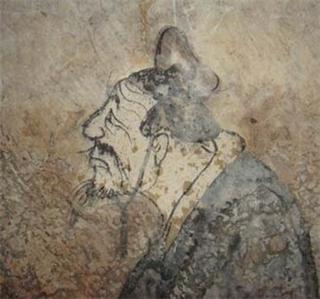
Confucianism takes its Western name from Confucius, the Latinised form, used by Jesuit missionaries, of Kong Fuzi, “Master Kong”. Kong Qiu, as he was named, was born, by the traditional date, in 551 BCE in the small state of Lu, in present-day Shandong, during the Spring and Autumn period, when the authority of the Zhou kings had waned and rival states competed for power. He came from a family of the lower aristocracy, held minor offices and, according to later accounts, briefly rose to high office in Lu before spending years travelling among the states, seeking a ruler who would put his ideas into practice.
He did not find one. He returned to Lu and spent his last years teaching, and he died in 479 BCE. His influence came through his students, said to number seventy-two close disciples and some three thousand in all, who recorded his sayings and conversations; these were compiled over the following generations into the Analects.
Confucius presented himself not as an innovator but as a transmitter of the wisdom of the early Zhou kings and the Duke of Zhou, whose rituals, music and moral order he wished to restore. He belonged to the ru, a class of specialists in ritual and the ancient texts, and the Chinese names of the tradition, rujia and rujiao, mean “the school” and “the teaching” of the ru, the scholars.
In the centuries of the Warring States that followed, his teaching was one school among many, competing with the Mohists, the Daoists and the Legalists. Two great thinkers developed it: Mencius, in the 4th century BCE, who taught that human nature is good and that a ruler who oppresses his people loses the mandate of Heaven and may rightly be overthrown; and Xunzi, in the 3rd century BCE, who held that human nature tends to evil and must be shaped by ritual, education and law.
The Qin dynasty, which unified China in 221 BCE, ruled by Legalist principles and, according to the traditional account, burned the books of the scholars in 213 BCE and put many of them to death the following year. The Han dynasty that followed in time made Confucianism the foundation of government.
Beliefs & Practice
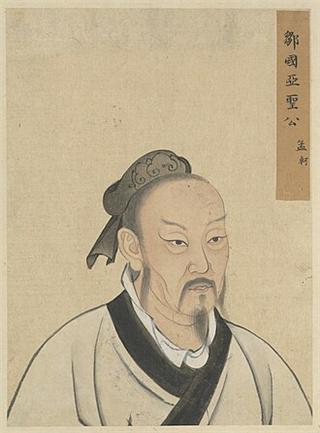
Confucianism is less a religion of gods and salvation than a tradition of ethics, ritual and government, though it includes reverence for Heaven, for the ancestors and for Confucius himself. Its central concern is how to be a good person in a good society.
The highest virtue is ren, humaneness or benevolence: the love and consideration for others that makes a person fully human. Confucius summed up his teaching in the principle of reciprocity: “Do not impose on others what you yourself do not desire.” Ren is expressed through li, ritual propriety: the forms of behaviour, from court ceremonies and sacrifices to everyday courtesy, that order human relationships and cultivate the self. Other virtues include yi, righteousness, doing what is right rather than what is profitable; zhi, wisdom; and xin, trustworthiness.
The ideal person is the junzi, originally a “lord’s son” and in Confucius’s teaching the “exemplary person”, who cultivates virtue through study and self-reflection. Learning was central to his teaching: he taught that anyone could become a junzi through education, whatever their birth.
Society rests on the family and on the five relationships named by Mencius: ruler and subject, father and son, husband and wife, elder and younger brother, and friend and friend. Each carries reciprocal duties. Filial piety, xiao, the respect and care owed to parents and ancestors, is the root of all virtue, and the rites of mourning and the offerings to ancestors express it. The well-ordered family is the model of the well-ordered state.
Government, in Confucian teaching, should rule by virtue and example rather than by force and punishment: in a famous saying of the Analects, people kept in line by punishments merely stay out of trouble, but people guided by virtue and ritual gain a sense of shame and reform themselves. The ruler holds the mandate of Heaven, an ancient Zhou idea, so long as he rules justly. Officials should be chosen for merit and learning. Confucius also taught the “rectification of names”: things and roles must correspond to their names, so that a ruler acts as a ruler and a father as a father.
Texts & Teachers
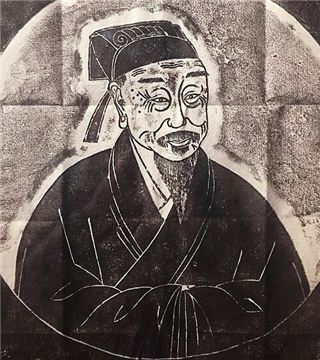
The canon of Confucianism grew over many centuries. Its oldest layer is the Five Classics, works of different ages that tradition linked to Confucius as their editor or author: the Book of Songs, a collection of ancient poems; the Book of Documents, speeches and records of early kings; the Book of Rites, on ceremony and conduct; the Book of Changes, the Yijing, a manual of divination with philosophical commentaries; and the Spring and Autumn Annals, a chronicle of the state of Lu. A sixth classic, on music, was lost. From 136 BCE the Han emperor Wu established official chairs for the study of the Five Classics, and their mastery became the basis of an official career.
The Analects, the Lunyu, record the sayings of Confucius and his disciples in short passages, often in dialogue; they are the most direct source for his thought. The book of Mencius records the teaching and debates of that philosopher, and the Xunzi presents Xunzi’s essays.
In the Song dynasty the philosopher Zhu Xi, who lived from 1130 to 1200, selected four texts as the core of learning: the Analects, the Mencius, and two chapters of the Book of Rites, the Great Learning and the Doctrine of the Mean. He published them in 1190 with his commentaries. From 1313, under the Yuan dynasty, the Four Books with Zhu Xi’s commentaries became the basis of the imperial examinations, and for six centuries every educated man in China studied them.
Later thinkers added their own works. Wang Yangming, in the 16th century, challenged Zhu Xi’s emphasis on study with a philosophy of innate moral knowledge and the unity of knowing and acting. Scholars of the Qing dynasty developed rigorous textual criticism of the classics. In Korea, scholars such as Yi Hwang and Yi I debated Neo-Confucian metaphysics in the 16th century.
The classics were carved in stone in the capital to fix their text, and the earliest Chinese printing of the classics, completed in 953, spread them widely.
Spread

Confucianism became the official ideology of the Chinese empire under the Han dynasty. Emperor Wu, who reigned from 141 to 87 BCE, established chairs for the classics and in 124 BCE an imperial academy to train officials, and scholars such as Dong Zhongshu joined Confucian ethics to cosmology. The cult of Confucius grew: Han emperors offered sacrifices at his home town of Qufu, where his family temple became a vast complex, and from the Tang dynasty a temple to him stood beside the school of every prefecture and county.
After the fall of the Han, Buddhism and Daoism rivalled Confucianism for centuries, but the Sui and Tang dynasties revived it through the imperial examinations, created by the Sui in 605. Under the Song dynasty the examinations became the main path to office, and Neo-Confucianism, the synthesis of Zhu Xi and his predecessors, answered Buddhist philosophy with a Confucian metaphysics of principle and vital energy, qi. It was the orthodoxy of the examinations from 1313 and of the Ming and Qing states.
Confucianism spread across East Asia with Chinese writing. In Korea it shaped government from the Three Kingdoms period, when Goguryeo founded a Confucian academy in 372, and the Joseon dynasty, which ruled from 1392 to 1897, made Neo-Confucianism the foundation of state and society more thoroughly than China itself had done. In Japan Confucian ideas arrived with Chinese writing and learning by the 6th century; under the Tokugawa shogunate the Neo-Confucianism of Zhu Xi became the official teaching of the shogunate’s academy and was taught in schools for the samurai. In Vietnam Confucian examinations for officials were held from 1075 until 1919.
In the 19th and 20th centuries Confucianism was blamed by reformers for East Asia’s weakness before the Western powers. The May Fourth Movement of 1919 attacked it, and in the People’s Republic of China the campaign to “criticise Lin Biao and criticise Confucius” in the 1970s denounced it. Since the 1980s it has revived in China and beyond, as a source of national culture, ethics and education.
Community & Society
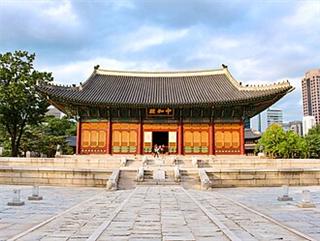
Confucianism has no church, clergy or membership. Its community was formed by scholars, officials and families who shared its learning and practised its rites.
For two thousand years the imperial state was its main institution. Officials were selected, increasingly from the Song dynasty onwards, through examinations on the Confucian classics held at district, provincial and national levels; success brought office, prestige and wealth to the candidate and his family, and only a small fraction of candidates passed the highest degree. The scholar-officials, the literati, were the governing class of China, and their education in the classics, history, poetry and calligraphy defined elite culture.
The state also conducted the official cult: sacrifices to Heaven and Earth by the emperor, and twice-yearly sacrifices to Confucius in temples across the empire. Private academies, the shuyuan, where scholars taught and debated, became centres of Neo-Confucian learning from the Song period.
Within the family, Confucian ritual governed the rites of passage: capping at adulthood, marriage, mourning and above all the veneration of ancestors, whose tablets were kept in household shrines and lineage halls and honoured with offerings. Large lineages, descent groups with their own halls, land and genealogies, organised much of rural life in southern China.
Confucian teaching on the family placed women under the authority of fathers, husbands and sons and emphasised female chastity, a legacy that modern critics and reformers have strongly challenged. It also promoted education, social order and respect for age.
In modern East Asia, Confucian values live on in the importance given to education and examinations, in family ties and duties to parents, in forms of courtesy and in ideals of public service. Ceremonies to Confucius are still held at Qufu and at the shrine of Confucius in Seoul, and Confucius’s birthday is celebrated as Teachers’ Day in Taiwan.
Legacy
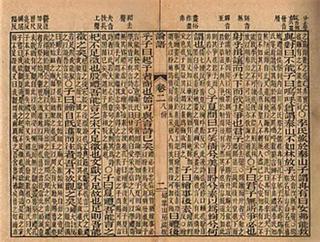
Confucianism is one of the most influential traditions of thought in history. For two thousand years it shaped the government, education and family life of China, the most populous society on earth, and it formed the political and moral culture of Korea, Japan and Vietnam.
Its idea that government should be entrusted to educated men chosen by merit gave rise to the imperial examinations, the world’s first large-scale system of selecting officials by examination; the system impressed European observers, and many historians see its influence in the competitive civil service examinations introduced in Britain and elsewhere in the 19th century.
Confucian ethics, centred on humaneness, reciprocity and the duties of relationships, offered an alternative to ethics founded on divine command, and the Jesuit missionaries who translated the Analects into Latin in the 17th century made Confucius admired by thinkers of the European Enlightenment such as Leibniz and Voltaire.
Its record is also contested: critics have blamed it for rigid hierarchy, the subordination of women and resistance to change, while its defenders see in it a humanist tradition of moral cultivation and responsible government. The debate between these views, inside and outside East Asia, continues, and the rise of East Asian economies has renewed interest in the role of Confucian values in modern society.
Confucianism, grown from the teaching of Confucius in 5th-century BCE China, is a tradition of ethics, ritual and learning centred on humaneness, family duty and government by virtue. Adopted by the Han and made the basis of the imperial examinations, it was the orthodoxy of the Chinese empire for two thousand years, shaped Korea, Japan and Vietnam, and remains a living influence in East Asia.
References
- Elman, B.A. (2000) A Cultural History of Civil Examinations in Late Imperial China. Berkeley: University of California Press.
- Fingarette, H. (1972) Confucius: The Secular as Sacred. New York: Harper & Row.
- Goldin, P.R. (2011) Confucianism. Durham: Acumen.
- Nylan, M. (2001) The Five "Confucian" Classics. New Haven: Yale University Press.
- Slingerland, E. (trans.) (2003) Confucius: Analects, with Selections from Traditional Commentaries. Indianapolis: Hackett.
- Yao, X. (2000) An Introduction to Confucianism. Cambridge: Cambridge University Press.