
Religion · Central & East Asia
Daoism
At a glance
- Daoism grew from the Daodejing and the Zhuangzi, works of the Warring States period which taught harmony with the Dao, the Way underlying all things, through simplicity, spontaneity and effortless action.
- From 142 CE, with the Way of the Celestial Masters, it became an organised religion of priests, rituals, scriptures and gods, seeking long life and transcendence, and emperors, above all the Tang, who claimed Laozi as their ancestor, patronised it.
- It shaped Chinese medicine, painting, poetry, alchemy and the martial arts, survived the persecutions of the 20th century, and its classic, the Daodejing, is one of the most translated works in world literature.
Timeline
- c. 300 BCEBamboo slips buried in a tomb at Guodian preserve the oldest known passages of the Daodejing
- 142Zhang Daoling receives a revelation from the deified Laozi and founds the Way of the Celestial Masters
- 184The Yellow Turban rebellion of the Way of Great Peace shakes the Han dynasty
- 442The Northern Wei emperor Taiwu receives Daoist registers, making Daoism the religion of his state
- 666The Tang emperor Gaozong honours Laozi, the dynasty’s claimed ancestor, as an emperor
- 1167Wang Chongyang founds the monastic school of Complete Perfection (Quanzhen)
- 1222The Quanzhen master Qiu Chuji meets Genghis Khan in the Hindu Kush
- 1445The Ming court completes the printing of the Daoist Canon
Spread through the centuries
Where it began, how it spread, and where it was a main faith (a bright glow) or held communities (a faint one), century by century to today. Press Play or move the slider, turn the globe, and tap a glow or a mark to read about it.
The map opens here once the page has loaded.
Origins

Daoism takes its name from the Dao, “the Way”, a word that Chinese thinkers of every school used for the right path of conduct and government, but which the texts later called Daoist made into the name of the ultimate source and pattern of all things. Its roots lie in the Warring States period, from the 5th to the 3rd centuries BCE, when the decline of the Zhou order and constant warfare between rival states provoked a flowering of philosophy, the age of the “hundred schools”.
Tradition names Laozi, “the Old Master”, as its founder: an archivist at the Zhou court, older than Confucius, who, weary of the decline of the kingdom, rode west through the Hangu Pass and, at the request of its guardian, wrote down his teaching in a book of some five thousand characters before vanishing. Already the historian Sima Qian, writing around 100 BCE, was uncertain who Laozi had been, and modern scholars regard the Daodejing as a compilation of sayings that took shape over the 4th and 3rd centuries BCE. The second classic, the Zhuangzi, carries the name of Zhuang Zhou, a thinker of the 4th century BCE, whose witty and paradoxical stories mock conventional values and celebrate freedom.
These texts were not yet the scriptures of a religion. Under the early Han dynasty a political philosophy known as Huang-Lao, after the Yellow Emperor and Laozi, influenced the court, recommending a ruler who governs lightly and lets things take their course. Laozi himself was gradually deified: in 165 and 166 CE the Han emperor Huan had sacrifices offered to him.
Daoism as an organised religion begins with Zhang Daoling, who in 142, according to its tradition, received a revelation on a mountain in Sichuan from Lord Lao, the deified Laozi, and founded the Way of the Celestial Masters, also called the Way of the Five Pecks of Rice after the contribution its members paid. His grandson Zhang Lu ruled a theocratic state in the Hanzhong valley until he submitted to the warlord Cao Cao in 215. Another movement, the Way of Great Peace, launched the Yellow Turban rebellion of 184, which was crushed but helped to bring down the Han.
Beliefs & Practice
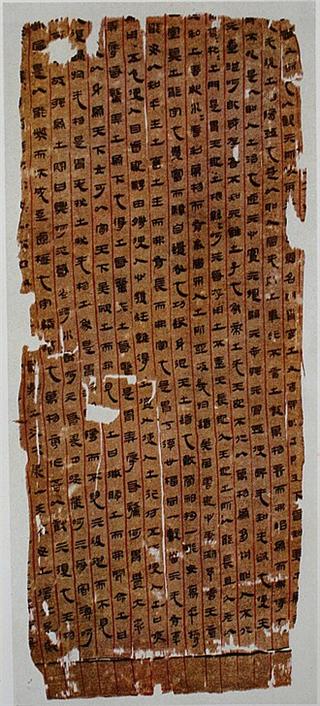
At the centre of Daoist thought is the Dao, the Way: the nameless source of the universe, prior to heaven and earth, from which all things arise and to which they return. The Daodejing opens by warning that the Dao that can be spoken of is not the constant Dao. It cannot be grasped by words or concepts, but it can be followed. Its power at work in things is de, often translated as virtue or potency.
Daoist ethics follow from this. The sage imitates the Dao by wuwei, “non-action”: not idleness, but action that is effortless, unforced and in harmony with the nature of things, like water, which yields to everything yet wears away the hardest stone. Ziran, naturalness or spontaneity, and simplicity are prized above ambition, cleverness and accumulated rules. The Daodejing names three treasures: compassion, frugality, and not daring to be first in the world. The Zhuangzi adds a delight in the relativity of all views and the freedom of a mind that no longer clings to life, death or reputation.
Daoism shares with all Chinese thought a cosmology of qi, the vital energy of which all things are made, of the complementary forces of yin and yang, and of the five phases. The human body is a small universe, and health and long life come from nourishing and balancing its energies.
As a religion, Daoism seeks not only wisdom but transformation. Its practitioners aimed to prolong life and to become xian, “immortals” or transcendents, through diet, breathing exercises, gymnastics, meditation and alchemy: at first external alchemy, the preparation of elixirs from minerals, and from the Tang and Song periods above all internal alchemy, the refining of the body’s own energies.
Religious Daoism worships a vast hierarchy of gods, imagined as a celestial bureaucracy. At its summit are the Three Pure Ones, personifications of the Dao, one of whom is Laozi deified; below them are the Jade Emperor, the gods of the stars, the mountains and the body, local and household gods and famous immortals. Priests communicate with this heavenly administration through rituals, written petitions and talismans, to bring blessing, heal illness and expel demons.
Texts & Teachers

The Daodejing, the “Classic of the Way and its Virtue”, is a short book of 81 chapters of compressed and often enigmatic verse, divided into a part on the Way and a part on virtue. The oldest known manuscripts, which show that the text was still fluid, come from tombs: bamboo slips from Guodian in Hubei, buried around 300 BCE and found in 1993, contain parts of it, and two silk manuscripts from Mawangdui in Hunan, buried in 168 BCE and found in 1973, contain it whole, with its two parts in reverse order.
The Zhuangzi survives in 33 chapters edited by the scholar Guo Xiang around 300 CE; its first seven, the “inner chapters”, are generally attributed to Zhuang Zhou himself. Its stories, among them the famous dream in which Zhuangzi cannot tell whether he is a man who dreamt he was a butterfly or a butterfly dreaming he is a man, are among the masterpieces of Chinese prose. The Liezi and the Huainanzi, presented to the Han emperor in 139 BCE, belong to the same tradition.
The religion produced a huge literature of revealed scriptures. Between 364 and 370 the visionary Yang Xi received texts from perfected beings at Mount Mao near Nanjing, the foundation of the Shangqing, “Highest Clarity”, school of meditation; around 400 Ge Chaofu began the Lingbao, “Numinous Treasure”, scriptures, with their rituals for universal salvation. Ge Hong’s Baopuzi, of the early 4th century, describes the techniques of alchemy and the search for immortality.
The scholar and priest Lu Xiujing catalogued the Daoist scriptures in 471, dividing them into three “caverns”, and later emperors had the growing canon collected and copied. The Daoist Canon, the Daozang, printed under the Ming in 1445 with a supplement in 1607, contains some 1,500 texts: philosophy, scriptures, rituals, hagiographies, alchemy, medicine and the histories of sacred mountains. It remains the main source for the study of Daoism.
Spread
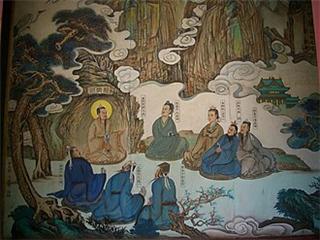
Daoism grew up alongside Confucianism and, from the 1st century CE, Buddhism, and the three teachings competed, borrowed from one another and were often practised together. After the fall of the Han, the Celestial Masters’ communities spread across northern and southern China. In 442 the Northern Wei emperor Taiwu, advised by the reformer Kou Qianzhi, received Daoist registers and made Daoism the religion of his state; in the south, Tao Hongjing, who lived from 456 to 536, organised the Shangqing tradition at Mount Mao.
Daoism reached its greatest official favour under the Tang dynasty, whose emperors, of the Li family, claimed descent from Laozi, whose family name tradition gave as Li. In 666 Gaozong honoured Laozi with the title of emperor, and Xuanzong, who reigned from 712 to 756, wrote a commentary on the Daodejing and created examinations on Daoist texts. Tang princesses became Daoist nuns, and poets such as Li Bai were initiated into the religion.
Under the Song dynasty, the emperor Huizong, who reigned from 1100 to 1126, was a fervent patron. In the north, under the Jurchen Jin dynasty, Wang Chongyang founded in 1167 the school of Complete Perfection, Quanzhen, a monastic order of celibate masters that drew on all three teachings. His disciple Qiu Chuji travelled to meet Genghis Khan in the Hindu Kush in 1222 and won freedom from taxes for his order, which flourished under Mongol rule until its debates with Buddhist monks went against it; in 1281 Kublai Khan ordered Daoist books, except the Daodejing, to be burned.
The Ming emperors favoured the Celestial Master lineage of Mount Longhu, the Orthodox Unity school, Zhengyi; the Yongle emperor built a vast complex of temples on Mount Wudang in honour of the god Zhenwu, protector of the dynasty, and the canon was printed in 1445. Daoist ideas and texts also reached Korea, Japan and Vietnam.
In the 20th century, Daoism suffered from campaigns against “superstition” in the Republic and in the People’s Republic of China, and above all during the Cultural Revolution, when temples were closed or destroyed and priests laicised. The 63rd Celestial Master moved to Taiwan in 1949. Since the 1980s Daoism, one of the five religions officially recognised in China, has revived, and Daoist ideas have attracted wide interest across the world.
Community & Society
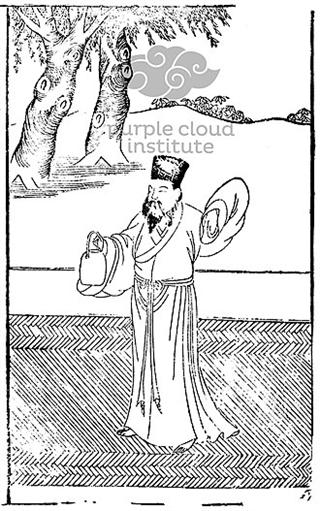
Daoism has two main orders of clergy today. The Orthodox Unity priests, Zhengyi, heirs of the Celestial Masters, may marry and live among the people, serving their communities with rituals for festivals, funerals, healing and exorcism; they are ordained by receiving registers, lists of the spirit generals they may command. The monks and nuns of Complete Perfection, Quanzhen, live celibate lives in monasteries, devoted to self-cultivation and internal alchemy; their centre is the White Cloud Monastery in Beijing, where Qiu Chuji is buried.
The great Daoist rituals, the jiao or offering, can last for days, with priests in embroidered robes chanting scriptures, dancing sacred steps and presenting written memorials to the gods on behalf of a whole community. Temples, often dedicated to local or popular gods as well as to the high deities, are centres of festivals, divination and pilgrimage, and the sacred mountains, among them Mount Wudang, Mount Longhu, Mount Qingcheng and Mount Mao, are dotted with temples and hermitages.
For most Chinese people, Daoism has never been an exclusive identity: they visit Daoist temples, Buddhist monasteries and ancestral halls alike, and Daoist priests perform rituals within this wider popular religion.
Women have held an unusual place in Daoism. From early times women could be ordained as priests, Tang princesses entered Daoist orders, and Sun Bu’er, one of the seven disciples of Wang Chongyang, was revered as a master of internal alchemy, with a distinctive path of self-cultivation for women.
Daoist practices of health and longevity, breathing exercises, meditation and gentle movement, have spread far beyond the clergy. The martial art of taijiquan, whose legendary founder is the Daoist immortal Zhang Sanfeng, though historians trace its forms to the 17th century, is practised by millions of people every morning in the parks of China and across the world.
Legacy
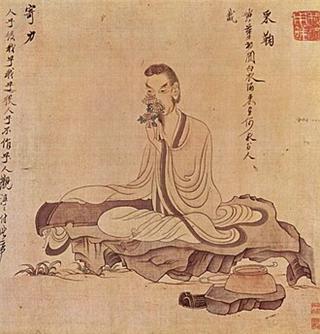
Daoism has been one of the great shaping forces of Chinese civilisation, the counterpart to the ordered, social world of Confucianism: the tradition of nature, spontaneity and the inner life. It deeply influenced Chinese poetry, from Tao Yuanming to Li Bai, landscape painting, with its vast mountains and tiny human figures, and calligraphy; the great calligrapher Wang Xizhi came from a family of Celestial Master followers.
Its quest for long life made it a laboratory of Chinese science and medicine. Daoist physicians and alchemists, such as Ge Hong and Sun Simiao, studied herbs, minerals and the body, and their experiments with elixirs produced the earliest known gunpowder mixtures. The historian of science Joseph Needham argued that Daoism’s attention to nature made it the seedbed of Chinese science.
Daoism also shaped Buddhism in China: early translators used Daoist terms for Buddhist ideas, and the Chan school, known in Japan as Zen, absorbed Daoist spontaneity and love of paradox. Its gods, festivals and rituals remain part of the religious life of Chinese communities across the world.
In the modern West, the Daodejing has been translated hundreds of times, and Daoist ideas of harmony with nature, non-action and simplicity have inspired writers, environmentalists and seekers, if often in forms far removed from the living religion of priests, temples and rituals that historians have rediscovered since the 20th century.
Daoism, the Chinese tradition of the Dao, the Way underlying all things, grew from the Daodejing and the Zhuangzi of the Warring States period and became an organised religion with the Celestial Masters from 142 CE. Seeking harmony with nature, long life and transcendence through ritual, meditation and alchemy, it was patronised by emperors, shaped Chinese art, medicine and science, and remains a living tradition in China, Taiwan and beyond.
References
- Kohn, L. (ed.) (2000) Daoism Handbook. Leiden: Brill.
- Lau, D.C. (trans.) (1963) Lao Tzu: Tao Te Ching. Harmondsworth: Penguin.
- Miller, J. (2003) Daoism: A Short Introduction. Oxford: Oneworld.
- Pregadio, F. (ed.) (2008) The Encyclopedia of Taoism. London: Routledge.
- Robinet, I. (1997) Taoism: Growth of a Religion. Translated by P. Brooks. Stanford: Stanford University Press.
- Schipper, K. (1993) The Taoist Body. Translated by K.C. Duval. Berkeley: University of California Press.