Culture · Europe
Hallstatt culture
At a glance
- The Hallstatt culture grew out of the Urnfield culture of the Late Bronze Age, and its Iron Age phases, from about 800 to 450 BCE, form the Hallstatt period proper.
- The salt mines of Hallstatt, worked most intensively from the 8th to the 5th centuries BCE, made its community unusually rich, and the salt has preserved cloth, wood, leather and tools.
- Late in the period fortified princely seats such as the Heuneburg traded with the Greek and Etruscan Mediterranean, but at the end many centres were destroyed or abandoned and the La Tène culture took their place.
Timeline
- c. 1200 BCEThe finds at Hallstatt begin, in the Hallstatt A phase of the Urnfield culture
- c. 800 BCEIron ore processing arrives and the Hallstatt period proper, Hallstatt C, begins, with iron swords among the bronze ones
- 778 ± 5 BCETimber from the cart grave of Wehringen gives a firm tree-ring date for early Hallstatt C
- c. 600 BCEAfter the founding of Marseille, Greek and Etruscan trade up the Rhône begins to transform the settlements north of the Alps
- c. 500 BCEMajor activity at Hallstatt ends and salt mining shifts to the Hallein mine at Dürrnberg
- c. 450 BCEHallstatt D gives way to the La Tène culture after great centres such as the Heuneburg are destroyed or abandoned
- 1846Johann Georg Ramsauer discovers the great prehistoric cemetery at Hallstatt
- 1902Paul Reinecke divides the period into Hallstatt A to D
Origins
The Hallstatt culture takes its name from Hallstatt, a lakeside village in the Austrian Salzkammergut south-east of Salzburg, with a rich salt mine and a great prehistoric cemetery. It developed out of the Urnfield culture of the 12th century BCE. In the scheme Paul Reinecke drew up in 1902 from finds in southern Germany, Hallstatt A (1200–1050 BCE) and Hallstatt B (1050–800 BCE) belong to the Late Bronze Age Urnfield culture, while Hallstatt C (800–620 BCE) and Hallstatt D (620–450 BCE) form the early Iron Age, the Hallstatt period proper. By convention it begins with the arrival of iron ore processing around 800 BCE; timber from the cart grave of Wehringen gives a firm tree-ring date of 778 ± 5 BCE for early Hallstatt C. Radiocarbon helps little, because of the “Hallstatt plateau”, which makes dates between 750 and 400 BCE impossible to tell apart.
The culture is commonly associated with speakers of Proto-Celtic, and some if not all of its spread probably took place in a Celtic-speaking context. In northern Italy the Golasecca culture, an early western example of the Hallstatt movement, grew out of the Canegrate culture, and Lepontic inscriptions of about the 6th century BCE show Celtic speakers there. Early 20th-century claims that Illyrians carried the eastern Hallstatt culture are now considered indefensible.
Ancient DNA shows continuity with the earlier Bell Beaker culture and about 50% steppe-related ancestry, and suggests descent largely from local Bronze Age populations.
Society
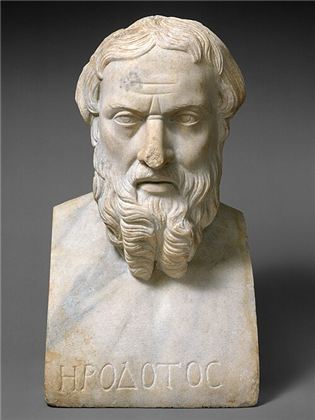
Hallstatt society was based on farming, but metalworking was well advanced, and by the end of the period long-distance trade had become economically important. Most settlements were small villages. The largest were mostly fortified hilltop sites, often with the workshops of bronze, silver and gold smiths; the greatest, the “princely seats” or Fürstensitze, had elite residences, rich burials, monumental buildings and fortifications, and some have been called “the first cities north of the Alps”. The Heuneburg on the upper Danube, ringed by nine very large grave mounds, is thought to be the Celtic city of Pyrene mentioned by Herodotus; Mont Lassois in eastern France, with the rich grave of Vix at its foot, is another.
Social distinctions grew sharper, with emerging elites of chieftains and warriors. Society is thought to have been tribal, though very little is known of it, and ancient DNA points to matrilineal “dynastic elites”. Hallstatt itself was untypical, its economy resting on salt, mined most intensively from the 8th to the 5th centuries BCE. Some 1,300 burials holding about 2,000 people have been found there, many with goods well above subsistence, and most are now thought to belong not to miners but to a richer class who controlled the mines. No settlement has been found; it may lie under the later village.
Crafts were standardised: spoked-wheel wagons are remarkably uniform, the potter’s wheel appeared, and buildings in Silesia used a standard unit of length of about 0.785 m.
Beliefs & Worldview
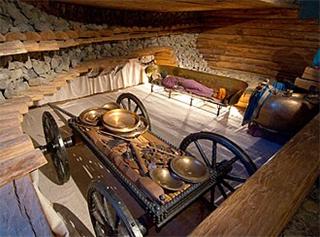
Burial customs changed over the period. At Hallstatt the dead were at first cremated and placed in simple graves and later more often buried whole, always with grave goods; in Hallstatt C cremation and inhumation occur together, and in Hallstatt D most burials were inhumations. Toward the end of the period, in the central regions, high-status people were buried under large mounds near fortified hilltop settlements, in timber-lined chambers with the body and the grave goods set about the room. Some graves held a chariot or wagon, as at Vix, Hochdorf, Hohmichele and Býčí Skála, and wooden funerary carts, presumably used as hearses, were buried in the grandest. In the west the elite were buried with a sword in Hallstatt C and with a dagger, probably a badge of rank rather than a weapon, in Hallstatt D; in the east, with an axe.
The Strettweg Cult Wagon from Austria (c. 600 BCE) has been read as showing a deer goddess or a “Great Nature Goddess” like Artemis. Some great burial mounds seem to have been aligned on the sky: at Glauberg and Magdalenenberg structures point to the major lunar standstill, which comes every 18.6 years. The archaeologist Allard Mees argues that the burials in the Magdalenenberg mound mirror the constellations of the summer solstice of 618 BCE and that it served as a lunar calendar, and Kruta reads a 6th-century brooch from Hallstatt, with waterfowl, horses, a solar boat and twelve pendants, as a symbolic summary of the year. These remain interpretations.
Arts & Knowledge
The later Hallstatt art of the western zone is generally agreed to form the early period of Celtic art. Its decoration is mostly geometric and linear and is best seen on fine metalwork from graves. Animals, waterfowl above all, are often worked into objects, more often than humans, and in the west there are almost no narrative scenes; these traits passed to the La Tène style. Common objects include weapons, in Hallstatt D often with “antenna hilts” ending in curving forks, and jewellery: fibulae with rows of discs hanging on chains, armlets and some torcs, mostly bronze, with gold in the princely burials. The most remarkable pieces, the Strettweg Cult Wagon, the Warrior of Hirschlanden and the bronze couch held up by “unicyclists” from the Hochdorf Chieftain’s Grave, are each one of a kind.
The eastern zone has more human figures and some narrative scenes, from Hallstatt C onward, traced to the situla art of northern Italy and the northern Adriatic. The fashion for decorated bronze buckets, situlae, spread north from about 600 to 400 BCE; the Vače situla from Slovenia is an example. Their scenes, mostly of feasts, hunting and war, show life from what Ruth and Vincent Megaw call a masculine viewpoint.
Iron swords became common after about 800 BCE, and steel was made for them. Builders used long saws for great planks, and the Vix palace shows a mastery of geometry and carpentry. Instruments included harps, lyres, zithers, panpipes, horns, drums and rattles.
Contact & Exchange
Long-distance trade grew in the later Hallstatt period. Attic black-figure pottery in elite graves attests trade with Greece, probably through the Greek colony of Massilia (Marseille). Amber, ivory, as in the Grafenbühl tomb, red kermes dye, found at Hochdorf, and probably wine came north, and the finest imports include the Greek Vix krater, the Etruscan lebes from Sainte-Colombe-sur-Seine, the Greek hydria from Grächwil, the Greek cauldron from Hochdorf and the Greek or Etruscan cauldron from Lavau. Weights and weighing equipment were used in trade.
The founding of Marseille and the reach of Greek and Etruscan culture after about 600 BCE opened trade up the Rhône valley, which transformed the settlements north of the Alps: powerful local chiefdoms emerged that controlled the redistribution of Mediterranean luxuries. Writing came north too. Inscriptions on situlae from the Hallstatt cemetery may be related to Etruscan or Old Italic scripts; a single word on a sherd from Montmorot (late 7th to mid-6th century BCE) has been identified as Gaulish or Lepontic; and a late 5th-century sherd from a princely burial near Bergères-les-Vertus bears what has been read as rîx, the Celtic word for “king”, in the Lepontic alphabet.
Trade, the spread of ideas and some movements of people carried the western Hallstatt culture into Britain and Ireland, and its influence reached the rest of France, northern Italy and much of Iberia.
Legacy

The largely peaceful and prosperous life of Hallstatt D was disrupted, perhaps even collapsed, at the very end of the period, for reasons that remain uncertain. Large settlements such as the Heuneburg and the Burgstallkogel were destroyed or abandoned, rich mound burials ended and old ones were looted. There was probably a significant movement of people westward, and the La Tène culture grew up in new centres to the west and north, perhaps overlapping with the last years of Hallstatt. At Hallstatt itself major activity ended about 500 BCE, when many graves were probably robbed, and salt mining moved to the Hallein mine, whose graves at Dürrnberg run into the early La Tène period, until a great landslide in the mid-4th century BCE destroyed its shafts. Towns re-emerged across temperate Europe in the 3rd and 2nd centuries BCE.
Johann Georg Ramsauer discovered the Hallstatt cemetery in 1846 and excavated it in the second half of the 19th century. Much of the early material was dispersed among collections, especially in German and Austrian museums, but the Hallstatt Museum in the town holds the largest. The finds from the Burgstallkogel are mostly in the Landesmuseum Joanneum at Graz, which also holds the Strettweg Cult Wagon.
Garrett Olmsted has argued that the Celtic Coligny calendar of the 1st–2nd centuries CE goes back to the Hallstatt period or earlier, carried by a long oral tradition.
The Hallstatt culture was the predominant culture of western and central Europe from about 1200 to 450 BCE, spanning the Late Bronze Age and the early Iron Age and named after a salt-mining village in Austria. Its elites lived in fortified princely seats, traded with the Greek and Etruscan world and were buried with wagons and rich goods, until its centres fell and the La Tène culture followed.
References
- Kristinsson, Axel (2010), Expansions: Competition and Conquest in Europe since the Bronze Age, Reykjavík: Reykjavíkur Akademían.