
Culture · South & Southeast Asia
Vedic civilisation
At a glance
- The Vedic period takes its name from the Vedas, liturgical texts composed and passed on by word of mouth in the northern Indian subcontinent between the end of the Indus cities and new cities of c. 600 BCE.
- Early Vedic society was tribal and pastoral, centred in the Punjab; later, with iron tools, it settled the western Ganges Plain and formed kingdoms such as the Kuru.
- The age produced fire sacrifice, the four varnas and the early Upanishads, and its tradition became one of the main parts of the later “Hindu synthesis”.
Timeline
- c. 1900 BCEThe urban Indus Valley Civilisation collapses; in the mainstream view, Indo-Aryan groups then settle the northern Indus Valley
- c. 1400–1000 BCEThe Rigveda, the oldest layer of the Vedas, is composed
- Early Vedic periodThe Bharatas under their chief Sudas defeat a confederation of ten tribes in the Battle of the Ten Kings on the river Parushni (Ravi)
- c. 1200–1000 BCEVedic culture spreads east to the western Ganges Plain, and iron tools come into use
- c. 12th–11th century BCEThe early Kuru kingdom forms; Vedic hymns are collected and the Śrauta rituals developed
- c. 900–750 BCEAfter the Kuru decline, the political centre of Vedic culture moves to Panchala under King Keśin Dālbhya
- 8th or 7th century BCEVideha rises under King Janaka, patron of the sages Yajnavalkya, Uddalaka Aruni and Gargi Vachaknavi
- c. 600–500 BCEThe Mahajanapadas, the first true cities and the śramaṇa movements, among them Jainism and Buddhism, mark the end of the period
Origins

The Vedic period, or Vedic age (c. 1500–c. 500 BCE), is the part of the late Bronze Age and early Iron Age in the northern Indian subcontinent when the Vedic literature, including the Vedas (c. 1500–900 BCE), was composed. It falls between the end of the urban Indus Valley Civilisation and a second urbanisation that began in the central Indo-Gangetic Plain around 600 BCE. The Vedas are liturgical texts, composed and orally transmitted with precision by speakers of an Old Indo-Aryan language; together with the archaeological record they are the primary sources for the period.
In the account of the academic mainstream, groups of Indo-Aryan peoples migrated into north-western India after the collapse of the Indus Valley Civilisation around 1900 BCE and settled the northern Indus Valley. The Indo-Aryans are seen as a branch that diverged from other Indo-Iranian tribes at the Andronovo horizon, which arose from the Sintashta culture, and that moved through the Bactria–Margiana area of present-day northern Afghanistan. Their religion was closely related to the reconstructed Proto-Indo-European and Indo-Iranian religions; according to Anthony it also borrowed from the Bactria–Margiana culture, including the god Indra and the ritual drink Soma. Some Indian writers and archaeologists reject a migration and argue for an indigenous origin of the Indo-Aryans, in an unbroken tradition reaching back to the Indus (Sindhu-Sarasvati) tradition of 7000 or 8000 BCE; this view is popular in India but outside the academic mainstream.
A much older chronology comes from post-Vedic Hindu texts such as the Mahabharata, the Ramayana and the Puranas, in which the Vedas were received by the seven rishis thousands of years ago and the Kurukshetra War is dated to about 3100 BCE. Historians date the early Vedic age to the second half of the second millennium BCE, reconstructing its history from details within the texts, whose language falls into five chronological layers, correlated with archaeology.
Society
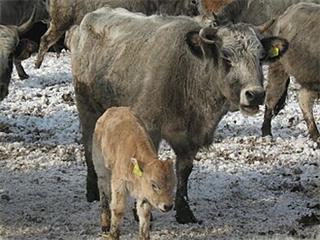
Early Vedic people were a Late Bronze Age society centred in the Punjab, organised into tribes rather than kingdoms and living mainly by herding. The economy combined pastoralism and agriculture: the Rigveda mentions levelling fields, processing seed and storing grain in large jars, and exchange ran through gifts to kings (bali) and priests (dana) and barter with cattle as a unit of value. Clans as a whole held rights over land and herds. After about 1000 BCE iron axes and ploughs made it possible to clear the forests of the Gangetic plains; Vedic settlements spread into the western Ganga-Yamuna Doab, growing wheat, rice and barley, and new crafts arose, among them carpentry, tanning, pottery, jewellery, dyeing and winemaking.
Society was patriarchal and patrilineal. Early on the tribal chief (rajan) and nobility (rajanya) stood at the top, the common people (viś) in the middle and the dasa and dasyu at the bottom; the Rigveda does not yet link the words Brahmana and Kshatriya to varna, and Vaishya and Shudra are absent. In the later period, as Kulke and Rothermund describe it, four estates emerged: Brahmin priests and warrior nobility on top, free peasants and traders third, and slaves, labourers and artisans, many from pre-Aryan groups, fourth. The later texts fixed roles and ritual purity for each, though they rank the top three inconsistently, and some hymns still suggest social mobility.
Women could choose their husbands and could remarry if their husbands died or disappeared, and women sages and goddesses were known, though a wife was subordinate to her husband; in the later period women were relegated to more subordinate roles, while the texts still name them as herders, weavers and dyers, the woman warrior Vishpala and two female philosophers of the Upanishads. Tribal councils, the sabha and samiti, limited the early rajan; with the later kingdoms hereditary kingship emerged and the councils declined. Pastimes included music, dancing, drama, chariot racing and gambling.
Beliefs & Worldview

Worship centred on sacrifice (yajna): the chanting of Rigvedic verses, the singing of Samans and the murmuring of sacrificial formulas (Yajus), with offerings poured into the sacrificial fire, the god Agni, in the belief that whatever was offered there reached the divine. People prayed for rain, cattle, sons, long life and heaven. The composers of the hymns, the rishis, were regarded as inspired poets and seers; in post-Vedic times the Veda was understood as śruti, “what is heard”. The Vedas record the liturgy of the 16 or 17 Śrauta priests and the purohitas.
The main gods were Indra, Agni and Soma, with gods of social order such as Mitra–Varuna, Aryaman, Bhaga and Amsa, and nature gods such as Surya (the Sun), Vayu (the wind) and Prithivi (the earth). Goddesses included Ushas (the dawn) and Aditi, and rivers, above all the Saraswati, were also goddesses. The gods were not thought all-powerful: the relationship with them was a transaction, with Agni as messenger between the two. Ethics rested on satya and ṛta, the order that regulates the universe, whose violation brought punishment. The Soma cult and fire worship keep traces of a common Indo-Iranian religion, both preserved in Zoroastrianism.
In the later period the Kuru kingdom systematised the religious literature and developed the Śrauta ritual. Its best-known new sacrifice was the Ashvamedha, in which a consecrated horse was set free to roam for a year, followed by warriors; the lands it entered had to pay homage or fight. Vedic people believed in the transmigration of the soul, and by the time of the Atharvaveda the peepul tree and the cow were sacred. Later ideas of Indian philosophy such as dharma and karma trace their roots to the Vedas.
Arts & Knowledge
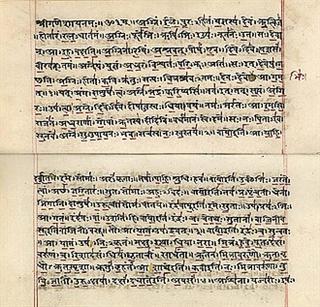
The great achievement of the age was its literature, composed and passed on orally with precision. The four Vedas are its core, with the Brahmanas, the Aranyakas, the older Upanishads and the oldest Śrautasutras. By their language the texts fall into five layers: the Rigveda, by far the most archaic and closest to the Indo-Iranian heritage; the mantra texts of the Atharvaveda, Samaveda and Yajurveda; the Samhita prose of the Black Yajurveda; the Brahmana prose, with the oldest Upanishads; and the Sutras, the last stratum of Vedic Sanskrit before c. 500 BCE. The grammar of Pāṇini marks the final apex of the Sutra texts and the beginning of Classical Sanskrit.
Music and craft are both recorded. The flute (vana), lute (vina), harp, cymbals and drums were played, using a heptatonic scale. The Rigveda names chariot-makers, cart-makers, carpenters, metalworkers, tanners, bow-makers, weavers and makers of mats of grass and reed. It also mentions a metal, ayas, used for razors, bangles and axes. Some scholars take ayas to be iron, but philological evidence indicates that in the Rigveda it meant copper and bronze, and that iron, “black metal”, is first named in the later Atharvaveda; on this reading the Early Vedic period was a Bronze Age culture and the Late Vedic period an Iron Age one. Later texts also mention tin, lead and silver.
Visual art is scarce. Northern India has very early images of deities from the Indus Valley Civilisation, but the following millennium is devoid of such remains. It has been suggested that early Vedic religion, centred on the forces of nature and elaborate sacrifices, did not lend itself to images of gods in human form. Abstract designs on the pottery of the Black and Red Ware (1450–1200 BCE) and Painted Grey Ware (1200–600 BCE) cultures are among the few examples of artistic expression.
Contact & Exchange
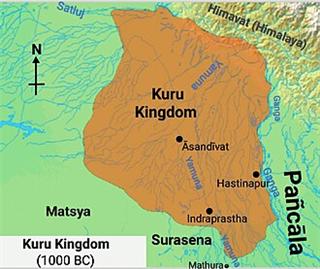
The Rigveda describes conflicts between the Aryas and the Dasas and Dasyus, people who did not perform sacrifices or obey the commands of the gods; the words describing their speech and appearance are open to many interpretations. Some modern scholars, such as Asko Parpola, connect the Dasas and Dasyus with the Iranian Dahae and Dahyu and think they were Indo-Aryans who arrived before the Vedic Aryans. Wars among the Vedic tribes also appear, above all the Battle of the Ten Kings on the river Parushni (the Ravi), where the Bharatas under their chief Sudas defeated a confederation of ten tribes. After the war the Bharatas and the Purus merged into a new tribe, the Kuru.
Horses remained a priority for Vedic leaders, a remnant of nomadic life. Because horses needed for cavalry and sacrifice could not be bred in India, trade routes were maintained beyond the Hindu Kush. There are references to boats, and Book X of the Rigveda mentions both eastern and western oceans. The Panis of some hymns were merchants; the suggestion that they were Semitic traders rests on slim evidence. Settled farming in the later period brought more trade and more competition for resources, and the Ashvamedha sacrifice put considerable pressure on relations between states.
The Vedic peoples were not the only Indo-Aryans in northern India. According to Bronkhorst, the central Ganges Plain was dominated by a related but non-Vedic culture, “Greater Magadha”, which placed kshatriyas above Brahmins and rejected Vedic rituals. The Kuru kingdom itself declined after defeat by the non-Vedic Salva tribe. By the 6th century BCE commerce and travel flourished between the new kingdoms, and the Achaemenid invasion of the Indus valley under Cyrus and Darius I marked the beginning of outside influence.
Legacy

The end of the Vedic period was marked by linguistic, cultural and political change. By the 6th century BCE the political units had consolidated into large kingdoms, the Mahajanapadas, true cities were rising, and in the Kosala-Magadha region the śramaṇa movements, including Jainism and Buddhism, challenged the authority of the Brahmins and their Vedic scriptures and ritual. Pāṇini’s grammar opened the age of Classical Sanskrit. The Mahajanapada period followed, and the culture of Greater Magadha reached its height under the Maurya Empire.
Vedic ideas lasted far longer. Vedic religion developed into Brahmanical orthodoxy, and around the beginning of the Common Era the Vedic tradition formed one of the main constituents of the “Hindu synthesis”. The old ritual survived in the Śrauta tradition, while Yoga and Vedanta acknowledged the authority of the Vedas but read the Vedic pantheon as a unitary view of the universe, with Brahman both immanent and transcendent. The Upanishads and the epics, including the Bhagavad Gita of the Mahabharata, were essential to these later developments.
The hierarchy of social classes that emerged in the period remained influential, and ideas such as dharma and karma trace their roots to the Vedas. Its chronology is still disputed: the mainstream dating rests on the texts and archaeology, while the Puranic chronology places Vedic events thousands of years earlier, and an indigenous origin of the Indo-Aryans, popular in India, remains outside the academic mainstream.
The Vedic period (c. 1500–500 BCE) is named after the Vedas, liturgical texts composed and orally transmitted in the northern Indian subcontinent by speakers of an Old Indo-Aryan language. Its society moved from tribal herding in the Punjab to farming and kingdoms such as the Kuru in the western Ganges Plain. It produced fire sacrifice, the varna hierarchy and the early Upanishads, and its tradition became a main part of later Hinduism.
References
- Thapar, R. (2004) Early India: From the Origins to AD 1300. University of California Press.
- Flood, G. (ed.) (2003) The Blackwell Companion to Hinduism. Malden, MA: Blackwell.
- Prasad, R. U. S. (2020) The Rig-Vedic and Post-Rig-Vedic Polity (1500 BCE – 500 BCE). Vernon Press.
- Kulke, H. and Rothermund, D. (2004) A History of India. Routledge.
- Erdosy, G. (ed.) (1995) The Indo-Aryans of Ancient South Asia: Language, Material Culture and Ethnicity. Walter de Gruyter.
- Bryant, E. (2001) The Quest for the Origins of Vedic Culture. Oxford University Press.