At a glance
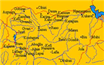
- A Somali Muslim state ruled by the Garen lineage, which claimed holy Arab descent, in the land between the Shabelle and Jubba rivers.
- Its power rested on control of wells and river water, which it used to levy tribute from herders and farmers.
- Revolts in the late 17th century broke it up, and the Hiraab Imamate and the Geledi took over its lands.
Rise & Fall
- 13th centuryThe Ajuran confederation begins to form under the Garen lineage, according to tradition
- 1331Ibn Battuta visits Mogadishu and praises its cloth trade
- 1499Vasco da Gama bombards Mogadishu
- 1507A Portuguese fleet sacks Barawa
- 1580sThe Ottoman corsair Mir Ali Bey wins support on the Benadir coast
- late 17th centuryRevolts led by Hawiye clans break Ajuran power
- c. 1700The Hiraab Imamate and the Geledi replace the Ajuran
Foundation
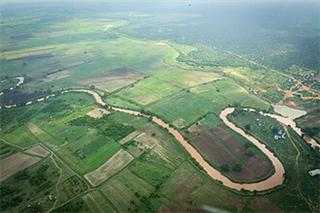
The Ajuran Sultanate arose among the Somali clans of the inter-riverine region of southern Somalia, the fertile land between the Shabelle and Jubba rivers, and on the arid plains that stretch north from it towards the Indian Ocean coast. Its history is known mainly from Somali oral traditions, gathered by scholars such as Lee Cassanelli in the twentieth century, supplemented by ruins, wells, coins and scattered references in Portuguese and Arabic sources, so its dates and extent are uncertain. Traditions describe the Ajuran as a clan confederation led by the Garen, a ruling lineage that claimed descent from Arab holy men and thus combined religious prestige with political authority. The state probably took shape from the thirteenth century onwards, as Islam spread inland from the coastal towns and as pastoral clans competed for scarce water and grazing. Its centres are traditionally placed at Mareeg in central Somalia and at Qalaafo on the upper Shabelle, in what is now Ethiopia’s Somali Region. By the fifteenth and sixteenth centuries, according to tradition, Ajuran authority stretched from the Shabelle valley across much of the hinterland of the Benadir coast, and its rulers were linked by alliance or overlordship to the ports of Mogadishu, Merca and Barawa.
Socioeconomy

The Ajuran economy combined camel and cattle herding with irrigated farming. Pastoral clans moved their herds between dry-season wells and wet-season pastures, while farmers along the Shabelle grew sorghum, maize in later centuries, beans and cotton, partly with the help of canals and floodwater. Control of water was the foundation of Ajuran power: traditions say the rulers organised the digging of deep, stone-lined wells and regulated access to wells and river water, taking tribute in livestock, grain and ghee from those who used them. For this reason the Ajuran has sometimes been described as a hydraulic state, although the scale of its waterworks is debated. Many old wells in southern Somalia are still attributed to the Ajuran. The interior was linked to the coast, where the Benadir ports exported ivory, hides, aromatic gums, livestock products and the cotton cloth of Mogadishu, famous since Ibn Battuta praised it in 1331, and imported Indian textiles, Arabian goods and Chinese porcelain. Mogadishu and Barawa were also visited by the Ming fleets of Zheng He in the early fifteenth century. Society was organised by clan and lineage, with Islamic scholars, holy families and merchants holding high status, and Islam, in the Shafi‘i tradition, had become the religion of most of the population.
Military

Little detailed evidence survives about Ajuran warfare, but the traditions describe a state that kept order on the plains through garrisons at strategic wells and river crossings and through forces raised from allied clans. Its fighters, like other Somali warriors of the period, used spears, swords, shields and bows, and its control of water and grazing gave it a powerful means of coercion over pastoral groups. On the coast the Benadir ports faced the Portuguese, who arrived in the Indian Ocean at the end of the fifteenth century. Vasco da Gama bombarded Mogadishu in 1499 on his return from India, and in 1507 a Portuguese fleet under Tristão da Cunha and Afonso de Albuquerque sacked Barawa, but the Portuguese never established lasting control over Mogadishu or the other Somali ports. In the 1580s the Ottoman corsair Mir Ali Bey visited the Benadir coast and won support there against the Portuguese. Some modern accounts attribute this coastal resistance to the Ajuran themselves; the extent of Ajuran involvement is uncertain, since the ports had their own rulers. In the interior, the expansion of the Oromo peoples into parts of southern Somalia in the sixteenth century and the rise of rival Somali clans placed growing pressure on Ajuran authority.
Governance & Law
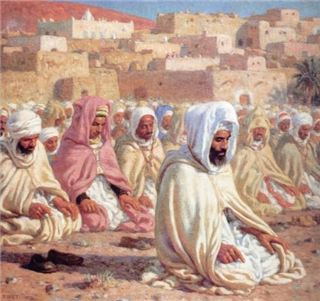
According to Somali traditions, the Ajuran was ruled by imams of the Garen lineage, whose claim to sacred descent gave them a religious authority that set them above ordinary clan leaders. Beneath them, the traditions mention governors, tax collectors and military officers who administered provinces and supervised wells, markets and caravan routes, and they describe the Ajuran as unusually centralised compared with the clan-based societies around it. Its power rested on the combination of holy lineage, control of water and the ability to extract tribute from herders and farmers. The relationship with the coast is less clear: the sultans of Mogadishu, of the Muzaffar dynasty in the sixteenth century, and the leaders of Merca and Barawa seem to have been allies or tributaries rather than direct subjects, and the Ajuran may have drawn revenue from their trade without governing them. Islamic law shaped justice and commerce, while customary clan law (xeer) continued to settle disputes over livestock, blood compensation and grazing. Traditions remember the later Ajuran rulers as harsh and arrogant, imposing heavy taxes and making extreme demands on their subjects, accounts that probably reflect the perspective of the clans that eventually overthrew them.
Global & Regional Impact

The Ajuran Sultanate is remembered as one of the largest and most organised states in pre-colonial Somali history, and it holds an important place in Somali national memory. It demonstrated that a centralised government could be built in a pastoral society by combining religious legitimacy with control of water, and its legacy shaped the political geography of southern Somalia: the clans that replaced it, including the Hawiye groups behind the Hiraab Imamate and the Geledi, inherited its territories, its wells and many of its ways of managing land and water. Through its ties with the Benadir ports it helped link the Somali interior to the trade of the Indian Ocean, which brought cloth, metals and luxury goods to the region and carried Somali produce to Arabia, India and beyond. The many wells, ruined forts, mosques and tombs attributed to the Ajuran, from the Shabelle valley to the central plains, remain landmarks in the cultural landscape. Because its history depends so heavily on oral tradition, the Ajuran also illustrates the methods historians use to reconstruct the African past from genealogies, place names and archaeology, as in Cassanelli’s influential study of southern Somali society.
Decline & Fall
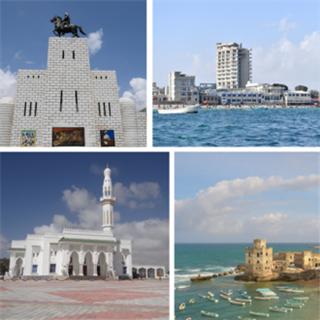
The Ajuran Sultanate broke up in the later seventeenth century. Somali traditions attribute its fall to the oppression of its last rulers, who are said to have imposed crushing taxes and humiliating demands on the clans, provoking a series of revolts. Underlying causes probably included the growth in numbers and strength of rival pastoral clans, pressure from Oromo groups in the south and west, and shifts in the coastal trade as the Portuguese, and later the Omanis, disrupted the commerce of the Benadir ports. One by one, regions threw off Ajuran control. In the Mogadishu region and its hinterland, the Hawiye Abgaal and related clans established the Hiraab Imamate, which, according to tradition, defeated the Ajuran and took over the coast and the central plains. On the lower Shabelle, the Geledi clan around Afgooye rose to power and later founded the Sultanate of the Geledi, which dominated the river valley in the eighteenth and nineteenth centuries. By around 1700 the Ajuran state had disappeared, although Ajuran clans survive today in Somalia, Ethiopia and northern Kenya. The exact chronology of the collapse remains uncertain, and some historians place the final break-up in the early eighteenth century.
The Ajuran Sultanate was among the most centralised states in Somali history, a Muslim polity that built its power on holy lineage and control of wells and rivers in southern Somalia, linked the interior to the Indian Ocean ports and left territories and traditions to its successors.
Test yourself
4 questions on this page, from its key events and facts.
The questions open here once the page has loaded.
References
- Cassanelli, L.V. (1982) The Shaping of Somali Society: Reconstructing the History of a Pastoral People, 1600–1900. Philadelphia: University of Pennsylvania Press.
- Freeman-Grenville, G.S.P. (1962) The East African Coast: Select Documents from the First to the Earlier Nineteenth Century. Oxford: Clarendon Press.
- Lewis, I.M. (1955) Peoples of the Horn of Africa: Somali, Afar and Saho. London: International African Institute.
- Lewis, I.M. (2002) A Modern History of the Somali. 4th edn. Oxford: James Currey.
Connections
Open the full connections map →