
Sub-Saharan Africa
Kingdom of Kano
At a glance
- A Hausa kingdom centred on the walled city of Kano, ruled by 43 kings from Bagauda, dated to 999, to the Fulani jihad.
- Muhammad Rumfa (1463–1499) built the Gidan Rumfa, founded the Kurmi market and took advice on Islamic rule from al-Maghili.
- Indigo-dyed cloth, leather, kola and the caravan trade made Kano the leading market city of the central Sudan.
Rise & Fall
- 999Bagauda becomes the first king of Kano, by the Kano Chronicle’s reckoning
- c. 1350Under Yaji, Wangara Muslims from Mali bring Islam to the Kano court
- c. 1400Kanajeji equips his cavalry with quilted armour, iron helmets and coats of mail
- c. 1440Abdullahi Burja pays tribute to Bornu and opens trade roads to Gonja
- 1463Muhammad Rumfa becomes king; he builds the Gidan Rumfa and founds the Kurmi market
- c. 1671Kwararafa (Jukun) forces break into Kano and the king flees to Daura
- 1781Muhammad Alwali II, the last Hausa king of Kano, comes to the throne
- 1805The Fulani jihad reaches Kano; Alwali is later driven out and killed at Burum-Burum
Foundation
Kano grew up around Dala hill, a rocky outcrop on the savanna plain of what is now northern Nigeria, where communities of farmers, hunters and ironworkers lived long before there was a kingdom. Almost everything known of its origins comes from the Kano Chronicle, an Arabic history of the kings of Kano written down in the late 1880s or early 1890s from older records and oral tradition, and translated into English by H. R. Palmer in 1908. The Chronicle tells of Barbushe, priest of a god called Tchunburburai who dwelt in a sacred tree, and of the arrival of Bagauda, grandson of the Hausa culture hero Bayajidda, who became the first king. Palmer dated Bagauda’s accession to 999 by counting the reigns back from the Fulani conquest, so the early dates are approximate at best, and the Chronicle itself records a dispute over who arrived first. By its account the third king, Gijimasu, or in the version it prefers his son Tsaraki, founded a walled town with eight gates at Gazarzawa below Dala, and Naguji, reckoned to have ruled from 1194 to 1247, was the first to collect a land tax of one-eighth of the crop. The newcomers’ rule was long resisted: the stronghold of Santolo held out until the fourteenth century, and the old cult survived longer still.
Socioeconomy
Kano’s wealth rested on the farmland of the surrounding plain and on crafts and commerce. Farmers grew millet, sorghum, cotton and indigo, and the city walls enclosed fields as well as houses, so that Kano could feed itself under siege. Cotton cloth woven and dyed with indigo became its best-known product; in the traditional division of roles among the Hausa states, Kano and Rano were the ‘kings of indigo’. Tanned goatskin was another export, and much of the ‘Morocco leather’ later prized by European bookbinders came from Hausa cities such as Kano. The Chronicle traces the growth of long-distance trade: under Abdullahi Burja (1438–1452) roads were opened from Bornu to Gonja, the source of kola nuts in what is now Ghana, and the king became the first in Hausaland to own camels; a prince from Bornu founded the market of Karabka; and Muhammad Rumfa established the Kurmi market, which still trades today. Merchants from Tripoli and Ghadames came to the city, and some Arabs settled there. Islam reached the court under Yaji (1349–1385), when Wangara Muslims from the Mali Empire arrived and supplied an imam and a judge, but it spread gradually, and many rural Hausa, the Maguzawa, kept the old religion. Slavery was widespread: captives worked royal estates, and slaves and eunuchs served as soldiers and officials.
Military
Kano fought with armoured cavalry and defended itself with walls. The Chronicle credits Kanajeji (1390–1410) with introducing quilted armour (lifidi), iron helmets and coats of mail after heavy losses in a war against the Umbatu, and records that he sent horses to the Kwararafa in exchange for slaves. Cavalry led Kano’s wars against its neighbours: Kanajeji defeated Zazzau and killed its king, and Rumfa’s war with Katsina lasted eleven years without a victor. Under Muhammad Kisoki (1509–1565) Kano attacked Birnin Nguru, and a Bornu army that came in reply could not take the city. The great earthen walls, begun by the Chronicle’s account in the late eleventh or twelfth century and extended by Rumfa and again around 1620 under Muhammad Nazaki, enclosed farmland and markets as well as houses and gave refuge in long sieges. They did not always hold. The Kwararafa, or Jukun, of the Benue valley ravaged the countryside in the reign of Muhammad Zaki (1582–1618), battered down a gate around 1653 and around 1671 broke into the city, killing many of its leading men while the king fled to Daura. Wars with Katsina, Zamfara and Gobir filled much of the following century. The Chronicle records guns arriving from Nupe under Kumbari (1731–1743), and Babba Zaki (1768–1776) was the first king with a guard of musketeers.
Governance & Law
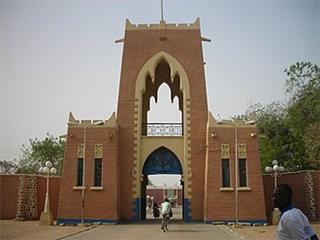
The sarki ruled through a hierarchy of titled officials. Princely titles such as Dan Buram and Dan Isa preserved the names of men whom the Chronicle lists among Bagauda’s companions, while great offices such as Galadima and Madawaki carried command of the capital, the army and the provinces. Muhammad Rumfa (1463–1499), whom the Chronicle calls the most powerful of all its kings, reshaped this system. It credits him with twelve innovations, among them a new palace, the Gidan Rumfa, still the emir’s residence; the Kurmi market; an extension of the walls; the council of nine senior office-holders, the Tara ta Kano; the seclusion of royal women (kulle); the public celebration of the Id festival; and the appointment of eunuchs to offices of state, including the treasury. Rumfa also sought guidance on Islamic government. The North African scholar Muhammad al-Maghili, almost certainly the Chronicle’s Abdu Rahaman, came to Kano in the 1490s, urged him to build a Friday mosque and cut down a sacred tree, and wrote for him a treatise on the duties of kings, Taj al-din fi ma yajib ‘ala al-muluk. Royal women could wield great power: Rumfa’s widow Madaki Auwa helped her son Abdullahi and her grandson Kisoki to rule. Later kings multiplied levies, and the Chronicle condemns Muhammad Sharefa (1703–1731) for seven new exactions ‘all of which were robbery’.
Global & Regional Impact

Kano became the leading commercial city of the central Sudan, linking the kola country of Gonja and the Niger valley with Bornu and the trans-Saharan caravan routes. Its dyed cloth was worn far beyond Hausaland, and its markets drew merchants from North Africa, Bornu and the western Sudan. The kingdom was also a centre of Islamic learning: scholars came from Mali, Bornu and North Africa, and al-Maghili’s advice to Rumfa became a reference point for Islamic government in West Africa, quoted three centuries later in a work attributed to the Fulani reformer Usman dan Fodio. Kano’s institutions outlived its Hausa dynasty. The Fulani emirs who took power in the early nineteenth century kept the Gidan Rumfa, much of the old title system and the walled city, and Kano remained the chief market of the region. The Kano Chronicle, which names forty-three Hausa kings from Bagauda to Muhammad Alwali, is one of the richest sources for precolonial West Africa; among much else it places Queen Amina of Zazzau, who in its account conquered as far as Nupe and the Kwararafa, in the 1420s and 1430s, although other traditions and historians date her to the sixteenth century. The city walls are on Nigeria’s tentative list for World Heritage status, and Kano is one of the largest cities of West Africa.
Decline & Fall

Kano’s fortunes swung through the seventeenth and eighteenth centuries. Defeats by Katsina, Jukun invasions and famine weakened it, and in the eighteenth century Katsina’s markets at times overshadowed its own. The Chronicle records that a Bornu army camped outside the city in Kumbari’s reign, and that Kumbari’s heavy levies on the Kurmi market and on the townspeople nearly ruined the market and drove Arab merchants to Katsina. Pastoral Fulani clans, taxed through the jangali cattle levy since Kutumbi’s reign (1623–1648), had become an important part of the population, and some of their leaders sat on the council of state. Muhammad Alwali II, king from 1781, faced famine and quarrelled with his own officials. After war broke out in 1804 between Usman dan Fodio and the king of Gobir, Fulani leaders in Kano, among them Muhammadu Bakatsine of the Jobawa, rose against Alwali in the name of the jihad. Many histories date the fall of the Hausa kingdom to 1805. The Chronicle says that Alwali fought the Fulani for three years before he was driven from the city, an event Palmer dated to 1807, and that he fled to Zaria, was turned away and was killed at Burum-Burum. A young imam, Sulaimanu, became the first Fulani emir, and Kano became an emirate of the Sokoto Caliphate until the British took the city in February 1903.
The Kingdom of Kano, ruled by Hausa kings from around 1000 until the Fulani jihad of the early nineteenth century, built a walled city whose cloth, leather and markets made it the commercial heart of the central Sudan, and its Kano Chronicle is one of the richest sources for precolonial West African history.
References
- Hogben, S.J. and Kirk-Greene, A.H.M. (1966) The Emirates of Northern Nigeria: A Preliminary Survey of Their Historical Traditions. London: Oxford University Press.
- Last, M. (1967) The Sokoto Caliphate. Harlow: Longmans.
- Lovejoy, P.E. (1980) Caravans of Kola: The Hausa Kola Trade, 1700–1900. Zaria: Ahmadu Bello University Press.
- Nast, H.J. (2005) Concubines and Power: Five Hundred Years in a Northern Nigerian Palace. Minneapolis: University of Minnesota Press.
- Palmer, H.R. (1928) Sudanese Memoirs: Being Mainly Translations of a Number of Arabic Manuscripts Relating to the Central and Western Sudan. 3 vols. Lagos: Government Printer.
- Smith, M.G. (1997) Government in Kano, 1350–1950. Boulder, CO: Westview Press.
Connections
Open the full connections map →