Americas
Tikal
At a glance
- Tikal, ancient Mutal, was one of the two great powers of the Classic Maya, a city of tens of thousands in Guatemala's Petén forest.
- In 378 a warrior linked with Teotihuacan remade its dynasty, and its long rivalry with the Snake kingdom of Calakmul shaped Maya politics.
- Victories in 695 and 743–744 restored its power in an age of giant temples, but its kings vanished in the ninth-century collapse.
Rise & Fall
- c. 90Yax Ehb Xook, later honoured as founder of the royal line, rules at Tikal
- 292Stela 29 records one of the earliest Long Count dates in the Maya lowlands
- 378Sihyaj K'ahk', linked with Teotihuacan, arrives and King Chak Tok Ich'aak I dies
- 562Tikal suffers a 'star war' defeat recorded at Caracol, opening a long hiatus
- 657Calakmul's Yuknoom Ch'een II drives King Nuun Ujol Chaak from Tikal
- 695Jasaw Chan K'awiil I defeats Yich'aak K'ahk' of Calakmul
- 743–744Yik'in Chan K'awiil defeats El Perú and Naranjo, allies of Calakmul
- 869Stela 11, Tikal's last dated monument, is raised in the Great Plaza
Foundation

Tikal grew from a farming village in the forests of the Petén, in northern Guatemala, into one of the greatest cities of the Classic Maya. The site was settled by about 800 BCE, and in the Late Preclassic period, from about 400 BCE, its people raised large pyramids and platforms, among them the radial pyramid of the Mundo Perdido, or 'Lost World', complex, part of a group laid out to mark the movements of the sun. The North Acropolis became the burial ground of the city's rulers. Later kings counted their descent from a founder, Yax Ehb Xook, whose reign the dynastic count places around 90 CE, and a rich Late Preclassic tomb in the North Acropolis may be his. The kingdom's own name was Mutal, written with the sign of a knot of hair. Tikal grew as the great Preclassic centre of El Mirador to the north declined, and by the late third century its lords were raising carved stelae: Stela 29, dated 292, bears one of the earliest Long Count dates known in the Maya lowlands. In January 378 a warrior named Sihyaj K'ahk', linked with the central Mexican metropolis of Teotihuacan, arrived at Tikal, and on the same day the reigning king, Chak Tok Ich'aak I, died.
Socioeconomy
At its height in the eighth century Tikal was a sprawling city of tens of thousands of people. The University of Pennsylvania's map of its central 16 square kilometres recorded some 3,000 structures, from temples and palaces to the house platforms of commoners, and settlement continued far into the surrounding countryside. Farmers grew maize, beans and squash in fields and house gardens. With no river or lake nearby, the city depended on rainwater, and the paved plazas of its centre drained into large reservoirs that carried it through the dry season. Local chert was worked into tools, while obsidian came from the Guatemalan highlands and, in the Early Classic, from central Mexico; jade, quetzal feathers, cacao, cotton cloth and fine painted pottery passed among the elite as tribute, gifts and goods of exchange. Society was steeply ranked, from the king and his court through nobles, scribes and artisans to the farmers who made up most of the population. Religion centred on royal ancestors, on gods such as K'awiil, whose name many kings bore, and on ceremonies marking the end of each twenty-year katun. Kings and nobles were buried with jade, shell and painted vessels beneath temples and shrines.
Military
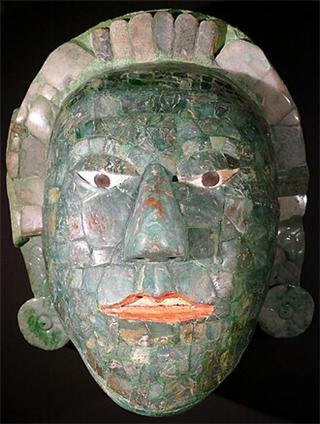
War was a royal duty at Tikal, and its monuments record campaigns, captives and defeats. In 378, under Sihyaj K'ahk', Tikal subdued its northern neighbour Uaxactun, and over the next two centuries it dominated much of the central Petén. Its great rival was Kaanul, the Snake kingdom, based first at Dzibanche and later at Calakmul, which built a network of allies around Tikal. In 556 Tikal attacked Caracol, a client kingdom that had changed sides, and in 562 it suffered a 'star war' defeat recorded on Caracol's Altar 21, a victory many epigraphers now credit to the Kaanul king; Tikal's ruler, Wak Chan K'awiil, was probably captured and sacrificed. Worse came when Dos Pilas, an outpost ruled by a Tikal prince, B'alaj Chan K'awiil, went over to Kaanul: in 657 Calakmul's king Yuknoom Ch'een II drove Nuun Ujol Chaak from Tikal, and in 679 Dos Pilas defeated Tikal in battle. The tide turned in August 695, when Jasaw Chan K'awiil I defeated the army of Yich'aak K'ahk' of Calakmul. His son Yik'in Chan K'awiil defeated El Perú in 743 and Naranjo in 744, breaking the ring of Calakmul's allies. A ditch and rampart some 9.5 kilometres long, about 4.5 kilometres north of the centre, may have served for defence.
Governance & Law
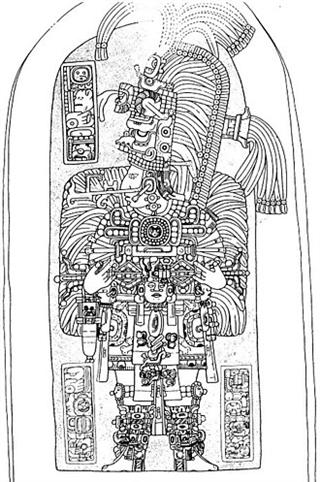
Tikal was ruled by a dynasty of sacred kings who held the title k'uhul ajaw, 'holy lord', of Mutal and numbered themselves in succession from Yax Ehb Xook. The king led in war and ritual, offered his own blood to the gods, and was commemorated on stelae and altars set up in the plazas. The events of 378 remade the dynasty: Yax Nuun Ahiin I, enthroned as a boy in September 379, was a son of a lord known as Spearthrower Owl, perhaps a ruler of Teotihuacan, and Stela 31, dedicated in 445 by his son Siyaj Chan K'awiil II, shows the father in Teotihuacan warrior dress beside the son in Maya regalia, with a long text joining the new line to the old. Tikal's kings oversaw the accession of rulers elsewhere, as Wak Chan K'awiil did at Caracol in 553, and Jasaw Chan K'awiil I claimed the supreme title kaloomte'. Women could hold office: a six-year-old girl known as the Lady of Tikal was installed in 511 and reigned with a co-ruler, Kaloomte' Bahlam. The court occupied the many-roomed palaces of the Central Acropolis, served by nobles and scribes. Late Classic kings raised twin-pyramid complexes to mark the end of each katun and great temples over their tombs, such as Temple I, built for Jasaw Chan K'awiil I, who died in 734.
Global & Regional Impact
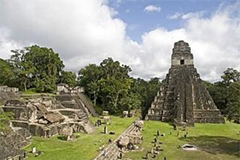
Tikal was one of the two great powers of the Classic Maya world, and its long contest with Kaanul drew in kingdoms across the southern lowlands, from Caracol in Belize to Dos Pilas, Naranjo and El Perú; the alliances and wars carved on their monuments form one of the best-documented political histories of the ancient Americas. Through Tikal the events of 378 carried Teotihuacan's prestige, weapons and imagery into Maya court culture, and lords installed under Sihyaj K'ahk's authority ruled at Uaxactun and other nearby cities. The city's architecture set standards for the region: its twin-pyramid complexes are known at only a few neighbouring sites, and its steep temples with tall roof combs are among the tallest buildings of the pre-Columbian Americas, Temple IV rising about 65 metres. Its inscriptions on stone and on carved sapodilla-wood lintels are central sources for Maya history. After Modesto Méndez and Ambrosio Tut, officials of the Petén, reported the ruins in 1848, they drew explorers such as Alfred Maudslay and Teobert Maler, while the Swiss Gustav Bernoulli took carved lintels to Basel in 1877. The University of Pennsylvania's project of 1956–1970 excavated and restored much of the centre. Tikal National Park was created in 1955, and UNESCO listed it as a World Heritage Site in 1979.
Decline & Fall
Tikal's last century of greatness was also the beginning of its end. Building went on after Yik'in Chan K'awiil: Temple VI was dedicated in 766, twin-pyramid complexes were raised in 771 and 790, and Temple III, built around 810 and probably associated with the king known as Dark Sun, was the last great pyramid. Across the southern lowlands, however, the Classic order was breaking down in the ninth century. Wars multiplied, lesser lords claimed royal titles, and dynasty after dynasty stopped raising monuments in what is called the Classic Maya collapse, whose causes are still debated: severe droughts, a large population on exhausted land, and the failure of kings who could not bring rain or victory are among those proposed. At Tikal, sediments from two of the largest central reservoirs show contamination with mercury and toxic cyanobacteria in the ninth century, and the population fell sharply after about 830. Jasaw Chan K'awiil II raised Stela 11, the last dated monument at Tikal, in the Great Plaza in 869. By about 900 royal rule had ended. Small groups lived on among the ruins until the city was finally abandoned in the tenth or eleventh century, and the forest closed over it.
Tikal was one of the greatest cities of the Classic Maya, and its kings' wars and alliances, above all the long struggle with Calakmul, form some of the best-recorded political history of ancient America; its temples, monuments and abandonment around 900 make it a key site for understanding both Maya civilisation and its collapse.
References
- Coe, W.R. (1967) Tikal: A Handbook of the Ancient Maya Ruins. Philadelphia: University Museum, University of Pennsylvania.
- Harrison, P.D. (1999) The Lords of Tikal: Rulers of an Ancient Maya City. New York: Thames and Hudson.
- Martin, S. (2020) Ancient Maya Politics: A Political Anthropology of the Classic Period 150–900 CE. Cambridge: Cambridge University Press.
- Martin, S. and Grube, N. (2008) Chronicle of the Maya Kings and Queens: Deciphering the Dynasties of the Ancient Maya. Rev. edn. London: Thames & Hudson.
- Sabloff, J.A. (ed.) (2003) Tikal: Dynasties, Foreigners, and Affairs of State: Advancing Maya Archaeology. Santa Fe: School of American Research Press.
- Sharer, R.J. with Traxler, L.P. (2006) The Ancient Maya. 6th edn. Stanford: Stanford University Press.
Connections
Open the full connections map →