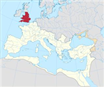
Islamic Caliphates & Middle East
Alans
At a glance
- Iranian-speaking horse nomads related to the Sarmatians, who dominated the steppe north of the Caucasus from the 1st century CE.
- Broken by the Huns around 370, some Alans crossed the Rhine in 406 and went on with the Vandals to Spain and North Africa.
- Those who stayed in the Caucasus formed the Kingdom of Alania, and the Ossetians speak a language descended from theirs.
Rise & Fall
- early 70sAlans cross the Caucasus and raid Media and Armenia
- c. 135Arrian, governor of Cappadocia, prepares Roman forces against an Alan invasion
- c. 370The Huns defeat the Alans near the Don
- 406Alans cross the Rhine with the Vandals and Suebi
- 418The Visigoths destroy the Alans of Hispania and kill their king Addac
- 429Alans cross with the Vandals to North Africa
- 451Alans under Sangiban fight Attila at the Catalaunian Plains
- c. 558Sarosius helps the first Avar envoys reach Constantinople
Foundation

The Alans were an Iranian-speaking people of the steppes north of the Caucasus and the Caspian, closely related to the Sarmatians and the earlier Scythians. Their name is generally thought to derive from an old Iranian form related to Aryan. They appear in Greek and Latin sources in the first century CE, when Roman writers such as Seneca, Lucan and the Jewish historian Josephus begin to mention them as a new and formidable power between the Don and the Caucasus. Chinese sources of the Han period refer to a people called Yancai, later renamed Alanliao, north-west of the Caspian, which many scholars connect with the rise of the Alans, although the identification is debated. The Alans probably formed as a new confederation within the Sarmatian world, absorbing the Aorsi and other groups and drawing in peoples of different origins. The historian Ammianus Marcellinus, writing in the late fourth century, describes how they had gradually overcome their neighbours and given them their own name, so that 'Alans' covered many peoples spread across the steppe from the Don eastwards. They were never a single state with fixed borders, but a shifting union of clans and chiefdoms bound by language, way of life and military success, whose leaders could combine for great raids and then disperse.
Socioeconomy

The Alans lived as mounted pastoralists, moving with their herds of horses, cattle and sheep between seasonal pastures. Ammianus Marcellinus describes them living in wagons covered with bark, which served as moving homes, and claims that they despised farming and lived on meat and milk; such portraits drew on Greek and Roman stereotypes of nomads, and archaeology shows that some Alan groups, especially in the North Caucasus foothills, lived in settled villages and hillforts and practised agriculture. Society was organised in clans under chiefs, with a warrior elite whose wealth is visible in rich burials containing weapons, horse gear, gold ornaments and objects imported from Rome, Iran and Central Asia. Ammianus reports that the Alans had no slaves and that all were of noble birth, another idealised claim, and that they valued death in battle above all. Their religion included the worship of a naked sword thrust into the ground, honoured as the god of war, and divination with willow rods. Trade with the Greek cities of the Black Sea, with Armenia and with Iran brought wine, metalwork and luxury goods in exchange for horses, livestock and captives. In the Caucasus the Alans controlled the passes, above all the Darial Gorge, which gave them leverage over the empires to the south.
Military
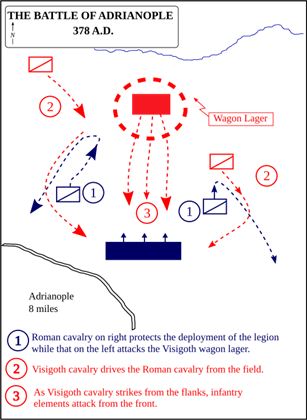
The Alans fought chiefly as cavalry. Their nobles were heavily armoured lancers, using long spears held with both hands, supported by horse archers, and Roman writers admired their skill and mobility. In the early 70s CE, according to Josephus, Alans crossed the Caucasus passes and raided Media and Armenia, nearly capturing the Armenian king Tiridates. Around 135 another Alan invasion struck Albania, Media and Armenia; Flavius Arrian, governor of Cappadocia, prepared his army to meet them and wrote a short treatise, the Order of Battle against the Alans, describing how Roman infantry should receive the charge of heavy cavalry. Alans served as allies and mercenaries of both Rome and Iran. Around 370 the Huns defeated the Alans near the Don, and many Alans joined the Huns or moved west with the Goths; Alan cavalry is reported among the Gothic forces at the Battle of Adrianople in 378. On the last day of 406, according to the traditional date, Alans crossed the Rhine with the Vandals and Suebi, entered Gaul and in 409 Hispania. Others served Rome: Alans under Sangiban fought on the Roman side against Attila at the Battle of the Catalaunian Plains in 451. In the sixth century the Caucasian Alans, under rulers such as Sarosius, were valued allies of Byzantium.
Governance & Law
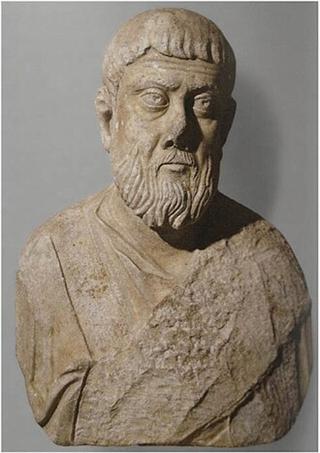
The Alans had no permanent central government. Power lay with the chiefs of clans and larger groups, who could be elected or accepted as war leaders for a campaign, and Ammianus says that they chose as leaders men distinguished in war. Different Alan groups followed their own kings and pursued their own policies, which explains why, in the fifth century, Alans fought on both sides of many conflicts. In the west, Respendial and Goar led separate groups across the Rhine in 406, and while Respendial's Alans saved the Vandals from defeat by the Franks, Goar went over to the Roman side and his followers were later settled near Orléans by the general Aetius; another group under Sambida was settled near Valence around 440. In Hispania the Alans received Lusitania and Carthaginiensis in the division of 411, and their king Addac ruled the strongest of the invading groups until the Visigoths destroyed his army in 418. In the east, Alan rulers in the North Caucasus negotiated with Byzantium, Persia and the steppe empires: Sarosius helped the first Avar envoys reach the Byzantine court around 558. By the seventh century the Alans of the Caucasus were tributary to the Khazar Khaganate, and only gradually did a more centralised Kingdom of Alania emerge from their chiefdoms.
Global & Regional Impact
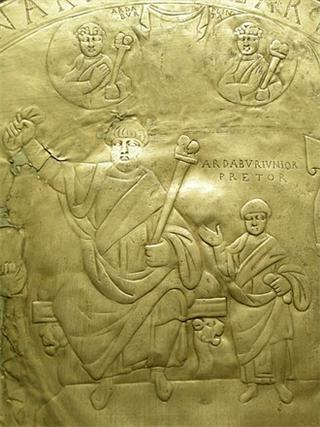
The Alans were among the most widely travelled peoples of late antiquity, and their history connects the steppe, the Caucasus, Roman Gaul, Spain and North Africa. Their heavy cavalry influenced the military practice of their neighbours, and some historians have argued for a lasting Alan contribution to the cavalry of the late Roman and early medieval west, though the extent of this influence is debated. Alan soldiers and commanders rose high in Roman service; the general Aspar, of Alan descent, was one of the most powerful men in the Eastern Roman Empire in the mid-fifth century. In Africa the Vandal kings styled themselves kings of the Vandals and Alans until the Byzantine conquest of 533–534. In the Caucasus the Alans controlled the Darial Pass and held the balance between Byzantium, Persia, the Khazars and later the Arabs, and their successor, the Kingdom of Alania, adopted Christianity in the early tenth century. The Ossetians of the central Caucasus speak a language descended from Alanic and preserve the Nart epic tradition, which shares motifs with older steppe lore. Groups of Alans also survived in medieval Hungary, as the Jász, and in Mongol service, where an Alan guard served the Yuan emperors in China.
Decline & Fall

The Alans never fell as a single state, but their great confederation was broken by the Huns. Around 370 the Huns defeated the Alans on the Don, killing many and forcing others to submit; Alan contingents then fought in Hunnic armies, while other groups fled west with the Goths. In the west, the Alans who entered Gaul and Hispania were gradually absorbed. The Visigoths, acting for Rome, crushed the Alans of Hispania in 418, and the survivors placed themselves under the Vandal king Gunderic and crossed with the Vandals to Africa in 429, where they merged into the Vandal kingdom. The Alans settled in Gaul by Aetius were assimilated into the Gallo-Roman and Frankish population, leaving traces mainly in place names. In the east, the Alans who remained in the North Caucasus foothills survived as a people under their own chiefs, but from the seventh century they were tributary to the Khazar Khaganate, while Arab armies campaigned through the Caucasus in the eighth century. From these chiefdoms the Kingdom of Alania took shape around the ninth century, the medieval successor of the Alans, which lasted until the Mongol invasions of the thirteenth century drove its people into the mountains.
The Alans were a nomadic Iranian-speaking people whose cavalry dominated the steppe north of the Caucasus, raided Rome and Iran, and after the Hunnic invasions scattered across Europe and Africa, while those who stayed in the Caucasus became the ancestors of the Ossetians.
Test yourself
5 questions on this page, from its key events and facts.
The questions open here once the page has loaded.
References
- Alemany, A. (2000) Sources on the Alans: A Critical Compilation. Leiden: Brill.
- Ammianus Marcellinus, The Later Roman Empire (A.D. 354–378), trans. W. Hamilton (1986). Harmondsworth: Penguin.
- Bachrach, B.S. (1973) A History of the Alans in the West. Minneapolis: University of Minnesota Press.
- Golden, P.B. (1992) An Introduction to the History of the Turkic Peoples. Wiesbaden: Otto Harrassowitz.
- Heather, P. (2005) The Fall of the Roman Empire: A New History. London: Macmillan.
Connections
Open the full connections map →