Europe
Roman Britain
At a glance
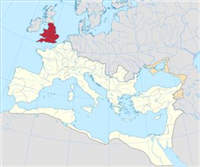
- Roman Britain was the province of Britannia, covering most of England and Wales from the Claudian invasion of 43 until about 410.
- It held one of the largest garrisons in the empire, guarding a northern frontier marked by Hadrian's Wall and the Antonine Wall.
- Towns such as London, York and Lincoln, a road network, villas and Christianity were its lasting legacies.
Rise & Fall
- 43Claudius's general Aulus Plautius invades with four legions; Camulodunum falls
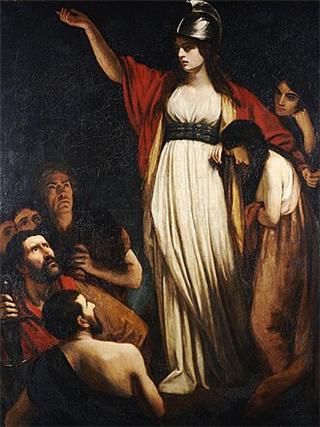
- 60 or 61Boudica of the Iceni destroys Camulodunum, Londinium and Verulamium before her defeat
- 83 or 84Agricola defeats the Caledonians at Mons Graupius in northern Scotland
- c. 122Building begins on Hadrian's Wall from the Tyne to the Solway
- 286Carausius declares himself emperor and rules Britain independently until 293
- 306Constantine the Great is proclaimed emperor at York
- 367Picts, Scotti and Saxons overrun the province in the 'barbarian conspiracy'
- 410Honorius reportedly tells the cities of Britain to look to their own defence
Foundation
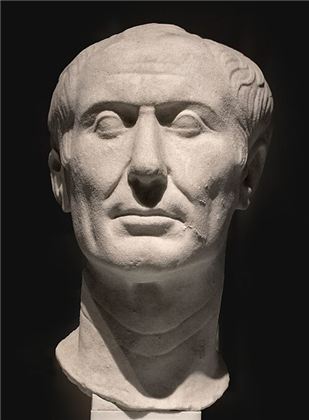
Britain was known to the Mediterranean world long before the Romans came, as a source of tin and as the island across the Ocean from Gaul. Julius Caesar crossed twice, in 55 and 54 BCE, defeating Cassivellaunus and taking hostages and promises of tribute, but he left no garrison. For the next century Rome dealt with British rulers through diplomacy, and southern kings such as Cunobelinus of the Catuvellauni struck coins and imported wine and fine pottery from the empire. In 43 CE the emperor Claudius, seeking military prestige, sent Aulus Plautius with four legions, the II Augusta, IX Hispana, XIV Gemina and XX, and auxiliaries, perhaps 40,000 men in all. After battles on the Medway and the Thames, Claudius himself arrived to enter Camulodunum (Colchester), the Catuvellaunian centre, and his triumphal arch in Rome recorded the surrender of eleven British kings. Camulodunum became the first capital and, from 49, a colony of veterans. Some peoples, such as the Regni under Togidubnus and the Iceni under Prasutagus, were left as client kingdoms, while Vespasian, commanding the II Augusta, conquered the south-west. Within four years a frontier ran roughly along the line later followed by the Fosse Way, from Exeter to Lincoln.
Socioeconomy

Roman Britain remained a largely rural society, with a population often estimated, very approximately, at two to three million. Most people lived in farmsteads and villages much like those of the Iron Age, but a network of towns grew up: coloniae of veterans at Colchester, Lincoln and Gloucester, later York, and civitas capitals for the native peoples, such as Verulamium (St Albans), Corinium (Cirencester) and Viroconium (Wroxeter). Londinium, founded around 50 at the lowest bridging point of the Thames, became the largest city, with a forum and basilica that were among the biggest north of the Alps. In the countryside the elite built villas, from modest farmhouses to the great palace at Fishbourne of about 75, and in the 4th century houses such as Chedworth and Bignor reached their greatest size and finest mosaics. The province exported grain, wool, hunting dogs, lead and silver from the Mendips and Derbyshire, and tin from Cornwall; the British woollen cloak, the birrus Britannicus, appears in Diocletian's price edict of 301. Religion mixed Roman and Celtic cults, as at the spring of Sulis Minerva at Bath, where some 130 curse tablets survive. Christianity spread from the 3rd century, and the Hinton St Mary mosaic shows an early image of Christ.
Military
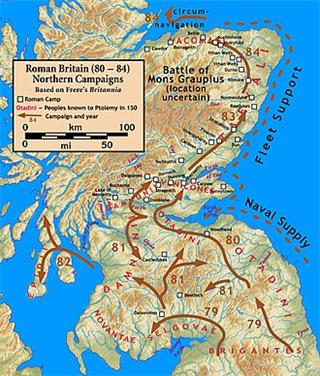
Britain held one of the largest garrisons in the empire, perhaps a tenth of the whole Roman army in the 2nd century. Resistance was fierce at first. Caratacus led the Silures and Ordovices in Wales until his defeat in 51, after which Cartimandua, queen of the Brigantes, handed him over to the Romans. In 60 or 61, while the governor Gaius Suetonius Paulinus was attacking Anglesey, Boudica of the Iceni rose in revolt and destroyed Camulodunum, Londinium and Verulamium before she was defeated somewhere in the Midlands. Under Vespasian the advance resumed, and Gnaeus Julius Agricola, governor from about 77 to 84, campaigned deep into Scotland and defeated the Caledonians at Mons Graupius in 83 or 84. From the late 1st century three legions remained, at Caerleon, Chester and York, with auxiliary forts across Wales and the north. Hadrian's Wall, begun around 122 and running some 73 miles from the Tyne to the Solway, became the main frontier; the Antonine Wall between the Forth and the Clyde, built from about 142, was held for only some twenty years. Septimius Severus campaigned in Scotland from 208 and died at York in 211. In the late empire a chain of coastal forts, the Saxon Shore, guarded the south-east against seaborne raiders.
Governance & Law
Britain was an imperial province governed by a legatus Augusti pro praetore, a senator of consular rank chosen by the emperor, who commanded the army and administered justice. Finance was the business of a separate procurator; after Boudica's revolt the procurator Julius Classicianus urged a milder policy, and his tombstone was found in London. Local government was left to the civitates, self-governing communities based on the old tribal peoples, whose councils of landowners ran towns, collected taxes and maintained roads such as Watling Street, Ermine Street and the Fosse Way. Client kingdoms were absorbed once their rulers died. To limit the power of a single governor with three legions, the province was divided into Britannia Superior, ruled from London, and Britannia Inferior, ruled from York, a reform traditionally credited to Septimius Severus but perhaps completed under Caracalla. Under Diocletian's reforms about 300 there were four provinces, Britannia Prima, Britannia Secunda, Maxima Caesariensis and Flavia Caesariensis, later joined by Valentia, grouped in a diocese under a vicarius based in London. Military command passed to new officers, the Duke of the Britons and the Count of the Saxon Shore. The Vindolanda tablets, letters on wood from a fort near Hadrian's Wall, reveal the routine of this administration around 100.
Global & Regional Impact

Roman Britain was the empire's north-western frontier for more than three and a half centuries, and it played a large part in imperial politics. Its armies made emperors: Clodius Albinus in 196, Carausius, who ruled Britain and part of northern Gaul as an independent emperor from 286 to 293, and Constantine the Great, proclaimed at York in 306 on the death of his father Constantius. Britain shared in the life of the empire; three British bishops attended the Council of Arles in 314, and the theologian Pelagius came from the island. The physical legacy is still visible. Many English towns stand on Roman sites, among them London, York, Lincoln and Chester, whose names often preserve their Latin forms. Roman roads remained routes for centuries, and Hadrian's Wall is now a World Heritage Site. Latin left fewer traces in the language than in Gaul, because Anglo-Saxon settlement replaced much of the population's speech in the east, but Brittonic took Latin loanwords that survive in Welsh, and Christianity survived in the west, where St Patrick was born to a Romano-British family. Medieval writers such as Gildas and Geoffrey of Monmouth looked back to the Roman period, and the province became central to British archaeology and historical writing from the 18th century.
Decline & Fall
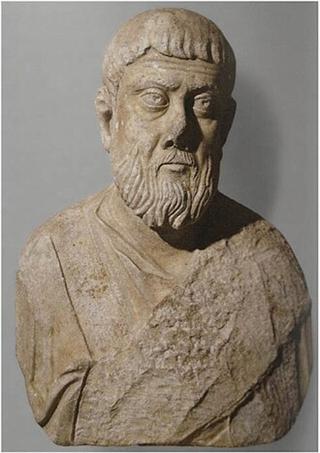
From the late 3rd century Britain faced growing raids by Saxons and Franks from across the North Sea, Picts from the north and Scotti from Ireland. In 367 a combined attack, which Ammianus Marcellinus called a barbarian conspiracy, killed the Count of the Saxon Shore and captured the Duke, and order was restored only by Count Theodosius in 368–369. The province also suffered from its role in civil wars. In 383 Magnus Maximus took troops to the continent to claim the throne, and after a series of short-lived usurpers in 406–407 the army proclaimed Constantine III, who crossed to Gaul with the field army. The coinage supply ceased in the early 5th century, and towns and villas, already declining, were largely abandoned within a generation. According to the Byzantine historian Zosimus, around 409 the Britons expelled Roman officials, and in 410 Honorius told the cities of Britain to look to their own defence, though some scholars think the letter was addressed to Bruttium in Italy. Roman rule was never restored. In the following decades Anglo-Saxon settlers took over much of the east, while British successor kingdoms such as Powys and Dumnonia emerged in the west, keeping elements of Roman Christianity and culture.
Roman Britain brought most of England and Wales into the Roman Empire for more than 350 years, creating the towns, roads and frontier walls that shaped the island's geography, producing emperors such as Constantine the Great, and leaving a legacy of Christianity and urban sites that survived the collapse of Roman rule around 410.
Test yourself
5 questions on this page, from its key events and facts.
The questions open here once the page has loaded.
References
- Esmonde Cleary, A.S. (1989) The Ending of Roman Britain. London: Batsford.
- Frere, S. (1967) Britannia: A History of Roman Britain. London: Routledge & Kegan Paul.
- Mattingly, D. (2006) An Imperial Possession: Britain in the Roman Empire, 54 BC–AD 409. London: Allen Lane.
- Millett, M. (1990) The Romanization of Britain: An Essay in Archaeological Interpretation. Cambridge: Cambridge University Press.
- Salway, P. (1981) Roman Britain. Oxford: Clarendon Press.
- Tacitus (1970) The Agricola and the Germania, trans. H. Mattingly, rev. S.A. Handford. Harmondsworth: Penguin.
Connections
Open the full connections map →