Europe
Lusitania
At a glance
- Augustus created the province from western Hispania Ulterior, with its capital at the veteran colony of Emerita Augusta.
- Farming, mining and fish-salting made it prosperous, and its monuments at Mérida and Alcántara still stand.
- The Alans and then the Suebi ended Roman rule by 439, but its name survives as a classical name for Portugal.
Rise & Fall
- 139 BCEThe Lusitanian leader Viriathus is murdered, ending the Lusitanian War
- 27 BCEAugustus begins the division of Hispania Ulterior
- 25 BCEEmerita Augusta is founded for veterans of the Cantabrian Wars
- 58 CEOtho begins a decade as governor of Lusitania
- c. 104–106The bridge at Alcántara is built over the Tagus
- 304Eulalia is martyred at Emerita
- 411The Alans receive Lusitania in the division of Hispania
- 439The Suebic king Rechila takes Emerita
Foundation

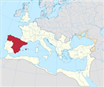
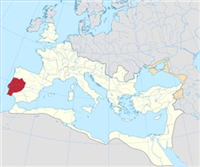
Lusitania took its name from the Lusitanians, a people of western Iberia who had resisted Rome for much of the second century BCE, most famously under Viriathus, until his murder in 139 BCE. Their lands formed part of the Republican province of Hispania Ulterior, and campaigns by Decimus Junius Brutus in 138–137 BCE, by Julius Caesar as governor in 61–60 BCE and by others completed the conquest, interrupted by the war of Sertorius in the 70s BCE. When Augustus reorganised the provinces in 27 BCE he began dividing Ulterior into Baetica in the south, left to the Senate, and Lusitania in the west under his own control. The final arrangement may date only to his second stay in Hispania in 16–13 BCE, when the north-western lands of Gallaecia and Asturia, at first probably attached to Lusitania, were transferred to Tarraconensis. Thereafter Lusitania stretched from the Douro in the north to the Algarve coast in the south and eastwards into the Meseta, taking in the lands of the Lusitanians, the Vettones around Salamanca and Ávila, and the Celtici of the south. In 25 BCE the legate Publius Carisius founded Emerita Augusta on the Guadiana for veterans discharged after the Cantabrian Wars, and the new colony became the provincial capital.
Socioeconomy
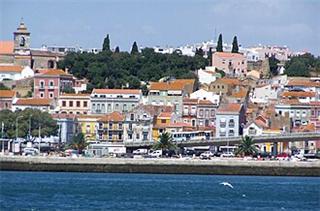
Lusitania was a predominantly rural province of farms, pastures and mines. The valleys of the Tagus, Guadiana and Douro produced grain, wine and olive oil, the uplands supported sheep, cattle and the Lusitanian horses that Roman writers praised for their speed, and the coast supported fishing and the salting of fish. At Tróia, near Setúbal, archaeologists have excavated one of the largest fish-salting complexes known in the Roman world, producing salted fish and sauces such as garum for export in locally made amphorae. Mining was a major source of wealth: bronze tablets found at Vipasca (Aljustrel) preserve imperial regulations, probably of Hadrian's reign, for its copper and silver mines and for the life of the mining community, covering the baths, cobblers, barbers and schoolmasters. Country estates (villae) multiplied from the second century and flourished in the fourth, as at São Cucufate and Torre de Palma with their mosaics. Towns such as Olisipo (Lisbon), Pax Iulia (Beja), Ebora (Évora), Conimbriga and Scallabis (Santarém) adopted Roman urban life, while in the interior native languages and cults, such as that of the god Endovelicus, survived alongside Latin and Roman religion. Christianity spread early: a letter of Cyprian of Carthage shows that Emerita had a bishop by the mid-third century.
Military

Lusitania was an unarmed province for most of its history. After the Cantabrian Wars ended in 19 BCE the legions in Hispania were concentrated in the north-west of Tarraconensis, and Lusitania's governors commanded at most small detachments and local forces; the veterans settled at Emerita Augusta formed a body of loyal citizens rather than a garrison. This peace followed hard fighting. The Lusitanian War of 155–139 BCE, in which Viriathus defeated several Roman armies before he was murdered by his own envoys, bribed by the Roman commander, made the Lusitanians a byword for resistance, and Quintus Sertorius drew on Lusitanian support when he defied the government in Rome from 80 to 72 BCE. Under the empire the main threats came from outside. In the 170s CE Moorish raiders from Africa crossed into southern Hispania, chiefly Baetica, and in the late third and fourth centuries towns such as Emerita and Conimbriga built or strengthened their walls; at Conimbriga the new circuit cut through the old town. Lusitanians also served in the Roman army far from home, in auxiliary cohorts named after them on the Danube frontier and in Egypt. When the Vandals, Alans and Suebi entered Hispania in 409, the province had no army capable of resisting them and depended on Roman forces and allies sent from outside.
Governance & Law
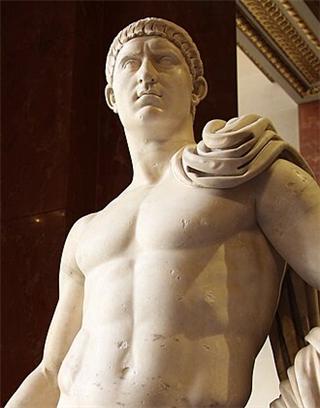
Lusitania was an imperial province, governed by a legate of the emperor (legatus Augusti pro praetore) of praetorian rank, with a procurator responsible for imperial revenues. Its best-known governor was Marcus Salvius Otho, sent to Lusitania in 58 CE by Nero, who had taken Otho's wife Poppaea Sabina; Otho governed for a decade with a reputation for moderation, supported Galba's revolt in 68 and briefly became emperor in 69. For justice and administration the province was divided into three assize districts (conventus), based at Emerita, Pax Iulia and Scallabis. Local government lay with the towns: Roman colonies such as Emerita, Pax Iulia and Norba Caesarina (Cáceres), municipalities such as Olisipo, and many native communities, which gained Latin rights when Vespasian extended them to all of Hispania around 73–74 CE. A provincial council met at Emerita to conduct the cult of Rome and the emperor, whose temples and monuments dominated the city's forums. Under Diocletian's reforms, around 300, Lusitania became one of the provinces of the new Diocese of the Spains, governed by a praeses and later by a consular governor, and Emerita probably served as the residence of the diocesan vicar, making it the administrative capital of Roman Iberia in the fourth century.
Global & Regional Impact
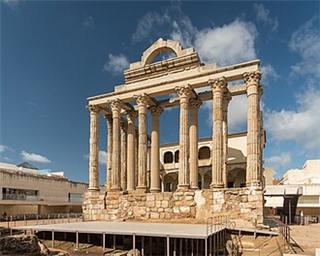
Lusitania's greatest legacy is the Roman city of Emerita Augusta, today Mérida, whose monuments are among the best preserved in Spain and have formed a UNESCO World Heritage Site since 1993. Its theatre, dedicated under Marcus Agrippa around 16–15 BCE, its amphitheatre, its circus, the so-called Temple of Diana, the Los Milagros aqueduct fed by the Proserpina dam, and the bridge over the Guadiana, nearly 800 metres long, show the scale of Roman investment in the provincial capital. Elsewhere the bridge at Alcántara over the Tagus, built under Trajan around 104–106 by the architect Gaius Julius Lacer and paid for by Lusitanian communities named on its inscription, still carries traffic, while the temple at Évora and the ruins of Conimbriga are major monuments of Portugal. Roman rule brought Latin, from which Portuguese developed, together with Roman law, roads and towns that remain the centres of the region today. The Christian community of Emerita produced the martyr Eulalia, whose cult, celebrated by the poet Prudentius, spread across Hispania. The province's name lived on. Renaissance humanists identified Portugal with Lusitania, and Luís de Camões called his national epic of 1572 Os Lusíadas, ‘the Lusiads’, after the mythical Lusus; ‘Lusophone’ still describes the Portuguese-speaking world.
Decline & Fall

Roman rule in Lusitania ended amid the barbarian invasions of the fifth century. In the autumn of 409 the Vandals, Alans and Suebi, who had crossed the Rhine in 406, broke through the Pyrenees, and after two years of plunder they divided the Iberian provinces among themselves by lot in 411: according to the chronicler Hydatius, the Alans took Lusitania and Carthaginiensis. In 416–418 the Visigoths, fighting as Roman allies, destroyed the Alans' power and killed their king Addax, and the survivors joined the Hasding Vandals. Roman authority briefly revived, but in 429, as the Vandals under Gaiseric prepared to cross to Africa, they defeated the Suebic king Hermigar near Emerita, and Hermigar drowned in the Guadiana. The Suebi, now the main barbarian power in the west, began to expand from Gallaecia. In 439 their king Rechila entered Emerita, and the following year he forced the Roman commander Censorius to surrender at Myrtilis (Mértola), effectively ending imperial control. Emerita served for a time as a Suebic royal centre and then, after the Visigoths defeated the Suebi in 456, became one of the leading cities of the Visigothic Kingdom. Lusitania survived as an administrative and church province, with Emerita its metropolitan see, until the Muslim conquest of 711–713.
Lusitania, the Roman province of western Iberia governed from Emerita Augusta, brought Roman towns, roads, mining and the Latin language to the lands of modern Portugal and Extremadura for over four centuries, leaving monuments such as Mérida and Alcántara and giving Portugal the classical name it still uses for itself.
References
- Alarcão, J. de (1988) Roman Portugal. Warminster: Aris & Phillips.
- Burgess, R.W. (1993) The Chronicle of Hydatius and the Consularia Constantinopolitana. Oxford: Clarendon Press.
- Curchin, L.A. (1991) Roman Spain: Conquest and Assimilation. London: Routledge.
- Keay, S.J. (1988) Roman Spain. London: British Museum Publications.
- Kulikowski, M. (2004) Late Roman Spain and Its Cities. Baltimore: Johns Hopkins University Press.
- Richardson, J.S. (1996) The Romans in Spain. Oxford: Blackwell.
Connections
Open the full connections map →