Europe
Bosporan Kingdom
At a glance
- A Greek kingdom on both shores of the Kerch Strait, ruled from Panticapaeum (modern Kerch) by the Spartocid dynasty for over three centuries.
- Its grain exports helped feed classical Athens, which honoured its kings with citizenship, privileges and crowns.
- It passed to Mithridates VI of Pontus and then lived on as a Roman client kingdom until the Hunnic invasions.
Rise & Fall
- c. 480 BCEThe Archaeanactids unite the Greek cities around Panticapaeum
- 438 BCESpartocus I takes power, founding the Spartocid dynasty
- 389–349 BCELeucon I takes Theodosia and grants Athens privileges in the grain trade
- 310–309 BCECivil war between the sons of Paerisades I; Eumelus wins the throne
- c. 108 BCEPaerisades V hands the kingdom to Mithridates VI of Pontus
- 63 BCEMithridates VI dies at Panticapaeum; Pharnaces II becomes a Roman client king
- 45–49 CERome replaces Mithridates, son of Aspurgus, with Cotys I
- 370sThe Huns overrun the region and the kingdom disappears
Foundation
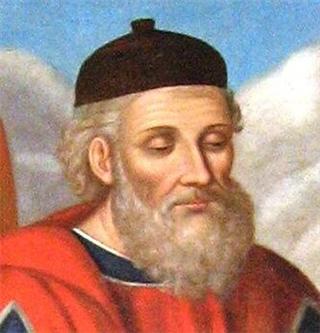
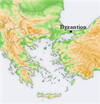
Greek settlers, mostly from Miletus, founded towns on both shores of the Cimmerian Bosporus, the Kerch Strait linking the Black Sea with the Sea of Azov, from the early sixth century BCE. Panticapaeum, modern Kerch, became the leading city on the European side, while Phanagoria, founded by colonists from Teos around 540 BCE, Hermonassa and Gorgippia lay on the Taman peninsula in Asia, and Nymphaeum and Theodosia stood on the Crimean coast. Around 480 BCE, perhaps under pressure from the Scythians, several of these cities united under a single ruling family at Panticapaeum, the Archaeanactids, who according to Diodorus ruled for 42 years. In 438 BCE power passed to Spartocus I, whose name suggests Thracian origin, although his background is debated. His descendants, the Spartocids, ruled for more than three centuries. Satyrus I (433–389 BCE) and Leucon I (389–349 BCE) turned the union of Greek cities into a territorial state. Satyrus died besieging Theodosia, whose fine harbour resisted Bosporan control; Leucon finally took it and extended his rule over the Sindi, Maeotians and other peoples east of the strait. By the mid fourth century BCE the kingdom held both shores of the strait, the Taman peninsula and the lower Kuban, with Panticapaeum as its capital.
Socioeconomy

The Bosporan economy rested on grain. The plains of eastern Crimea and the Kuban produced wheat and barley in surplus, much of it grown by native farmers paying tribute, and the kings shipped it through Panticapaeum and Theodosia to the Aegean. Demosthenes claimed in 355 BCE that the Bosporus sent Athens about 400,000 medimnoi of grain a year, as much as all its other sources combined; the figure is debated, but the trade was clearly vital to Athens. Salted fish from the strait and the Sea of Azov, hides, slaves and honey were also exported, and in return came wine, olive oil, fine pottery and metalwork. Society was mixed. A Greek urban population lived beside Scythians, Sindi, Maeotians and later Sarmatians, and intermarriage and cultural borrowing were common. Rich burial mounds such as Kul-Oba near Kerch, of the fourth century BCE, contain gold work made by Greek craftsmen in Scythian taste, while the monumental Royal Kurgan at Kerch has a stone burial chamber roofed by a corbelled vault. The Greek cults of Apollo, Aphrodite and Demeter coexisted with local deities, and in the Roman period Panticapaeum and other towns had Jewish communities whose inscriptions record the freeing of slaves in the synagogue.
Military
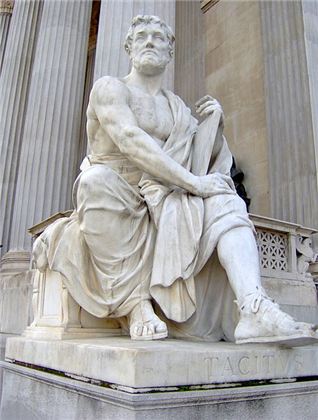
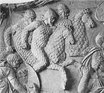
The Bosporan army combined the citizen militias of the Greek towns with mercenaries and the cavalry of allied or subject peoples. Contact with the steppe shaped its warfare: Bosporan nobles adopted Scythian and later Sarmatian armour, long swords and heavy lances, and painted tombs of the Roman period at Kerch show armoured horsemen fighting in steppe style. The civil war of 310–309 BCE between the sons of Paerisades I shows this mix. Satyrus II, with Greek mercenaries and Scythian allies, defeated his brother Eumelus and a native king, Aripharnes, at the river Thatis but was mortally wounded besieging their stronghold, and Eumelus eventually won the throne; Diodorus describes the campaign in detail. Eumelus then kept a fleet that cleared the Black Sea of pirates from the Caucasian coast and the Crimean mountains. Earthworks across the Kerch peninsula, such as the Uzunlar rampart, protected the core territory, though their dates are debated. In the Roman period the kingdom fought Scythians, Sarmatians and Tauri, often with Roman help, and during the war of 45–49 CE Roman troops and their allies stormed the town of Uspe, an episode described by Tacitus. In the 250s CE Gothic and Boranoi raiders seized Bosporan ships to plunder the coasts of Asia Minor.
Governance & Law

The Spartocids ruled with a double title that reflected the double nature of their state. Inscriptions call Leucon I and his successors archons of Bosporus and Theodosia, a magistracy acceptable to the Greek cities, and kings of the Sindi, Toreti, Dandarii, Psessoi and other native peoples. Later rulers increasingly called themselves simply kings. Power stayed within the royal family, with brothers and sons often sharing rule, while the cities kept councils and magistrates for local affairs under royal supervision. The kings cultivated Greek opinion: Leucon held Athenian citizenship and tax privileges, and an Athenian decree of 347/346 BCE honoured his sons Spairocus, Paerisades and Apollonius with gold crowns. Under Mithridates VI of Pontus the kingdom was governed by his son Machares as viceroy. After 63 BCE Rome treated it as a client kingdom. Pharnaces II, Asander and his wife Dynamis, Polemon I and then Aspurgus ruled with Roman approval, and during the first century CE the kings took the names Tiberius Julius, styled themselves friends of Caesar and of the Romans, and placed the emperor’s portrait on their coins. Rome confirmed each accession, at times stationed troops in the kingdom, and expected the kings in return to guard the north-eastern approaches of the empire.
Global & Regional Impact
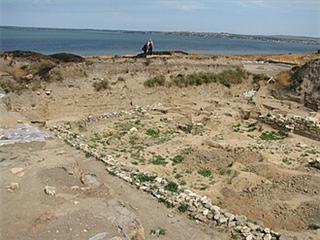
The Bosporan Kingdom was the longest-lived Greek state on the northern coast of the Black Sea and one of the longest-lived monarchies of the ancient world, lasting in various forms from the fifth century BCE to the fourth century CE. Its grain helped feed classical Athens, and the Athenian friendship with the Spartocids shaped Athenian policy towards the Hellespont and the Black Sea routes. For Greeks it was a frontier where Hellenic and steppe cultures met. Bosporan workshops produced much of the Greco-Scythian gold work now in the Hermitage Museum in Saint Petersburg, and the kurgans of Kerch and the Taman peninsula became central to the archaeology of the region from the nineteenth century onwards. Its blend of Greek city institutions, a nobility influenced by Scythian and Sarmatian customs, and Roman patronage makes it a classic example of a hybrid frontier society. Under Mithridates VI it became the last refuge of Rome’s most dangerous eastern enemy, who died at Panticapaeum in 63 BCE. Its Jewish communities and, later, a bishop of Bosporus recorded at the Council of Nicaea in 325 linked the region to the wider religious world of the Mediterranean. The remains of Panticapaeum on Mount Mithridates in Kerch and of Phanagoria are among the principal ancient sites of the Black Sea coast.
Decline & Fall

From the third century BCE the kingdom came under growing pressure. Sarmatian peoples pushed westwards across the steppe, the Scythians of the Crimea revived under kings such as Scilurus, and the Bosporan grain trade faced competition, which some historians link to exports from Ptolemaic Egypt. Around 108 BCE the childless Paerisades V handed his kingdom to Mithridates VI of Pontus. A Scythian named Saumacus then led a revolt in which Paerisades was killed, but Mithridates’ general Diophantus crushed it and recovered Panticapaeum. After Mithridates’ death there in 63 BCE the kingdom survived for four centuries as a Roman client, sometimes prosperous and sometimes torn by dynastic quarrels, such as the war of 45–49 CE in which Rome replaced Mithridates, son of Aspurgus, with his brother Cotys I. The third century CE brought Gothic and Boranoi raids, economic decline and a debased coinage. Regular Bosporan coinage ends in the early 340s CE, and the kingdom’s last decades are obscure. The Huns, who reached the region in the 370s, appear to have overrun much of its territory and probably ended the monarchy, although the city of Bosporus, the former Panticapaeum, survived and came under Byzantine control in the reign of Justinian I.
The Bosporan Kingdom held the Kerch Strait for some eight centuries, first as the Spartocid grain kingdom that helped feed classical Athens and then as a Roman client state, and its gold-filled kurgans and mixed Greek, Scythian and Sarmatian culture make it the classic meeting point of the Greek world and the steppe.
References
- Minns, E.H. (1913) Scythians and Greeks: A Survey of Ancient History and Archaeology on the North Coast of the Euxine from the Danube to the Caucasus. Cambridge: Cambridge University Press.
- Rostovtzeff, M. (1922) Iranians and Greeks in South Russia. Oxford: Clarendon Press.
- Gajdukevič, V.F. (1971) Das Bosporanische Reich. Berlin: Akademie-Verlag.
- Moreno, A. (2007) Feeding the Democracy: The Athenian Grain Supply in the Fifth and Fourth Centuries BC. Oxford: Oxford University Press.
Connections
Open the full connections map →