Europe
Byzantium
At a glance
- Byzantium was founded by colonists from Megara, traditionally in 667 BCE, on the promontory that commands the Bosporus.
- It grew rich from tuna fishing, tolls and the Black Sea grain trade, and the great powers of Greece fought for its loyalty.
- After centuries as an ally of Rome it lost its freedom under Vespasian; Constantine refounded it as Constantinople in 330 CE.
Rise & Fall
- 667 BCEMegarian colonists found Byzantium, according to tradition
- 493 BCEA Phoenician fleet burns the city after the failure of the Ionian Revolt
- 478 BCEPausanias captures Byzantium from the Persians
- 408 BCEAlcibiades recovers Byzantium for Athens after a siege
- 340–339 BCEByzantium withstands the siege of Philip II of Macedon
- 220 BCETolls on Black Sea shipping provoke war with Rhodes and Bithynia
- c. 73 CEVespasian takes away the city's freedom and annexes it to a Roman province
Foundation

Byzantium was founded by Greek colonists from Megara, traditionally in 667 BCE, although ancient chronographers also gave dates around 660 BCE. Later legend named its founder Byzas and told that the Delphic oracle had directed the settlers to build opposite the land of the blind. Herodotus reports a related saying of the Persian general Megabazus, who called the people of Chalcedon blind because they had settled on the Asian shore seventeen years earlier and ignored the far better site facing them. The colonists, perhaps joined by settlers from other Greek cities, occupied the triangular promontory between the Golden Horn, the Bosporus and the Sea of Marmara, with their acropolis on the site of the later Topkapı Palace. The position offered everything a trading city could want: a deep, sheltered harbour in the Golden Horn, currents that carried shipping and migrating fish towards its shore, and command of the Bosporus, the only sea route between the Aegean and the Black Sea. Its weakness was the hinterland, which belonged to Thracian peoples who raided its fields and at times extracted tribute. In its first century Byzantium was a modest colony, one of several Megarian foundations around the straits, including Chalcedon and Selymbria, and it kept Megarian institutions, cults and the Doric dialect of its mother city.
Socioeconomy

Byzantium's wealth came from the sea. Polybius, in a famous description of the city, explains how the currents of the Bosporus brought ships to its harbours rather than to Chalcedon opposite, and how the city stood astride the Black Sea trade, which supplied the Greek world with slaves, cattle, honey, wax and salted fish as well as grain. The seasonal migration of tuna and bonito through the straits made fishing a major industry, and Aristotle, in the Politics, names Byzantium as a city where fishermen formed a large part of the common people. The Byzantines also farmed the fertile land of their Thracian territory, though Polybius stresses that Thracian raids made its harvests insecure. The city's position allowed it to levy dues on passing ships, a source of revenue that its rulers, and at times Athens, tried to exploit. Silver coins of the fourth century BCE showed a cow standing on a dolphin, probably alluding to the myth of Io, who crossed the strait in the form of a cow. In the Hellenistic period Byzantium controlled the Hieron, a sanctuary of Zeus Ourios at the Black Sea entrance of the Bosporus where ships waited for favourable winds. The pseudo-Aristotelian Oeconomica describes the expedients, including sales of public land, by which the Byzantines raised money in times of crisis.
Military
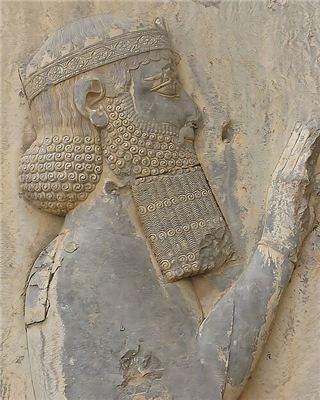
Byzantium's walls made it hard to take, but its value drew every great power of the region. Around 513 BCE Darius I crossed the Bosporus near the city on a bridge of boats, and Byzantium came under Persian rule. It joined the Ionian Revolt, and when the revolt collapsed its people fled to Mesembria on the Black Sea, while a Phoenician fleet burned the city in 493 BCE. In 478 BCE the Greek fleet under the Spartan regent Pausanias captured Byzantium from the Persians; his arrogance there helped drive the allies to accept Athenian leadership. Byzantium revolted against Athens with Samos in 440 BCE, and again in 411 BCE in favour of Sparta, until Alcibiades recovered it after a siege in 408 BCE; Lysander took it back for Sparta in 405 BCE. The city's most celebrated feat was its resistance to Philip II of Macedon, who besieged it in 340–339 BCE. Aided by Athenian fleets under Chares and Phocion and by Chios, Rhodes and Kos, Byzantium held out and Philip withdrew. In the Hellenistic period the Gauls of the Kingdom of Tylis, settled in Thrace after 279 BCE, extorted tribute that Polybius says rose to 80 talents a year. To pay it Byzantium imposed tolls on Black Sea shipping in 220 BCE, provoking a short war with Rhodes and Prusias I of Bithynia, after which it abandoned the tolls.
Governance & Law
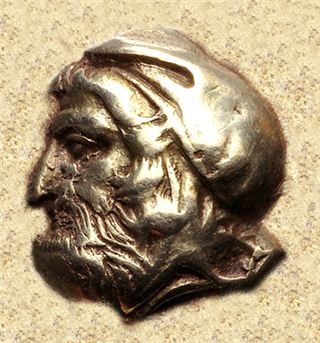
Byzantium was a self-governing polis with a council and a citizen assembly, and its institutions, calendar and cults followed those of Megara. Its constitution shifted with the balance of power around it: democratic government generally prevailed when Athens was dominant, and oligarchic factions when Sparta was. After 405 BCE the Spartan governor Clearchus ruled the city so harshly that Sparta itself removed him, and he went on to lead Greek mercenaries in the service of Cyrus the Younger. As a member of the Delian League Byzantium paid one of the highest tribute assessments in the Hellespontine district, reflecting its wealth. In 390 BCE the Athenian general Thrasybulus restored democratic government and imposed a tithe on ships leaving the Black Sea. Byzantium was among the first members of the Second Athenian League in 378 BCE, but broke away with Chios, Rhodes and Kos in the Social War of 357–355 BCE. Inscriptions and literary sources indicate that the city's chief eponymous official bore the title hieromnemon. In the Hellenistic period the city conducted its own diplomacy with kings and leagues, hired troops, signed treaties and, from the second century BCE, allied itself with Rome. Under Roman supremacy it kept the status of a free city with its own laws, though it paid tribute, and Pliny the Younger's correspondence with Trajan later shows Roman governors scrutinising its finances.
Global & Regional Impact
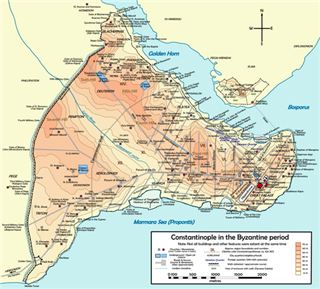
Byzantium's lasting importance lies above all in its site. The qualities Polybius analysed, a defensible promontory, a superb harbour and control of the passage between two seas, led Constantine the Great to refound the city as Constantinople, the capital of the Roman Empire in the east for more than eleven centuries and afterwards of the Ottoman Empire. Through it the name of the small Megarian colony passed to an entire civilisation, for early modern scholars, notably Hieronymus Wolf in the sixteenth century, called the medieval Eastern Roman state the Byzantine Empire. In antiquity Byzantium mattered as the guardian of the Black Sea route on which Athens and other Aegean cities depended for grain, which is why Athens, Sparta, Persia, Macedon and Rhodes fought for influence over it. The city produced notable scholars and engineers: Aristophanes of Byzantium, head of the Library of Alexandria around 200 BCE, edited Homer and other poets and is credited with developing the system of Greek accents, while Philo of Byzantium wrote on mechanics and siegecraft. Its defence against Philip II became a celebrated episode, and a later legend connected the crescent on the city's coins with the goddess Hecate, said to have lit the night sky to reveal a Macedonian attack, though the story is not attested in contemporary sources.
Decline & Fall
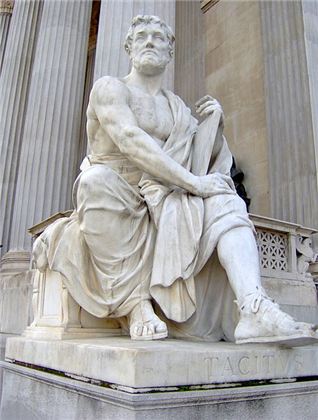
Byzantium did not fall in war; it was absorbed gradually into the Roman order. The tribute paid to the Gauls of Tylis had strained its finances in the third century BCE, and the rise of Bithynia and Pergamon limited its room to manoeuvre. From the second century BCE it sided with Rome, and according to Tacitus, envoys reminded the Senate in 53 CE of the help their city had given to Roman commanders in wars against the Macedonian kings, Antiochus III, Aristonicus, the pirates and Mithridates VI of Pontus; Claudius responded by remitting their tribute for five years. As a free and allied city Byzantium kept its laws and magistrates, but real power lay with Roman governors and armies. Suetonius records that Vespasian took away the freedom of Byzantium, along with that of Achaea, Lycia, Rhodes and Samos, and around 73 CE it was incorporated into a Roman province. The city remained a prosperous port. In 193 CE it supported Pescennius Niger against Septimius Severus and endured a long siege, after which Severus demolished its walls and reduced its status, though he is said to have later begun its rebuilding. Constantine the Great, having defeated Licinius nearby in 324 CE, refounded Byzantium on a far larger scale and dedicated it as Constantinople in 330 CE, beginning the city's second life as an imperial capital.
Byzantium matters as the Greek city that first exploited one of the most strategic sites on earth: from its Megarian founding it controlled the passage between the Aegean and the Black Sea, withstood Philip II of Macedon, and gave its name and its location to Constantinople and the Byzantine Empire.
References
- Polybius, The Histories, trans. Paton, W.R. (1922–1927). Loeb Classical Library. Cambridge, MA: Harvard University Press.
- Hansen, M.H. and Nielsen, T.H. (eds) (2004) An Inventory of Archaic and Classical Poleis. Oxford: Oxford University Press.
- Russell, T. (2017) Byzantium and the Bosporus: A Historical Study, from the Seventh Century BC until the Foundation of Constantinople. Oxford: Oxford University Press.
Connections
Open the full connections map →