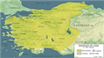
Ancient Near East
Median Empire
At a glance
- The Median Empire grew from a confederation of Zagros tribes into a leading Near Eastern power ruled from Ecbatana.
- Allied with Babylon, the Medes destroyed Assyria, sacking Ashur in 614 BCE and Nineveh in 612 BCE.
- Cyrus the Great absorbed it c. 550 BCE, but its nobles and court customs lived on inside the Achaemenid Empire.
Rise & Fall
- c. 700 BCEDeioces, according to Herodotus, unites the Median clans and founds Ecbatana
- c. 653 BCEPhraortes dies and a period of Scythian domination begins
- c. 625 BCECyaxares restores Median power and reorganises the army
- 614 BCEThe Medes capture Ashur
- 612 BCECyaxares and Nabopolassar of Babylon destroy Nineveh
- 585 BCEWar with Lydia ends after the battle of the eclipse, fixing the Halys River frontier
- c. 550 BCEAstyages' army mutinies and hands him to Cyrus, who seizes Ecbatana
Foundation
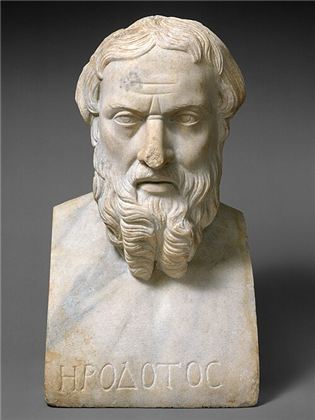
The Median Empire emerged in the 7th century BCE from a confederation of tribes in the Zagros Mountains, many of whose chiefdoms had long paid tribute to Assyria. Herodotus credits Deioces (traditionally r. c. 700–675 BCE) as the unifier who brought the Median clans together and founded Ecbatana (modern Hamadan) as the capital. Although Deioces' historicity is debated, Assyrian records and excavated sites such as Godin Tepe and Nush-i Jan attest to growing Median power in this period. Phraortes (r. c. 675–653 BCE), possibly identical with the rebel leader Kashtaritu known from Assyrian texts, is said by Herodotus to have extended Median rule over the Persians and to have died fighting Assyria, marking the transition from highland confederation to emerging regional power. This growth was interrupted by the Scythian Interregnum, a period of Scythian domination (c. 653–625 BCE), which Herodotus says lasted twenty-eight years. Cyaxares (r. c. 625–585 BCE) restored Median power and reorganised the army, and in alliance with Nabopolassar of Babylon he destroyed Assyria, taking Ashur in 614 BCE and Nineveh in 612 BCE. Media remained a leading Near Eastern power until its absorption by Cyrus the Great around 550 BCE.
Socioeconomy

Median society reflected a hierarchical yet fluid structure shaped by tribal traditions and the demands of expansion. Nobles and tribal chiefs retained local authority under the monarchy, while farming in the fertile Zagros valleys sustained the population and provisioned the army. Trade routes across the Iranian plateau, including the great road later known as the Khorasan route, linked Media with Assyrian, Babylonian and later Anatolian markets, carrying metals, textiles and livestock. Media was famed for its horses, especially those of the Nisaean plain, which Assyrian kings had long sought as tribute. Revenue came from tribute imposed on subject peoples and contributions from allied tribes, balancing coercion with accommodation. Pastoralism based on transhumance alongside settled farming gave the economy resilience in a demanding highland environment. Fortified centres such as Ecbatana served as administrative, religious and commercial hubs, integrating local elites into government and encouraging the circulation of goods and crafts. This economic base underpinned Media's capacity to raise large armies and project power over distant territories.
Military
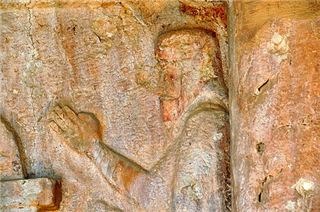
Median military strength derived from Cyaxares' transformation of tribal levies into a more organised army. According to Herodotus, he was the first to divide his forces into separate units of spearmen, archers and cavalry, replacing a mixed tribal host. Reinforced by Babylonian allies and siege expertise, the Medes captured fortified cities such as Ashur (614 BCE) and Nineveh (612 BCE), and pursued the Assyrian remnant to Harran. The army relied on mounted archers, composite bows and iron weapons, reflecting both steppe and Assyrian influences. Military power was central to state formation, enabling the integration of subject peoples and expansion across the Iranian plateau into eastern Anatolia, where a war with Lydia ended after the battle of the eclipse in 585 BCE, with the Halys River agreed as the frontier. Cyaxares' successor relied on these forces to maintain cohesion and deter rivals until internal discontent and the rise of Cyrus the Great undermined Median supremacy. Beyond conquest, military organisation legitimised the state and reinforced a social hierarchy rooted in service and loyalty to the king.
Governance & Law

Median government combined monarchical authority with federated tribal structures. The king held supreme power but relied on alliances with local chiefs and nobles to enforce policy across a geographically fragmented territory. Ecbatana, which Herodotus describes as ringed by seven concentric walls, served as the centre for tribute collection, justice and military coordination. Herodotus also portrays Deioces as a judge who built royal authority on his reputation for justice and introduced strict court ceremonial, though no Median legal code or royal archive survives. Under Cyaxares, appointed officials appear to have managed tribute, logistics and the administration of conquered lands, suggesting a shift from purely kinship-based authority towards institutional government. Power was reinforced through ritual, elite networks and marriage alliances, notably the marriage of Astyages to the daughter of the Lydian king Alyattes. This hybrid system enabled rapid territorial expansion while maintaining cohesion among diverse populations, and it set precedents for later Achaemenid administration.
Global & Regional Impact
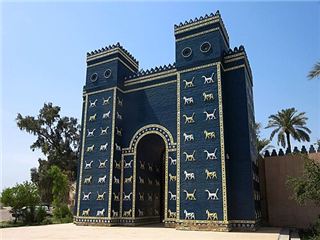
The Median Empire exerted transformative influence over the Near East, serving, together with Babylon, as the force that brought down Assyria and reshaped the region's geopolitics. Its conquests brought diverse peoples, including Persians, Armenians and Cappadocians, under a single overlordship, foreshadowing later multi-ethnic empires. Trade and cultural exchange flowed along overland routes linking Media with Anatolia, Mesopotamia and the Iranian plateau, spreading technologies, artistic motifs and religious ideas. The Achaemenid Empire absorbed Median nobility, court customs and administrative practices after Cyrus' conquest, so closely that Greek writers often called the Persians 'Medes' and termed collaboration with Persia 'Medism'. Media itself remained a leading province, with Ecbatana serving as a royal residence. The consolidation of disparate tribes into a cohesive state demonstrated the feasibility of large-scale rule in the Iranian highlands, leaving a lasting imprint on later empires and on the development of Iranian cultural identity.
Decline & Fall

The Median Empire's decline was precipitated by internal weaknesses and the emergence of a more dynamic regional power. Astyages (r. c. 585–550 BCE) struggled to keep the loyalty of his nobles while ruling the multi-ethnic territories assembled under Cyaxares. Discontent among Median commanders, notably the general Harpagus, whom Herodotus describes as seeking revenge on the king, was exploited by Cyrus of Persia, Astyages' vassal. According to the Babylonian Nabonidus Chronicle, when Astyages marched against Cyrus around 550 BCE his army mutinied and handed him over, and Cyrus then seized Ecbatana and its treasure. The fall of the Median Empire did not mean its destruction: Media was absorbed into the new Achaemenid Empire, its institutions and elite preserved under Persian rule. This transition reflects the continuity of Median structures, which went on functioning under new leadership, ending Median sovereignty while confirming Media's foundational role in Persian imperial government.
The Median Empire stands as the bridge between Assyrian and Persian power: it united the tribes of the Zagros, helped bring down Assyria with the fall of Nineveh in 612 BCE, and passed its institutions and nobility intact to the Achaemenid Empire that absorbed it.
References
- Dandamaev, M.A. and Lukonin, V.G. (1989) The Culture and Social Institutions of Ancient Iran. Translated by P.L. Kohl. Cambridge: Cambridge University Press.
- Diakonoff, I.M. (1985) 'Media', in I. Gershevitch (ed.) The Cambridge History of Iran. Vol. 2. Cambridge: Cambridge University Press, pp. 36–148.
- Herodotus (2003) The Histories. Translated by A. de Sélincourt. Revised edn. London: Penguin.
- Kuhrt, A. (1995) The Ancient Near East c. 3000–330 BC. London: Routledge.
- Waters, M.W. (2014) Ancient Persia: A Concise History of the Achaemenid Empire, 550–330 BCE. Cambridge: Cambridge University Press.
- Wiesehöfer, J. (1996) Ancient Persia from 550 BC to 650 AD. Translated by A. Azodi. London: I.B. Tauris.
Connections
Open the full connections map →