Central & East Asia
Saka
At a glance
- The Saka were the eastern Scythians, Iranian-speaking horse nomads spread from the Aral Sea to the Altai and the Tarim Basin.
- They formed many tribes rather than one state, fighting and serving Persia and resisting Alexander the Great.
- Driven south by the Yuezhi in the 2nd century BCE, they founded Indo-Scythian kingdoms in Iran and India.
Rise & Fall
- 530 BCECyrus the Great dies fighting the Massagetae, according to Herodotus
- c. 519 BCEDarius I captures the pointed-cap Saka chief Skunkha
- 490 BCESaka troops fight in the Persian centre at the Battle of Marathon
- 329 BCEAlexander the Great defeats a Saka force at the Jaxartes
- c. 160 BCEThe Yuezhi drive the Saka from the Ili valley and Zhetysu
- c. 127 BCESaka warriors kill the Parthian king Phraates II
- c. 100 BCEMithridates II of Parthia subdues the Saka, many of whom settle in Sakastan
Foundation
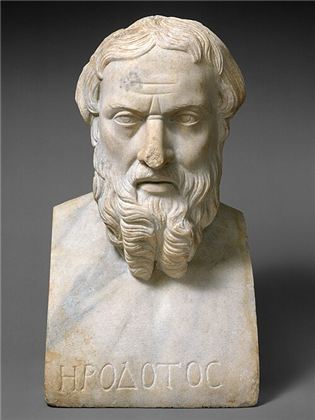
The Saka were the eastern branch of the Iranian-speaking pastoral peoples whom the Greeks called Scythians. They never formed a single state but a constellation of tribes spread across the steppes and mountains from the Aral Sea to the Altai and the edges of the Tarim Basin. Herodotus noted that the Persians called all Scythians Sakai; the name appears in Old Persian inscriptions as Saka and in Chinese records as Sai. Archaeologically, the Saka world is usually recognised from the eighth and seventh centuries BCE in cultures such as the Tasmola culture of central Kazakhstan and the early Saka of Zhetysu (Semirechye), while the Aldy-Bel culture of Tuva, whose royal kurgan Arzhan 2 held thousands of gold objects, belongs to the same early Scythian horizon. Their ancestors are generally traced to Bronze Age herders of the Andronovo horizon, and the spread of fully mounted nomadism around the start of the first millennium BCE gave them great mobility. Achaemenid inscriptions of the late sixth century BCE distinguish several groups: the Saka Tigraxauda, 'with pointed caps', probably east of the Caspian and along the Syr Darya; the Saka Haumavarga, probably in Fergana and the Pamirs, whose name is usually linked to the ritual drink hauma; and the Saka Paradraya, 'beyond the sea', the Scythians north of the Black Sea.
Socioeconomy
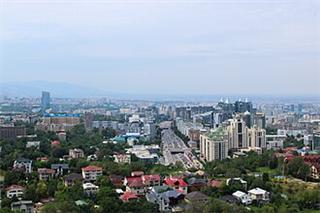
Saka life was built on mobile herding of horses, sheep, goats and cattle, moving between summer pastures in the mountains and winter camps in sheltered valleys. In well-watered regions such as Zhetysu and the Syr Darya delta many groups also farmed, and permanent settlements are known alongside seasonal camps. Society was ranked: chieftains and a warrior aristocracy stood above ordinary herders, and their status is displayed in the great kurgans, earth mounds raised over timber burial chambers. The Issyk kurgan near Almaty, excavated in 1969–1970, held the 'Golden Man', a richly dressed burial, usually thought to be a young warrior, covered with some four thousand gold ornaments and accompanied by a silver bowl bearing a short inscription in a still undeciphered script. The frozen tombs of Pazyryk in the Altai, of the fourth and third centuries BCE and usually linked to the wider Saka-Scythian world, preserved felt hangings, tattooed bodies, wooden carvings and the oldest known knotted pile carpet. Saka art used the steppe animal style of deer, felines, birds of prey and griffins, worked in gold, bronze, wood and felt. Religion probably centred on sky and fire, and horses were sacrificed at burials. The Saka exchanged horses, livestock and furs with oasis towns, Persia and China, and Chinese silk and mirrors reached their graves.
Military
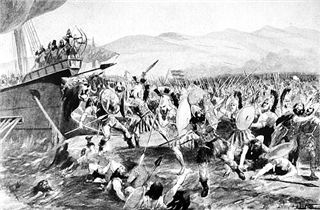
The Saka fought as mounted archers, using the composite bow, the short akinakes sword and battle-axes, and their nobles wore scale armour. Their mobility made them hard to conquer. Herodotus relates that Cyrus the Great was killed in 530 BCE fighting the Massagetae, a people east of the Caspian whom many scholars place within the Saka world, under their queen Tomyris; the story is literary, but it probably reflects a real Persian defeat. Darius I campaigned against the pointed-cap Saka around 519 BCE and captured their chief Skunkha, whose figure in a tall pointed hat was added to the end of the line of captive rebels on the Behistun relief. Saka contingents thereafter served the Persian kings. Herodotus records that Persians and Saka broke the Athenian centre at the Battle of Marathon in 490 BCE and that Saka horsemen fought at Plataea in 479 BCE, and Saka cavalry served Darius III at the Battle of Gaugamela in 331 BCE. In 329 BCE Alexander the Great crossed the Syr Darya and defeated a Saka force at the Battle of the Jaxartes, but made no attempt to conquer the steppe. In the second century BCE, displaced Saka warriors overran parts of Bactria and fought the Parthians, killing King Phraates II in about 127 BCE.
Governance & Law
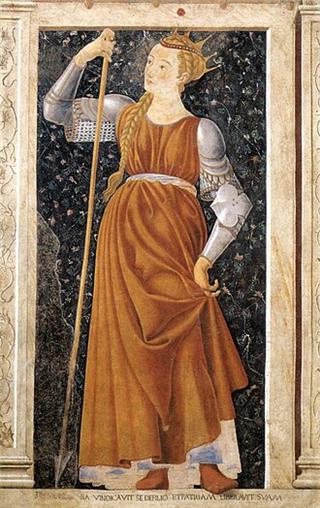
The Saka had no single government. Each tribe or tribal union was led by chiefs and kings drawn from leading lineages, whose authority depended on wealth in herds, success in war and the loyalty of armed retinues. Greek writers mention named Saka rulers only occasionally, among them Tomyris of the Massagetae and Zarinaea, a Saka queen in the semi-legendary history of Ctesias, while the Behistun inscription names Skunkha, whom Darius replaced with a chief loyal to Persia. Under the Achaemenids some Saka lands were attached to the eastern satrapies, and the reliefs of the Apadana at Persepolis show Saka delegations in pointed hats bringing horses, garments and bracelets to the king; but Persian control beyond the Syr Darya was probably loose and based on alliance. Power within Saka society is best seen in the scale of elite burials, which required the labour of many people and the slaughter of numerous horses, implying chiefs who could command resources across wide areas. Clusters of large kurgans, such as Besshatyr and Issyk in Zhetysu and Berel in the Kazakh Altai, suggest regional centres of power. After Alexander's campaigns and the weakening of Seleucid control in the east, the Saka of Central Asia were fully independent until the migrations of the second century BCE.
Global & Regional Impact
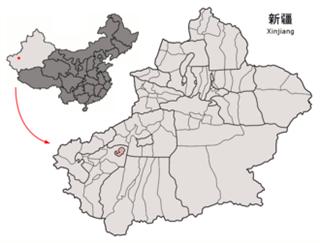
The Saka carried the art, weapons and horse culture of the steppe across a vast area, linking the Black Sea Scythians, the Altai and the borders of China, and the animal style found in their graves influenced metalwork from Iran to the Ordos. After their displacement in the second century BCE, Saka groups moved into Bactria, into Drangiana, which took the name Sakastan (modern Sistan), and through the mountains into Gandhara and north-western India. There Indo-Scythian kings such as Maues and Azes ruled in the first century BCE, and Saka dynasties of satraps lasted for centuries: the Western Kshatrapas governed Gujarat and Malwa until about 400 CE. The Shaka era, which begins in 78 CE and is traditionally associated with Saka rulers, is the basis of India's national calendar. In the Tarim Basin, Saka languages were written at Khotan and Tumshuq; Khotanese preserved a large Buddhist literature until the tenth century and gave the kingdom of Khotan its distinctive culture. In Iranian tradition the hero Rostam of the Shahnameh is lord of Sistan, and some scholars trace his legends to Saka epic. In modern Kazakhstan the Golden Man of Issyk has become a national symbol and stands on top of the Independence Monument in Almaty.
Decline & Fall
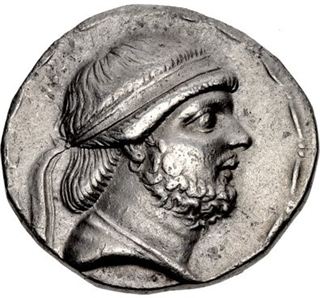
The Saka world of the steppe was broken by migrations set off by the rise of the Xiongnu. After the Xiongnu defeated the Yuezhi in the Gansu corridor around 176 BCE, the Yuezhi moved west into the Ili valley and Zhetysu and drove out the Saka who lived there. According to the Han shu, the Sai king fled south across the Pamir passes to Jibin, usually identified with Gandhara and Kashmir, while many Saka stayed behind under the new rulers. When the Wusun in turn expelled the Yuezhi, the Wusun state absorbed the remaining Saka of the Ili region. Other Saka groups pushed into Bactria, where nomadic invaders, whether Saka or Yuezhi is debated, destroyed the Greek city at Ai-Khanoum around 145 BCE, and into eastern Iran. The Parthian kings fought them for decades: Phraates II was killed in battle against them in about 127 BCE, and Mithridates II subdued them and appears to have settled them in Sakastan by around 100 BCE. From then on the Saka no longer formed an independent steppe world. They lived on as ruling elites in the Indo-Scythian kingdoms, as subjects of Parthia and later the Kushans, and as the oasis peoples of Khotan and Tumshuq, who were absorbed into Turkic and Islamic states from the eleventh century.
The Saka, the eastern Scythians of the Central Asian steppe, created one of the great horse-nomad cultures of antiquity, known for gold-rich kurgans and animal-style art; they fought Persia and Alexander and, after their dispersal, founded Indo-Scythian kingdoms whose legacy survives in India's Shaka era.
Test yourself
3 questions on this page, from its key events and facts.
The questions open here once the page has loaded.
References
- Briant, P. (2002) From Cyrus to Alexander: A History of the Persian Empire. Winona Lake: Eisenbrauns.
- Cunliffe, B. (2019) The Scythians: Nomad Warriors of the Steppe. Oxford: Oxford University Press.
- Harmatta, J. (ed.) (1994) History of Civilizations of Central Asia, Vol. II: The Development of Sedentary and Nomadic Civilizations, 700 B.C. to A.D. 250. Paris: UNESCO Publishing.
- Herodotus (2003) The Histories, trans. A. de Sélincourt, rev. J. Marincola. London: Penguin.
- Simpson, St J. and Pankova, S. (eds.) (2017) Scythians: Warriors of Ancient Siberia. London: Thames & Hudson.
Connections
Open the full connections map →