Ancient Near East
Kingdom of Saba
At a glance
- The oldest of the South Arabian kingdoms, centred on the irrigated oasis of Marib in Yemen, and the biblical land of Sheba.
- It grew rich on irrigated farming and on frankincense and myrrh carried by caravan to the Mediterranean and Mesopotamia.
- Rivals, sea trade and the rise of Himyar wore it down until Himyar absorbed it around 275 CE.
Rise & Fall
- c. 8th century BCEMukarribs rule Saba from Marib and Sirwah; Sabaic inscriptions appear
- 715 BCEItamra the Sabaean sends gifts to Sargon II of Assyria
- 7th century BCEKarib’il Watar destroys Awsan and imposes Sabaean supremacy in South Arabia
- late 2nd century BCEThe Himyarite kingdom rises in the highlands around Zafar
- 25 BCEAelius Gallus besieges Marib for six days and retreats
- early 3rd century CESha’irum Awtar defeats Hadramawt and takes Shabwa
- c. 275 CEShammar Yuhar’ish of Himyar absorbs Saba
Foundation
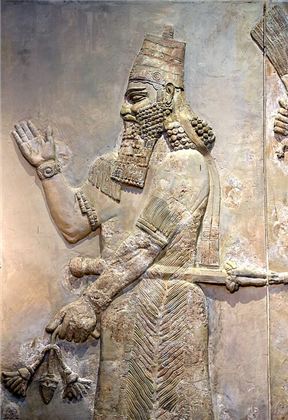
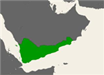
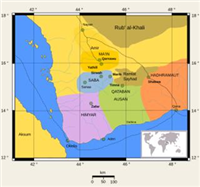
The Kingdom of Saba, the biblical Sheba, emerged in the early first millennium BCE on the eastern edge of the Yemeni highlands, where the wadis descending from the mountains meet the desert of the Ramlat al-Sab’atayn. Its heartland was the oasis of Marib, watered by the seasonal floods of the Wadi Dhana, and the nearby town of Sirwah. Inscriptions in the Sabaic language, written in the Ancient South Arabian alphabet, appear by around the eighth century BCE, although the chronology of the early rulers is debated and some scholars place the beginnings earlier. The early rulers bore the title mukarrib, often translated ‘federator’, which marked their leadership over a federation of tribes and communities united in the cult of the god Almaqah. Assyrian records mention Sabaean rulers sending gifts: Itamra the Sabaean to Sargon II in 715 BCE and Karibilu to Sennacherib c. 685 BCE, names usually identified with the mukarribs Yitha’amar and Karib’il. The great expansion came under Karib’il Watar in the early seventh century BCE, whose long inscription at Sirwah records campaigns that destroyed the Kingdom of Awsan, subdued towns of the Jawf such as Nashshan and imposed Sabaean supremacy over much of south-western Arabia.
Socioeconomy

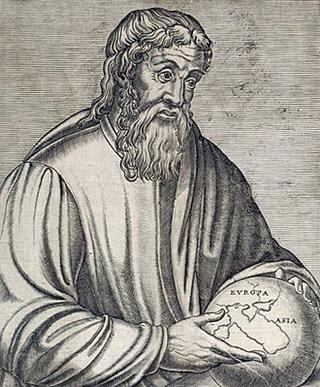
Saba rested on two foundations: irrigated agriculture and the incense trade. At Marib, earthen and stone works diverted the floods of the Wadi Dhana into channels that watered two great oases, together covering several thousand hectares; these works were enlarged over many centuries into the famous Marib Dam, whose surviving sluice structures belong to later phases. The fields produced grain, dates and other crops for a substantial urban population. Saba also lay on the caravan routes that carried frankincense and myrrh, gathered from trees in Hadramawt, Dhofar and the Horn of Africa, north through western Arabia to Gaza and the Mediterranean and to Mesopotamia. Incense was in heavy demand for temple ritual and funerals across the Near East and later the Greek and Roman worlds, and the profits of the trade made the Sabaeans proverbially rich in the eyes of classical writers such as Strabo and Pliny the Elder. Society was organised in tribal communities, each called a sha’b, bound to the ruler, with leaders known as qayl. Religion focused on Almaqah, worshipped at the great Awwam temple near Marib, at the Bar’an temple and at Sirwah, alongside deities such as ‘Athtar and the sun goddess Shams; pilgrimages, ritual hunts and dedications in bronze and stone are well attested.
Military
Sabaean power was built by military campaigns as well as by trade. Karib’il Watar’s inscription at Sirwah lists campaigns against Awsan, Qataban, the towns of the Jawf and other neighbours, with claims of many thousands killed and captured and towns burned, although such figures are probably inflated in the manner of royal annals. Towns were protected by massive walls of dressed stone with towers, as at Marib and Sirwah, and the walled city of Marib was among the largest in ancient Arabia. The tribal communities supplied fighting men to the ruler, and later inscriptions describe armies drawn from Sabaean tribes and Bedouin allies, with camels giving mobility across the desert margins. Between the sixth and first centuries BCE Saba was often on the defensive as Qataban, Hadramawt and Ma’in grew stronger. In 25 BCE a Roman expedition under Aelius Gallus, prefect of Egypt, marched into Arabia Felix with Nabataean guides and besieged Marib, which Strabo calls Mariaba, for six days before withdrawing for lack of water. In the first three centuries CE Saba fought long wars with Himyar, Hadramawt and the Kingdom of Aksum, whose troops intervened in western Yemen, and kings such as Ilsharah Yahdub and Sha’irum Awtar recorded their campaigns in dedications at the Awwam temple.
Governance & Law
Sabaean government evolved over a thousand years. The early mukarribs combined political and religious leadership, presiding over a federation of communities bound by covenant to Almaqah and leading rituals such as the communal hunt. Later rulers used the title malik, ‘king’, and the mukarrib title fell out of use; the change is usually placed around the middle of the first millennium BCE and may reflect a more secular kingship, although its date and meaning are debated. Royal power worked through tribal and communal structures: the sha’b communities were led by qayls who owed military service and dues, and councils of notables appear in the inscriptions. Decrees on stone regulated land, irrigation and the obligations of communities, and temples held estates and received tithes. Sabaic served as the language of a large epigraphic culture: thousands of inscriptions on stone and bronze survive, and everyday letters and contracts were also written in a cursive script on palm-leaf stalks, many of which have been recovered; radiocarbon dating places the earliest in the early first millennium BCE. From the first century BCE power shifted from the old families of Marib towards highland tribes of the Hamdan confederation, and rival lineages competed for the throne and for the title ‘King of Saba and Dhu Raydan’.
Global & Regional Impact
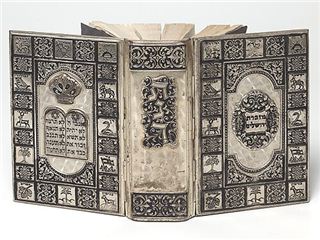
Saba was the first and longest-lived of the ancient South Arabian kingdoms, and its language, script and religious forms set the pattern for Qataban, Hadramawt, Ma’in and Himyar. Sabaean influence also crossed the Red Sea: in the eighth and seventh centuries BCE the Ethiopian highland kingdom of D’mt adopted Sabaean-style temples, inscriptions and gods, as the great temple at Yeha shows, and the Ge’ez script of Ethiopia later developed from the South Arabian alphabet. The incense trade carried Sabaean goods and reputation across the Near East and the Mediterranean, and Greek and Roman writers from Eratosthenes, quoted by Strabo, to Pliny the Elder made the Sabaeans a byword for the fabulous wealth of Arabia Felix. The Hebrew Bible’s story of the Queen of Sheba visiting Solomon, retold in the Qur’an, where she is unnamed but later tradition calls her Bilqis, and in the Ethiopian Kebra Nagast, which makes her the mother of Menelik I, gave Saba a lasting place in world literature and art, although no Sabaean inscription mentions such a queen. The Qur’an also recalls the bursting of the dam, the Sayl al-‘Arim, as a punishment of Saba. In 2023 the ruins of Marib, Sirwah and the dam were inscribed as a UNESCO World Heritage Site.
Decline & Fall

Saba’s long decline began in the last centuries BCE. The rise of Qataban and Hadramawt, and Ma’in’s control of much of the northern caravan trade, had already reduced Sabaean dominance, and from about the second century BCE Greek and then Roman ships, sailing with the monsoon winds between Egypt and India, carried a growing share of incense and eastern goods by sea, bypassing the overland route past Marib. At the same time new powers rose in the highlands, above all the Himyarites of Zafar, who formed a rival kingdom in the late second century BCE. For three centuries Saba and Himyar contested the title ‘King of Saba and Dhu Raydan’, with highland tribal dynasties ruling at Marib and alliances shifting between Saba, Himyar, Hadramawt and Aksum. In the early third century CE Sabaean kings were still able to fight back: according to his inscriptions, Sha’irum Awtar defeated Hadramawt and took its capital Shabwa. Around 275 CE, however, the Himyarite king Shammar Yuhar’ish brought Saba under his rule and later added Hadramawt, unifying south-western Arabia. Marib remained an important town, and its dam was repaired by Himyarite kings and in the sixth century by the Aksumite ruler Abraha, but it finally broke, probably in the later sixth century, and the oasis was largely abandoned.
Saba was the oldest and most enduring of the ancient South Arabian kingdoms, whose irrigation at Marib and control of the incense routes created a literate, wealthy civilisation for a thousand years, spread its script and gods to Ethiopia, and lives on in the story of the Queen of Sheba.
References
- Doe, B. (1971) Southern Arabia. London: Thames and Hudson.
- Groom, N. (1981) Frankincense and Myrrh: A Study of the Arabian Incense Trade. London: Longman.
- Hoyland, R.G. (2001) Arabia and the Arabs: From the Bronze Age to the Coming of Islam. London: Routledge.
- Simpson, St J. (ed.) (2002) Queen of Sheba: Treasures from Ancient Yemen. London: British Museum Press.
Connections
Open the full connections map →