Ancient Near East
Himyarite Kingdom
At a glance
- A kingdom of the Yemeni highlands, ruled from Zafar, that united all of south Arabia around 300 CE.
- Around 380 its kings gave up the old gods for one god, the Merciful, in a monotheism close to Judaism.
- Conflict with Christian Najran and Aksum ended in Kaleb’s invasion of 525, in which the last king, Yusuf, was killed.
Rise & Fall
- c. 110 BCEThe Himyarite era, later used to date inscriptions, begins
- 26–25 BCEA Roman expedition under Aelius Gallus reaches south Arabia and withdraws
- c. 275Shammar Yuhar'ish annexes the Kingdom of Saba
- c. 300Himyar annexes the Kingdom of Hadramawt and unites south Arabia
- c. 380The royal court abandons the old gods for monotheism
- 450sSharahbil Ya'fur records major repairs of the Marib Dam
- 523Yusuf As'ar Yath'ar besieges Najran, where many Christians are killed
- 525Kaleb of Aksum invades, and Yusuf is defeated and killed
Foundation
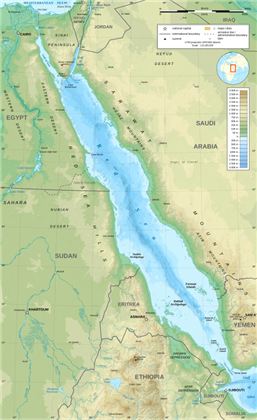
Himyar was a people and tribal confederation of the southern highlands of Yemen, south of the Kingdom of Saba, whose centre lay around Zafar, near modern Yarim. Its rise is usually dated by the Himyarite era, a reckoning used in later inscriptions that probably began around 110 BCE, although some scholars prefer 115 BCE. At that time the old incense kingdoms of Saba, Qataban, Hadramawt and Ma'in still dominated south Arabia, and the overland caravan trade on which they had grown rich was beginning to lose ground to the sea route through the Red Sea. The Himyarites, based in the well-watered highlands rather than on the desert edge, built their royal palace of Raydan at Zafar, and their kings styled themselves 'king of Saba and Dhu Raydan', a title that asserted a claim to the Sabaean heritage and which rival Sabaean kings also used. Qataban, weakened, lost territory to its neighbours and disappeared, probably in the late second century CE. For about three centuries Himyar and Saba fought, allied and fought again, with Aksumite forces from across the Red Sea intervening in the third century. Around 275 CE King Shammar Yuhar'ish (Shammar Yahrish) annexed Saba and, around 300, the Kingdom of Hadramawt, uniting all of south Arabia under one crown for the first time.
Socioeconomy

Himyarite society rested on terraced and irrigated agriculture in the highlands and in the wadis at the desert edge, where sorghum, wheat, barley and grapes were grown and livestock raised. Dams and diversion works, above all the Marib Dam inherited from Saba, watered the oases, and the kings took pride in maintaining them. Society was organised in tribal communities led by noble lineages whose heads, the qayls, held castles, land and dependants and stood between the king and the commoners. The economy also depended on long-distance trade: frankincense and myrrh from the south and east, and the transit of Indian and African goods through ports such as Muza and Aden, described in the first-century Periplus of the Erythraean Sea, which names Charibael (Karib'il) as king of the Homerites and Sabaeans, ruling from Saphar. Inscriptions were carved in the Sabaic language and the south Arabian musnad script, while the spoken Himyaritic language is poorly known. Religion changed fundamentally around 380, when King Malkikarib Yuha'min and his successors abandoned the old gods such as Almaqah in favour of a single god, called Rahmanan, 'the Merciful', and 'Lord of Heaven'. Jewish communities flourished and the court's monotheism drew heavily on Judaism, while Christianity spread in Najran and other towns.
Military

Himyar's wars were mostly fought in the highlands and wadis of Yemen, with armies raised from the tribes under their qayls and supplemented by Bedouin auxiliaries from the desert. Walled towns, hilltop castles and fortified capitals such as Zafar and Marib anchored control of the land. In 26–25 BCE a Roman expedition under Aelius Gallus, prefect of Egypt, marched into south Arabia, besieged Marib and withdrew after heavy losses from disease and hardship; the geographer Strabo, a friend of Gallus, described the campaign. The long struggle with Saba and Hadramawt filled the first three centuries CE, and early in the third century Aksumite forces held parts of the western coastal plain, the Tihama, and took part in these wars. After unification the Himyarite kings campaigned deep into the interior of Arabia. In the fifth century Abikarib As'ad and his son Hassan Yuha'min left an inscription at Ma'sal al-Jumh, west of modern Riyadh, recording an expedition into central Arabia, and the Kingdom of Kinda served as Himyar's client among the Arab tribes of the interior. In the 520s the kingdom's military capacity proved insufficient: Kaleb of Aksum, with Byzantine encouragement, carried an army across the Red Sea in 525 and defeated and killed Yusuf As'ar Yath'ar.
Governance & Law

The king, whose title grew with each conquest, ruled from Zafar through a combination of royal authority and negotiation with the tribal nobility. After about 300 the full royal style became 'king of Saba, Dhu Raydan, Hadramawt and Yamnat', and in the fifth century it added 'and of their Arabs in the highlands and the Tihama', claiming authority over the nomads of the interior. Royal inscriptions, dated by the Himyarite era, recorded building works, campaigns and dedications, and they are the main source for the dynasty's history. The qayls governed their own territories and could be powerful enough to challenge the throne, so much depended on the king's ability to keep their loyalty. The kings also took responsibility for great public works: an inscription of Sharahbil Ya'fur records major repairs of the Marib Dam in the 450s, and the dam was repaired again under Abraha in the sixth century. The adoption of monotheism around 380 had a political side as well, giving the dynasty a single official cult and setting it apart from both Christian Rome and Zoroastrian Persia. Succession is poorly documented, but the throne seems to have passed mostly within the ruling family until the crises of the early sixth century, when Aksum intervened to impose kings of its own choosing.
Global & Regional Impact
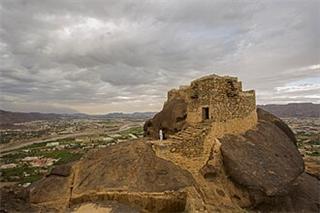
Himyar was the last of the great pre-Islamic kingdoms of south Arabia and the first to unite the whole region. Its adoption of monotheism, and the strongly Jewish character of its court, made it one of the few states of late antiquity whose rulers favoured Judaism, and the religious conflicts of its final decades drew in the Aksumite Empire, the Byzantine Empire and later the Sasanian Empire. The persecution of the Christians of Najran in 523 was commemorated in Syriac and Greek texts such as the Book of the Himyarites and the Martyrdom of Arethas, and Muslim tradition has often linked it with the 'people of the ditch' mentioned in the Qur'an. Himyar's expansion into central Arabia through the Kingdom of Kinda shaped the political world of the Arabian tribes in the century before Islam. In Arab and Islamic memory the Himyarite kings, often called the Tubba', became figures of legend, and south Arabian genealogy traced many tribes to Qahtan through Himyar. In the tenth century the Yemeni scholar al-Hamdani collected Himyarite history, castles and genealogies in his al-Iklil, and Himyarite descent long remained a source of prestige in Yemen. Its dated inscriptions are today among the most important sources for the history of late antique Arabia.
Decline & Fall
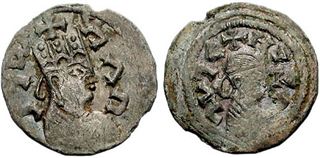
The kingdom's last decades were marked by religious conflict and foreign intervention. Christianity, supported by the Byzantine Empire and by the Christian Aksumite Empire across the Red Sea, had taken root in Najran and other towns, and the Himyarite elite was divided between pro-Aksumite and Jewish-leaning factions. Around 518 Kaleb of Aksum seems to have intervened for the first time, and a Christian king, Ma'dikarib Ya'fur, probably ruled as his client. Soon afterwards Yusuf As'ar Yath'ar, remembered in Arab tradition as Dhu Nuwas, seized power, attacked the Aksumite garrison and in 523 besieged Najran, where many Christians were killed. The massacre provoked a response: encouraged by the Byzantine emperor Justin I, Kaleb led a large expedition across the Red Sea in 525, defeated the Himyarite army and killed Yusuf. Aksum installed a Christian Himyarite noble, Sumyafa' Ashwa', as client king, but he was soon overthrown by the Aksumite commander Abraha, who ruled Yemen as an effectively independent king for several decades. The Sasanian Empire occupied Yemen around 570, and the region accepted Islam around 630. The precise dates of these events, especially the first Aksumite expedition and the Najran massacre, are still debated by historians.
The Himyarite Kingdom was the first state to unite all of south Arabia and the last great kingdom of ancient Yemen; its turn to a monotheism close to Judaism, and the conflict with Christian Aksum that ended it in 525, shaped the religious and political world of Arabia on the eve of Islam.
References
- Bowersock, G.W. (2013) The Throne of Adulis: Red Sea Wars on the Eve of Islam. New York: Oxford University Press.
- Casson, L. (1989) The Periplus Maris Erythraei: Text with Introduction, Translation, and Commentary. Princeton: Princeton University Press.
- Fisher, G. (ed.) (2015) Arabs and Empires before Islam. Oxford: Oxford University Press.
- Hoyland, R.G. (2001) Arabia and the Arabs: From the Bronze Age to the Coming of Islam. London: Routledge.
- Munro-Hay, S. (1991) Aksum: An African Civilisation of Late Antiquity. Edinburgh: Edinburgh University Press.
Connections
Open the full connections map →