Ancient Near East
Caucasian Albania
At a glance
- A kingdom of the eastern Caucasus between the Kura river and the Caspian, roughly the north and centre of modern Azerbaijan.
- A client first of Rome and then of Sasanian Persia, it guarded the Caspian passes against raiders from the steppe.
- It adopted Christianity in the 4th century and had its own church and alphabet, whose texts survive in Sinai palimpsests.
Rise & Fall
- 66–65 BCEKing Oroeses attacks Pompey and is defeated near the Abas river
- 81–96A detachment of Legio XII Fulminata carves an inscription at Gobustan
- 4th centuryKing Urnayr adopts Christianity, according to tradition
- c. 387Albania receives the Armenian provinces of Artsakh and Utik
- early 5th centuryAn alphabet is created for the Caucasian Albanian language
- 451Albanians join the Armenian rising crushed at the Battle of Avarayr
- c. 488Vachagan III issues church canons at the council of Aghuen
- c. 510The Sasanians abolish the kingship and rule through marzbans
Foundation
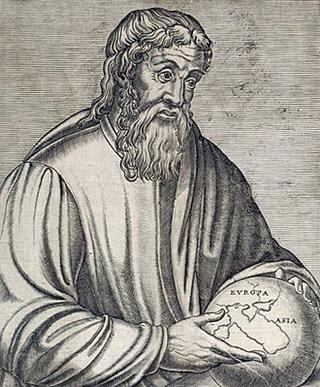
Caucasian Albania, known in Armenian as Aghvank and later in Arabic as Arran, lay in the eastern Caucasus between the Greater Caucasus range, the Caspian Sea and the Kura river, roughly in the north and centre of modern Azerbaijan. Its name, which reaches us through Greek and Latin writers, has no connection with Albania in the Balkans. The geographer Strabo, writing around the turn of the era, described the Albanians as a union of 26 tribes, each with its own language, who had once had separate kings but were now ruled by one. A single kingship seems to have formed by the first century BCE, perhaps under the pressure of the wars between Rome, Pontus and Armenia that reached the Caucasus in those decades. The first king known by name is Oroeses, who in 66–65 BCE attacked the Roman general Pompey during his Caucasian campaign and was defeated. The early royal centre was Kabala, near modern Qabala, on the southern slopes of the Greater Caucasus. Many of the kingdom's peoples spoke languages of the north-east Caucasian family, among them the ancestors of the modern Udi, whose language descends from Caucasian Albanian. From the fourth century, according to Armenian and Albanian sources, a branch of the Arsacid family, related to the royal houses of Armenia and Iberia, ruled the country.
Socioeconomy
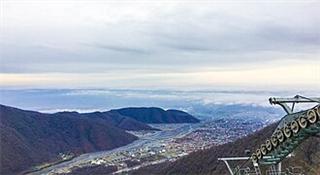
Albania was a land of farmers and herders. The plains of the Kura and its tributaries supported grain, vines and orchards, irrigated in places, while upland pastures fed cattle, sheep and horses; Strabo admired the fertility of the soil, claiming that it yielded crops with little labour. Towns were few and small, among them Kabala and later Partav, the later Barda, on a tributary of the Kura, which grew into the main city of the region. Trade passed along the Caspian coast between the steppe and Iran and across the Caucasus passes, though Albania was never a major commercial power. Society was dominated by great noble families, who held land, followers and fortresses, above a population of free peasants, herders and dependants. The traditional religion included the worship of the sun and, above all, the moon, whose temple Strabo describes with its sacred slaves. Christianity reached the country from Armenia, and according to tradition King Urnayr was baptised in the fourth century in connection with the mission of Gregory the Illuminator. A church organisation developed with its own catholicos, closely tied to the Armenian Church, and in the early fifth century an alphabet was created for the Albanian language, which Armenian tradition credits to Mesrop Mashtots. Texts in that script were recovered in the 1990s in palimpsest manuscripts at Saint Catherine's Monastery on Mount Sinai.
Military

Albanian armies were drawn from the noble houses and their mounted retainers, with infantry levies from the countryside; Strabo claimed that they could field 60,000 foot and 22,000 horse, a figure that should be treated with caution. In 66–65 BCE Oroeses attacked Pompey's winter quarters and was then defeated in a battle near the Abas river, after which he made peace with Rome. In 36 BCE Publius Canidius Crassus, a general of Mark Antony, campaigned against the Iberians and Albanians. Roman soldiers reached the Caspian under the emperor Domitian, when a detachment of the Twelfth Legion, Legio XII Fulminata, left a Latin inscription at Gobustan near Baku, the easternmost Latin inscription known. The greater danger came from the north: the Alans, and later the Huns and other steppe peoples, crossed the Caucasus by the mountain passes and by the narrow Caspian coastal route at Derbent, and in 135 an Alan invasion struck Albania and Media. Defending these routes became a shared concern of Albania, Rome and Persia. Under the Sasanian Empire Albanian cavalry served in Persian campaigns, and Ammianus Marcellinus records Albanians among the forces of Shapur II at the siege of Amida in 359. The Sasanians fortified the coastal passage at Derbent, and the great walls there, completed largely in the sixth century, long guarded the region.
Governance & Law
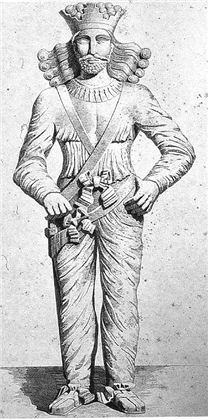
Albania was a monarchy whose kings ruled through and alongside the great noble families. Little is known of its institutions before the fourth century, and much of what we know comes from Greek and Latin writers and from the History of the Country of Albania attributed to Movses Kaghankatvatsi, compiled in Armenian, probably in the tenth century, from older material. The kings were usually clients of a stronger power: of Rome after Pompey's campaign, and from the third century of the Sasanian Empire, whose king Shapur I listed Albania among the lands of his realm in his great inscription on the Ka'ba-ye Zartosht at Naqsh-e Rustam. The Arsacid kings of the fourth and fifth centuries sought to balance Persian overlordship with loyalty to the Christian church. After the partition of Armenia between Rome and Persia around 387, Albania received the former Armenian provinces of Artsakh and Utik south of the Kura, which greatly enlarged it. The church, led by its own catholicos, became a central institution of the kingdom; the canons issued by King Vachagan III the Pious at the council of Aghuen around 488 regulated church discipline, marriage and the relations between clergy and nobility. The royal seat moved from Kabala to Partav during the fifth century, a change that tradition links with the Sasanian king Peroz I.
Global & Regional Impact
Caucasian Albania was a frontier society between the Roman and Iranian worlds, between the steppe and the Near East, and between Christianity and Zoroastrianism. Its kingdom shaped the political geography of the eastern Caucasus for six centuries, and its church, alphabet and literature made it one of the three Christian cultures of the Caucasus alongside Armenia and Georgia, although it was the least enduring of them. The Albanian alphabet, attested in the Sinai palimpsests and a handful of inscriptions, has allowed scholars to read the language and to confirm its close relationship with Udi, still spoken by a small community in Azerbaijan, notably in the village of Nij. The Albanian church survived the end of the kingship and flourished under the Mihranid princes in the seventh century, when the history of Movses Kaghankatvatsi records the building of churches and a mission to the Huns of the north Caucasus. After the Arab conquest the church drew ever closer to the Armenian Church, and the Christians of Artsakh and Utik became part of the Armenian world, while the plains were gradually Islamised and later Turkicised. The heritage of Caucasian Albania has become a subject of strong modern interest, and of national controversy, among historians in Azerbaijan and Armenia.
Decline & Fall

The end of the Albanian kingdom came through the tightening of Sasanian control rather than through a single conquest. In 450–451 Albanians joined the Armenian and Iberian rising against the attempt of the Sasanian king Yazdegerd II to impose Zoroastrianism on the Christian Caucasus, a rising crushed at the Battle of Avarayr in 451. A further revolt by King Vache II around 459 ended with his abdication, and for about a quarter of a century the kingship lapsed while Persian officials governed the country. The Sasanian king Balash restored it around 485 in the person of Vachagan III, a member of the old royal family, as part of a wider settlement with the Christian Caucasus after renewed Armenian resistance. Vachagan's reign was remembered as a golden age of church building and reform. After his death, around 510, the Sasanians abolished the kingship again and governed Albania through marzbans, Persian governors based at Partav. Local rule revived in the early seventh century under the Mihranid family, whose princes navigated between Persia, Byzantium, the Khazars and finally the Arabs. The Arab conquest from the 640s brought Arran, as it was now called, into the caliphate, and the Albanian language and separate church faded over the following centuries.
Caucasian Albania was the easternmost of the three ancient Christian kingdoms of the Caucasus, a client state of Rome and Persia that guarded the Caspian passes, created its own alphabet and church, and left a disputed heritage to the modern peoples of Azerbaijan and Armenia.
References
- Dowsett, C.J.F. (trans.) (1961) The History of the Caucasian Albanians by Movsēs Dasxuranci. London: Oxford University Press.
- Gippert, J., Schulze, W., Aleksidze, Z. and Mahé, J.-P. (2008) The Caucasian Albanian Palimpsests of Mount Sinai. Turnhout: Brepols.
- Hewsen, R.H. (2001) Armenia: A Historical Atlas. Chicago: University of Chicago Press.
- Strabo, The Geography of Strabo, vol. 5, trans. H.L. Jones (1928). Cambridge, MA: Harvard University Press (Loeb Classical Library).
- Toumanoff, C. (1963) Studies in Christian Caucasian History. Washington, DC: Georgetown University Press.
Connections
Open the full connections map →