South & Southeast Asia
Satavahana dynasty
At a glance
- The first great empire of the Deccan, ruling from Pratishthana (Paithan) and later from the Krishna valley.
- Its ports and inland towns traded with the Roman world, and merchants funded Buddhist caves at Karle, Nashik and Kanheri.
- Gautamiputra Satakarni defeated the Western Satraps c. 125 CE, but the empire fragmented in the early 3rd century.
Rise & Fall
- c. 100 BCESimuka founds the dynasty in the northern Deccan (date disputed)
- 1st c. BCEQueen Naganika's Naneghat inscription records Satakarni I's horse sacrifices
- c. 125Gautamiputra Satakarni destroys the Kshaharata dynasty of Nahapana
- c. 150Rudradaman I of the Western Satraps twice defeats the Satavahanas
- late 2nd c.Yajna Sri Satakarni recovers parts of the western Deccan
- early 3rd c.The kingdom fragments among the Abhiras, Ikshvakus and Chutus
Foundation
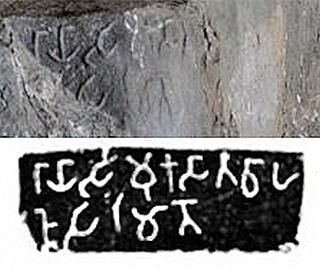
The Satavahanas rose in the northern Deccan, in what is now Maharashtra, after the Maurya Empire withdrew from the region in the second century BCE. The Puranas call them Andhras, list some thirty kings ruling for about four and a half centuries, figures generally considered too high, and name Simuka as the founder. Because the Puranas also credit the Andhras with ending the Kanva dynasty of Magadha, and because the earliest inscriptions and coins are hard to date, scholars place Simuka anywhere between the late third and the first century BCE. The family's origins are equally debated: the name Andhra later attached to the eastern Deccan, but the earliest Satavahana records come from the west, at Naneghat, Nashik and Junnar. Simuka was followed by his brother Kanha and then by Satakarni I, the first great king of the line, who extended Satavahana rule over the western Deccan and probably into Malwa. His queen Naganika recorded in the Naneghat cave inscription that he had performed Vedic sacrifices, including two horse sacrifices, or ashvamedha, and given lavish gifts to Brahmins. A Satakarni is also named as a western rival in the Hathigumpha inscription of Kharavela of Kalinga, and an inscription on the southern gateway of the Great Stupa at Sanchi records a gift by a foreman of the artisans of King Siri Satakarni.
Socioeconomy

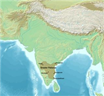
The Satavahana realm combined the black-soil plains of the Deccan, where cotton, millets and pulses were grown, with the river valleys of the Godavari and Krishna and the harbours of the Konkan coast. Its prosperity grew from trade. Passes through the Western Ghats, such as the Naneghat, linked inland towns like Pratishthana, the modern Paithan, and Tagara, the modern Ter, with ports at Kalyan and Sopara, while the eastern territories opened on to the Bay of Bengal. The Periplus of the Erythraean Sea, a Greek merchant's guide of the first century CE, describes onyx, muslins and ordinary cloth carried from Paithan and Ter to the great port of Barygaza, modern Bharuch, for export, and Roman coins, amphorae and other imports have been found at Deccan sites. Merchants organised in guilds, artisans, landowners and royal women made donations, recorded in hundreds of Prakrit inscriptions, to Buddhist monasteries cut into the rock of the Western Ghats at Karle, Bhaja, Nashik, Kanheri and Junnar; the Great Chaitya at Karle was the gift of a merchant, Bhutapala of Vaijayanti, and donors called Yavanas, people of Greek or western origin, also appear. Society combined the Brahmanical norms that kings proclaimed with widespread support for Buddhism. Kings were known by their mothers' names, such as Gautamiputra, son of Gautami, although succession passed in the male line.
Military
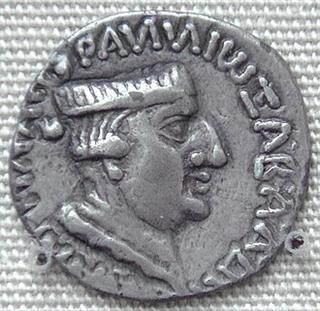
Little is known of the organisation of Satavahana armies, but inscriptions refer to victorious camps from which kings issued orders, and the realm relied on infantry, cavalry and elephants like other Indian states of the time. Its history was shaped by wars on several fronts. Kharavela of Kalinga claims in his Hathigumpha inscription to have sent an army westward in defiance of Satakarni. The main rivals, however, were the Western Satraps, Saka rulers of Gujarat, Malwa and western India who were probably at first subordinate to the Kushan Empire. In the late first and early second centuries CE the Kshaharata ruler Nahapana occupied much of the western Deccan, including Nashik and the ports of the Konkan, as his family's inscriptions in the local caves show. Gautamiputra Satakarni reversed this in a campaign usually dated to around 125 CE, destroying the Kshaharata dynasty; a large hoard found at Jogaltembi near Nashik contains thousands of Nahapana's silver coins restruck with Gautamiputra's name. The recovery did not last. The Junagadh inscription of Rudradaman I, the Western Satrap ruler of the Kardamaka line, dated 150 CE, boasts that he twice defeated Satakarni, lord of the south, but spared him because of their close relationship, a reference to a marriage alliance between the two houses. Yajna Sri Satakarni later regained some western territory.
Governance & Law
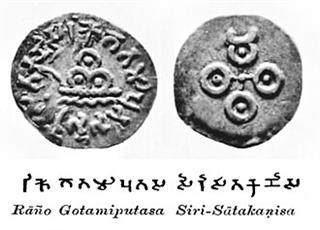
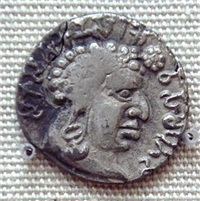
Satavahana kings ruled from Pratishthana in the west and, increasingly in the second century CE, from Dhanyakataka, near Amaravati on the Krishna, in the east. They presented themselves as upholders of Brahmanical order: the Nashik inscription of Queen Gautami Balashri praises her son Gautamiputra Satakarni as a unique Brahmin, a destroyer of the Shakas, Yavanas and Pahlavas, and a king who prevented the mixing of the four varnas, while also recording gifts to Buddhist monks. The kingdom was divided into districts called aharas, such as Govardhana around Nashik, administered by royal officials known as amatyas, while great families with titles such as maharathi and mahabhoja governed parts of the realm as hereditary feudatories, often marrying into the royal house. Satavahana inscriptions contain some of the earliest known grants of land to Buddhist monks and Brahmins with immunity from royal officers and taxes, a practice that spread widely in later Indian states. The kings issued coins in lead, potin, copper and, later, silver; some silver portrait coins carry legends in Prakrit on one side and in an early Dravidian language on the other. Prakrit was the language of administration, and royal titles and coin designs drew on both Indian traditions and the models of the Western Satraps.
Global & Regional Impact

The Satavahanas created the first great state of the Deccan and gave the region a political identity independent of the Ganges valley. By uniting the western and eastern Deccan, they linked the Arabian Sea ports, which traded with the Roman world, to the Krishna delta and the Bay of Bengal, from which trade and Buddhist teachers reached Sri Lanka and Southeast Asia. The rock-cut monasteries of their age at Karle, Bhaja, Nashik and Kanheri, the earliest caves at Ajanta, cut in the same period, and the sculpted stupa at Amaravati, enlarged and decorated in the late Satavahana period, are among the masterpieces of early Indian art, and the Amaravati style influenced Buddhist art in Sri Lanka and Southeast Asia. Prakrit literature flourished: tradition attributes to King Hala the Gatha Saptashati, an anthology of seven hundred short poems of love and village life that shaped later Indian poetics, and places the lost Brihatkatha of Gunadhya, source of later story collections, at a Satavahana court. Their land grants, feudatory titles and royal ideology became models for the Vakataka dynasty, the Ikshvaku dynasty, the Pallava dynasty and other successors. The Satavahana period also spread coinage, writing and urban life widely across the Deccan, laying foundations for the kingdoms of the following centuries.
Decline & Fall

The decline of the Satavahanas followed the defeats by Rudradaman I and the gradual shift of the kingdom's centre to the eastern Deccan. Yajna Sri Satakarni, usually dated to the late second century CE, was the last strong ruler: he recovered parts of the western Deccan from the Western Satraps, as his inscriptions at Nashik and Kanheri show, and his coins circulated widely, some of them bearing the image of a ship that may reflect the importance of maritime trade. After his death the authority of his successors, among them Vijaya, Chandra Shri and a last Pulumavi, shrank rapidly, and by the early third century the kingdom had broken apart. Feudatories and local families took over its provinces. In the west the Abhira dynasty under Ishvarasena established itself around Nashik; in the Krishna valley the Ikshvaku dynasty ruled from Vijayapuri, at Nagarjunakonda, and continued the lavish patronage of Buddhist monasteries; the Chutu dynasty held the south-west around Banavasi; and later the Pallava dynasty in the south-east and the Vakataka dynasty in the north inherited much of the former Satavahana sphere. The details of the collapse are poorly known, but the political and religious traditions of Satavahana rule, from land grants to the patronage of both Brahmins and Buddhists, passed to these successor states.
The Satavahana dynasty built the first great empire of the Deccan, uniting the western and eastern parts of the peninsula, linking Indian Ocean trade with the Roman world, and patronising the Buddhist rock-cut monasteries of the Western Ghats and the Amaravati stupa while proclaiming a Brahmanical ideal of kingship.
Test yourself
3 questions on this page, from its key events and facts.
The questions open here once the page has loaded.
References
- Dehejia, V. (1972) Early Buddhist Rock Temples: A Chronological Study. London: Thames and Hudson.
- Ray, H.P. (1986) Monastery and Guild: Commerce under the Satavahanas. Delhi: Oxford University Press.
- Sastri, K.A.N. (1955) A History of South India from Prehistoric Times to the Fall of Vijayanagar. Madras: Oxford University Press.
- Thapar, R. (2002) Early India: From the Origins to AD 1300. London: Allen Lane.
Connections
Open the full connections map →