South & Southeast Asia
Pallava dynasty
At a glance
- A South Indian dynasty that ruled from Kanchipuram for some six centuries, at its height the leading power of the south.
- Narasimhavarman I sacked the Chalukya capital Vatapi in 642, during a long rivalry with the Chalukyas of Badami.
- Its temples at Mamallapuram and Kanchipuram founded Dravidian architecture, and its script spread across Southeast Asia.
Rise & Fall
- c. 350Samudragupta defeats Vishnugopa of Kanchi
- c. 575Simhavishnu defeats the Kalabhras and extends Pallava rule to the Kaveri
- 642Narasimhavarman I sacks Vatapi; the Chalukya king Pulakeshin II dies
- c. 700Rajasimha builds the Shore Temple and the Kailasanatha temple
- c. 740Vikramaditya II of the Chalukyas occupies Kanchipuram
- c. 885Pallavas and Gangas defeat the Pandyas at Sripurambiyam
- c. 897Aditya I of the Cholas defeats Aparajita and annexes the kingdom
Foundation
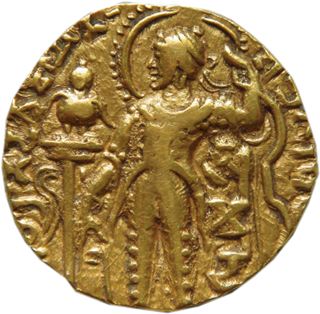
The Pallavas first appear in the late third and fourth centuries CE in copper-plate charters written in Prakrit, such as the Mayidavolu and Hirahadagalli grants of Shivaskandavarman, issued from Kanchipuram and recording gifts of land in the Andhra country and the Bellary region. They emerged as the Satavahana dynasty and its successor in the east, the Ikshvaku dynasty, declined, and their heartland was Tondaimandalam, the country around Kanchipuram in the north of present-day Tamil Nadu. Their origins are uncertain: an old theory linking them with the Iranian Pahlavas has little support, and most historians see them as a local or Andhra family that rose in Satavahana service. In the mid-fourth century the Allahabad pillar inscription of Samudragupta lists Vishnugopa of Kanchi among the southern kings defeated during the Gupta ruler's southern campaign. Kanchipuram also features in the founding legend of the Kadamba dynasty: Mayurasharma, a Brahmin student there, is said to have taken up arms after being insulted by a Pallava horseman. For two centuries the dynasty, whose genealogy is poorly known, issued Sanskrit charters and remained a regional power. It became a major state only when Simhavishnu, in the late sixth century, defeated the Kalabhras and extended Pallava rule south to the Kaveri delta, beginning the line usually called the later Pallavas.
Socioeconomy
The Pallava kingdom was an agrarian society centred on the plains of Tondaimandalam and the Kaveri delta, where irrigation tanks, many of them built or endowed by kings and local communities, sustained rice cultivation. Royal charters granted villages to Brahmins as brahmadeya and to temples as devadana, spreading Brahmin settlements and temple estates that became centres of agricultural expansion and learning. Kanchipuram was a great city of temples, monasteries and colleges; the Chinese pilgrim Xuanzang, who visited around 640, described its many Buddhist monasteries, its Hindu temples and its numerous Jains. Its ghatika, a college of Brahmin learning, was renowned across the south. The Pallava age saw the decisive rise of devotional Hinduism in the Tamil country: the Shaiva Nayanars, such as Appar and Sambandar, and the Vaishnava Alvars, such as Tirumangai Alvar, composed Tamil hymns that drew worshippers to temples and turned many away from Jainism and Buddhism. Trade flowed through ports such as Mamallapuram to Sri Lanka, Southeast Asia and China, carried by merchant guilds; a Tamil inscription at Takua Pa in southern Thailand, which mentions a tank named after a title of Nandivarman III and a merchant guild, the Manigramam, attests to these links across the Bay of Bengal.
Military
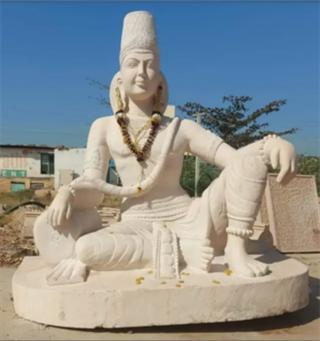
The defining conflict of Pallava history was a long struggle with the Chalukyas of Badami for supremacy in the south, fought alongside wars with the Pandyas of Madurai, the Gangas of Talakad and, later, the Rashtrakutas. Around 618–619 the Chalukya king Pulakeshin II defeated Mahendravarman I and advanced to the neighbourhood of Kanchipuram, although the Pallavas claimed a victory at Pullalur. Mahendravarman's son Narasimhavarman I, known as Mamalla, turned the tide: he defeated Pulakeshin in several battles and in 642, with his general Paranjoti, captured and sacked the Chalukya capital Vatapi, where Pulakeshin died, earning the title Vatapikonda, conqueror of Vatapi. He also sent two naval expeditions to Sri Lanka to place his ally, the exiled prince Manavamma, on the throne. The Chalukyas recovered under Vikramaditya I, and around 740 Vikramaditya II occupied Kanchipuram, though he spared its temples and left a Kannada inscription in the Kailasanatha temple recording his gifts. In the ninth century Nandivarman III defeated the Pandyas at the Battle of Tellaru, but the Pandya wars continued until the Battle of Sripurambiyam, around 885, when Aparajita and his Ganga ally Prithvipati I defeated the Pandya king Varaguna II with Chola support, at the cost of Prithvipati's life.
Governance & Law

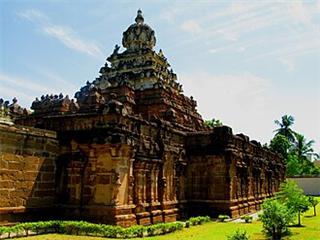
The Pallava kings ruled as Hindu monarchs in the Sanskrit tradition, claiming descent from the god Brahma through the epic hero Ashvatthama and legitimating their power through Vedic sacrifices, temple building and grants to Brahmins. Their copper-plate charters, first in Prakrit, then in Sanskrit and, from the seventh century, in Sanskrit and Tamil, are the main sources for their administration. The kingdom was divided into provinces and districts, in the Tondaimandalam heartland into kottams and nadus, with royal officers overseeing revenue and justice while village assemblies, the sabha of Brahmin villages and the ur of other settlements, managed local affairs, tanks and temple endowments. Kings were patrons and practitioners of learning. Mahendravarman I wrote the Sanskrit farce Mattavilasa Prahasana, which satirises Buddhist monks and Shaiva ascetics, and bore titles such as Vichitrachitta, the curious-minded; tradition holds that the saint Appar converted him from Jainism to Shaivism. Narasimhavarman II, called Rajasimha, built the Shore Temple and the Kailasanatha temple and is associated with the poet and theorist Dandin. When the main line died out around 731, officials and leading men chose the young Nandivarman II from a collateral branch, an event thought to be shown in the sculptured panels of the Vaikuntha Perumal temple in Kanchipuram.
Global & Regional Impact
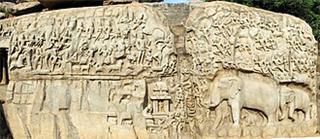
The Pallavas transformed the architecture and art of South India. Under Mahendravarman I the first rock-cut shrines of the Tamil country were excavated, and his Mandagapattu inscription boasts of a temple made without brick, timber, metal or mortar. At Mamallapuram, the port named after Narasimhavarman I, Pallava sculptors carved cave temples, the monolithic shrines known as the Five Rathas and the great relief usually called Arjuna's Penance or the Descent of the Ganges; under Rajasimha came the structural Shore Temple and the Kailasanatha temple at Kanchipuram, followed by the Vaikuntha Perumal temple. These works, at Mamallapuram now a World Heritage Site, laid the foundations of the Dravidian temple style later developed by the Chola Empire. Under Pallava patronage Kanchipuram, counted among the seven sacred cities of Hinduism, flourished as a centre of Sanskrit learning, and the bhakti hymns of the Nayanars and Alvars composed in their age became the scriptures of Tamil Shaivism and Vaishnavism. Beyond India, the Pallava form of the Grantha script, used to write Sanskrit, was adopted in Southeast Asia, where early inscriptions in Cambodia, Champa, Java and the Malay world use scripts derived from it, and Pallava architectural forms influenced early temples in the region.
Decline & Fall

The later Pallava state was weakened by almost continuous war. Chalukya invasions in the eighth century, including the occupation of Kanchipuram around 740, were followed by Rashtrakuta incursions, while the Pandyas of Madurai pressed northward into the Kaveri delta. Nandivarman II recovered and ruled for some sixty-five years, and Nandivarman III won the Battle of Tellaru, celebrated in the Tamil poem Nandikkalambakam, but disputes among his successors and the claims of rival branches divided the dynasty. The Battle of Sripurambiyam, around 885, crushed Pandya power but left Aparajita dependent on his allies, among them the rising Chola dynasty of Thanjavur, which had grown up as an ally and subordinate of the Pallavas. Around 897 the Chola king Aditya I turned on Aparajita and defeated him; according to the later Chola Tiruvalangadu plates, Aditya killed Aparajita as he rode a war elephant. Tondaimandalam was annexed to the Chola Empire, which went on to dominate South India for three centuries. Pallava descendants survived as minor chiefs, and in the thirteenth century the Kadava chief Kopperunjinga, who claimed Pallava ancestry, briefly challenged the Cholas. The Pallava achievement lived on in the temples of Mamallapuram and Kanchipuram and in the scripts and temple forms of Southeast Asia.
The Pallava dynasty of Kanchipuram ruled the northern Tamil country for six centuries, fought the Chalukyas of Badami for supremacy in the south, created the rock-cut and structural temples of Mamallapuram and Kanchipuram that founded Dravidian architecture, and spread a script that became the ancestor of many Southeast Asian alphabets.
Test yourself
3 questions on this page, from its key events and facts.
The questions open here once the page has loaded.
References
- Harle, J.C. (1986) The Art and Architecture of the Indian Subcontinent. Harmondsworth: Penguin.
- Minakshi, C. (1938) Administration and Social Life under the Pallavas. Madras: University of Madras.
- Sastri, K.A.N. (1955) A History of South India from Prehistoric Times to the Fall of Vijayanagar. Madras: Oxford University Press.
- Thapar, R. (2002) Early India: From the Origins to AD 1300. London: Allen Lane.
Connections
Open the full connections map →