Europe
Delphi
At a glance
- Delphi was a small city-state in Phocis that existed to run the sanctuary of Apollo and the most famous oracle of the Greek world.
- The Amphictyonic League of twelve peoples protected the shrine, ran the Pythian Games and could proclaim sacred wars.
- Phocians, Macedonians, Aetolians and finally Romans controlled it in turn, until Greece came under Roman oversight in 146 BCE.
Rise & Fall
- c. 595–586 BCEFirst Sacred War: the Amphictyons destroy Kirrha and consecrate its plain to Apollo
- 586 or 582 BCEThe Pythian Games are reorganised as a panhellenic festival
- 548 BCEThe temple of Apollo burns and is rebuilt with contributions from across Greece
- 479 BCEThe Greeks dedicate the Serpent Column after the victory at Plataea
- 356–346 BCEThird Sacred War: the Phocians seize Delphi and spend its treasures
- 279 BCEA Gallic army under Brennus is driven back from Delphi
- 191 BCERome ends Aetolian control and restores Delphian autonomy
Foundation
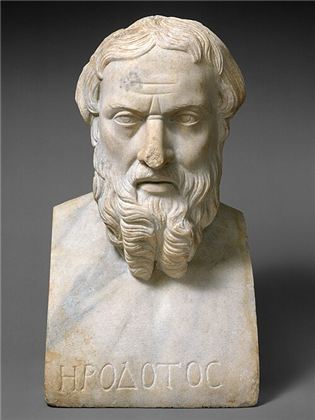
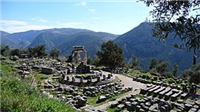
Delphi lies on the southern slopes of Mount Parnassus in Phocis, above the gorge of the Pleistos and the plain that runs down to the Gulf of Corinth. A small Mycenaean settlement occupied the site in the Late Bronze Age, but the sanctuary of Apollo as later Greeks knew it took shape in the eighth century BCE, when bronze tripods and other offerings begin to appear in quantity. Greek tradition held that the oracle had first belonged to Gaia or Themis before Apollo killed the serpent Python and took possession of it, which is why his priestess was called the Pythia; the Homeric Hymn to Apollo adds that the god brought Cretan sailors from Knossos to serve as his first priests. Its rise was rapid. During the great wave of Greek colonisation the oracle was consulted by the founders of new cities, and tradition credits it with sanctioning, among many others, Syracuse, Croton and Cyrene, traditionally settled about 631 BCE after, as Herodotus tells it, repeated commands from the Pythia. A small community of Delphians, living around the sanctuary and from it, formed the city-state that administered the shrine, while the wider Greek world came to regard Delphi as the centre of the earth, marked by a sacred stone, the omphalos or navel.
Socioeconomy
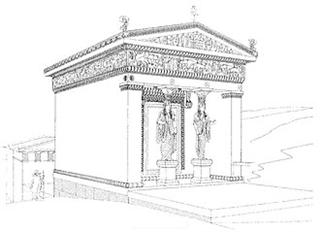
The Delphians had little farmland of their own, and the plain below the city, consecrated to Apollo after the First Sacred War, was by law left uncultivated. The community lived instead from the sanctuary: consultation fees and the sacred cake, the pelanos, the sale of sacrificial animals, the lodging of visitors and the festivals. Consultations were at first held only once a year, on the seventh day of the month Bysios, regarded as Apollo's birthday, and later on the seventh of each of nine months, since the god was thought to leave Delphi in winter, when Dionysus was honoured there. Inquirers sacrificed a goat, paid their fee and waited their turn, with priority, the promanteia, granted to favoured cities and individuals. The Pythia, a Delphian woman who in later times had to be over fifty, gave the responses in the inner temple, and male officials called prophets conveyed them; how the answers were produced, and whether vapours played any part, remains debated. The sanctuary accumulated great wealth. Croesus of Lydia sent gold and silver offerings, and cities built treasuries along the Sacred Way, such as the Siphnian Treasury of about 525 BCE. From around 200 BCE the sanctuary walls were covered with some 1,300 inscriptions recording slaves freed through a fictive sale to Apollo.
Military

Delphi itself had no military strength worth the name; its security depended on the sanctity of the shrine and on whichever power controlled central Greece. Control of the sanctuary was worth fighting for, and four wars were called sacred because they were fought in Apollo's name. In the First Sacred War, traditionally dated about 595–586 BCE, the Amphictyons, aided by Cleisthenes of Sicyon and the Thessalians, destroyed Kirrha, accused of exploiting pilgrims, and consecrated its plain to the god, although many details of the story are doubted by modern historians. Herodotus reports that when a Persian detachment approached in 480 BCE, rocks crashed down from Parnassus and drove it off. In the Second Sacred War of about 449–448 BCE Sparta handed the sanctuary to the Delphians, after which Athens returned it to the Phocians. The gravest blow came in the Third Sacred War of 356–346 BCE, when the Phocians under Philomelus seized Delphi and his successor Onomarchus spent the temple treasures on mercenaries. Philip II of Macedon defeated Onomarchus at the Battle of the Crocus Field in 352 BCE and imposed a settlement in 346 BCE. A Fourth Sacred War against Amphissa in 339 BCE brought Philip south again and led to the Battle of Chaeronea. In 279 BCE a Gallic army under Brennus attacked Delphi and was driven back, chiefly by Aetolian and Phocian troops.
Governance & Law
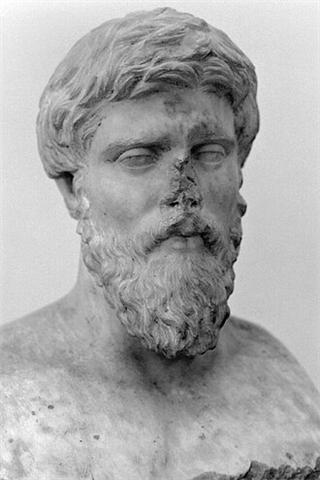
Delphi had a double structure. The city of the Delphians was a small polis with an annual eponymous archon, a council and an assembly of citizens. It managed the shrine's daily business, chose the Pythia and the cult staff, and granted honours such as promanteia and proxeny to benefactors. Apollo had two priests appointed for life, one of them later Plutarch. Above the city stood the Amphictyonic League, or Amphictyony, an ancient association of twelve peoples, mostly of central and northern Greece, among them the Thessalians, Boeotians, Phocians, Locrians, Dorians and Ionians. Each people sent two delegates, the hieromnemones, to meetings held each spring and autumn at Delphi and at Anthela near Thermopylae. The council supervised the sanctuary's property, the sacred land and the Pythian Games, fined offenders and could proclaim sacred war. Because votes belonged to peoples rather than cities, Athens and Sparta held only a share of the Ionian and Dorian votes, and control passed to whoever dominated the member peoples: the Thessalians in the Archaic period, Philip II after 346 BCE, when he received the Phocian votes, and the Aetolian League for much of the third century BCE. Rebuilding the temple after the fire of 548 BCE and its destruction, probably by earthquake, in 373 BCE was financed by contributions from across the Greek world.
Global & Regional Impact
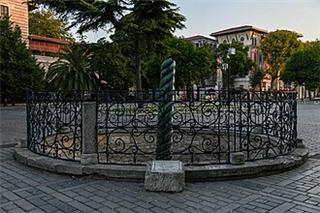
Delphi was the nearest thing the Greek world had to a common religious centre. Its oracle advised on colonies, laws, cults, wars and private dilemmas, and its famous responses, whatever their authenticity, shaped how Greeks told their history. Herodotus records that Croesus was told he would destroy a great empire if he attacked Persia, and that the Athenians in 480 BCE were told to trust in their wooden walls, which Themistocles read as their fleet. In Plato's Apology Socrates traces his philosophical mission to the Pythia's answer that no one was wiser than he. Maxims inscribed at the temple, such as Know yourself and Nothing in excess, became touchstones of Greek ethics. The Pythian Games, reorganised as a panhellenic festival in 586 or 582 BCE, ranked second only to the Olympic Games and gave music a special place. Dedications made Delphi a showcase of Greek art and politics: the Athenian Treasury, the bronze Charioteer of Delphi of about 475 BCE, and the Serpent Column set up after the Battle of Plataea in 479 BCE, which Constantine the Great later moved to Constantinople, where its remains still stand in the old Hippodrome of Istanbul. Two Delphic hymns to Apollo of the late second century BCE, carved with musical notation, are among the most important survivals of ancient Greek music. French excavations from 1892 uncovered the site.
Decline & Fall
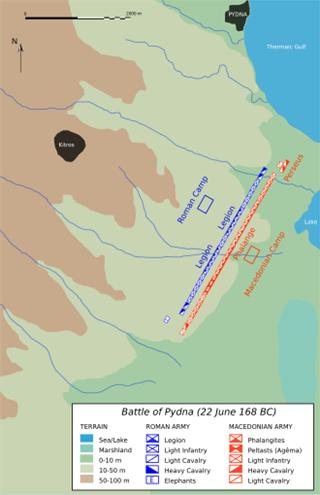
Delphi's decline was political long before it was religious. The plundering of its treasures by the Phocians in the Third Sacred War stripped it of much of its accumulated wealth, and after 346 BCE the Amphictyony became an instrument of Macedonian policy. From the early third century BCE the Aetolian League dominated both the council and the sanctuary, gaining prestige from its defence of Delphi against the Gauls in 279 BCE, which was commemorated by a new festival, the Soteria. Rome's victory over Antiochus III and his Aetolian allies in 191 BCE ended Aetolian control: the consul Manius Acilius Glabrio restored the sanctuary's property and the autonomy of the Delphians, which the Roman Senate soon confirmed. Roman generals then used Delphi as Greek kings had. After the Battle of Pydna in 168 BCE Lucius Aemilius Paullus took over a pillar intended for a statue of Perseus of Macedon and crowned it with his own monument. After the Achaean War of 146 BCE Greece came under the oversight of the Roman governors of Macedonia, and Delphi's freedom became a privilege granted by Rome. Sulla took treasures from the sanctuary in 86 BCE. The oracle continued under the Roman Empire, patronised by Hadrian among others, but fell silent in the late fourth century CE, probably as a result of the anti-pagan measures of Theodosius I.
Delphi matters as the shared sanctuary of the Greek world: its oracle advised colonists, cities and kings for centuries, its Amphictyonic council and Pythian Games bound the Greeks together, and the struggle to control it, from the Sacred Wars to Rome, mirrored the shifting balance of power in Greece.
References
- Scott, M. (2014) Delphi: A History of the Center of the Ancient World. Princeton: Princeton University Press.
- Parke, H.W. and Wormell, D.E.W. (1956) The Delphic Oracle. 2 vols. Oxford: Basil Blackwell.
- Fontenrose, J. (1978) The Delphic Oracle: Its Responses and Operations. Berkeley: University of California Press.
- Morgan, C. (1990) Athletes and Oracles: The Transformation of Olympia and Delphi in the Eighth Century BC. Cambridge: Cambridge University Press.
Connections
Open the full connections map →