Egypt & North Africa
Punic Empire
At a glance
- Carthage, a Phoenician colony of Tyre in Tunisia, built a trading empire across the western Mediterranean.
- Its fleets, mercenary armies and Hannibal's invasion of Italy made it Rome's greatest rival for over a century.
- Three Punic Wars stripped it of Sicily, Spain and its navy; Rome razed the city in 146 BCE and enslaved its survivors.
Rise & Fall
- 814 BCEElissa (Dido) of Tyre traditionally founds Carthage
- 264–241 BCECarthage loses Sicily to Rome in the First Punic War
- 237 BCEThe Barcid family begins the conquest of southern Iberia
- 218 BCEHannibal crosses the Alps and invades Italy
- 216 BCEHannibal annihilates a Roman army at Cannae
- 202 BCEScipio defeats Hannibal at Zama
- 146 BCEScipio Aemilianus storms and razes Carthage, ending the Third Punic War
Foundation
The Punic Empire, more precisely the Carthaginian Empire, its name deriving from the Latin Punicus, “Phoenician”, originated as a colony of the Phoenician city of Tyre on the North African coast, traditionally founded in 814 BCE by the Tyrian princess Elissa, known to later tradition as Dido. According to legend, she negotiated with the local king Iarbas for as much land as a single ox-hide could cover, then cut the hide into strips thin enough to encircle the hill of Byrsa, “hide” in Greek, on which Carthage’s citadel was later built. The historical reality behind this founding myth was the Phoenician practice of establishing coastal trading posts across the Mediterranean from the ninth century BCE onwards, driven by Tyre’s need to secure metals, particularly silver and tin, beyond the Levant, and Carthage’s position on the Tunisian promontory commanding the narrows between Sicily and Africa made it the most strategically placed of all Phoenician foundations. Independence from Tyre came gradually over the seventh and sixth centuries BCE, as Assyrian and then Babylonian pressure on the Phoenician homeland weakened ties with the mother city and Carthage assumed leadership of the western Phoenician settlements. The Magonid dynasty, whose founder Mago I is placed around the mid-sixth century BCE, initiated systematic empire-building, transforming Carthage from a trading city into an imperial metropolis that extended its authority over neighbouring Libyan populations, established hegemony over Sardinia, controlled western Sicily and secured the Balearic Islands, a source of mercenaries famous throughout the ancient world for their skill with the sling. The sack of Tyre by Alexander the Great in 332 BCE, before which some Tyrians had sent their families to safety in Carthage, symbolically completed Carthage’s transformation into an independent civilisational centre at the very moment its eastern mother city was humbled.
Socioeconomy
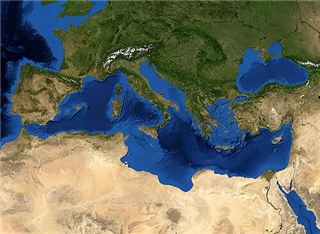
Carthage at its commercial peak was arguably the wealthiest city in the Mediterranean world, its prosperity resting on a sophisticated mercantile economy that combined agricultural productivity, skilled manufacturing and a maritime trading network extending from the Atlantic coasts of Iberia and Morocco to the ports of the eastern Mediterranean. The agricultural hinterland of northern Tunisia, among the most fertile land of the ancient world, was organised through large estates worked by enslaved labour and by subject Libyan populations paying heavy tribute. Carthaginian farming was sufficiently advanced that the writer Mago produced an agricultural treatise in twenty-eight books, so highly regarded that the Roman Senate ordered its translation into Latin after Carthage’s destruction in 146 BCE, preserving it as a practical manual while obliterating the civilisation that produced it. Carthage’s commercial network was protected by a policy of maritime exclusivity: the Treaties between Rome and Carthage, the first traditionally dated to 509 BCE and another to 348 BCE, barred Roman and Italian merchants from trading in Carthaginian waters beyond specified limits, protecting Punic monopolies in western Mediterranean and Atlantic trade. The city’s workshops produced purple-dyed textiles using the murex process inherited from Phoenicia, fine metalwork, glass and ceramics that commanded high prices across Mediterranean markets. Silver from the Spanish mines, exploited intensively after the Barcid conquest of southern Iberia beginning in 237 BCE, became the financial foundation of Carthage’s late imperial power, funding Hannibal’s Italian campaign with resources that long sustained the war against Rome despite Rome’s far larger citizen population and Italian alliance network.
Military

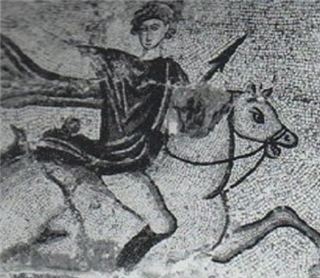
The Carthaginian military was built around a professional mercenary and allied core recruited from across the Mediterranean and African worlds, including Numidian cavalry, Balearic slingers, Iberian swordsmen, Gallic warriors, Libyan infantry and Greek technical specialists, supplemented by citizen levies and, from the third century BCE, war elephants drawn from the now-extinct North African forest elephant population. This system reflected Carthage’s commercial ethos: military service was largely a purchased commodity rather than a civic obligation, enabling the rapid assembly of large and diverse forces but creating chronic weaknesses in loyalty and cohesion, as the Mercenary War of 241–238 BCE demonstrated, when unpaid veterans of the First Punic War turned on Carthage itself in a brutal conflict that Gustave Flaubert later fictionalised in Salammbô. The empire’s supreme military achievement was Hannibal Barca’s invasion of Italy during the Second Punic War, beginning with his audacious crossing of the Alps in 218 BCE with some 26,000 surviving troops and a dwindling elephant corps. Three crushing Roman defeats followed: the Trebia in 218 BCE, Lake Trasimene in 217 BCE and above all Cannae in 216 BCE, where Hannibal’s double envelopment of a Roman army of perhaps 80,000 men killed an estimated 47,000–70,000 in a single afternoon, one of the worst defeats in Roman history and a tactical masterpiece still studied today. Naval power was equally central: Carthage’s fleets of quinqueremes dominated the western Mediterranean until Rome, building its first great fleet by copying a captured Carthaginian warship and devising the corvus boarding bridge, challenged that supremacy, and the loss of sea control in the First Punic War proved irreversible.
Governance & Law
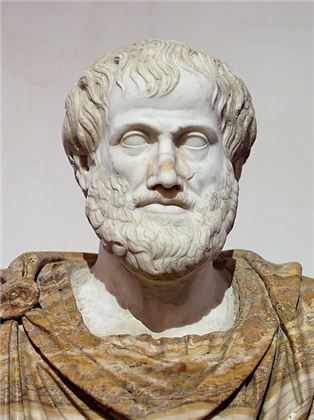
Carthage’s constitution was sufficiently admired in antiquity that Aristotle discussed it in his Politics alongside those of Sparta and Crete, the only non-Greek state he examined at length, judging it among the best-ordered of his age. The government combined monarchical, oligarchic and democratic elements in a mixed constitution: executive authority lay with two annually elected suffetes, magistrates whose title shares a Semitic root with the Hebrew shofet, “judge”, who presided over civil administration, while military command was held separately by generals, and a Council of Elders, a senate of wealthy aristocrats perhaps several hundred strong, served as the principal deliberative and policy-making body. The Court of the One Hundred and Four, whose precise composition and powers remain debated, held officials and generals to account and could punish unsuccessful commanders severely and even crucify them, a sanction that encouraged effectiveness but may have discouraged strategic risk-taking; Aristotle likened this body to the Spartan ephors. Popular assemblies of the citizens held residual authority, deciding matters when the suffetes and the council disagreed, an element whose influence grew in the later third century BCE. The empire’s provinces in North Africa, Sicily, Sardinia and Iberia were managed through governors and local elites with varying degrees of autonomy, with Libyan subjects more heavily taxed and controlled than the Phoenician settlements, a difference that generated recurring unrest and helps to explain why Numidian and Iberian allies, most notably the Numidian prince Masinissa, defected to Rome once Carthaginian power began to fail during the Second Punic War.
Global & Regional Impact
Carthage’s impact on the ancient Mediterranean world was profound but has been obscured by the completeness of its destruction: the Romans razed the city and enslaved its surviving population, and the later, unsubstantiated legend that they salted the earth reflects the totality of that erasure. As a result, Punic civilisation’s contributions reached later ages almost entirely through Greek and Roman sources written by its adversaries. Carthaginian seafaring was remarkable: the voyage of Hanno the Navigator down the Atlantic coast of Africa, probably in the fifth century BCE, may have reached as far as Sierra Leone or even Cameroon according to competing interpretations of his surviving periplus, making it the most ambitious known exploration of that coast before the Portuguese voyages of the fifteenth century CE, while Himilco’s voyage northward along the Atlantic coasts of Europe sought access to the tin trade of the north-west. Carthaginian agricultural science, preserved through the Roman translation of Mago's treatise, influenced Mediterranean farming for centuries, while Punic urban planning, religious architecture and religious practice, including the controversial tophet sanctuaries whose remains have generated sustained debate over whether they attest child sacrifice or infant burial, shaped the cultural landscape of North Africa, Iberia and Sardinia long after political Carthage ceased to exist; the Punic language was still spoken in North Africa in the time of St Augustine. The Punic Wars fundamentally shaped Rome’s imperial trajectory, compelling it to build a permanent navy and to develop provincial government, beginning with Sicily, transforming it from an Italian power into a Mediterranean empire.
Decline & Fall

The Punic Empire’s destruction resulted from strategic overextension, the structural limitations of its mercenary military system, the erosion of its commercial and territorial assets across three devastating wars with Rome, and ultimately the deliberate decision of the Roman Senate to eliminate Carthage altogether rather than merely as a competitor. The First Punic War of 264–241 BCE, which began over conflicting interests in Sicily, lasted twenty-three years and ended with Carthage’s naval defeat at the Battle of the Aegates Islands, forcing the surrender of Sicily, its richest overseas possession, and the payment of an indemnity of 3,200 talents of silver over ten years. Rome’s opportunistic seizure of Sardinia and Corsica in 238–237 BCE during the Mercenary War, in breach of the spirit of the peace, added a further indemnity and generated the resentment that drove the Barcid family’s construction of a Spanish empire as both financial compensation and preparation for renewed conflict. Hannibal’s campaign in the Second Punic War of 218–201 BCE came close to its strategic objective, the dissolution of Rome’s Italian alliance network, but the loyalty of most of Rome’s Latin and Italian allies even after Cannae, combined with the delaying strategy associated with Fabius Maximus and the destruction of Carthaginian power in Spain by the Scipio family, above all Publius Cornelius Scipio, showed that Hannibal could win battles but not the war without reinforcements and siege equipment that Carthage failed to provide. Recalled to Africa, he was defeated by Scipio at Zama in 202 BCE. The final destruction was driven by political will rather than military necessity: Cato the Elder is said to have ended his speeches with the declaration that Carthage must be destroyed (Carthago delenda est), and the Third Punic War of 149–146 BCE was a siege of a city that posed little real threat, ending when Scipio Aemilianus’s forces stormed Carthage after six days of street fighting and razed it, tradition holding that the city burned for seventeen days, while an estimated 50,000 survivors were sold into slavery.
The Punic Empire’s ultimate historical significance lies in the void its annihilation created, an erasure so complete that one of the ancient Mediterranean’s most sophisticated commercial and constitutional cultures survives chiefly as a presence in its destroyers’ literature, making Carthage one of history’s most consequential examples of what is lost when the victors alone write the record.
References
- Goldsworthy, A. (2000) The Punic Wars. London: Cassell.
- Hoyos, D. (2010) The Carthaginians. London: Routledge.
- Lancel, S. (1995) Carthage: A History. Translated by A. Nevill. Oxford: Blackwell.
- Lazenby, J.F. (1978) Hannibal's War: A Military History of the Second Punic War. Warminster: Aris and Phillips.
- Picard, G.C. and Picard, C. (1968) The Life and Death of Carthage. Translated by D. Collon. London: Sidgwick and Jackson.
- Warmington, B.H. (1960) Carthage. London: Robert Hale.
Connections
Open the full connections map →