Research Series · Essay 10 · · 19 min read
Who Invented It First?
Firsts, Credit and the Long Road of Ideas
Firsts Without Names
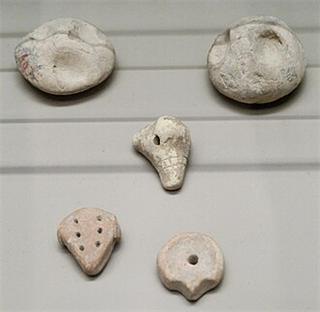
The oldest card on the Institute's inventions tree has no inventor, and perhaps no human maker. The stone tools found at Lomekwi, near Lake Turkana in Kenya, are dated to 3.3 million years ago, about a million years before the genus Homo, and who made them is not known: Australopithecus afarensis, Kenyanthropus platyops or a species not yet identified. The next four cards are no better furnished with names. The control of fire is placed at Wonderwerk Cave in South Africa about a million years ago, the bow and arrow about 80,000 years ago at Obi-Rakhmat in Uzbekistan, the sewing needle about 50,000 years ago in Denisova Cave, and the burning of coal at Petřkovice in the Czech Republic between 25,000 and 23,000 BCE. None of the five is credited to a people or a person.
Each of these dates is a floor, not a birthday. The tree places every invention "at its first known date, the earliest firm evidence historians accept, which is often earlier than the version that spread", and its notes show how much may lie beneath the floor. Claims for the use of fire reach back 1.5 to 2 million years, but traces of wood ash from about a million years ago are the evidence with the firmest scholarly support. The evidence for the earliest archery is indirect, small stone points, while the oldest surviving bows, from Holmegaard in Denmark, date from about 9000 BCE. Neanderthals may have burned lignite at Les Canalettes in France about 70,000 years ago. A "first" of this kind is the oldest example that happened to survive, to be found and to be dated.
Survival favours some materials over others. The dugout canoe is the oldest boat type archaeologists have found, the oldest of them from Pesse in the Netherlands, of 8040–7510 BCE; but the tree's note warns that dugouts may be the oldest boats found only because their massive wood survives better than lighter craft such as bark canoes. Pottery survives almost everywhere: its sherds are typically the most common artefacts on archaeological sites, and the earliest known vessels, from Xianren Cave in Jiangxi, China, date to 20,000–19,000 years ago. The deep past of invention is read from stone, bone, fired clay and ash, and a bark canoe leaves less behind than a hollowed trunk.
The first card the tree credits to any people at all is lacquerware, from Kakinoshima at Hakodate in Hokkaido, about 7000 BCE, credited to the Jōmon culture. Even this credit carries a question: lacquerware was also made by the Hemudu culture in Zhejiang in the 5th millennium BCE, and experts are divided on whether Jōmon lacquer was invented independently or derived from Chinese techniques. The oldest firsts belong to nobody, and the first that belongs to someone may also belong to someone else.
Invented More Than Once
The question "who was first?" assumes that a thing began once. The tree's own guide says otherwise: "many inventions arose more than once, and where the record shows that, the card says so." Thirty-eight cards name an independent origin elsewhere.
The card for agriculture places its beginning in the Fertile Crescent about 10,000 BCE, though dates for West Asia range from about 12,000 to 8000 BCE, and it lists the other beginnings: the Yangtze in China, 13,500–8,200 years ago; northern China, about 6000 BCE; New Guinea, perhaps 8000 BCE; Mesoamerica, about 7000 BCE; eastern North America, about 2500 BCE; and Ethiopia, the Sahel and West Africa. At Kuk Swamp in the Wahgi Valley of the Papua New Guinea highlands, drainage ditches dug from about 9,000 years ago turned a swamp into grassland where taro was grown, and bananas and sugar cane were cultivated from 6,900–6,400 years ago, one of the places where people developed agriculture independently. The crops themselves were tamed in many places: rice in the Yangtze valley about 7000 BCE and African rice in West Africa about 3,000 years ago, maize in the Balsas River valley of Mexico about 7000 BCE, the potato around Lake Titicaca between 8000 and 5000 BCE, and cotton at Nanchoc in Peru about 6000 BCE and at Mehrgarh in Pakistan in the 6th millennium BCE.
The crafts of fire, and the wheel, were found more than once too. Pottery appears at Xianren Cave, at Ounjougou in Mali by 9400 BCE, and in Brazil 9,500–5,000 years ago. Copper smelting has its oldest securely dated evidence at Belovode in Serbia about 5000 BCE, and began separately in the Andes and, in 3000–2500 BCE, in the Aïr Mountains of Niger. Iron smelting is placed in Anatolia about 2500 BCE and in sub-Saharan Africa by about 2000 BCE, and the old idea of a Hittite monopoly on iron-working is no longer accepted. The wheel is first found north of the Black Sea before 4000 BCE, and again, as wheeled toys, in Mesoamerica about 1500 BCE.
Writing is a case much argued. The tree gives it no single card but several scripts, each a beginning of its own. Cuneiform appears at Uruk about 3300 BCE, built on the clay tokens that had kept records in the Near East since about 8000 BCE, though a contrarian view holds that the tokens were not the precursor of writing. Egyptian hieroglyphs appear at Abydos about 3250 BCE; whether they arose independently or from Mesopotamian writing is debated, and signs from Abydos as early as 3400 BCE question Mesopotamian priority. Chinese writing, the oracle bone script of the Shang kings at Anyang about 1250 BCE, has no parent on the tree: its mature form implies earlier development, but no older writing has been found. The script of the Maya, known from the 3rd century BCE at San Bartolo in Guatemala and Chakjobon in Mexico, was long thought to have been taken from the Olmec or Epi-Olmec; murals found in 2005 make an independent invention possible.
Numbers and time were reckoned separately as well. Zero in its modern use derives from India, where a Jain text internally dated to 458 CE uses a decimal place-value system including zero; Mesoamerica used zero independently, in Long Count dates from 36 BCE, the earliest at Chiapa de Corzo; and placeholder zeros are older still, in Babylonian texts from about 700 BCE. Base-60 numbers were used in Sumer and among the Ekari of Western New Guinea.
In the modern centuries the pattern changes its shape. The independent origins are no longer separated by oceans and millennia but by a few years and a national border, among people working on the same problems. Michael Faraday first demonstrated electromagnetic induction on 29 August 1831, and Joseph Henry discovered it independently in 1832. Charles Darwin published evolution by natural selection in 1859, and the tree records Alfred Russel Wallace's work in the Maluku Islands in 1858. Photography is credited to Nicéphore Niépce and Louis Daguerre at Le Gras in 1826–1827, with Hercule Florence in Brazil in 1832–1833 and Henry Fox Talbot in England in 1835. Such near-simultaneous firsts could become quarrels: Isaac Newton derived the results of calculus in 1665–1666, but Gottfried Wilhelm Leibniz published first, in 1684, and although they reached them independently the credit was bitterly disputed.
Credit Given and Withheld
A card is credited to a civilisation only where its source supports it, and "Credited to" names "the society or state where it first appeared". Of the 291 cards, 127, or 44 per cent, are credited to a civilisation and 164 to none. Coinage is credited to the Kingdom of Lydia and the World Wide Web to CERN, where Tim Berners-Lee invented it in 1989; nuclear fission, discovered in Berlin, and the jet engine, made by Hans von Ohain and Frank Whittle in Germany and England, are credited to no state at all.
The states credited most are the United States, with 16 cards, the Han dynasty with 8, and the Zhou and Song dynasties with 6 each. The American cards all date from 1852 or later, from the safety elevator to the aeroplane, the transistor and ARPANET. The Chinese cards are older. The Han are credited with porcelain, papermaking, tea, the sternpost rudder, woodblock printing, acupuncture, the wheelbarrow and Zhang Heng's seismoscope of 132 CE; the Zhou with cast iron, the iron plough, the three-field system, the crossbow, the trebuchet and the camera obscura; the Song with the pound lock, the magnetic compass, the rocket, movable type, paper money and the junk.
A credit is a statement about evidence, and the notes qualify many of them. Coinage goes to Lydia, but Guanzhuang in Henan, where a factory made shovel-shaped bronze coins between 640 and 550 BCE, is the oldest securely dated minting site, and Aegina has also been proposed for the first coins. Tyrian purple is named after the Phoenician city of Tyre, yet the tree credits it to the Minoans of Crete in the 20th to 18th century BCE: the Minoans may have pioneered the dye, and the Phoenicians may have used it from about 1570 BCE. The chinampa, the farming plot built up from mud and vegetation in the shallow lakes of the Valley of Mexico, is credited to no state: the Aztecs did not invent it but farmed it on a far larger scale, and Culhuacan may have built the first about 1100. The credits of the oldest civilisations come with qualifications too: the Indus Valley Civilisation is credited with the plough at Kalibangan about 2800 BCE, though ox-drawn ards may go back to the 6th millennium BCE in Mesopotamia and the Indus Valley, and the Wari Empire with the quipu of about 600–1000 CE, though a possible proto-quipu from Caral, of 3000–1800 BCE, has yet to be evaluated.
Credit is also withheld, and the tree records the traditional inventor beside the evidence that displaced the tradition. Paper is traditionally credited to Cai Lun, the court eunuch who presented an improved method of making it to Emperor He in 105 CE; but older paper has been found, at Fangmatan in Gansu from 179–141 BCE, so its first date and inventor are unknown. The discovery of tea by Shennong is legend. The kite has been claimed for the philosophers Mozi and Lu Ban, who are said to have flown wooden kites; the Records of the Three Kingdoms credit Zhuge Liang with the wheelbarrow in 231 CE, more than a century after the card's date of 118 CE at Chengdu. A seventeenth-century claim that Salvino degli Armati of Florence invented eyeglasses is false; the attribution of the astrolabe to Hypatia rests on a misreading; the story that the Countess of Chinchón brought to Europe the bark from which quinine comes is a myth; and there is no hard evidence that the Druids invented the horseshoe. A legend puts a name where the record has none.
The Named Inventor and the Anonymous Many
Of the 291 cards, 155, or 53 per cent, name people. The share changes sharply with time. Of the 165 cards dated before 1500 CE, only 38 name anyone; of the 126 from 1500, 117 do. On the tree the named inventor is largely a modern figure.
The names that reach the earlier cards are often those of officials, rulers or authors, and many come through a record later than the thing. The first stone pyramid, Djoser's at Saqqara in the 27th century BCE, is credited to Imhotep, but the credit is that of modern Egyptologists; his name and titles appear on the base of a statue of the king. No record from the time of the segmental arch bridge in Zhao County survives, and its credit to Li Chun comes from later chronicles. Pliny the Elder named Sostratus of Cnidus as the architect of the lighthouse at Alexandria, which bore a dedication in his name; the attribution is disputed. Kallinikos, according to the chronicler Theophanes, introduced Greek fire at Constantinople about 672, and some think it the work of the city's chemists rather than of one man. Among the firmer early names are a king under whom a thing was made and an artisan whose method a scholar wrote down: Hangul was created in 1443 under Sejong the Great of Joseon, and the movable type that Bi Sheng made about 1040 is recorded in the writings of Shen Kuo.
From 1500 the names come with patents, publications and lawsuits, and the notes show credit going, more often than not, to the first to publish or to patent. Jerónimo de Ayanz patented a steam-powered pump in 1606, Thomas Savery's pump of 1698 was the first commercial steam device, and Thomas Newcomen's engine of about 1712 the first to drive machinery, so the card for the steam engine names all three. Benjamin Jesty and others had tried cowpox inoculation from 1774, and Edward Jenner was the first to publish the evidence for vaccination. Johann Philipp Reis demonstrated the first device to transmit a voice by electronic signals in Frankfurt on 26 October 1861, and credit for the telephone is disputed among Reis, Antonio Meucci, Charles Bourseul, Elisha Gray and Alexander Graham Bell, who received the first United States patent in March 1876. Courts and patent offices became judges of firsts: an 1861 ruling of the United States Patent and Trademark Office gave much of the credit for the mechanical reaper to Obed Hussey rather than Cyrus McCormick, and a United States court ruled in 1973 that the inventors of ENIAC had drawn on John Atanasoff's Atanasoff–Berry Computer, prototyped in 1939.
The names also multiply. The card for insulin names Frederick Banting, Charles Best, John Macleod and James Collip; that for the structure of DNA James Watson, Francis Crick, Rosalind Franklin and Maurice Wilkins; that for nuclear fission Otto Hahn, Fritz Strassmann, Lise Meitner and Otto Robert Frisch, with the note that Hahn and Strassmann found the evidence in Berlin, while Meitner and Frisch, who explained it in January 1939, were then in exile. For some modern inventions no single name will do. No single inventor of the tank can be named; radar was developed in secret by several countries before and during the Second World War; and historians estimate that some form of typewriter was invented 52 times.
The cards without names are not the minor ones. Agriculture, with fourteen cards built on it, and irrigation, with nine, the two that led to most on the tree, have no inventor; the electric battery, also with nine, has Alessandro Volta. The sail, the wheel, pottery, the plough and writing in all its early forms carry no name: none was recorded. Where the tree does name women, they are nearly all of the last two centuries: Marie Curie with radioactivity, Rosalind Franklin, Lise Meitner, and Tu Youyou, who found artemisinin in the leaves of sweet wormwood in 1972; the exception is Lyndiana Bernacotti, named with Simonio Bernacotti for the pencil of the 1560s.
From One Idea to the Next
Each card on the tree is joined by a line to what it built on, and 216 cards have at least one such parent. The cards with most parents are the cannon, built on the fire lance, bronze and cast iron, and the wind turbine, built on the windmill, the electric generator and the electric battery. Those that led to most, after agriculture, irrigation and the battery, are pottery, the sail, Babylonian astronomy, Euclid's Elements and the internal combustion engine, with six each.
The lines are long in the ancient world. From a parent to its child the median gap on the tree is 800 years; for children dated before 1500 CE it is 2,300 years, and for those from 1800 it is 75. The road of record-keeping in Mesopotamia shows the slow pace. Clay tokens were first used to keep records in the Near East around 8000–7500 BCE, the earliest known from the Zagros. Marks on clay tablets replaced them, and around 3100 BCE they gave way to pictographic tablets, the beginning of cuneiform. On cuneiform the tree builds base-60 numbers, which originated with the Sumerians in the 3rd millennium BCE and passed to the Babylonians; on both it builds Babylonian astronomy, from about 1800 BCE; and on Babylonian astronomy and Euclid it builds the astrolabe, in Alexandria in the 4th century CE.
The road of the written page is quicker but still slow. Papyrus was used in Egypt by about 3000 BCE, and the codex appeared in Rome in the 1st century CE. Paper was made at Fangmatan in the 2nd century BCE; woodblock printing appears in China before 220 CE, on silk; movable type followed about 1040, and the printing press of Johannes Gutenberg at Mainz about 1440. On the press the tree builds the newspaper of 1605 and the modern anatomy of Andreas Vesalius, printed in Basel in 1543. A line on the tree records an order of ideas, not always a proven passage from one people to another: whether Asian movable type influenced Gutenberg is debated.
The road of steam shows how long an idea could wait. The aeolipile, a vessel that spins as steam escapes through bent nozzles, was described by Hero of Alexandria in the 1st century CE; in 1551 Taqi al-Din described a steam turbine in Ottoman Egypt that turned a roasting spit, and the modern steam turbine was invented by Charles Parsons in 1884. The road of gunpowder runs faster once it begins: gunpowder in China in 808 under the Tang, the fire lance in 950, the cannon by 1288 under the Yuan, the arquebus in Europe in 1411, the musket by 1521, the Gatling gun in 1861, the machine gun in 1884 and the tank in 1915.
After 1800 the lines grow short and branch thickly. The electric battery of 1800 stands behind the electrical telegraph of 1816, electromagnetic induction, the electric motor, the solar cell and the cardiac pacemaker. The telegraph led to the telephone of 1861 and to radio in 1895, radio to television in 1909; ENIAC, completed in 1945, led to ARPANET in 1969, and ARPANET to the World Wide Web in 1989. The wind turbine shows the two speeds together: wind had powered machines since the windwheel of Hero of Alexandria and the vertical-axle windmills built in Sistan from the 7th century, but Josef Friedländer's machine of 1883 in Vienna, built on the generator of 1831 and the battery of 1800, was the first to generate electricity.
Why First Is Contested
Of the 291 cards, 231 carry a note, and many of the notes concern the claim to be first. Read together, they show four reasons why that claim is so often disputed.
The first is the definition of the thing. By stricter definitions, whiteness and translucency, porcelain begins in the late Sui and early Tang, and the wares of the Shang are called proto-porcelain. The earliest glass objects are often counted as faience. Cornelis Drebbel's submarine of 1620 was an oar-driven submersible, and David Bushnell's Turtle of 1775 was the first verified submarine able to move underwater on its own. Some scholars class the Sintashta vehicles as carts and see the chariot as a Near Eastern invention of the early 2nd millennium BCE. Whether earlier work, from the Rhind papyrus to Diophantus and Brahmagupta, counts as algebra is debated. Change the definition and the first changes with it.
The second is the gap between a first device and a first useful one. Edmond Becquerel made a solar cell in 1839, and the first practical one was demonstrated at Bell Laboratories in 1954. Hippolyte Pixii's alternator of 1832 came first, but alternating current became practical for power only with the transformers of the 1880s. The field-effect transistor had been patented by Julius Edgar Lilienfeld in 1925–1928 and by Oskar Heil in 1934, but no working device was built then. Credit for the first practical bulb of the electric light is disputed between Thomas Edison and Joseph Swan, though the card begins with Humphry Davy in 1802.
The third is the date itself. The Ishango bone has been dated anywhere from 9000 BCE to 44,000 years ago, and whether its marks are mathematical is also debated. For the first alphabet, an early date of about 1850 BCE and a late one of about 1550 BCE decide whether it arose in Egypt or in Canaan. Proposals for the date of the Sushruta Samhita range from 2000 BCE to the 6th century CE, and those for the Antikythera mechanism from 205 to 87 BCE.
The fourth is the question of passage: whether a thing found in two places was carried from one to the other or invented twice. Whether Europe's blast furnaces of the 12th and 13th centuries arose independently or from Chinese knowledge of cast iron is uncertain. Whether the vertical windmill of 12th-century Europe owed anything to the Persian one is unclear. Derek de Solla Price held that the water-driven escapements of Tang China, built in 723–725, were the source of the Western escapement of the mechanical clock; Joseph Needham held that the sternpost rudder reached Europe from China. Whether the Western, Chinese and Indian traditions of alchemy share an origin is an open question. On these questions the tree takes no side: it places the card at its oldest firm evidence and writes the doubt beside it.
The answer the tree gives to the question in this essay's title is therefore seldom a single name. It is the earliest people whose work survived, was found and was dated; in the last five centuries, the first who published, patented or persuaded a court; and, in a good number of cases, several peoples far apart. For an institution that keeps such a record, the lesson is to treat "first" as a finding about evidence rather than a prize. The tradition that gives paper to Cai Lun is not baseless, for he did present an improved method in 105 CE; it names the one maker the record kept. A record that keeps the gap open, and says what is known on either side of it, gives the anonymous many their due and leaves room for the next find at a Kuk Swamp or an Abydos to move the floor.
What the Data Shows
When this essay was written, in November 2026, the Institute's inventions tree held 291 inventions and discoveries in eleven lanes: 32 in farming and food, 32 in science and discovery, 30 in writing and counting, 30 in medicine and health, 28 in tools and materials, 28 in transport and navigation, 27 in communication and computing, 26 in weapons and war, 20 in building and engineering, 20 in chemistry and 18 in energy and power. By period, 39 are dated before 3000 BCE, 68 from 3000 BCE to 1 BCE, 58 from 1 to 1499 CE, 34 from 1500 to 1799, 58 in the nineteenth century and 34 from 1900. The five oldest are stone tools (3.3 million years ago), the control of fire (about a million years ago), the bow and arrow (about 80,000 years ago), the sewing needle (about 50,000 years ago) and coal (25,000–23,000 BCE). The place written most often is simply "China", 23 times, then France 10, England 7, Mesopotamia, Egypt, India, Rome and the United States 5 each, and Alexandria, Europe and London 4 each; 29 cards name no place.
Of the 291, 127, or 44 per cent, are credited to a civilisation and 164 to none. The United States is credited with 16, the Han dynasty with 8, the Zhou and Song dynasties with 6 each, the Roman Empire and the United Kingdom of Great Britain and Ireland with 4 each, and the Roman Republic, Roman Egypt, the Abbasid Caliphate, Joseon, the Kingdom of Great Britain and the Second French Empire with 3 each. People are named on 155 cards, or 53 per cent: on 38 of the 165 dated before 1500 CE and on 117 of the 126 from 1500. A note qualifies 231 cards. Of the cards, 216 have at least one parent, and the mean number of parents is 0.95; the cannon and the wind turbine have the most, 3 each. Agriculture led to 14 cards, irrigation and the electric battery to 9 each, and pottery, the sail, Babylonian astronomy, Euclid's Elements and the internal combustion engine to 6 each. The median gap between a parent and its child is 800 years: 2,300 years for children dated before 1500 CE and 75 years for those from 1800.
Thirty-eight cards record an independent origin elsewhere, listed in the table below. The tree is a selection, not a census: its cards were chosen one by one, and a card without an independent origin may simply be one whose second beginning has not been found.
| Invention or discovery | Independent origin elsewhere |
|---|---|
| Pottery | Ounjougou, Mali; Brazil |
| Domestication of animals | The Fertile Crescent (goats, pigs, sheep, cattle); East Asia (pigs) |
| Agriculture | The Yangtze, China; northern China; New Guinea; Mesoamerica; eastern North America; Ethiopia, the Sahel and West Africa |
| Dugout canoe | Dufuna, Nigeria; Kuahuqiao, Zhejiang, China |
| Lacquerware | Zhejiang, China (Hemudu culture) |
| Rice | West Africa (African rice) |
| Cotton | Mehrgarh, Pakistan |
| Irrigation | Zaña Valley, Peru |
| Sail | Taiwan and Island Southeast Asia (Austronesian sails) |
| Copper smelting | The Andes; the Aïr Mountains, Niger |
| Fired brick | Chengtoushan, China |
| Wheel | Mesoamerica (wheeled toys) |
| Base-60 numbers | Western New Guinea (the Ekari) |
| Iron smelting | Sub-Saharan Africa |
| Aqueduct | Tenochtitlan, Mexico |
| Water clock | Babylon; Greater Iran; China |
| Seed drill | China (multi-tube iron drills) |
| Qanat | Nazca, Peru (puquios) |
| Crossbow | Greece (the gastraphetes) |
| Coinage | China (Guanzhuang) |
| Lathe | China |
| Three-field system | Europe |
| Aquaculture | Alekoko, Hawaii |
| Catapult | Syracuse, Sicily (Greek) |
| Camera obscura | Greece (Aristotle’s school) |
| Crucible steel | Sheffield, England (Benjamin Huntsman) |
| Armillary sphere | China |
| Alchemy | China; India |
| Zero | Mesoamerica: south-central Mexico and Central America (earliest at Chiapa de Corzo, Chiapas) |
| Photography | England (Henry Fox Talbot); Brazil (Hercule Florence) |
| Electromagnetic induction | United States (Joseph Henry) |
| Bessemer process | United States (William Kelly) |
| Evolution by natural selection | The Maluku Islands (Alfred Russel Wallace) |
| Hall–Héroult process | France |
| Blood groups | Bohemia |
| Tank | France |
| ENIAC | Britain (Colossus) |
| Transistor | Paris (Herbert Mataré and Heinrich Welker) |
The independent origins cluster at the two ends of the tree: the older ones, of farming, crops, pottery, metals, boats and numbers, separated by continents, the newer ones, from photography to the transistor, by a few years.
Further Reading
- Chang, K. C. Shang Civilization. New Haven: Yale University Press, 1980.
- Coe, M. D. Breaking the Maya Code. London: Thames & Hudson, 1992.
- Gernet, J. Daily Life in China on the Eve of the Mongol Invasion, 1250–1276. Translated by H. M. Wright. London: Allen and Unwin, 1962.
- Howe, D. W. What Hath God Wrought: The Transformation of America, 1815–1848. New York: Oxford University Press, 2007.
- Keightley, D. N. Sources of Shang History: The Oracle-Bone Inscriptions of Bronze Age China. Berkeley: University of California Press, 1978.
- Kenoyer, J. M. Ancient Cities of the Indus Valley Civilization. Karachi: Oxford University Press, 1998.
- Kobayashi, Tatsuo. Jōmon Reflections: Forager Life and Culture in the Prehistoric Japanese Archipelago. Oxford: Oxbow Books, 2004.
- Lee, K.-b. A New History of Korea. Translated by E. W. Wagner with E. J. Shultz. Cambridge, MA: Harvard University Press, 1984.
- Mote, F. W. Imperial China, 900–1800. Cambridge, MA: Harvard University Press, 1999.
- Nissen, H. J., P. Damerow and R. K. Englund. Archaic Bookkeeping: Early Writing and Techniques of Economic Administration in the Ancient Near East. Chicago: University of Chicago Press, 1993.
- Roosevelt, C. H. The Archaeology of Lydia, from Gyges to Alexander. Cambridge: Cambridge University Press, 2009.
- Schreiber, K. J. Wari Imperialism in Middle Horizon Peru. Ann Arbor: Museum of Anthropology, University of Michigan, 1992.
- Wang, Z. Han Civilization. Translated by K. C. Chang. New Haven: Yale University Press, 1982.
Profiles in this essay
 Han Dynasty206 BCE – 220 CE
 Song Dynasty960 CE – 1279 CE
 United States1776 CE – 2025 CE
 Kingdom of Lydia1200 BCE – 546 BCE
 Uruk3500 BCE – 1802 BCE
 Joseon1392 CE – 1897 CE
 Shang dynasty1600 BCE – 1046 BCE
 Maya civilisation2000 BCE – 1697 CE
 Jōmon culture14000 BCE – 300 BCE
 Minoan civilisation3100 BCE – 1100 BCE
 Phoenicians1200 BCE – 332 BCE
 Tang Dynasty618 CE – 907 CE
 Yuan Dynasty1271 CE – 1368 CE
 Indus Valley Civilisation3300 BCE – 1300 BCE
 Wari Empire600 CE – 1000 CE
Cite this essay
- APA
- The Epoch Institute. (2026). Who Invented It First?. In Research Series. https://the-epoch-institute.org/essays/who-invented-it-first
- MLA
- “Who Invented It First?.” Research Series, The Epoch Institute, 2026, https://the-epoch-institute.org/essays/who-invented-it-first. Accessed .
- Chicago
- The Epoch Institute. “Who Invented It First?.” Research Series. 2026. https://the-epoch-institute.org/essays/who-invented-it-first.
- Harvard
- The Epoch Institute (2026) ‘Who Invented It First?’, Research Series. Available at: https://the-epoch-institute.org/essays/who-invented-it-first (Accessed: ).