Research Series · Essay 11 · · 19 min read
From Ruler to Enslaved
What Fifty Social Ladders Show Side by Side
The Few at the Top
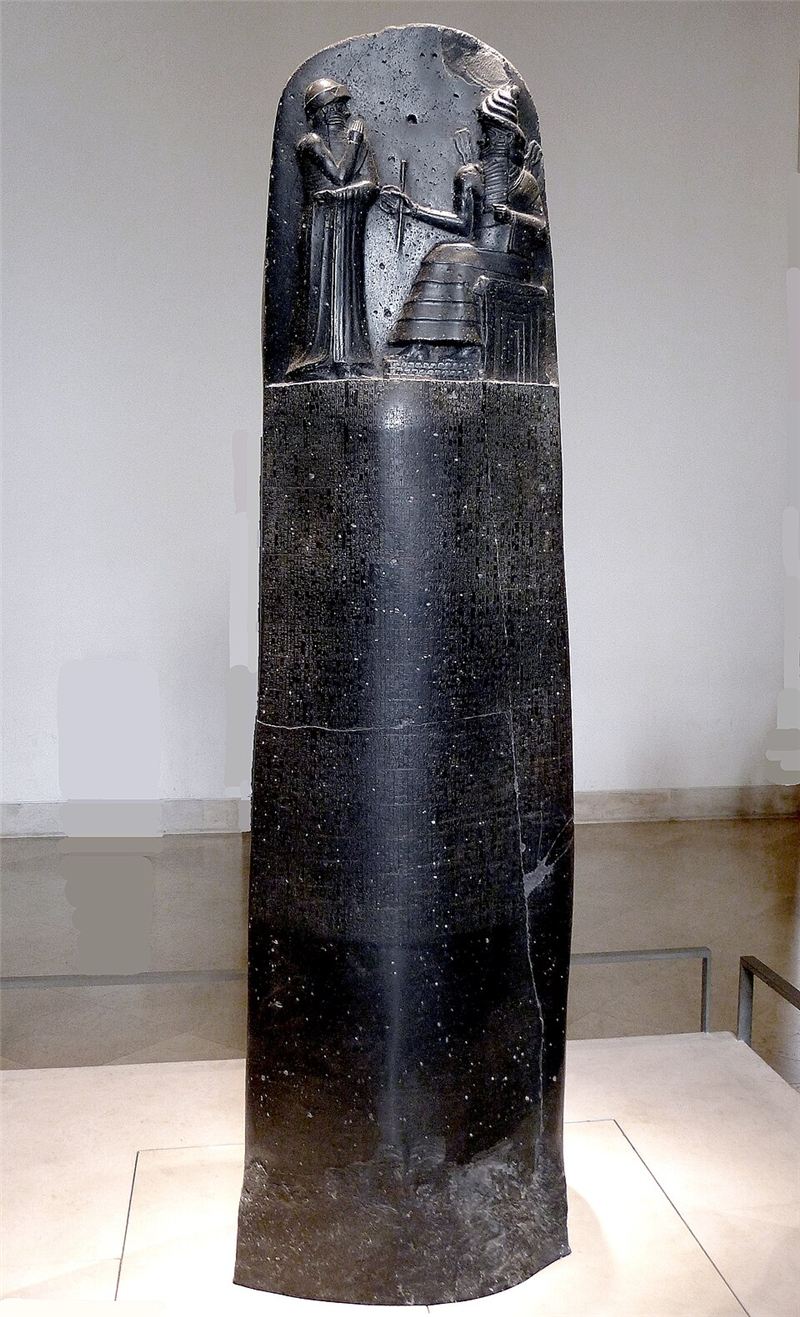
The Institute's fifty social ladders each set out the ranks of one society in one age, from Babylonia in the age of Hammurabi and Classical India to the Mali Empire, Joseon Korea, Saint-Domingue and the Soviet Union under Stalin. Each rank has its own name, a share of the population, what law and custom gave or denied it, and how people entered or left it. Side by side, the ladders show how differently peoples drew the lines between ruler and ruled, free and unfree, and how often the same devices recur: the hereditary register, the tax one rank paid and another did not, the examination, the bought title, the law that made a person property.
At the top of nearly every ladder stands one man, with the royal family. The exceptions are instructive. Classical Athens had no king, so its ladder begins with the richest citizens, who had to win votes in the Assembly and could be voted into exile. Classical Sparta had two kings at a time, one from each royal house. The doge of the Republic of Venice was elected for life and reigned within strict limits, and the stadtholder of the Dutch Republic, usually the Prince of Orange, commanded the army but was by law an official of the provincial States. Among the Haudenosaunee the top rank is the fifty chiefs of the League's Grand Council, whom the clan mothers chose and could depose. The king of Kongo was elected for life from among the royal kin. The colonial ladders put the sovereign overseas: the viceroy of the British Raj was appointed by the Crown, typically for five years, the viceroys of Spanish America served a king who remained in Spain, and Saint-Domingue was governed by a governor-general and an intendant for a king who ruled from Versailles.
Below the ruler, the ladders agree on how few shared power. In imperial Rome a few thousand families held the honours of an empire of sixty to seventy-five million people, and a few thousand men governed the Ottoman Empire, which grew from about 12 million people in the 1520s to perhaps 30 million by 1600. About 5,000 aristocrats enjoyed the court's culture in Heian Japan, a land of perhaps five million; some 20,000 officials governed the 90 to 100 million people of Song China. The few also held a great deal. Around 1650 the 445 highest-ranked nobles of the Mughal Empire drew 61 per cent of the empire's revenue, and in Ancien Régime France the clergy and the nobility, about 2 per cent of the people, held a third or more of the land.
Many rulers claimed more than human standing. The pharaoh of New Kingdom Egypt was in theory the only link between the gods and the people; the chiefs of Hawaii under the kapu traced their descent from the gods, and commoners lay face down before the most sacred of them; the Sapa Inca of the Inca Empire was believed to be the son of the Sun; the cult of the devaraja in the Khmer Empire identified the king with Shiva or Vishnu. Yet honour and power did not always sit together. In Heian Japan the emperor reigned while the Fujiwara regents ruled, and in Tokugawa Japan the emperor stood highest in honour but without power, while the shogun ruled from Edo. Nor was every throne secure against those below it: in the Ashanti Empire every chief, from the village to the king, could be destooled for breaking his oaths.
What Set the Ranks Apart
Every ladder rests on more than one principle. Birth comes first in most. In Venice, after the lockout (Serrata) of the Great Council in 1297, only the men of the noble families enrolled in the Golden Book sat in the council and filled the offices of state. In Hawaii rank was genealogy, so that no one could make himself a chief. In Mali a person belonged by birth to a lineage, freeborn, nyamakala or enslaved, and married within it. Joseon recorded birth in household registers, and Tokugawa Japan recorded hereditary status every year in registers built on the certificates of Buddhist temples; in both, status decided dress and marriage.
Law made the lines explicit. The Code of Hammurabi sorts people into three classes, the free man (awīlum), the commoner (muškēnum) and the slave, and punishes by class. The Russkaya Pravda of Kievan Rus' ranked people by what it charged for killing them. The Code of Laws of 1832 named four estates in the Russian Empire, of which the nobility and the clergy paid no poll tax and gave no recruits to the army. In France privilege, not wealth alone, defined rank: the clergy and the nobles paid no taille, the chief direct tax, and only nobles could wear a sword. The sakdina system of the Ayutthaya Kingdom gave every rank a number, in name the rai of land its holder was entitled to: 5 for a slave, 20 for a commoner, 600 for a learned monk, 10,000 for a chief minister. What the numbers measured in practice was manpower.
Office and service could cut across birth. In Song China rank came above all from office, and office came, more than ever before, from the civil service examinations. The Ottoman divide ran between the askeri, all who served the sultan and paid no taxes, and the reaya, "the flock", who paid for them. The Mughal emperor paid his mansabdars with assignments of land revenue that he moved at will (the mansabdari system). Elsewhere wealth decided. Solon's property classes graded the citizens of Athens by the yield of their land, and in the Dutch Republic status was largely determined by income. In Han China the official order ran against wealth: merchants came last of the four occupations, and some laws barred them from office and from wearing silk, yet they could grow richer than nobles.
Religion drew lines of its own. In the Abbasid Caliphate Islamic law set Muslims above the protected non-Muslims, the dhimmis, who paid a poll tax, and both above the enslaved. In the Delhi Sultanate non-Muslims owed the jizya, yet the sultans relied on Hindu chiefs and village officials to collect the revenue. Venice confined its Jews, denied citizenship, to the Ghetto from 1516, and in the Dutch Republic only those who conformed to the Reformed Church could hold office. Conquest drew others. Yuan China sorted its subjects into four categories in an order that followed how early each people had submitted; Ptolemaic Egypt was ranked by class and by language; Qing China drew a division "not between Manchu and Han, but between bannerman and civilian"; in the Achaemenid Empire the Persians of the homeland paid no tribute.
Colour and caste are the lines the ladders most explicitly treat as the work of law and ideology. In Saint-Domingue the Code Noir of 1685 made the enslaved movable property but gave freed people the rights of the freeborn; from the 1760s colonial laws took many of those rights from free people of colour, however rich, and kept office and honour for whites. In Spanish America colonial law and ideology ranked people by descent and colour, and the casta paintings of the 18th century show a neat ladder of mixtures. The Brahmanical law books ranked people in four varnas fixed by birth, with groups such as the Chandalas outside them, while lived society was made of many jatis. In three ladders far apart, the work of death and blood marked people as outcast. The Manusmriti gave the Chandalas the carrying away of corpses and the execution of condemned criminals. In Joseon the baekjeong lived apart as butchers, tanners and executioners, work that Buddhist ideas of pollution led others to avoid. In Tokugawa Japan the kawata skinned dead animals and tanned hides, work that Shinto and Buddhist ideas of pollution tied to death and blood. None of these ranks appears in its ladder as a natural fact: each is shown being written into registers, law codes and custom, and enforced.
Owned and Bound
Slavery runs through most of the ladders, and the law of each said plainly what it meant. In Athens a slave could be sold, was flogged for offences that cost a free man a fine, and gave evidence in court only under torture. The Code Noir declared the enslaved movable property. Joseon's private nobi could be bought, sold, given away and inherited, and an owner was not held responsible if a nobi died of a beating. War, debt, crime, sale and birth brought people into slavery. In Babylonia a bad harvest could lead a farmer to pledge his land, then his wife or children, and finally himself; in Kievan Rus' a peasant who took a loan became a zakup, and one who failed to repay could become a kholop; Aztec men and women sold themselves or their children through debt, gambling or hunger, for a price often of twenty cotton cloaks.
Birth decided most. In Rome, Egypt and Gaul the children of the enslaved were born enslaved, and in Saint-Domingue a child took its mother's status under article 13 of the Code Noir. A few ladders show the opposite rule: Aztec slavery was not inherited, and in Heian Japan the child of a base and a good parent was counted among the good people. The ladders also show slavery's weight. Nearly nine people in ten in Saint-Domingue were enslaved, most of them born in Africa; deaths outran births, and in the late 1780s ships landed some 20,000 to 30,000 captives a year. In Joseon the nobi made up at least 30 per cent of the people at the system's height, and in Athens modern estimates put 20,000 to 30,000 slaves, some of them children, in the silver mines of Laurion alone.
Between the free and the enslaved stood ranks bound in other ways. The helots of Sparta belonged to the state rather than to individual citizens; they lived in families and kept part of the harvest, yet each year the ephors declared war on them, so that killing one brought no religious pollution, and at Plataea in 479 BCE there were, says Herodotus, seven helots for every Spartiate. Russia's serfs were owned with their land by noble landlords, who judged them, approved their marriages and could sell them with or without land, though the law forbade a lord to kill them; in the official count of 1857–1859 some 23 million were serfs on private estates. The Aztec mayeque farmed a lord's land and, on colonial accounts, passed their status to their children with it. The newest ladders add new forms. Soviet collective farmers had no right of free exit, and the camps of the Gulag held more than a million people by the late 1930s. More than 1.6 million Indians were shipped overseas as indentured labourers: officials called it "free" migration, and historians such as Hugh Tinker call it "a new form of slavery".
The most surprising pattern is slavery near the top. From 1250 to 1517 Egypt and Syria were ruled by men who had begun life as slaves: bought as boys, mostly Kipchak Turks and later Circassians, trained in the barracks of the Citadel of Cairo and then freed, the mamluks of the Mamluk Sultanate chose the sultan, while their own freeborn sons were mostly kept out of the caste. The highest Ottoman posts went to men who were legally the sultan's slaves, Christian boys taken in the devshirme and raised as Muslims. The first sultan of Delhi, Qutb ud-Din Aibak, was a former slave; most Abbasid caliphs were sons of enslaved concubines; and the shahs of Safavid Iran built a force of Caucasian captives, trained as their own slaves, the ghulams, who took over much of the army and many high offices. The ladders give the reason in the rulers' own interest: the Ottoman levy was meant to ensure that no hereditary nobility could rival the dynasty, and Abbasid caliphs trusted men who owed everything to them. The same legal condition could mean the silver mines of Laurion or the command of an army.
The enslaved and the bound were not only acted upon. After the Spartans fortified Decelea in 413 BCE, more than 20,000 slaves escaped from Athens to them, and the helots rose in revolt in 464 BCE. In Saint-Domingue the field workers built families, the Creole language and Vodou as far as they could; maroon communities in the Bahoruco mountains held out for generations, and in August 1791 the enslaved of the northern plain rose. In New Spain in 1609 the maroons of Gaspar Yanga won recognition as a free town.
Rising and Falling
No ladder was wholly closed, and none was wholly open. Where rank came from the ruler's grant, the top could be reached from far below. Basil I, born to peasant parents, rose from groom to emperor in 867 in the Byzantine Empire; Sokollu Mehmed Pasha, born to a Serbian Orthodox family, governed the Ottoman Empire as grand vizier for fourteen years. Even captives rose. Baybars, a Kipchak boy sold at the slave market of Sivas, seized the Mamluk throne in 1260; Jang Yeong-sil, born a government nobi, became a court technician under King Sejong; the Athenian slave Pasion became a banker, a metic and finally a citizen, a career his ladder calls exceptional.
The examinations promised the most regular road, and the ladders show its limits. In Song China about 57 per cent of the graduates in the lists of 1148 and 1256 had no father, grandfather or great-grandfather in office, though most had kinsmen in the bureaucracy. In Ming China the examinations were graded without regard to background, but success took years of costly tutoring, so 90 per cent of the people were shut out for lack of education. Under the Qing only about 5 per cent of those who sat the examinations passed, and Hong Xiuquan, after his fourth failure, went on to lead the Taiping Rebellion. In Joseon the examinations were open in theory to most free men, yet the yangban won almost every degree.
Elsewhere the ladder was climbed over generations, won in war or bought. In Rome a fortune could carry a family up over two or three generations, from slave to freedman, to the town council, the equestrian order and the Senate. In the Aztec Empire a commoner who took four captives could join the eagle or jaguar warriors, until Moctezuma II made such promotion harder. Money bought rank across the world. On one estimate some 6,000 French families had entered the nobility by buying ennobling offices by 1765; in the 17th and 18th centuries Venice sold its nobility for 100,000 ducats, and 134 families were admitted. After the Japanese invasion of 1592 the Joseon state, short of grain, sold rank and let nobi win their freedom by paying or fighting, and in the registers of Daegu the yangban rose to nearly 70 per cent of the people by 1858, while the nobi fell to about 1.5 per cent.
Societies that feared movement closed their doors, and the ladders date the closing. By 1323 membership of Venice's Great Council was hereditary. Pericles's citizenship law of 451 BCE excluded anyone without an Athenian mother as well as father. France's Ségur Ordinance of 1781 made new infantry and cavalry officers prove four generations of noble descent. The Tokugawa order was built to stop people moving: Toyotomi Hideyoshi, a peasant's son who had risen to rule Japan, began to fix warriors and farmers apart with his Sword Hunt of 1588. In Sparta poverty or cowardice could cost a citizen his rights, and the citizen body shrank from about 8,000 men in 480 BCE to fewer than a thousand by Aristotle's day.
Falls were as common as rises, and debt was the commonest cause. It drove Babylonian families into bondage, though the Code limited the bondage of family members to three years and kings issued edicts cancelling debts for necessities; it turned Han owner-farmers into tenants or slaves. Conquest overturned whole ladders: in the conquest of Gaul as many as a million Gauls died and another million were enslaved. Under Stalin a label could fall on anyone: officials applied the definition of a kulak arbitrarily, and between 1934 and 1941 the number of prisoners with higher education rose more than eightfold. Several orders ended by law. On the night of 4 August 1789 the French National Assembly abolished the privileges of the orders; Alexander II's manifesto of 1861 freed some 23 million serfs, who had to pay for their land over 49 years (the emancipation reform); the Meiji government abolished the four classes after 1868 and the outcast statuses in 1871; and Joseon abolished all slavery in 1894. In Saint-Domingue the rising of the enslaved came first, and the abolitions of 1793 and 1794 followed it.
Women on the Ladder
In most ladders a woman took her rank from her father and then from her husband, and the law marked her place within it. In Athens every citizen woman lived under a male guardian. The Russkaya Pravda valued a woman's life at half a man's, and the Code of Hammurabi charged ten shekels for a blow that made an awīlum's daughter miscarry, five for a muškēnum's daughter and two for a slave woman. Under the Heian codes a woman's allotted field was two-thirds of a man's, and Islamic law, in the Abbasid, Mamluk, Ottoman and Mughal ladders, gave a daughter half a son's inheritance while letting free women own property in their own right. The townswomen of Ancien Régime France earned about half a man's wage, and India's indentured women were paid nine pence to a man's shilling.
Descent through the mother changed the picture. Among the Haudenosaunee children belonged to their mother's clan, women held the dwellings and farmed the land, and the clan mothers chose the League's chiefs. In Asante the chiefs represented their mothers' lines, which gave the queen mothers their power to nominate kings and chiefs. In Hawaii rank passed through mothers as well as fathers, so that Keōpūolani outranked her husband Kamehameha I. The Kingdom of Dahomey gave each great office held by a man a female counterpart, and in the Kingdom of Benin the queen mother, the Iyoba, ranked with the senior chiefs and had her own palace and regiment. Spartiate women married at eighteen to twenty, not at fourteen like many Athenian girls, could own and inherit land, and, Aristotle complained, owned nearly two-fifths of it.
Some women ruled. Hatshepsut ruled Egypt as king; Shajar al-Durr ruled Egypt as sultan in 1250; Razia Sultana reigned in Delhi from 1236 to 1240; Tribhuwana and Suhita reigned in their own right in Majapahit; Yohl Ik'nal held the full title of holy lord at Palenque from 583 to 604 among the Classic Maya. More often women held power through the palace: Nur Jahan held the Mughal imperial seal and had coins struck in her name. Some ladders record women's rights narrowing. In Joseon daughters still inherited a share of family property early in the dynasty, but from the 17th century property and ancestral rites passed through the male line, a yangban widow could not remarry, and a husband could divorce his wife on seven grounds while she could not divorce him.
Kept from office, women left their mark in other forms. The court women of Heian Japan, not trained in Chinese, the language of government, wrote in the new kana script, and much of the vernacular literature of the age, the Tale of Genji among it, is theirs. Sor Juana Inés de la Cruz became a nun in 1669 so that she could study, and in 1691 defended women's right to learning. Where the ladders speak of enslaved women, they had the least protection: in Saint-Domingue rape by owners and overseers went unpunished. Women also led resistance. The priestess Cécile Fatiman presided with Boukman over the ceremony at Bois Caïman in August 1791; Micaela Bastidas commanded rebels beside her husband Túpac Amaru II and was executed in Cusco in 1781; and in 1900 Yaa Asantewaa led the last armed resistance to British rule in Asante.
Ideal and Practice
Many ladders begin from a scheme the period drew of itself, and set it beside the evidence. In the 1020s the bishops Adalbero of Laon and Gerard of Cambrai described Christian society as three orders: those who pray, those who fight and those who work (Feudal Europe). The Eddic poem Rígsþula tells how the god Ríg fathered Thrall, Karl and Jarl, the ancestors of slaves, free farmers and nobles (Viking Age Scandinavia). Tokugawa ideology named four classes, samurai, peasants, artisans and merchants, in order of moral worth. The ladders then say what historians find. The tidy feudal pyramid of textbooks is a later simplification; historians of Tokugawa Japan since the 1990s stress that the real legal line ran between the samurai and everyone else; the varnas were a Brahmin ideal, contested in their own time, for Buddhist texts put the Kshatriyas first; and many historians now read the casta paintings as an idealised scheme, not daily practice.
The schemes served those who stated them. Hammurabi declared that the gods had called him "to prevent the strong from oppressing the weak", in a code that priced a blow to a slave woman at two shekels against ten for a free man's daughter. In British India the census ranked thousands of jatis by their supposed purity from 1881, and the Criminal Tribes Act of 1871 declared whole communities criminal by birth. Historians such as Nicholas Dirks argue that caste had been loose and fluid before colonial rule and that the Raj built a stricter hierarchy; communities answered with caste associations that petitioned for a higher varna, and Jyotirao Phule rejected every claim that caste was natural or ordained by the Creator.
The evidence itself is uneven, and the ladders say so. The sources for the Kingdom of Aksum say much about the king and little about everyone else; the Classic Maya inscriptions speak almost only of kings, queens and lords; what is known of the Incas comes from archaeology and from chroniclers writing after the conquest. Europeans who wrote about Dahomey often wrote for one side or the other of the debate over the slave trade; the European traders' accounts of the Zulu Kingdom are now read with caution; and the Europeans who wrote about the Haudenosaunee came from a patriarchal society that often overlooked the power of women. The lower a rank, the less the sources say of it: nobody recorded how many kauwā there were in Hawaii, and the slaves of Classical India were never counted.
What the Data Shows
When this essay was written, in November 2026, the Institute's social ladders numbered 50, with 417 ranks among them: a median of 8 ranks to a ladder, never fewer than 6 or more than 12. By region, 13 ladders are of Europe, 8 of Central and East Asia, 7 of Sub-Saharan Africa, 7 of South and Southeast Asia, 6 of the Americas, 4 of the Islamic Caliphates and the Middle East, 2 of the Ancient Near East, 2 of Egypt and North Africa and 1 of Oceania. By the year each describes, 8 fall before 1 CE, 17 between 1 and 1499, 18 between 1500 and 1799 and 7 from 1800. By band, the ranks divide into 51 of rulers, 95 of the nobility, 60 of specialists, 45 religious, 94 of commoners, 17 dependent, 14 outcast and 41 enslaved. The collection is a selection, not a census of societies, and its weight towards Europe and the centuries after 1500 should be kept in mind.
Of the 50 ladders, 39 have an enslaved rank. The 11 without one are the British Raj, the Dutch Republic, Hawaii under the kapu, the Inca Empire, Majapahit, the Russian Empire, the Soviet Union under Stalin, Classical Sparta, Tokugawa Japan, the Republic of Venice and the Zulu Kingdom; in most of them dependent or outcast ranks stand where the enslaved stand elsewhere, from the helots and the Russian serfs to the prisoners of the Gulag. Where an enslaved rank exists, its share, taken at the midpoint of its range, is highest in Saint-Domingue, 86.95 per cent, then Joseon Korea, 35; Classical Athens, 32.5; the Ayutthaya Kingdom, the Kingdom of Dahomey and the Mali Empire, 17.5 each; and the Ashanti Empire and the Kingdom of Kongo, 15 each. It is lowest in Qing China, 1.25; Han China, 1; Feudal Europe, 0.3; Spanish America, 0.2; and Ancien Régime France, 0.015. The French figure counts a few thousand Black servants, most of them enslaved in the colonies and brought to France, where the law did not recognise slavery; the colonies lay outside the kingdom's count, and Saint-Domingue alone held 406,000 to 465,000 enslaved people around 1789.
The ruler and the nobility together, again at the midpoints, make a median of 1.21 per cent of the people. They are largest in Joseon Korea, 7.00 per cent; Classical Sparta, 6.50; Tokugawa Japan, 6.02; and the Classic Maya and Classical India, 5.50 each; and smallest in New Kingdom Egypt and Ptolemaic Egypt, 0.13 each; the Abbasid Caliphate, 0.12; Heian Japan, 0.10; and the Achaemenid Empire, 0.06. In 48 ladders one rank is "the rest", the commoners or peasants left when every other rank is counted, and its midpoint has a median of about 78 per cent.
These figures must be read with their uncertainty. Of the 366 ranks below the rulers, 320, or 87 per cent, rest on an estimate rather than on a scholar's figure; the ladders mark them as estimates, draw their bars dashed, and say in each share note what the estimate rests on, and a "rest" is itself an estimate whenever any other rank is one. The populations of 21 of the 50 societies are estimated in the same way. The order of the ranks is firmer than their size: the place of 245 ranks, 59 per cent, is agreed, and only those go into the Order the Ranks game. What the figures show is the shape the ladders share: a ruler and a nobility of a few per cent or less, a great majority of commoners and peasants, and below them, in most of the societies recorded, people whom the law held as property or bound to another's land.
Further Reading
- Bloch, M. Feudal Society. Translated by L. A. Manyon. London: Routledge & Kegan Paul, 1961.
- Cartledge, P. Sparta and Lakonia: A Regional History 1300–362 BC. 2nd edn. London: Routledge, 2002.
- Chaffee, J. W. The Thorny Gates of Learning in Sung China: A Social History of Examinations. Cambridge: Cambridge University Press, 1985.
- Duby, G. The Three Orders: Feudal Society Imagined. Translated by A. Goldhammer. Chicago: University of Chicago Press, 1980.
- Fick, C. E. The Making of Haiti: The Saint Domingue Revolution from Below. Knoxville: University of Tennessee Press, 1990.
- Finley, M. I. Ancient Slavery and Modern Ideology. London: Chatto & Windus, 1980.
- Howell, D. L. Geographies of Identity in Nineteenth-Century Japan. Berkeley: University of California Press, 2005.
- Katzew, I. Casta Painting: Images of Race in Eighteenth-Century Mexico. New Haven: Yale University Press, 2004.
- Kolchin, P. Unfree Labor: American Slavery and Russian Serfdom. Cambridge, MA: Belknap Press of Harvard University Press, 1987.
- Palais, J. B. Confucian Statecraft and Korean Institutions: Yu Hyŏngwŏn and the Late Chosŏn Dynasty. Seattle: University of Washington Press, 1996.
- Reynolds, S. Fiefs and Vassals: The Medieval Evidence Reinterpreted. Oxford: Clarendon Press, 1994.
- Thapar, R. Early India: From the Origins to AD 1300. London: Allen Lane, 2002.
- Tinker, H. A New System of Slavery: The Export of Indian Labour Overseas 1820–1920. London: Oxford University Press, 1974.
Profiles in this essay
 Saint-Domingue1665 CE – 1804 CE
 Joseon1392 CE – 1897 CE
 Sparta900 BCE – 146 BCE
 Russian Empire1721 CE – 1917 CE
 Mamluk Sultanate1250 CE – 1517 CE
 Ottoman Empire1299 CE – 1922 CE
 Tokugawa Shogunate1603 CE – 1868 CE
 British Raj1858 CE – 1947 CE
 Athens900 BCE – 86 BCE
 Republic of Venice697 CE – 1797 CE
 Aztec Empire1325 CE – 1521 CE
 Song Dynasty960 CE – 1279 CE
 Kingdom of Hawaii1795 CE – 1893 CE
 Iroquois Confederacy1450 CE – 2025 CE
 Kingdom of France987 CE – 1792 CE
 Roman Empire27 BCE – 476 CE
Cite this essay
- APA
- The Epoch Institute. (2026). From Ruler to Enslaved. In Research Series. https://the-epoch-institute.org/essays/from-ruler-to-enslaved
- MLA
- “From Ruler to Enslaved.” Research Series, The Epoch Institute, 2026, https://the-epoch-institute.org/essays/from-ruler-to-enslaved. Accessed .
- Chicago
- The Epoch Institute. “From Ruler to Enslaved.” Research Series. 2026. https://the-epoch-institute.org/essays/from-ruler-to-enslaved.
- Harvard
- The Epoch Institute (2026) ‘From Ruler to Enslaved’, Research Series. Available at: https://the-epoch-institute.org/essays/from-ruler-to-enslaved (Accessed: ).