Social ladder · 1715–1789 (from the death of Louis XIV to the Revolution)
Social Hierarchy of Ancien Régime France
From King to Enslaved

Before 1789 French law divided the king’s subjects into three orders, or estates: the clergy, the nobility and everyone else, the Third Estate. The king stood above them all. Privilege, not wealth alone, defined rank: the clergy and the nobles paid no taille, the chief direct tax, and only nobles could wear a sword. The two privileged orders made up about 2 per cent of the people but held a third or more of the land. The Third Estate ran from rich bankers and lawyers to day labourers, and at least four French people in five worked the land. Birth fixed most ranks, but money could buy an office that made a family noble. In the colonies, royal law upheld slavery. In January 1789 the Abbé Sieyès asked in a famous pamphlet what the Third Estate was, and answered: “Everything.”
Period 1715–1789 (from the death of Louis XIV to the Revolution)People 21–28 millionRanks 9Profile Kingdom of France
The ladder
By rank, the ladder is drawn as a pyramid. To scale, each bar is as wide as that rank’s share of the people. Shares marked est. are estimates where no count survives; their boxes and bars are dashed.

Ruler · One ruler
Roi (The king)
Roi Très Chrétien
The king lived in the great palace of Versailles and was crowned in the cathedral of Reims.
The king stood outside and above the three orders. Anointed with holy oil at Reims, the “Most Christian King” was believed to cure scrofula by his touch, and in law all justice flowed from him. Louis XV, who succeeded his great-grandfather Louis XIV at the age of five in 1715, and Louis XVI, from 1774, governed through royal councils, the controller-general of finances and the intendants of the provinces, with only about 10,000 officials for a kingdom of 28 million. By a lettre de cachet the king could imprison a subject without trial. His power had limits: the parlements, the high courts, could delay his edicts by refusing to register them until he forced them through in a lit de justice, and provinces, towns and orders guarded their privileges. The great nobles competed for his favour at Versailles. Debts weighed ever heavier on the crown: the American war alone cost 1.3 billion livres, and in 1789 they drove Louis XVI to summon the Estates General.
Moving in or out. The crown passed from father to son in the male line, and Louis XV, whose son had died, left it to his grandson Louis XVI in 1774. A king who came to the throne as a child, as Louis XV did, ruled through a regent until he came of age.
How many? One man, with the royal family and the princes of the blood.

Religious and learned · Fewer than 1 in 1,000 (est.)
Haut clergé (Bishops and abbots)
prélats
Bishops were powerful churchmen from noble families, and the church they led owned rich lands.
The clergy formed the First Estate, the senior order, and its leaders lived as great lords. Under Louis XVI every bishop was a nobleman. Since the Concordat of Bologna with the pope, the king had named the bishops and the abbots of the great monasteries, and he used these posts to reward noble families, whose younger sons were often destined for the church. Many abbots held their abbeys in commendam, drawing the revenues without living there. The church owned between 6 and 10 per cent of the land, by different estimates, collected the tithe and had an income put at 150 million livres a year; instead of the taille it paid the crown a “free gift” (don gratuit). Bishops governed their dioceses, sat on royal councils and in provincial estates, and many lived at court or in Paris rather than in their dioceses. Charles-Maurice de Talleyrand, the lame son of an old noble family, became agent-general of the clergy in 1780 and bishop of Autun in 1788.
Moving in or out. Bishoprics and rich abbeys went to the younger sons of noble families, chosen by the king and his ministers. By the 1780s a commoner could no longer hope for a bishopric.
How many? Estimate: about 135 bishops and archbishops, the abbots of the great abbeys and the canons of the cathedral chapters, perhaps 5,000–15,000 people of the 115,000–150,000 clergy.

Nobility and officials · 0.4–1.4%
Noblesse (Nobles)
noblesse d'épée, noblesse de robe
Nobles did not have to pay the taille, the main tax that ordinary French families paid.
The nobles formed the Second Estate: perhaps 120,000 to 400,000 people, as estimates differ widely, holding some 25 to 30 per cent of the land. Nobility passed through the male line. The old families “of the sword” traced their rank to the warriors of the Middle Ages and looked to the army and the court; the nobles “of the robe” owed theirs to high judicial and financial offices, above all in the 13 parlements, whose 1,100 magistrates were the robe’s elite. By the 18th century the two had intermarried so much that the historian Guy Chaussinand-Nogaret doubts the distinction meant much. Nobles paid no taille, though they paid the newer capitation and vingtième; they alone could wear a sword and hunt, and from 1781 a new officer of infantry or cavalry had to prove four generations of noble descent. Trade or manual work could cost a noble his rank. Wealth varied greatly: some 250 families had more than 50,000 livres a year, while over 5,000 lived on less than 1,000.
Moving in or out. Nobility came by birth, by royal letters, or by buying an office that ennobled its holder: that of secrétaire du roi cost 120,000 livres in 1773 and was mocked as a savonnette à vilain, a soap that washed away common birth. On one estimate, some 6,000 families had been ennobled through office by 1765.
How many? Modern estimates for 1789 run from about 120,000 to 400,000 people (William Doyle’s range; François Bluche gave 140,000, Gordon Wright 300,000), roughly 0.4–1.4 per cent of 28 million.
Religious and learned · 0.4–0.5%
Bas clergé (Parish priests, monks and nuns)
curés, vicaires, religieux, religieuses
Village priests ran the parish church, and many of them earned very little money.
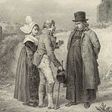
Below the prelates stood the great body of the clergy: the curés and their curates (vicaires) of some 40,000 parish churches, and the monks and nuns of the religious houses. Unlike the bishops, most were commoners. A curé baptised, married and buried his parishioners, taught the catechism and handed out alms, for the church ran most schools, hospitals and poor relief. Often he saw little of the tithe his parish paid: it went to a bishop, a chapter or an abbey, which paid him a fixed minimum stipend, the portion congrue, and many priests earned less than unskilled labourers and had more in common with their poor parishioners than with the bishops. Recruitment fell after 1750. On the eve of the Revolution the average convent had about 25 nuns, with a median age of 48, and most had little wealth. In 1789 three-quarters of the clergy’s deputies to the Estates General were parish priests, and in June more than a hundred clerical deputies joined the Third Estate.
Moving in or out. The priesthood was open to commoners who could be trained for it, but few rose higher, since bishoprics went to nobles; a priest’s rank was his own and passed to no heirs.
How many? The clergy as a whole numbered about 115,000–150,000 in 1789 (the range in Paul Hanson’s and Timothy Tackett’s accounts), roughly 0.4–0.5 per cent of the people; the parish clergy, monks and nuns were nearly all of them.
Picture: A village priest with his parishioners: Le Curé de campagne, lithograph by Grenier de Saint-Martin, c. 1827 · Francisque Grenier de Saint-Martin · CC0 · Wikimedia Commons

Soldiers, merchants and craftsmen · 7.7–10%
Bourgeoisie
bourgeois
The bourgeois were well-off townspeople, such as merchants, bankers and lawyers.
At the top of the Third Estate stood the bourgeoisie: merchants and bankers, financiers and tax farmers, lawyers, notaries and doctors, the holders of venal offices, and rentiers living on their investments. It grew fast, roughly tripling between 1715 and 1789, and on one estimate it took 39 per cent of the national income. Fortunes came from overseas trade through Bordeaux and Nantes, from lending to the crown and from collecting its taxes, and the bourgeois put them into land: by 1789 they owned about a third of France’s arable land. They paid the taille unless they lived in a privileged town such as Paris or held an office that exempted them, and noble privilege hemmed them in. In 1726 the young writer Voltaire, the son of a minor treasury official, was beaten by a nobleman’s servants; when he sought satisfaction, he was imprisoned in the Bastille without trial. Half the Third Estate’s deputies in 1789 were lawyers or local officials, and none were craftsmen or shopkeepers.
Moving in or out. Merchants’ sons became lawyers and officeholders, and the richest families bought ennobling offices or married into poor noble families. From 1781 the army’s officer commissions were closed to them.
How many? About 7.7 per cent of the people on Christian Morrisson and Wayne Snyder’s estimate, and almost 10 per cent by 1789 on Lauren Clay’s, the middle class having roughly tripled since 1715.
Free commoners · c. 7–10% (est.)
Maîtres et compagnons (Artisans and workers of the towns)
maîtres, compagnons, apprentis, menu peuple
Craftspeople in towns belonged to guilds, groups that set the rules for each trade, such as baking.
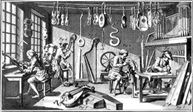
About a fifth of the French lived in towns, and Paris alone had 600,000 to 650,000 people. Most townspeople worked with their hands. Craftsmen belonged to corporations: in Paris in 1776 there were 125 recognised trades, from bakers and barbers to lace-makers, each with its own rules, patron saint and charity, setting prices and controlling who could enter. Each had its masters, journeymen (compagnons) and apprentices, and only a master could keep his own shop. Below them worked shop assistants, carters, porters and labourers, and Paris had some 40,000 domestic servants, most of them from the provinces. An unskilled man in Paris earned 20 to 30 sous a day and a woman about half as much, while a four-pound loaf cost eight or nine sous, so families often spent half their income on bread. Bad harvests brought hunger and riots: when grain prices in Paris rose by half in 1775, the Flour War spread across much of north-eastern France.
Moving in or out. A journeyman became a master by passing the guild’s tests and paying its fees. In 1776 the minister Turgot abolished the guilds’ privileges, but they were soon restored after his fall that same year.
How many? Estimate: about a fifth of the French lived in towns in 1789 (Silvia Marzagalli); less the bourgeoisie, the clergy and the nobles there, the masters, journeymen, apprentices, servants and labourers of the towns.
Picture: A violin-maker's workshop, plate from Diderot and d'Alembert's Encyclopédie, 1760s · Laurent Grillet · Public domain · Wikimedia Commons

Free commoners · About 78% (the rest, est.)
Paysans (Peasants)
laboureurs, métayers, journaliers
Most French people were peasants, who farmed the land and paid taxes to the king, the church and their lord.
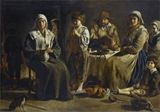
Peasants were the great majority, at least four people in five, and they ranged from rich farmers to the landless. At the top were the big tenant farmers and the laboureurs, who owned a plough team; below them came sharecroppers (métayers), who gave the landowner part of each harvest, smallholders who also worked for others, and the day labourers (journaliers). Peasants owned about a third of the arable land, often in plots too small to live on. Their burdens were many: the king’s taille, capitation and vingtième, the salt tax (gabelle), the tithe to the church, and the dues of the lord, who kept a court, collected rents in coin and in kind, kept the hunting for himself, could make them use his mill and oven, and was owed a few days’ unpaid labour a year. More than a quarter of the farmland owed such dues. Many lived close to destitution, and the bad harvest of 1788 led to the rural risings of 1789.
Moving in or out. A family rose by buying land and leasing more, and the sons of prosperous farmers became priests, notaries or merchants. Debt, bad harvests and divided inheritances pushed others down into day labour, and many left for the towns.
How many? Everyone not counted in the other ranks: chiefly the peasants, whom modern estimates put at some 82–88 per cent of the people (with the serfs among them). Two of the other ranks are estimates, so this share is one too.
Serfs and dependants · 0.5–5%
Mainmortables (Serfs)
serfs
A few French farmers were still serfs in 1789 and had fewer rights than their neighbours.
Serfdom had faded from most of France long before the 18th century, but it survived in pockets of the east and centre, above all on the lands of churches and abbeys in Franche-Comté, Burgundy, Berry and the Marche. These serfs, called mainmortables, farmed their own holdings like their neighbours, but they bore the mark of servitude known as mortmain (mainmorte): their land and goods could pass only to heirs who lived with them, and otherwise went to the lord, and some could not move away freely. Estimates of their number in 1789 range from 140,000 to 1.5 million. In 1779 the reforms of Jacques Necker, the director-general of finances, abolished serfdom on the crown’s own lands, but not on those of private lords or the church. On the night of 4 August 1789 the National Assembly abolished without compensation every right that rested on personal servitude.
Moving in or out. Lords could free their serfs, and the crown freed its own in 1779. The rest were freed in August 1789.
How many? Estimates of the serfs left in 1789 run from 140,000 to 1.5 million people, roughly 0.5–5 per cent of the population: the uncertainty is great.
Picture: Peasant Family in an Interior, attributed to Louis Le Nain, 1642 · Attributed to Louis or Antoine Le Nain · Public domain · Wikimedia Commons


Enslaved · Fewer than 1 in 1,000 (est.)
Esclaves (Enslaved people)
Enslaved people were owned by others and made to work without pay on plantations in France’s colonies.
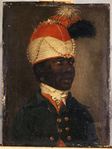
Slavery had no place in the law of France itself: the soil of France was held to make free, and enslaved people brought from the colonies fled or sued for their freedom, and some French courts declared them free. Royal law upheld slavery in the colonies. The Code Noir of 1685 governed the plantations of Saint-Domingue, Martinique and Guadeloupe, where enslaved Africans grew the sugar and coffee that enriched Bordeaux and Nantes. They were property: they could be sold, and their children were born enslaved. By 1778 French ships carried some 13,000 captives a year to the French West Indies, and Saint-Domingue alone held 406,000–465,000 enslaved people around 1789; there deaths outran births, as five to ten in every hundred died each year. Edicts from 1716 let colonists keep slaves in France if they registered them, and in 1777 Louis XVI forbade Black people to enter the kingdom. Some enslaved people won or bought their freedom: Toussaint Louverture, born on a Saint-Domingue plantation, was freed in the 1770s.
Moving in or out. Freedom came by manumission, by purchase or, in France, by a lawsuit, and the Code Noir gave freed slaves the rights of free subjects.
How many? Estimate: a few thousand Black servants, most of them enslaved in the colonies and brought to France, where the law did not recognise slavery; in the colonies, outside the kingdom’s 28 million, Saint-Domingue alone held 406,000–465,000 around 1789.
Picture: Presumed portrait of Zamor, the Bengal-born page of Madame du Barry (Musée Carnavalet) · Unidentified painter · CC0 · Wikimedia Commons

Born into history
Where would you have stood? Chance places you on the ladder, as birth placed most people: weighted by how many each rank held.
Moving up and down
The society of orders was steep but not sealed. Money was the main ladder: a merchant’s or lawyer’s family could buy an office that ennobled it, and on one estimate some 6,000 families had entered the nobility that way by 1765, while poor noble families married their children into rich bourgeois ones. Jeanne-Antoinette Poisson, whose father was a steward to the Pâris brothers, financiers to the crown, became Louis XV’s mistress in 1745, and the king bought her the marquisate of Pompadour so that she could be presented at court. In the late 18th century the doors began to close: the old nobility resented the newcomers, and the Ségur Ordinance of 1781 made new infantry and cavalry officers prove four generations of noble descent, so that a commoner had to spend ten or twenty years in the ranks before he could hope for a lieutenancy. The Third Estate’s demand in 1789 for careers open to talent grew from such grievances, and on the night of 4 August the National Assembly abolished the privileges of the orders.
Women on the ladder
Women took the rank of their fathers and husbands, and none could vote or hold public office. In law a daughter was under her father’s authority and a wife under her husband’s. Noblewomen and rich bourgeois women presided over the salons of Paris, meeting places of the Enlightenment, and a few won fame in their own right: Émilie du Châtelet translated Newton’s Principia into French, and Jeanne-Antoinette Poisson, a commoner, became the Marquise de Pompadour and Louis XV’s adviser. Townswomen worked as seamstresses, laundresses, market women and servants, earning about half a man’s wage; some trades were organised by women, and in 1776 the fashion merchants (marchandes de modes) won a guild of their own. Peasant women worked in the fields as well as the house. In October 1789 the market women of Paris marched on Versailles, and in 1791 Olympe de Gouges published her Declaration of the Rights of Woman and of the Female Citizen.
Compare with another society
Test yourself
4 questions on the ladder of Ancien Régime France.
The questions open here once the page has loaded.
Sources and further reading
- Chaussinand-Nogaret, G. (1985) The French Nobility in the Eighteenth Century: From Feudalism to Enlightenment. Trans. W. Doyle. Cambridge: Cambridge University Press.
- Doyle, W. (2002) The Oxford History of the French Revolution. 2nd edn. Oxford: Oxford University Press.
- Hufton, O. (1974) The Poor of Eighteenth-Century France, 1750–1789. Oxford: Clarendon Press.
- Jones, C. (2002) The Great Nation: France from Louis XV to Napoleon. London: Allen Lane.
- Jones, P. M. (1988) The Peasantry in the French Revolution. Cambridge: Cambridge University Press.
- Peabody, S. (1996) "There Are No Slaves in France": The Political Culture of Race and Slavery in the Ancien Régime. New York: Oxford University Press.
The shares are of the whole population, children included. Where a scholar has counted or estimated a rank, its share follows that work, named on the rank; where no count survives, the share is an estimate, marked est. and drawn dashed, made from what the rank was and did, from related figures and from the same rank in comparable societies, and its note says what it rests on. Population: modern estimates: about 21 million in 1715 and 28 million in 1789 (Silvia Marzagalli).
Cite this page
- APA
- The Epoch Institute. (2026). Social Hierarchy of Ancien Régime France. In Social Ladders. https://the-epoch-institute.org/societies/ancien-regime-france
- MLA
- “Social Hierarchy of Ancien Régime France.” Social Ladders, The Epoch Institute, 2026, https://the-epoch-institute.org/societies/ancien-regime-france. Accessed .
- Chicago
- The Epoch Institute. “Social Hierarchy of Ancien Régime France.” Social Ladders. 2026. https://the-epoch-institute.org/societies/ancien-regime-france.
- Harvard
- The Epoch Institute (2026) ‘Social Hierarchy of Ancien Régime France’, Social Ladders. Available at: https://the-epoch-institute.org/societies/ancien-regime-france (Accessed: ).