Americas
Saint-Domingue
At a glance
- By the 1780s Saint-Domingue produced about 40 per cent of the sugar and 60 per cent of the coffee consumed in Europe, more than all the British West Indies together, and its taxes were a major source of the French budget.
- Between 1681 and 1791 an estimated 790,000 to 860,000 enslaved Africans were brought to its plantations, a third of the whole Atlantic slave trade in 1783–1791; some 5 to 10 per cent died every year, so the population was kept up only by constant importation.
- Enslaved Africans and Creoles planned their rising at the Vodou ceremony of Bois Caïman in 1791; slavery was abolished in 1793, Toussaint Louverture's constitution of 1801 declared it abolished for ever, and the French army sent to restore it was beaten at the Battle of Vertières on 18 November 1803.
Rise & Fall
- 1665Louis XIV officially recognises French colonisation of Hispaniola and Tortuga, with slavery-based plantation agriculture and cattle farming.
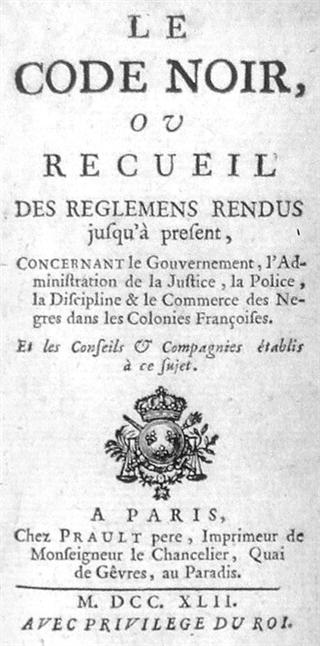
- 1685The Code Noir regulates slavery and grants freed people full citizenship; the colony's first sugar windmill is built.
- 1697By the Peace of Ryswick Spain tacitly recognises French control of Tortuga and the western third of Hispaniola.
- 1758Mackandal, the one-armed maroon leader who united the maroon bands and raided for six years, is captured after a plot to poison the planters' water and burned alive at Cap-Français.
- 1789Some 8,000 plantations worked by 406,000 to 465,000 enslaved people produce half the sugar and coffee consumed in Europe and the Americas.
- 1791After the Vodou ceremony at Bois Caïman the enslaved of the northern plain rise, killing 2,000 Creoles and burning 280 sugar plantations within two months.
- 1793Civil Commissioner Léger-Félicité Sonthonax abolishes slavery in the colony by emancipation proclamation; Toussaint Louverture joins the Republic.
- 1803On 18 November Dessalines's army defeats the French at the Battle of Vertières near Cap-Haïtien; the last French troops withdraw and Haiti declares independence in 1804.
Foundation
Spain held all of Hispaniola from the 1490s, but as its interest shifted to the mainland the western part was neglected. In 1605 Philip III ordered Governor Antonio de Osorio to depopulate the western, central and northern regions to stop smuggling with the French, English and Dutch; instead, pirates of all three nations took over the abandoned coasts. French buccaneers settled Tortuga in 1625, living by piracy, wild cattle and hides. The Spanish destroyed their settlements several times, but they returned for the hardwood, the game and the fresh water, and in 1659 the settlement on Tortuga was officially established under a commission of Louis XIV.
In 1665 the king recognised the French colonisation of Hispaniola and Tortuga, now built on slavery-based plantation agriculture and cattle farming. Bertrand d'Ogeron (1613–1676) encouraged tobacco planting, which turned freebooters into a settled population, and drew colonists from Martinique and Guadeloupe. Cap-Français, later Cap-Haïtien, was established shortly before 1670, when a tobacco crisis emptied many places and freebooting revived in raids such as Vera Cruz in 1683 and Campêche in 1686. Seignelay, the minister of the navy, restored order and ordered plantations of indigo and cane sugar; the first sugar windmill rose in 1685, the year of the Code Noir. By the Peace of Ryswick in 1697 Spain tacitly recognised the French presence in the western third of the island.
Socioeconomy
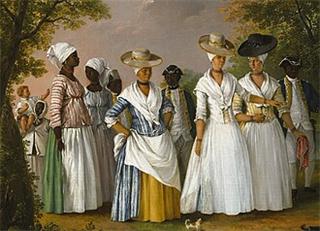
Saint-Domingue became the richest colony of the French West Indies, the Pearl of the Antilles. By the 1780s it produced about 40 per cent of the sugar and 60 per cent of the coffee consumed in Europe, and by 1789 its roughly 8,000 plantations yielded half of all the sugar and coffee consumed in Europe and the Americas, more than all the British West Indies combined. The grands blancs owned 800 sugar estates, averaging 300 slaves; petits blancs held 5,700 small plantations and the gens de couleur 6,000, chiefly coffee.
This wealth was made by enslaved people. Between 1681 and 1791 an estimated 790,000 to 860,000 were brought from Africa, a third of the entire Atlantic trade in 1783–1791, 28,000 a year by 1786 and more than 30,000 from 1787; most were war captives from hundreds of peoples who learned Creole French to speak to one another. In 1789 there were 406,000 to 465,000 slaves, 28,000 to 32,000 free people of colour and 40,000 to 45,000 whites. Field gangs cut razor-sharp cane from 5 am to sunset under the whip, women did most of the processing and lost arms in the mills, and owners deep in debt found it cheaper to work people to death and buy replacements: 5 to 10 per cent died each year, deaths outpaced births, and most survived only a few years. Vodou, blending Catholic ritual with the religions of Guinea, Congo and Dahomey, was outlawed and driven underground, but healed and held them.
Military
Resistance was constant. Thousands fled into the mountains as maroons, farming and hunting in close-knit communities, returning to free kin and raiding isolated plantations. French expeditions into the Bahoruco mountains from 1702 to 1761 took a few dozen maroons at a time but never destroyed the hideaways, and a joint French-Spanish expedition of 1776–77 found the villages empty. Mackandal, a one-armed Vodou houngan who escaped in 1751, united many bands, raided for six years, reputedly killed more than 6,000 people and preached the killing of the whites; he was burned alive at Cap-Français in 1758.
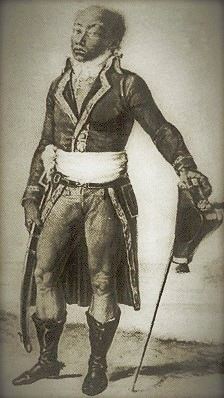
The rising of August 1791 turned resistance into war: within two months 2,000 Creoles were dead and 280 sugar plantations burned. Spain and Britain invaded; 7,000 French Republican troops landed in September 1792; Toussaint Louverture and Jean-Jacques Dessalines, leading the formerly leaderless revolt, first allied with Spain, then destroyed the Spanish forces and joined the Republic. In the War of the South of 1799 Dessalines murdered some 10,000 Creole captives and civilians. Napoleon's expedition under Leclerc opened the last war in 1802; after Louverture's arrest Dessalines and Pétion fought on from October. Yellow fever killed Leclerc and more than half the French army, Rochambeau's atrocities rallied former loyalists to the rebels, the British blockaded the coast, and the French were finished at the Battle of Vertières on 18 November 1803.
Governance & Law

Saint-Domingue was a royal colony whose law was the Code Noir of 1685. It obliged masters to feed and clothe their slaves, regulated corporal punishment and gave affranchis, freed people, full citizenship; free people of colour used the courts to sue whites. On remote plantations its protections were often ignored. The grands blancs, nobles mostly living in France, held most power and property; the petits blancs and gens de couleur libres held local power and the militia. From the 1760s the Bourbon authorities barred people of colour from public trust, the professions, European clothing, swords and firearms and mixed functions, though not from buying land: by 1789 they owned a third of the plantation property and a quarter of the slaves.
Revolution remade the state. The National Convention's decree of 15 May 1792 restored the rights of the free people of colour; Léger-Félicité Sonthonax, Civil Commissioner and de facto ruler from September 1792 to 1795, stripped the white Creoles of military power and abolished slavery. Louverture forced him out in 1795, ruled the north alone, and promulgated the Constitution of 1801 on 7 July, making himself governor general for life of the whole island: Article 3 read, "There cannot exist slaves, servitude is therein forever abolished. All men are born, live and die free and French." He imposed forced plantation labour and crushed his nephew Moïse's rising against it in October 1801.
Global & Regional Impact
Saint-Domingue was the greatest jewel in imperial France's mercantile crown. The income and taxes of slave-grown sugar became a major source of the French budget, and slave labour let France surpass Britain in trade; Louis XVI would not change the labour system even when economists showed free labour cheaper. The colony drew a third of the Atlantic slave trade in its last decade, and in it African cultures endured in Creole French, Vodou and the tales of Compère Lapin. Its free people of colour were the largest and wealthiest in the Caribbean.
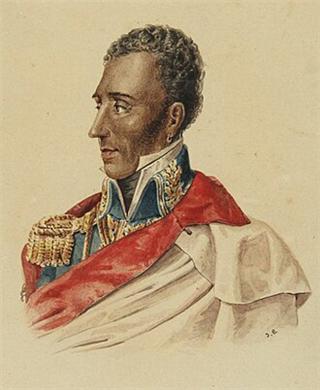
Its revolution reached far beyond the island. It culminated in the elimination of slavery and the founding of Haiti over the whole of Hispaniola, and it cost Napoleon so dearly that, having sold Louisiana in April 1803, he lost interest in the Western Hemisphere. Between 1791 and 1810 more than 25,000 Creoles, planters, petits blancs and free people of colour with their slaves, fled to the United States, Jamaica and Cuba; more than 10,000, expelled from Cuba, reached New Orleans in 1809–1810, nearly doubling its population. In the American South before the Civil War "San Domingo" named the fear of slave rebellion. In 1825 Charles X recognised Haitian independence only for 150 million francs, ten times the price of Louisiana, delivered under the guns of fourteen brigs of war; Jean-Pierre Boyer signed on 11 July 1825, and the debt drained Haiti's treasury for a century.
In the Research Series
Decline & Fall
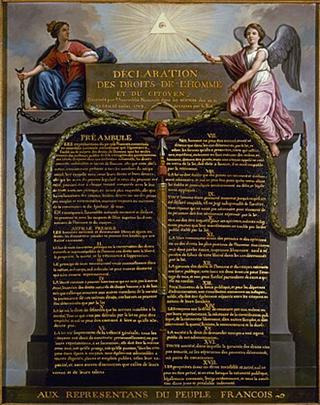
The colony's social order began to erode in the 1760s. Slave prices doubled between 1750 and 1780, coffee's profits collapsed in 1770 and planters sank into debt. Then the Declaration of the Rights of Man of 26 August 1789 reached the island. Wealthy Creole planters saw a chance of independence; Vincent Ogé, Jean-Baptiste Chavannes and others incited revolts against the royal government, among them a slave revolt that laid waste the northern plain, and the Creoles soon lost control of it. Enslaved Africans and Creoles had planned the rising at the Vodou ceremony of Bois Caïman in 1791; what began as a political revolution became a racial war.
Sonthonax's abolition of 1793 brought the rebels to the Republic but alienated the whites who had lived by their labour. Louverture, an affranchi and planter who had himself owned slaves, ruled the whole island by 1801. Napoleon sent Leclerc in 1802; Louverture was arrested during a ceasefire, Dessalines having denounced him, and deported to France. When it became plain that slavery was being restored, as on Guadeloupe, Dessalines and Pétion turned against the French in October 1802. Leclerc died of yellow fever, and after Vertières on 18 November 1803 the last troops withdrew. In 1804 the colony declared itself Haiti, the Taíno name of the island; between February and April Dessalines had the remaining French whites killed, and on 6 October 1804 he was crowned Emperor Jacques I.
Saint-Domingue, the French western third of Hispaniola, became by 1789 the richest colony in the world, producing half of Europe's sugar and coffee with the labour of over 400,000 enslaved Africans who died faster than they were born. Their revolution from 1791, under Louverture and Dessalines, abolished slavery, defeated Napoleon's army at Vertières and made the colony Haiti in 1804.
Test yourself
5 questions on this page, from its key events and facts.
The questions open here once the page has loaded.
References
- Laurent Dubois, Avengers of the New World: The Story of the Haitian Revolution (The Belknap Press of Harvard University Press, 2004)
- John Garrigus, Before Haiti: Race and Citizenship in Saint-Domingue (Palgrave-Macmillan, 2002)
- Madison Smartt Bell, Toussaint Louverture: A Biography (Pantheon Books, 2007)
- Joan Dayan, Haiti, History, and the Gods (University of California Press, 1998)
- Paul Butel, Histoire des Antilles françaises: XVIIe–XXe siècle (Perrin, 2002)
- Bryan Edwards, A Historical Survey of the French Colony on the Island of St. Domingo (Stockdale, 1797)
Connections
Open the full connections map →