Europe
Cossack Hetmanate
At a glance
- The Treaty of Zboriv of 18 August 1649 recognised the Hetmanate within the Commonwealth, with 40,000 Registered Cossacks and Crown forces barred from the Kyiv, Bratslav and Chernihiv lands.
- At the Pereiaslav Council of 1654 Khmelnytsky and the Cossack elite swore allegiance to Tsar Alexis in return for self-government, a bond Russia tightened with every later agreement.
- Peter I's troops burnt the capital Baturyn on 13 November 1708, killing up to 15,000 people, after Ivan Mazepa allied with Charles XII of Sweden.
Rise & Fall
- 1649Bohdan Khmelnytsky signs the Treaty of Zboriv on 18 August: the Registered Cossacks rise to 40,000 and Crown forces are barred from the Kyiv, Bratslav and Chernihiv voivodeships.
- 1654At the Pereiaslav Council Khmelnytsky and the Cossack elite swear allegiance to Tsar Alexis in return for self-government and war on Poland.
- 1667The Treaty of Andrusovo, made without any Cossack representative, splits the Hetmanate along the Dnieper between Russia and the Commonwealth.
- 1687Ivan Mazepa is elected hetman, ending the civil wars of the Ruin and opening a flowering of Cossack Baroque architecture and learning.
- 1708Mazepa allies with Charles XII of Sweden on 28 October; on 13 November Menshikov's troops sack Baturyn and kill up to 15,000 people.
- 1709The Battle of Poltava on 8 July ends in the defeat of the Swedes and Mazepa; the Hetmanate's autonomy becomes nominal.
- 1750Kyrylo Rozumovsky is elected hetman in absentia after Elizabeth restores the office; he moves the capital back to Baturyn and reforms the courts.
- 1764Catherine II forces Rozumovsky to resign and by decree of 21 October abolishes the hetmanship, handing power to the Little Russian Collegium under Pyotr Rumyantsev.
Foundation
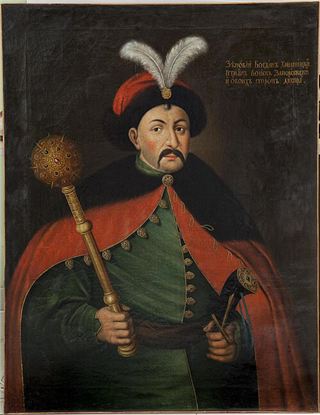
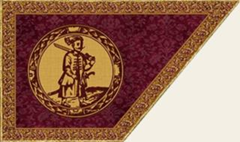
The Cossack Hetmanate, officially the Zaporozhian Host, was a stratocratic state built by Registered Cossacks in Dnieper Ukraine out of the Khmelnytsky Uprising of 1648 against the Polish–Lithuanian Commonwealth. After victories over the Poles, Bohdan Khmelnytsky entered Kyiv at Christmas 1648, hailed as a liberator from Polish captivity, and in February 1649 told a Polish delegation at Pereiaslav that he meant to be hetman of a Ruthenia stretching to Chelm and Halych.
That summer he besieged Jeremi Wiśniowiecki at Zbarazh and, with İslâm III Giray's Tatars, ambushed King John II Casimir near Zboriv; the king won over the khan, and Khmelnytsky had to negotiate. The Treaty of Zboriv of 18 August 1649 raised the Registered Cossacks to 40,000 and barred Crown Forces from the Kyiv, Bratslav and Chernihiv voivodeships. From this base Khmelnytsky built a state in military, administrative, financial, economic and cultural spheres, investing the Host under its hetman with supreme power and forming an elite of Cossack officers and Ruthenian nobles. The Hetmanate used Polish currency and often Polish as its language of administration until, after 1667, the “simple language” of Ukraine entered its documents. Its people called the land Ukraine and themselves the Ruthenian nation; Moscow called it Little Russia, the Ottomans “the country of Ukraine”.
Socioeconomy
The economy stayed agrarian. The uprising expropriated the Polish magnates, nobles and tenants: their lands, livestock and property passed to Cossacks, peasants, burghers and the state, the folwark manor system and Catholic Church holdings were eliminated after the Battle of Batih in 1652, and the peasants became free. After the uprising 80–90 per cent of peasants held land; roughly half the territory was officers' grants or free self-governing villages, a third officers' and nobles' land, and 17 per cent the Church's. The starshyna enlarged its estates by purchase, often forced, by hetmans' grants and tsarist awards, until more than 35 per cent of cultivated land was its private property by the 1730s.
Society had five estates: nobility, Cossacks, clergy, townspeople and peasants. Cossacks were about 45 per cent of the population in the 1760s; after 1735 only Elected Cossacks kept their privileges and served in person, while Helper Cossacks supplied the army. Tax-exempt monasteries owned over 20 per cent of households in nine regiments in 1729–1730. The Military Treasury drew on taxes on mills and breweries, redemptions for horilka, tar and tobacco, beehives, customs and land rent. Distilling flourished in every village, with more than 10,000 distilleries by the late eighteenth century, and saltpetre works supplied the Russian treasury.
Military

The Hetmanate was an army with a territory. Its land was divided into regiments, polky, each under a colonel who was both military and civil authority, subdivided into sotnias and kurins. The core was the Registered Cossacks, free soldiers who armed and horsed themselves. The Zaporozhian Sich on the lower Dnieper kept a distinct status, a refuge for Cossacks fleeing the Hetmanate and often its opponent.
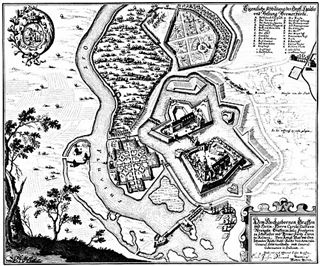
Khmelnytsky's wars with the Commonwealth depended on Crimean Tatar cavalry, allies who betrayed the Cossacks three times by 1653. After Pereiaslav a joint Cossack–Muscovite army invaded Lithuania in 1654, took White Ruthenia and Vilnius, and Khmelnytsky halted a Polish–Tatar counterstroke at the Battle of Okhmativ in 1655. The Ruin of 1657–1687 was civil war: Ivan Vyhovsky crushed Martyn Pushkar's revolt near Poltava in 1658 with Tatar help and routed a Muscovite army at Konotop in 1659; Petro Doroshenko fought the Commonwealth with Ottoman and Tatar support, and the Ottoman–Tatar army destroyed Chyhyryn in the Russo-Turkish War that followed his fall in 1676. When Mazepa joined Charles XII on 28 October 1708, Peter I had Menshikov burn Baturyn, killing up to 15,000 people on 13 November, executed over 900 officers at Lebedyn, destroyed the Zaporozhian Sich in May 1709 and beat the Swedes at the Battle of Poltava on 8 July 1709 with Skoropadsky's Cossacks in his ranks.
Governance & Law
Supreme power belonged in principle to the General Cossack Council of all Cossacks, townspeople, clergy and even peasants, which chose the hetman; by the late seventeenth century the Council of Officers, the starshyna, did the choosing, and after Poltava the tsar had to confirm every nomination. The hetman held complete power over administration, judiciary, finances and army, and conducted foreign policy until Russia stripped that right away in the eighteenth century. Colonels, first elected by their regiments, were appointed by the hetman and after 1709 often by Moscow.
The relation to Moscow was set by treaties: the March Articles of 1654, the Pereiaslav Articles of 1659 that opened the way to serfdom, the Hlukhiv Articles of 1669 and the Konotop Articles of 1672, which removed the right to an independent foreign policy and took the election of the hetman from ordinary Cossacks. Peter I created the Little Russian Collegium in 1722, six Russian officers under Stepan Velyaminov answering to the Senate, a parallel government; acting hetman Pavlo Polubotok died in the Peter and Paul Fortress in 1724. Danylo Apostol's 28 Authoritative Ordinances of 1728 allowed ten regiments, a mixed court and a law code in force into the nineteenth century. In exile, Pylyp Orlyk's Pacts and Constitutions of 1710 gave the Cossack state a democratic frame.
Global & Regional Impact
For the first time a major part of the ethnic Ukrainian lands was united under one rule in a de facto independent polity, and that fact outlasted the state. Khmelnytsky's multi-vectored diplomacy, weighing an Orthodox–Protestant bloc, a third partner's place in the Commonwealth or the Ottoman orbit, drew the Tsardom, Poland, Sweden, Transylvania and the Porte into the Ukrainian question. The Treaty of Hadiach of 1658 proposed a Grand Duchy of Ruthenia equal to Poland and Lithuania; Doroshenko's submission to the sultan made Ukraine an Ottoman sanjak on paper, though the Porte never imposed Islamic tribute and preferred a buffer.
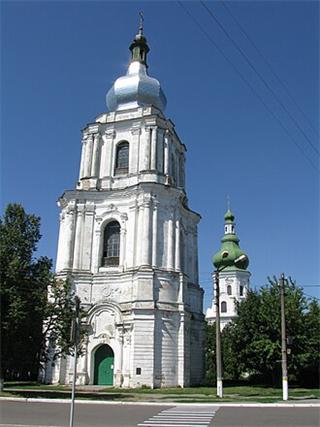
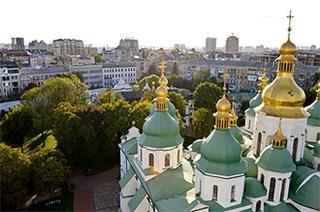
Culturally it flowered under Mazepa. The Kyiv collegium became an academy that drew the leading scholars of the Orthodox world, the largest school in lands ruled by Russia; a collegium opened in Chernihiv and a musical academy at Hlukhiv in 1730 trained Maksym Berezovsky and Dmitry Bortniansky. Mazepa financed the Church of the Epiphany, St Michael's Golden-Domed cathedral and the restoration of Saint Sophia in the Cossack Baroque style. The starshyna's descendants, proving their nobility from the hetmans' treaties after 1785, revived interest in the Cossack past, and the image of a free Cossack Ukraine against despotic Muscovy, spread by the History of Ruthenians, inspired the Ukrainian national revival of the nineteenth century.
Decline & Fall
The Hetmanate was dismantled by stages. The Treaty of Andrusovo of 1667, made without any Cossack representative, split it along the Dnieper, and Poland abolished Cossack self-government on the Right Bank in 1699. After Poltava autonomy became nominal: the territory went into the Kyiv Governorate, three imperial regiments were stationed permanently, Peter I's trade rules banned exports and redirected trade through northern Russia, and the Little Russian Collegium ruled from 1722 to 1727. After Danylo Apostol's hetmanship (1727–1734) a Governing Council dominated by Russian officers ruled.
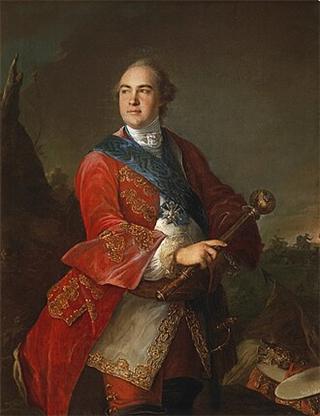
Elizabeth, secretly married to the Cossack Oleksiy Rozumovsky, heard the starshyna's petition for their “ancient liberties” in 1744 and in 1750 had Kyrylo Rozumovsky “elected” hetman in absentia. He moved the capital back to Baturyn, reformed the courts in 1760–1763 and convened starshyna congresses. A congress at Hlukhiv proposing a hereditary hetmanship and a return to Khmelnytsky's terms alarmed Saint Petersburg. Rozumovsky was summoned in January 1764 and forced to resign; Catherine II, advised by Grigory Teplov that the Hetmanate's “republican” law was incompatible with autocracy, abolished the office by decree of 21 October 1764 and gave power to a second Little Russian Collegium under Pyotr Rumyantsev. The Zaporozhian Sich was liquidated in 1775, the regiments on 27 September 1781, and serfdom followed in 1783.
The Cossack Hetmanate, born of Bohdan Khmelnytsky's uprising against Poland and recognised at Zboriv in 1649, placed itself under the tsar at Pereiaslav in 1654, was partitioned along the Dnieper in 1667 and, after Mazepa's failed break with Russia in 1708–1709, lost its autonomy piece by piece until Catherine II abolished the hetmanship in 1764.
Test yourself
5 questions on this page, from its key events and facts.
The questions open here once the page has loaded.
References
- Serhii Plokhy, The Cossacks and Religion in Early Modern Ukraine (Oxford University Press, 2001)
- Orest Subtelny, Ukraine: A History (University of Toronto Press, 1988)
- L. Okinshevych and A. Zhukovsky, "Hetman state", Encyclopedia of Ukraine, vol. 2 (University of Toronto Press, 1988)
Connections
Open the full connections map →