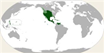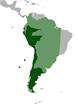
Americas
Colonial Brazil
At a glance
- Brazil was a slave society from the outset: about 35 per cent of all Africans taken in the Atlantic slave trade were sent there, more than ever reached the Thirteen Colonies, and the trade lasted longer than in any other country of the Americas.
- Sugar made the colony: from 1600 to 1650 it was 95 per cent of exports, and in the Bahia sugar regions owners found it cheaper to work the enslaved to death over a few years and buy replacements.
- The enslaved fled to fortified settlements called quilombos; the largest, the Quilombo dos Palmares under Ganga Zumba and Zumbi, grew to many thousands and held out until Domingos Jorge Velho destroyed it and killed Zumbi in 1695.
Rise & Fall
- 1500On 22 April Pedro Álvares Cabral's fleet of 13 ships lands at what is now Porto Seguro and takes possession of the land in the name of Manuel I.
- 1534–1536John III divides the land into fifteen hereditary captaincies; only Pernambuco and São Vicente prosper.
- 1549Tomé de Sousa arrives as first governor-general with the first Jesuits and founds the capital, Salvador, on All Saints Bay.
- 1565Estácio de Sá founds Rio de Janeiro in the war against France Antarctique; the last French settlers are expelled in 1567.
- 1630–1654The Dutch West India Company holds Recife, Olinda and the sugar coast as Dutch Brazil until it withdraws in 1654.
- 1695An army under Domingos Jorge Velho destroys the Quilombo dos Palmares and kills Zumbi.
- 1763The capital of the State of Brazil moves from Salvador to Rio de Janeiro, nearer the gold of Minas Gerais.
- 1808Prince Regent John and the Portuguese court arrive in Brazil, fleeing Napoleon, and open its ports to friendly nations.
Foundation
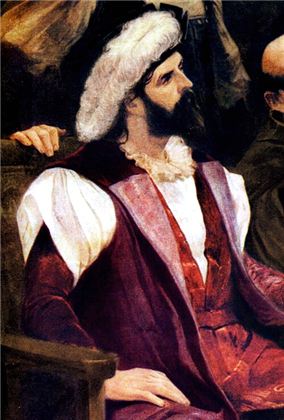
In 1494 Portugal and Castile divided the New World along the Tordesillas meridian, and on 22 April 1500 Pedro Álvares Cabral, leading 13 ships and more than 1,000 men on the route to India, landed at what is now Porto Seguro and took possession of the land for King Manuel I. For thirty years the Portuguese, busy in Africa and India, sent few expeditions, mostly to cut brazilwood for red dye with the labour of Indigenous people paid in mirrors, knives and axes. French competition for the wood brought Martim Afonso de Sousa's expedition of 1530 to patrol the coast and found the first villages, among them São Vicente.
Between 1534 and 1536 John III granted fifteen hereditary captaincies to merchants, soldiers and petty nobles. Only two prospered: Pernambuco, where Duarte Coelho founded Olinda in 1536 and sugar mills followed from 1542, and São Vicente, which lived chiefly by enslaving Indigenous people; the rest failed through Indigenous resistance, shipwrecks and quarrels. In 1549 the king made colonisation a royal enterprise, sending Tomé de Sousa as first governor-general with the first Jesuits under Manuel da Nóbrega. He founded Salvador on All Saints Bay, divided into an upper administrative town and a lower harbour, and the diocese followed in 1551. Mem de Sá (1557–1573) defeated the Indigenous peoples around Salvador and, with the Jesuits, expelled the French from France Antarctique; his nephew Estácio de Sá founded Rio de Janeiro in 1565.
Socioeconomy
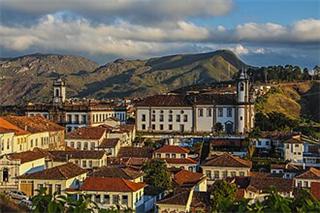
Brazil's economy ran in export cycles: brazilwood, then sugar, then gold and diamonds. Sugar, planted from the mid sixteenth century, was by far the chief product for 150 years and made up 95 per cent of exports between 1600 and 1650. Trade was restricted to Portugal, and in Africa Brazilian traders exchanged cachaça and shells for people. At the end of the seventeenth century the bandeirantes found gold in Minas Gerais, and in the first half of the eighteenth century a rush of people from the colony and from Portugal built Vila Rica de Ouro Preto, Sabará and Mariana from 1711. The Crown took a fifth, the quinto, cast at the Casas de Fundição from 1725.
All of it rested on slavery. After a brief use of Indigenous labour to cut brazilwood, the Portuguese enslaved Indigenous people for the cane fields, continuing after Sebastian I's law of 1570 freed them through the loophole of "just wars": as many as 40,000 may have been taken from the interior by 1580. Enslaved Africans, familiar with agriculture and more resistant to Old World disease, cost more and became the main workforce; about 35 per cent of all Africans captured in the Atlantic trade were sent to Brazil. In the Bahia sugar districts it was often cheaper to work people to death over a few years and replace them. In Minas Gerais enslaved and freed Black people made up three quarters of the population.
Military

The colony's wars were against Indigenous peoples, foreign rivals and the enslaved who fled. Duarte da Costa's governorship (1553–1557) was consumed by wars around Salvador, and the first bishop, Pero Fernandes Sardinha, was killed and eaten by the Caeté after a shipwreck in 1556. Mem de Sá forced the submission of the peoples near Salvador from 1557 and in 1560 attacked France Antarctique; Nóbrega and Joseph of Anchieta pacified the Tamoio who supported the French, and the last were expelled in 1567. During the Iberian Union Dutch privateers sacked Salvador in 1604 and took it in May 1624 for eleven months; from 1630 to 1654 the Dutch West India Company held Recife, Olinda and, after Paraíba fell in 1635, the sugar coast as Dutch Brazil until it withdrew in 1654.
Inland, the bandeiras of the Paulistas marched for months to enslave Indigenous people and find minerals. Against the quilombos the colonists sent soldiers and mercenaries to destroy the settlements and kill or re-enslave their people, so the quilombos were heavily fortified with dikes, false roads, covered traps and sharpened stakes in the African manner; Palmares, which grew to many thousands during the Dutch wars, resisted Dutch and Portuguese attacks until Domingos Jorge Velho's army destroyed it and killed Zumbi in 1695. In the south Colónia do Sacramento, founded in 1679, was fought over repeatedly, and the Guaraní War of 1756 destroyed the Jesuit missions.
Governance & Law
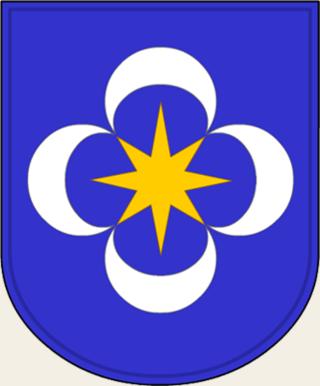
Brazil was governed first through private captaincies, then from 1549 by a royal governor-general at Salvador with detailed instructions from the king. In 1621 Philip II made it the State of Brazil and cut off a separate State of Maranhão at São Luís. Governors of high nobility used the title of viceroy from about 1640, and in 1763 the capital moved from Salvador to Rio de Janeiro, nearer the mines. Each town had a câmara municipal of landowners, merchants and slave traders regulating commerce, infrastructure, artisans and prisons. New Christians, converted Jews prominent as merchants, held civil and church offices, and the Inquisition was never permanently established.
The Jesuits were the spiritual arm of the enterprise. Supported by the king, Nóbrega, Anchieta and their companions founded missions at Salvador and São Paulo and gathered Indigenous people into aldeias where they worked and were evangelised, a policy that after 1557 accepted force; epidemics, forced removals and colonists' raids for labourers made the aldeias places people fled. The Jesuits fought colonists who wanted Indigenous slaves and quarrelled with Bishop Sardinha, but seldom objected to the enslavement of Africans. In 1755 the Marquis of Pombal abolished the enslavement of Indigenous people and the legal discrimination against Europeans who married them. The Crown's mining law was hated: the quinto fed the Vila Rica revolt of 1720 and the Minas Gerais conspiracy of 1789.
Global & Regional Impact
Colonial Brazil gave Portugal its wealth and its name to a continent-sized country. Brazilian sugar, before the Caribbean undercut it, and then Minas gold, which paid for textiles and weapons from industrial Europe, carried the Portuguese economy. Unlike Spanish America, which broke into many republics, Brazil stayed one unit, united by the Portuguese language and Roman Catholicism, and became the largest country in Latin America. The bandeirantes pushed its frontiers far west of the Tordesillas line, confirmed by the Treaty of Madrid of 1750, which with Tordesillas reflects the present extent of its coastline.
The colony remade peoples and landscapes. On the caboclo frontier Indigenous, European and African people exchanged beliefs, music, remedies and techniques; Tupi gave Portuguese its words for plants, animals and places, and Kimbundu gave it fubá; runaways taught Indigenous people Portuguese, so that one frontier agent judged a fugitive Black man could do more among the Indians than all the missionaries. The Black Irmandade of Bahia built a culture of festivals and elaborate burials from African and Christian elements, and some quilombos survive as rural communities. The colonists' view of nature as disposable denuded 4,000 square kilometres of Atlantic Forest for mining, and their slash-and-burn fields, surrendered to leaf-cutting ants, and untended cattle turned native grassland into degraded, scrubby pasture.
Decline & Fall

The colonial order wore out from its own cycles. Gold production declined towards the end of the eighteenth century, leaving the hinterland stagnant, and the Crown's intention to enforce payment of all debts, the derrama, drove the white upper class of Minas Gerais into the Inconfidência Mineira of 1788–89: a republic with an elected leader, but with property and slavery intact. Discovered in 1789 before the rising, it ended with eleven exiled to Angola and Joaquim José da Silva Xavier, Tiradentes, hanged in Rio de Janeiro in 1792; he became the symbol of Brazilian independence.
Napoleon ended the colony. When French troops invaded Portugal in 1807, Prince Regent John moved the court to Brazil; in January 1808 at Salvador he opened Brazil's trade to friendly nations, breaking the colonial pact that had tied it to Portugal alone, and in March reached Rio de Janeiro, where he founded medical schools, military academies and the first bank of Brazil. In 1815, during the Congress of Vienna, he raised Brazil to a kingdom within the United Kingdom of Portugal, Brazil and the Algarves, the formal end of the colonial era; the captaincies became provinces. Called back to Lisbon by the Liberal Revolution of 1820, John VI left his heir, who refused the Cortes' demand to reduce Brazil to a colony on the Dia do Fico, 9 January 1822, and was crowned Emperor Pedro I after independence on 7 September 1822.
Colonial Brazil, Portugal's possession from Cabral's landing in 1500, passed from brazilwood to sugar to the gold of Minas Gerais on the labour of enslaved Africans and Indigenous people, who resisted in quilombos such as Palmares; governed from Salvador and then Rio de Janeiro, it ceased to be a colony when Prince Regent John raised it to a kingdom in 1815.
Test yourself
5 questions on this page, from its key events and facts.
The questions open here once the page has loaded.
References
- Caio Prado Júnior, História econômica do Brasil (Brasiliense, 1945)
- Celso Furtado, Formação econômica do Brasil (Fundo de Cultura, 1959)
- Michiel van Groesen (ed.), The Legacy of Dutch Brazil (Cambridge University Press, 2014)
- Stuart B. Schwartz, Sugar Plantations in the Formation of Brazilian Society: Bahia, 1550–1835 (Cambridge University Press, 1985)
Connections
Open the full connections map →