Research Series · Essay 09 · · 19 min read
Faiths on the Move
How Thirty Religions Spread, Met and Ended
Gods of Cities, Founders of Faiths
The oldest religion the Institute profiles is first seen in writing. At Uruk, one of the first city-states of Sumer, the invention of writing around 3500 BCE brings the first evidence of Mesopotamian religion: the worship of the forces of nature as providers of sustenance. Each city honoured its patron god, and as kingdoms and empires rose, their gods rose with them. When Babylon came to power in the 18th century BCE, Hammurabi raised Marduk, until then of little importance, to supremacy beside Anu and Enlil. Ashur, the god of the city of Assur, alone bore the title of king; as Assyria grew he became overlord of a domain that reached from the Caucasus to Egypt and from Cyprus to central Iran, and worship was conducted in his name throughout the lands the Assyrians ruled.
The same bond between god and state held around the eastern Mediterranean. When Egypt was united under a single king around 3100 BCE, the gods of its towns joined a shared religion, and kingship itself became sacred: the king was the living Horus. In Canaan, as Egyptian power declined in the Iron Age, peoples and cities gathered round patron gods: Chemosh of Moab, Milcom of Ammon, Qos of Edom, Yahweh of Israel, Melqart of Tyre and Eshmun of Sidon.
Several of the thirty religions have no founder at all. Hinduism has no single moment of origin: its oldest recorded root is the Rigveda, whose hymns were composed in the Punjab from about 1500 BCE, and “Hinduism” came into use in English as the name of a religion only in the early 19th century. The roots of Shinto are prehistoric. Chinese folk religion and the religion of the Yoruba, whose sacred centre is Ife, grew over many centuries among towns and lineages, with no founder or fixed date.
Other faiths began with a person in a place, and the faith maps mark each beginning with a star. Zarathustra composed the Gathas somewhere in eastern Iran or Central Asia, at a date still disputed. By tradition the Buddha attained awakening at Bodh Gaya, and by Jain tradition Mahavira was born near Vaishali; both taught in the kingdoms of the Ganges plain. Jesus of Nazareth was crucified in Jerusalem around 30; according to Islamic tradition Muhammad received his first revelation near Mecca around 610; Mani began to preach near Ctesiphon around 240. The youngest began within recorded history. Hamza ibn Ali began to preach the doctrine of the Druze faith in Cairo in 1017; in the 12th century Sheikh Adi ibn Musafir settled in the valley of Lalish, united the scattered Yazidi tribes and gave Yazidism its lasting form; Guru Nanak began his mission after an experience at the river Bein around 1499; the Báb declared his mission in Shiraz in 1844.
Even founded faiths often presented themselves as old. Jains regard their religion not as founded by Mahavira but as an eternal truth that he revealed again; Confucius presented himself as a transmitter of the wisdom of the early Zhou kings; Mani called himself the last of a line of prophets after the Buddha, Zoroaster and Jesus. What set the founded faiths apart was their audience. Mani designed his religion from the start as a universal faith, to be preached to every people in its own language and terms, and the Buddha's community of monks and nuns, the Sangha, was supported by lay followers among merchants and kings. A ruler's favour and a merchant's journey run through the histories that follow.
When Kings Convert
A ruler's choice could carry a faith across an empire. The Mauryan emperor Ashoka, after his bloody conquest of Kalinga, turned to the Buddha's teaching in the 3rd century BCE and had inscriptions carved on rocks and pillars across the subcontinent urging restraint, honesty and kindness to living beings. Buddhist tradition credits him with sending missions abroad, among them his son Mahinda to Sri Lanka, which became a lasting centre of the Theravada. Jainism, never a missionary religion on the scale of Buddhism, still enjoyed the patronage of rulers in every period: in the 12th century King Kumarapala of Gujarat, guided by the teacher Hemachandra, forbade the slaughter of animals in his realm. In China Emperor Wu of Han set up official chairs for the Five Classics in 136 BCE, and Confucian learning became the training of officials; in 442 the Northern Wei emperor Taiwu received Daoist registers and made Daoism the religion of his state.
The road of Christianity to power ran through kings. By tradition Armenia adopted it in 301, before any other state; King Ezana of Aksum adopted it in the 4th century; in the Roman Empire Constantine ended the persecution in 313, and Theodosius I made Nicene Christianity the religion of the empire in 380. The peoples of the north and east followed their rulers. Bulgaria was baptised in 864 and Mieszko I of Poland in 966, and Harald Bluetooth raised the runestone at Jelling, around 965, recording that he had made the Danes Christian. Vladimir of Kiev tried both courses: in 980 he raised idols of Perun and other Slavic gods on a hill above the city, and in 988 he was baptised with his subjects and had the idols burned or thrown into the Dnieper. In Iceland the choice was made by law: around 1000 the Althing asked the lawspeaker Thorgeir, himself a pagan, to decide, and he ruled that all Icelanders should be baptised but that pagan sacrifice in private would be tolerated for a time.
The rulers of the steppe made other choices. In 762 or 763 Bögü Qaghan of the Uyghur Khaganate, having met Manichaean teachers during a campaign in China, adopted Manichaeism, for decades the faith of his empire. The rulers of the Khazars adopted Judaism, by most accounts in the 8th or 9th century, and the Volga Bulgars accepted Islam in 922. The successors of Genghis Khan were Tengrist “shaman-kings”, open to other faiths, and within decades of the Mongol sack of Baghdad in 1258 the Mongol rulers of Iran and of the Golden Horde had become Muslims. In 1578 Altan Khan gave the Tibetan lama Sonam Gyatso the title of Dalai Lama, and Mongolia turned to Tibetan Buddhism. In West Africa the rulers of Takrur, Gao and Kanem became Muslims.
Yet a ruler's faith was seldom at once his people's. Under the caliphs Christians, Jews and Zoroastrians were permitted to keep their religions as protected peoples, the dhimmis, paying a special tax, and it took several centuries before Muslims formed the majority in Egypt, Syria, Iraq and Iran. The Delhi Sultanate and the Mughals ruled northern India from 1206 to 1857, yet most of their subjects remained Hindu, and under Ottoman rule most of the people of the Balkans remained Christian. Resistance ran the other way too: in Kiev the common people kept the old gods for centuries after the baptism of 988, and volkhvs led rebellions even near the city. Force was used beside favour. Charlemagne forced the Saxons to convert, the Norwegian kings Olaf Tryggvason and Olaf Haraldsson imposed Christianity, often by force, and in the 12th century the Northern Crusades imposed Catholicism on the Baltic West Slavs. A conqueror could also leave a faith alone: the Achaemenid Persians, who conquered Mesopotamia in 539 BCE, did not interfere with its religion.
Merchants, Missionaries and Migrants
Kings decided what a court professed; merchants carried faiths to the next oasis. In the 1st century CE, in the words of the faith maps, monks and merchants carried the Buddha's teaching over the Pamirs, along the Silk Road to the oases of the Tarim basin and into China. Khotan and Kashgar became Buddhist oasis kingdoms, Kumarajiva of Kucha translated the great sutras at Chang'an, and cave temples were cut at Dunhuang from the 4th century. The same roads carried the faiths of Iran: Sogdian merchants brought their fire temples to the Chinese capitals and, as the Manichaeans faded in the West, carried Mani's faith east.
Beyond the reach of the caliphs, Islam travelled with merchants, scholars and Sufis. Across the Sahara, Muslim merchants lived in a town of their own beside the capital of Ghana; along the monsoon routes Islam became the religion of the Swahili towns of East Africa; Muslim merchants lived in Guangzhou and Quanzhou; and in northern Sumatra the gravestone of Sultan Malik al-Salih, of 1297, is the earliest evidence of a Muslim ruler in Southeast Asia. Hinduism had taken the sea road much earlier. Brahmins and traders carried the gods across the Bay of Bengal, and from the early centuries CE kingdoms in Funan, Champa, Java and the Khmer lands adopted Sanskrit, Hindu rites and the worship of Shiva and Vishnu, often alongside Buddhism; Angkor Wat was built for Vishnu in the 12th century.
Settlers and soldiers carried their gods with them. From the 8th century BCE Greek colonists took the gods of Greek religion to Italy and Sicily, Cyrene and the Black Sea; from the 9th century BCE Phoenician settlers carried theirs to Carthage, southern Spain, Sardinia and western Sicily. Mithraism is the clearest case of a soldiers' faith. The earliest military inscription to Mithras was set up by a centurion of the Fifteenth Legion at Carnuntum, probably before 114, and in the 2nd and 3rd centuries the cult spread among soldiers, merchants and officials at an “astonishing” rate. The gods of Norse religion went with Scandinavian raiders, traders and settlers to York and Dublin, Normandy, Iceland, Greenland and the rivers of Rus', and Thor's hammer amulets and pagan graves mark their path; where they settled among Christians, they usually converted within a few generations.
Missions were a third road. Paul's journeys, of about 45 to 58, carried Christianity across Asia Minor and Greece; Patrick preached in Ireland in the 5th century, Augustine's mission from Rome arrived at Canterbury in 597, and Cyril and Methodius brought the liturgy to the Slavs in 863. The Church of the East, centred in Persia, carried its own tradition along the Silk Road to India and China, where a stele of 781 at Xi'an records its presence since 635. From the 16th century Catholic missionaries accompanied Spanish and Portuguese expansion. The youngest faith on the maps planned its spread: the Ten Year Crusade of 1953 to 1963 carried the Bahá'í Faith worldwide. Not every faith sought converts. The Druze faith closed to new pledges in 1043, and Haitian Vodou, in the scholar Brown's words, has “no pretensions to the universal”.
Some faiths spread because their people were scattered. The exile of 586 BCE took many Judeans to Babylon, where, without Temple or king, they preserved their identity through their scriptures, the Sabbath and the observance of the law; by the Roman period there were large Jewish communities in Babylonia, Alexandria, Syria, Asia Minor and Rome. Expulsions moved them again: from Spain in 1492 many found refuge in the Ottoman Empire and North Africa, while the Ashkenazi Jews of northern Europe moved east into Poland and Lithuania, the largest centre of Jewish life by the 17th century. Some Zoroastrians left Iran: by the Story of Sanjan a group landed at Sanjan in Gujarat, at a date between the 8th and 10th centuries that remains uncertain, and their descendants became the Parsis.
The largest forced movement carried the gods of West and Central Africa across the Atlantic. Through the Atlantic slave trade enslaved Yoruba carried the orishas to Brazil and the Caribbean, and the collapse of the Oyo Empire in the 1830s and the wars that followed sent many more to Cuba and Bahia, where Santería and Candomblé took shape. In Saint-Domingue, where the Code Noir of 1685 forbade the open practice of African religions, the traditions of Kongo, Fon and Yoruba people blended in rites held in secret at night and took the form of Vodou around the mid-18th century. Indentured labourers taken from India by the British carried Hinduism to Mauritius from 1834, the Caribbean from 1838, Natal from 1860 and Fiji from 1879; Sikh soldiers and policemen went to Malaya, and railway workers to East Africa from 1896; Gujarati Jain merchants settled in East Africa, and many moved on to Britain in the 1960s and 1970s. Yazidis from Turkey and Iraq went to Germany, which now has more than 230,000.
Where Faiths Met
Where faiths met, they were often matched god for god. In the Bronze Age Baal was identified with the Egyptian god Set and with the Hurrian storm god Teshub, and in the Hellenistic period Canaanite gods took the names of their Greek equivalents. Herodotus equated Egyptian gods with Greek ones, the Romans matched Jupiter with Zeus and Minerva with Athena, and after the Roman conquests of Gaul and southern Britain Celtic religion blended with Roman into a Gallo-Roman faith of gods such as Lenus Mars, Apollo Grannus and Sulis Minerva. Roman religion absorbed the gods of other peoples rather than rooting them out, bringing the Magna Mater from Pessinus in 206 BCE. The Ptolemies of Egypt promoted Serapis, a god combining Egyptian and Greek features, and the cult of Isis spread from Delos to Pompeii, Rome and the Rhine frontier. In India, where Alexander's conquests had carried the Greek gods, the hero Heracles appears in Buddhist art as a protector of the Buddha.
In East Asia meeting became a way of life. China's three teachings, Confucianism, Buddhism and Daoism, competed, borrowed from one another and were often practised together, and by the Song dynasty folk practice had blended with all three into the popular religion that lasts to the present day; a cult of Ganesha is attested in China in 531. In Japan kami and buddhas were worshipped together from the 8th century, and by the Heian period the theory of honji suijaku taught that the kami were local manifestations of the buddhas and bodhisattvas, until in 1868 the Meiji government's separation of kami and buddhas set off a wave of destruction of Buddhist temples, statues and texts. On the steppe the Tengrist khans took up the language of other faiths. Hulegu, who had Nestorian Christians in his family, wrote to Louis IX of France in 1262 in a letter that calls Christ “Messiah-Tengri”, and in 1290 Arghun wrote to Pope Nicholas IV that prayer to Eternal Tengri with righteous thoughts was as much as baptism.
Some meetings produced new faiths. Mani drew on Jewish-Christian baptist traditions, the letters of Paul, Gnostic Christianity, Zoroastrian dualism and Buddhist ideas of renunciation and rebirth, and in his religion's last refuge, at Cao'an near Quanzhou, he was carved in 1339 as the Buddha of Light. Sikhism began in the Punjab, a land where Hindu and Muslim traditions met: by the traditional accounts Guru Nanak returned from the river Bein with the words “There is no Hindu, there is no Muslim”, and the Adi Granth that Guru Arjan compiled in 1604 gathered the hymns of the Gurus with those of Hindu and Muslim saints. Under the sultans and the Mughals the bhakti poets and the Sufis shared ideas, and Kabir drew on both traditions. In the Americas Catholic images and ritual probably hid the identity of Vodou's spirits, giving rise to correspondences between African spirits and Catholic saints, and the Yoruba of Cuba and Bahia identified each orisha with a saint: Shango with Saint Barbara, Oshun with Our Lady of Charity, the patron of Cuba, and Babaluaye, the orisha of disease, with Saint Lazarus.
Meeting was also rivalry. In Tibet Bon and Buddhism clashed, and Bon histories tell of persecution under the Buddhist king Trisong Detsen. In Sasanian Iran the high priest Kartir boasted in his inscriptions of persecuting Jews, Christians, Buddhists and Manichaeans. In China the debates of the Daoist school of Complete Perfection with Buddhist monks went against it, and in 1281 Kublai Khan ordered Daoist books, except the Daodejing, to be burned.
Last Places
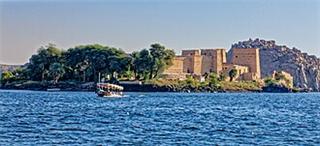
The faith maps draw a ring at the last places where a faith is recorded, and the rings fall into a few kinds. The old faiths of the Mediterranean ended by law. Theodosius banned pagan sacrifice; the Serapeum of Alexandria was destroyed in 391, and in the same year he put out the sacred fire of the Vestals in Rome, ending official support for the old cults. In 529 Justinian forbade pagans to teach, and the Platonic school of Athens closed; around 537 his officials closed the temple of Isis at Philae, on Egypt's southern frontier, where priests had served the goddess for the Nubian peoples beyond the border and where the last known hieroglyphic inscription had been carved in 394.
Other faiths ended more slowly, as their people turned to a new one. Christianity was introduced into Mesopotamia from the 2nd century, and by about 400–500 the old religion had almost completely died out, its people having largely become Syriac Christians, though in Assyrian vassal states temples to Ashur, Sin, Shamash, Hadad, Bel and Ishtar were still dedicated up to the 4th century. Punic religious practice outlived the Roman conquest of North Africa, in some places until the 4th century. In Ireland the church had relegated the druids to irrelevancy by the early 7th century. In Sweden, the last stronghold of the Norse gods, Adam of Bremen described the temple at Uppsala, with its images of Thor, Odin and Freyr, around 1075; by the 12th century Scandinavia was Christian.
Some were ended by conquest. In 1168 the temple-stronghold of the four-headed Svantevit at Arkona on Rügen surrendered to King Valdemar I of Denmark, and Bishop Absalon destroyed the temple; the last place of Slavic paganism on the maps, a holy place at Kobarid in present-day Slovenia, was stamped out in a “crusade” in 1331. The fall of Tenochtitlan in 1521 ended the Aztec state religion; friars destroyed temples, images and books, and in 1562 Diego de Landa burned the books and images of the Maya at Maní. Nojpetén, capital of the Itza and the last independent Maya kingdom, fell to the Spanish in 1697, the last place of Mesoamerican religion. Manichaeism, persecuted from Diocletian around 302 to the Tang emperor Wuzong, who banned it in 843, survived longest in Fujian as the “religion of light”, and its last communities fade from the record after the 16th century.
A faith that survives elsewhere can still end in a place, and the maps ring those places too. Buddhism lost the Tarim basin oasis by oasis: Khotan, a Buddhist kingdom of the Silk Road for about a thousand years, fell to the Muslim Kara-Khanids around 1006, and the Uyghurs of Turfan, the last Buddhists of the basin, became Muslims in the 15th century. In India royal patronage shifted to Hindu devotional traditions, the great monasteries of Bihar and Bengal, Nalanda and Vikramashila among them, were sacked around 1200, and Buddhism faded from most of the land of its birth. Native Christianity died out in North Africa by the 12th century; at Old Dongola, capital of Christian Makuria, the throne hall became a mosque in 1317, and the Christianity of the Nubian kingdoms faded by about 1500. Islam's last places in Spain are Granada, which surrendered in 1492, and Valencia, from which the Moriscos were expelled between 1609 and 1614. Judaism's include Toledo, a great centre of Sephardic Jewry until the expulsion of 1492, and Kaifeng, whose synagogue was taken down around 1860. Zoroastrianism lost its state when Yazdegerd III, the last Sasanian king, was killed near Merv in 651, and in Iran its communities came to be concentrated around Yazd and Kerman. Hinduism's last places in Southeast Asia are Trowulan, capital of Majapahit, the last great Hindu-Buddhist kingdom of Java, and Panduranga, the last Cham principality, annexed by Vietnam in 1832. Shinto's is Seoul, where the chief shrine of colonial Korea was taken down after Japan's defeat in 1945.
A ring is not always an ending. Japan's hidden Christians kept their faith in secret at Urakami for over two centuries, until the ban was lifted in 1873. Cham Hindus still live in Panduranga, the descendants of the Jews of Kaifeng still remember their origins, and El Ghriba on Djerba still draws pilgrims. Maya day-keepers still count the 260-day calendar; the Slavic gods lived on in folk religion and the “double faith”; the Norse myths survive in the poems and sagas written down in Iceland in the 13th century; and Tengrism, mostly submerged after the 14th century, has been revived in Central Asia, Russia and Siberia since 1991.
The Lesson for Institutions
The first lesson of the thirty faiths is that a religion bound to one state's institutions shares that state's fortunes, while one carried by a community can outlive the states it lives under. Egyptian religion survived the Persian kings, Alexander and the Ptolemies, who all presented themselves as pharaohs. What ended it was its rulers' new faith: Christianity spread along the Nile, the temples lost their income and their priests, and imperial laws banned sacrifice. In Rome, where the elected magistrates also served as priests, the old religion ended when the emperor put out the Vestals' fire. Judaism lost its Temple twice, in 586 BCE and in 70, and its rabbis rebuilt Jewish life around the study of the law; Zoroastrianism lost its empire in 651 and kept its fires at Yazd and Kerman and among the Parsis of India.
The second lesson is that conversion by decree is quick at the top and slow below, and that bans work slowly where a faith has a community. A khagan or a prince could change his court's religion in a year; the caliphates took several centuries to make Muslim majorities, and the common people of Kiev kept the old gods for centuries after their prince's baptism. The Druze, persecuted from 1021, went underground and resumed their call in 1038; Japan banned Christianity in 1614, and its hidden Christians kept the faith until the ban was lifted. Where force ended a faith, it ended what could be closed, its temples and priesthoods: the state cults of Rome, the temple of Isis at Philae, the temple of Svantevit at Arkona, the Great Temple of Tenochtitlan. What lived in households and villages, as the Maya day-keepers' calendar did, outlasted them.
The third lesson concerns adaptation. The faiths that travelled farthest translated themselves: Buddhism adapted to Chinese culture and produced schools of its own, Chan and Pure Land; Mani meant his faith to be preached to every people in its own terms; the Ramayana is still performed in dance and puppet theatre across Southeast Asia; the orishas took the names of saints. Adaptation had a price. Manichaeism lived on in Fujian as a secret or semi-Buddhist religion until it faded from the record; Tengrism was absorbed into Mongolian Buddhism; the Adawi brotherhood named after Sheikh Adi, attested across the Middle East into the 15th century, dissolved into the Muslim majority. A faith that grows like its neighbours can live among them, and may in the end be taken for one of them.
What the Data Shows
When this essay was written, in November 2026, the Institute profiled thirty religions, each with a faith map. Nineteen are living and eleven have ended: Roman religion in 391 CE, Mithraism and Canaanite religion in 400, Ancient Greek and Mesopotamian religion in 500, Ancient Egyptian religion in 537, Celtic religion in 600, Norse religion in 1100, Slavic paganism in 1331, Manichaeism in 1600 and Mesoamerican religion, the last to end, in 1697. By the region where they began, six belong to the Ancient Near East, six to Central and East Asia, six to Europe, four to the Islamic Caliphates and Middle East, four to South and Southeast Asia, two to the Americas, and one each to Egypt and North Africa and to Sub-Saharan Africa. The oldest five are Mesopotamian religion, from 3500 BCE, Ancient Egyptian religion, 3100 BCE, Canaanite religion, 3000 BCE, Hinduism, 1500 BCE, and Ancient Greek religion, 1400 BCE; the youngest five are the Bahá'í Faith, 1844, Haitian Vodou, 1512, Sikhism, 1499, Yazidism, 1100, and the Druze faith, 1017. The dates are conventions: an end date closes the recorded tradition rather than marking the last believer, so that Ancient Greek religion's 500 stands beside the closing of the Academy in 529, and Manichaeism's 1600 beside a last temple carved in 1339.
The thirty maps hold 507 areas, 180 routes and 245 marks. Christianity has the most of both, 83 areas and 23 routes, followed by Islam with 49 and 16; Buddhism has 38 areas and 10 routes, Judaism 35 and 14, Hinduism 33 and 11. The counts measure the maps as much as the faiths: an area is a region that the sources name, and a faith whose history is better recorded gathers more of them. Manichaeism, with 7 routes, is the only ended religion among the six with the most.
A cruder measure of reach is the distance from a faith's origin mark to its farthest area. Christianity reaches 18,400 km, the Bahá'í Faith 15,100, Hinduism 13,300, Buddhism 12,600 and Jainism 12,400; the Druze faith and Judaism reach 12,200, Sikhism 12,100, Islam 10,800, Yazidism 10,500 and Zoroastrianism 10,400. At the other end stand Mesopotamian religion at 600 km, Mesoamerican religion at 1,000, Slavic paganism at 1,100, Celtic religion at 1,300 and Roman religion at 1,600. Two things stand out. Of the eleven religions that ended, the farthest-travelled, Manichaeism, reached 7,100 km, and none of the other ten went farther than Ancient Greek religion's 3,900. And for each of the faiths that reach beyond 10,000 km, the farthest area on its map is a community of the 19th or 20th century: Tahiti for Christianity, the Caribbean for Hinduism, Argentina for Judaism, California for the Buddhists, the Sikhs and the Druze, North America for the Muslims, Jains and Zoroastrians, Samoa for the Bahá'ís and Nebraska for the Yazidis. The great distances on these maps were made by the migrations of the last two centuries, and the faiths that ended had all ended before them.
The maps cannot count believers, and a ring on them marks the last record rather than the last prayer. But the faiths that reached farthest were those that could leave their homelands with their people, as traders, labourers, refugees or the enslaved, and most of the eleven that ended were the religions of particular cities, peoples and empires, whose gods had risen with their states and whose temples could be closed.
Further Reading
- Boyce, M. Zoroastrians: Their Religious Beliefs and Practices. 2nd edn. London: Routledge, 2001.
- Bulliet, Richard W. Conversion to Islam in the Medieval Period. 1979.
- Dijkstra, J. H. F. Philae and the End of Ancient Egyptian Religion. Leuven: Peeters, 2008.
- Elverskog, Johan. Buddhism and Islam on the Silk Road. 2010.
- Guest, John S. Survival Among the Kurds: A History of the Yezidis. 1993.
- Hardacre, H. Shinto: A History. New York: Oxford University Press, 2017.
- Jenkins, Philip. The Lost History of Christianity. 2008.
- Jones, Grant D. The Conquest of the Last Maya Kingdom. 1998.
- Lapidus, I. M. A History of Islamic Societies. 3rd edn. Cambridge: Cambridge University Press, 2014.
- Lieu, S. N. C. Manichaeism in the Later Roman Empire and Medieval China. 2nd edn. Tübingen: J.C.B. Mohr, 1992.
- MacCulloch, D. A History of Christianity: The First Three Thousand Years. London: Allen Lane, 2009.
- Matory, J. L. Black Atlantic Religion: Tradition, Transnationalism, and Matriarchy in the Afro-Brazilian Candomblé. Princeton: Princeton University Press, 2005.
- Vertovec, Steven. The Hindu Diaspora. 2000.
- Zürcher, E. The Buddhist Conquest of China. 3rd edn. Leiden: Brill, 2007.
Profiles in this essay
 Christianity30 CE – present
 Islam610 CE – present
 Buddhism500 BCE – present
 Judaism1000 BCE – present
 Hinduism1500 BCE – present
 Manichaeism240 CE – 1600 CE
 Zoroastrianism1200 BCE – present
 Ancient Egyptian religion3100 BCE – 537 CE
 Mesoamerican religion1200 BCE – 1697 CE
 Yoruba religion1000 CE – present
 Haitian Vodou1512 CE – present
 Tengrism350 BCE – present
 Mithraism80 CE – 400 CE
 Norse religion500 CE – 1100 CE
 Slavic paganism500 CE – 1331 CE
 Sikhism1499 CE – present
Cite this essay
- APA
- The Epoch Institute. (2026). Faiths on the Move. In Research Series. https://the-epoch-institute.org/essays/faiths-on-the-move
- MLA
- “Faiths on the Move.” Research Series, The Epoch Institute, 2026, https://the-epoch-institute.org/essays/faiths-on-the-move. Accessed .
- Chicago
- The Epoch Institute. “Faiths on the Move.” Research Series. 2026. https://the-epoch-institute.org/essays/faiths-on-the-move.
- Harvard
- The Epoch Institute (2026) ‘Faiths on the Move’, Research Series. Available at: https://the-epoch-institute.org/essays/faiths-on-the-move (Accessed: ).