
Religion · Americas
Haitian Vodou
At a glance
- Vodouists serve Bondye, a remote creator God, through the lwa, spirits mostly named after West and Central African deities, equated with Catholic saints and grouped in nations such as the Rada and the Petwo.
- In the dans, the night ceremony of drumming, song and dance, a lwa is invited to possess a worshipper, the chwal or “horse”, and to speak through them to the congregation.
- Forbidden in the colony, Vodou became Haiti’s dominant religion after the Revolution; long maligned by outsiders as sorcery, it was officially recognised in 2003 and has spread with Haitian emigrants.
Timeline
- c. 1512Spanish colonists on Hispaniola begin importing enslaved West Africans, some of them priests of African traditional religions
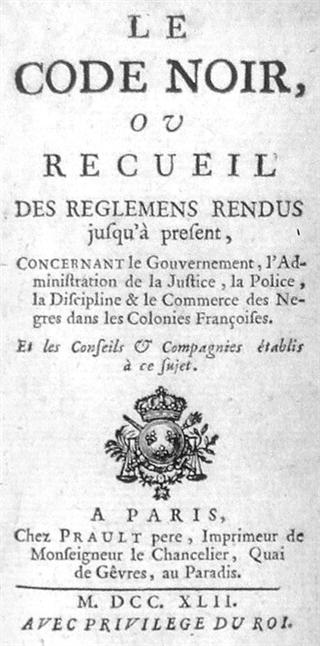
- 1685The French Code Noir forbids the open practice of African religions and orders that the enslaved be baptised as Roman Catholics
- c. 1750Among the enslaved of Saint-Domingue, African religions mixed with Catholic and Freemasonic elements take the form of Vodou
- 1791According to legend, a Vodou ritual at Bois-Caïman sparks the Haitian Revolution
- 1805The Roman Catholic Church cuts ties with Haiti until 1860, and Vodou becomes the country’s dominant religion
- 1915The United States occupies Haiti until 1934, stirring foreign interest in Vodou and its reassessment by Haitian indigenists
- 1941The government launches Operation Nettoyage, a Church-backed campaign to destroy many Vodou temples
- 2003President Jean-Bertrand Aristide grants Vodou official recognition, after the constitution of 1987 enshrined freedom of religion
Spread through the centuries
Where it began, how it spread, and where it was a main faith (a bright glow) or held communities (a faint one), century by century to today. Press Play or move the slider, turn the globe, and tap a glow or a mark to read about it.
The map opens here once the page has loaded.
Origins
Haitian Vodou developed among Afro-Haitian communities amid the Atlantic slave trade. After Christopher Columbus’s expedition founded a Spanish colony on Hispaniola in 1492 and the Taíno population was decimated, colonists began importing enslaved West Africans around 1512; some were priests of African traditional religions, others had already absorbed Catholic influences or were Muslim. Spain ceded western Hispaniola to France in 1697, and in the 18th century the plantation colony of Saint-Domingue imported enslaved Africans in great numbers. Among them were Kongo, Fon and Yoruba people, whose religions gave Vodou its main structure.
Enslavement destroyed the social fabric of African religions, which were rooted in ethnic and family membership, and people of many languages had to forge common practices. The Code Noir of 1685 forbade the open practice of African religions, so rites were held in secret, usually at night; a white observer, Médéric Louis Élie Moreau de Saint-Méry, described one in the 1790s. Catholic images and ritual probably hid the deities’ identity, giving rise to correspondences between African spirits and Catholic saints, and Vodou also drew on European grimoires, commedia performances and the Freemasonic lodges of 18th-century Saint-Domingue.
The religion took the form of Vodou around the mid-18th century. Scholars call it syncretic, a product of creolisation and “a new religion”: Leslie Desmangles named it an “African-derived tradition”, and it has been called a “sister religion” of Cuban Santería and Brazilian Candomblé.
Beliefs & Practice
Vodou teaches that there is one supreme God, Bondye, from the French Bon Dieu, also called the Gran Mèt: creator of the universe and keeper of its order, but so remote that Vodouists see little point in approaching him directly. Vodou has no powerful enemy of God like the Christian Satan. Between Bondye and humans stand the lwa, over a thousand spirits, so that the religion has been called both monotheistic and polytheistic. Each lwa has its own personality, colours, days and objects; most bear Fon or Yoruba names, and most are linked to Catholic saints, Papa Legba to Saint Peter and the serpent Danbala to Saint Patrick. Everyone has a mèt tèt, a “master of the head”, whom divination can name.
The lwa form nanchon, “nations”, after the way enslaved Africans were grouped on arrival. The largest are the “cool” Rada, owing most to Dahomey and the Yoruba, and the “hot” Petwo, derived largely from Kongo religion; the Gede, headed by Baron Samedi, belong to the realm of the dead. The soul has two parts, the ti bonnanj, the conscience, and the gwo bonnanj, the psyche, which at death joins the ancestral spirits in Ginen, often imagined beneath the sea or under the earth.
Vodou morality rests on a reciprocal relationship with the lwa rather than a written code: a moral person lives in tune with their own character and that of their lwa, and maji, supernatural power used for selfish and malevolent ends, is thought bad. The religion offers women leadership and is sympathetic to gay people, many of whom are priests and priestesses.
Texts & Teachers
Vodou has no written scripture, no orthodoxy, no central liturgy and no formal creed. Its teachings pass on mainly by word of mouth, and children learn by watching adults at the rites, although many practitioners began to use texts after they appeared in the mid-20th century. The terminology of ritual is called langaj. Unlike Santería and Candomblé, whose liturgy is in Yoruba, Vodou’s liturgies are mainly in Haitian Creole, the everyday language of most Vodouists, with some songs in Fon or Yoruba.
Its sacred words live in song. A ceremony may open with Catholic prayers and the two Creole songs of the Priyè Deyò, “Outside Prayers”, which last up to an hour; then each lwa is saluted in turn, Legba first, with three or seven songs of its own. The songs are simple and repetitive, built on call and response between a soloist and the chorus. Vodou myth tells that Bondye made humans from water and clay, and that the lwa Loco was the first oungan and his consort Ayizan the first manbo. Many Vodouists also adopt and reinterpret biblical stories.
Vodou writes in images rather than books: the vèvè, designs drawn in cornmeal, ash or coffee grounds on the temple floor to summon the lwa, and the drapo, sequined flags that show a lwa’s vèvè or saint. Much of what outsiders know comes from observers and scholars, from Moreau de Saint-Méry in the 1790s to the anthropologist Alfred Métraux, who called Vodou “a practical and utilitarian religion”.
Spread
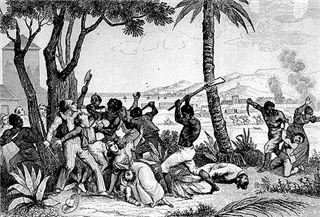
Many Vodouists took part in the Haitian Revolution of 1791 to 1801. Haitian folklore holds that it was sparked by a Vodou ritual at Bois-Caïman in 1791 and that the early revolutionaries Boukman and François Mackandal were oungans, though historians debate these claims. France conceded defeat in 1803, and Jean-Jacques Dessalines proclaimed the republic of Haiti. The Revolution made Haiti a land of small farmers living in lakous, family compounds that often had their own “root lwa”. The Catholic Church cut ties with Haiti in 1805 and returned only in 1860; in its absence Vodou became the dominant religion and, with no new arrivals from Africa, began to stabilise.
Vodou also left the island. Amid the Revolution many Haitians fled to Louisiana, where their Vodou contributed to the development of Louisiana Voodoo. In the early 20th century Haitian migrants took it to eastern Cuba, and later migrants to the United States, where it drew African Americans and Caribbean migrants, mixed with Santería and Spiritism, and fed the New Orleans Voodoo Revival. It has spread to the Dominican Republic, Puerto Rico, France and Canada, and major temples stand in Miami, Oakland, Boston, New York City and Washington, D.C.
Vodou does not seek converts; in the scholar Brown’s words it has “no pretensions to the universal”. Yet in Haiti and abroad it is now practised by people of many ethnicities, and in the late 20th century it built links with related traditions in West Africa and the Americas.
Community & Society
Vodou has no central authority. It is practised by families on their land, by congregations at temples and in secret societies such as the Bizango. A temple, the ounfò, is run by an oungan (priest) or manbo (priestess), who leads the liturgies, prepares initiations, consults clients by divination and makes remedies for the sick; there is no priestly hierarchy, and the role is often hereditary. Oungan outnumber manbo in rural Haiti, while towns are more evenly balanced. Called by the lwa, a future priest normally rises through the congregation and serves an apprenticeship of months or years before a secret initiation and “taking the ason”, the sacred rattle.
Each ounfò is autonomous. Its main room, the peristil, centres on the poto mitan, the post through which the lwa enter. Its congregation, the “children of the house”, includes the ounsi, mostly women, who commit themselves for life to serving the lwa, a mistress of the choir and sometimes a prèt savann, a “bush priest” who knows Latin and performs Catholic rites. Typically four levels of initiation lead from the kanzo to the priesthood, and those who share an initiator call each other brother and sister.
Respected priests are often literate in a society where many are not, and can become political leaders. Haiti’s first three presidents feared Vodou rituals as a source of rebellion, and the Bizoton Affair of 1863, in which practitioners accused of killing a child confessed, possibly under torture, and were executed, drew much attention.
Legacy
Vodou is the majority religion of Haiti, for most Haitians practise it alongside Roman Catholicism and see no contradiction between the two; a joke holds that Haiti is 85% Catholic, 15% Protestant and 100% Vodou. Numbers are hard to know, since there has never been an accurate census and many, especially in the middle and upper classes, practise in private while decrying it in public.
Its history in Haiti has swung between hostility and embrace. The United States occupation of 1915–1934 brought Vodou-themed tourist shows and books, and a positive reassessment by Haiti’s indigenist movement. In 1941 the Church-backed Operation Nettoyage destroyed many temples; François Duvalier later hailed Vodou as “the supreme factor of Haitian unity” and made oungans rural section chiefs. Protestant campaigns contributed to attacks on Vodouists after the fall of Jean-Claude Duvalier in 1986, and mobs attacked them again after the 2010 earthquake, which many Protestants partly blamed on Vodou. Vodouists formed the civil rights groups Zantray and Bode Nasyonal; the 1987 constitution enshrined freedom of religion, and in 2003 Vodou was officially recognised.
Scholars call Vodou one of the world’s most maligned and misunderstood religions: Christians have presented it as Satanic, and films such as White Zombie (1932) sensationalised it. It also inspired the artists of the “Haitian Renaissance”, the rasin band Boukman Eksperyans and Maya Deren’s documentary Divine Horsemen (1954).
In the Research Series
Haitian Vodou developed among enslaved Africans in Hispaniola, taking form in Saint-Domingue around the mid-18th century from Fon, Kongo and Yoruba religions joined with Catholicism and Freemasonry. Vodouists serve a remote God, Bondye, through the lwa, met in drumming, dance and spirit possession. Forbidden in the colony and long maligned, it became Haiti’s majority religion, was officially recognised in 2003 and has spread with emigrants.
Test yourself
5 questions on this page, from its key events and facts.
The questions open here once the page has loaded.