
Religion · Islamic Caliphates & Middle East
Bahá'í Faith
At a glance
- The Bahá’í Faith grew from the movement of the Báb, a merchant of Shiraz who in 1844 proclaimed a new revelation, and from the mission of Bahá’u’lláh, who in 1863 declared himself the messenger of God whom the Báb had foretold.
- It teaches that the founders of the great religions were messengers of one God, and that humanity must unite in a peaceful world order, with the equality of women and men, universal education and the harmony of science and religion.
- Persecuted in Iran from its beginnings to the present day, it spread from its founders’ places of exile in the Ottoman Empire to almost every country, with its world centre in Haifa and Acre.
Timeline
- 1844The Báb declares his mission in Shiraz
- 1850The Báb is executed by a firing squad in Tabriz
- 1863Bahá’u’lláh declares his mission in the Garden of Ridván in Baghdad
- 1868Bahá’u’lláh is exiled to the Ottoman prison city of Acre
- 1892Bahá’u’lláh dies near Acre; his son ʻAbdu’l-Bahá leads the faith
- 1912ʻAbdu’l-Bahá travels across North America, speaking in churches, synagogues and universities
- 1963The Universal House of Justice, the faith’s governing body, is elected for the first time
- 1980sMore than two hundred Bahá’ís are executed or killed in Iran in the years after the Islamic Revolution
Spread through the centuries
Where it began, how it spread, and where it was a main faith (a bright glow) or held communities (a faint one), century by century to today. Press Play or move the slider, turn the globe, and tap a glow or a mark to read about it.
The map opens here once the page has loaded.
Origins
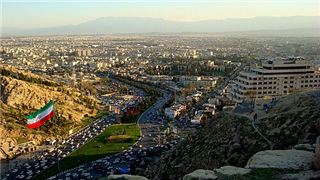
The Bahá’í Faith arose from the religious ferment of Shi’i Islam in 19th-century Iran, where many believers awaited the return of the Twelfth Imam, the Mahdi, hidden from the world since the 9th century. On 23 May 1844, in Shiraz, a young merchant named Sayyid ʻAli-Muhammad declared that he was the Báb, “the Gate”, and later claimed to be the promised one himself, the bearer of a new revelation with its own laws, set out in his book, the Bayán.
His followers, the Bábís, spread rapidly across Iran, among them the poet Táhirih, who in 1848 appeared unveiled before a gathering of believers to proclaim the break with Islamic law. The clergy and the Qajar state reacted with violence: the Bábís fought desperate armed struggles in Mazandaran, Nayriz and Zanjan, and thousands were killed. The Báb himself was executed by a firing squad in Tabriz on 9 July 1850. In 1852, after a few Bábís tried to kill the shah, a wave of massacres followed, and Táhirih was put to death.
Among the Bábís imprisoned in 1852 was Mírzá Husayn-ʻAli Núrí, a nobleman of Tehran, later known as Bahá’u’lláh, “the Glory of God”. He later wrote that in the dungeon called the Black Pit he received the first intimation of his own mission. Released and exiled to Baghdad, then under Ottoman rule, he became the leading figure among the scattered Bábís. In April 1863, as he prepared to leave Baghdad for Constantinople, he declared to his companions in a garden that he called Ridván, “Paradise”, that he was the one whose coming the Báb had foretold.
Most Bábís accepted his claim and became known as Bahá’ís, while a minority followed his half-brother Mírzá Yahyá. The Ottoman authorities moved Bahá’u’lláh to Constantinople and Adrianople, where he proclaimed his mission in letters to the kings and rulers of the world, and in 1868 to the prison city of Acre in Palestine. He spent the rest of his life there and at the nearby mansion of Bahjí, where he died in 1892.
Beliefs & Practice
The Bahá’í Faith teaches that there is one God, whose essence is unknowable, who has revealed himself to humanity through a series of messengers, called Manifestations of God: among them Abraham, Moses, Zoroaster, Krishna, the Buddha, Jesus, Muhammad, the Báb and Bahá’u’lláh. Each brought teachings suited to the needs of their age, and their religions are stages of a single, progressive revelation. Bahá’u’lláh is regarded as the messenger for the present age, but not the last.
Its central principle is the oneness of humanity. Bahá’u’lláh taught that “the earth is but one country, and mankind its citizens”, and the faith calls for the abolition of prejudice of race, nation, class and religion; the equality of women and men; universal education; the harmony of science and religion; the independent search for truth; the elimination of extremes of wealth and poverty; a universal auxiliary language; and a world federation that will establish lasting peace.
The human being has a rational soul, created at conception, which is immortal and continues to progress after death through spiritual worlds; heaven and hell are understood as states of nearness to God or remoteness from him rather than places.
Bahá’í laws, set out by Bahá’u’lláh, include a daily obligatory prayer, the reading of scripture each morning and evening, a fast from sunrise to sunset for nineteen days each March, abstinence from alcohol and drugs, chastity outside marriage, marriage with the consent of both partners and their parents, and the avoidance of backbiting and of partisan politics. Bahá’ís are asked to obey the government of their country and to serve their communities through work done in a spirit of service, which they regard as a form of worship.
The faith places great weight on the Covenant: Bahá’u’lláh named his son ʻAbdu’l-Bahá as the interpreter of his writings, and the faith’s authority passed in turn to his great-grandson Shoghi Effendi and then to the Universal House of Justice, a succession that has preserved the unity of the community.
Texts & Teachers
Bahá’ís regard the writings of the Báb and of Bahá’u’lláh as revealed scripture, and the writings of ʻAbdu’l-Bahá and Shoghi Effendi as their authoritative interpretation. The original texts, in Persian and Arabic, survive in large part in the handwriting of the authors or of their secretaries, and are preserved at the Bahá’í World Centre.
The Báb wrote prolifically; his works include the Qayyúm al-Asmá', a commentary on the Qur’anic chapter of Joseph, begun on the night of his declaration, and the Persian Bayán, which set out the laws of his new dispensation and foretold the coming of “Him whom God shall make manifest”.
Bahá’u’lláh’s writings amount to thousands of tablets and books. In Baghdad he wrote the Hidden Words, a collection of short spiritual aphorisms, the Seven Valleys, a mystical treatise, and the Kitáb-i-Íqán, the “Book of Certitude”, which explains the idea of progressive revelation and the unity of the messengers of God. In Acre he wrote the Kitáb-i-Aqdas, the “Most Holy Book”, around 1873, which contains the laws of the faith and the institutions of its future order, and his last major work, the Epistle to the Son of the Wolf, in 1891.
ʻAbdu’l-Bahá’s letters and talks, such as Some Answered Questions, recorded in conversations at his table in Acre, and his talks in Paris and America, explain the teachings for a modern audience. Shoghi Effendi translated many of the writings into English, which became the basis for translations into hundreds of other languages, and wrote a history of the faith’s first century, God Passes By, published in 1944.
Spread
In Bahá’u’lláh’s lifetime the faith spread among Iranians and their neighbours in the Ottoman Empire, the Caucasus, Central Asia and India. In Ashgabat, in Russian Turkestan, Bahá’ís began building their first House of Worship in 1902. The first Bahá’ís in the West were converted in Chicago in 1894.
ʻAbdu’l-Bahá, who led the faith from 1892 to 1921, was a prisoner of the Ottomans until the Young Turk Revolution of 1908 freed him. Between 1910 and 1913 he travelled to Egypt, Europe and North America, speaking about peace, the unity of races and the equality of women and men in churches, synagogues, universities and Black and white congregations alike; in 1912 he laid the foundation stone of the House of Worship at Wilmette, near Chicago, dedicated in 1953.
His grandson Shoghi Effendi, Guardian of the faith from 1921 until his death in 1957, built its administrative order of elected local and national councils and organised plans to spread the faith across the world, above all the Ten Year Crusade of 1953 to 1963. In 1963 Bahá’ís elected the first Universal House of Justice, which sits in Haifa. From the 1960s the faith grew rapidly in India, Africa, Latin America and the Pacific, and today it is one of the most widely spread religions in the world, with communities in almost every country and territory.
In Iran, where they are the largest non-Muslim religious minority, Bahá’ís have been persecuted since the faith’s beginnings. After the Islamic Revolution of 1979, more than two hundred were executed or killed, their holy places in Iran were destroyed, thousands were imprisoned, and Bahá’ís were barred from universities and government employment; the United Nations has repeatedly condemned their treatment. Bahá’ís have also faced persecution in Yemen and other countries.
Community & Society

The Bahá’í Faith has no clergy. Its affairs are run by elected councils: in each locality a Local Spiritual Assembly of nine members, in each country a National Spiritual Assembly, and at the world level the Universal House of Justice, elected every five years by the members of the national assemblies. Elections are held by secret ballot, without nominations or campaigning, and the councils reach decisions through consultation, a method of frank and loving discussion that seeks unity. Women and men serve equally on local and national assemblies, though membership of the Universal House of Justice is limited to men, a provision Bahá’ís accept as part of revealed law.
Community life follows the Bahá’í calendar of nineteen months of nineteen days. At the start of each month, believers gather for the Nineteen Day Feast, which combines prayers and readings, consultation on community affairs and fellowship. Nine holy days, among them the anniversaries of the declarations and deaths of the Báb and Bahá’u’lláh and the festival of Ridván, are marked by suspending work.
Bahá’ís hold devotional meetings open to all, classes for children, groups for young adolescents and study circles, and many local communities run schools and projects of social and economic development. The faith’s activities are funded only by the contributions of its own members.
The Bahá’í World Centre in Haifa and Acre, in present-day Israel, is the faith’s spiritual and administrative heart. The Shrine of Bahá’u’lláh at Bahjí, towards which Bahá’ís turn in prayer, and the Shrine of the Báb on Mount Carmel, surrounded by terraced gardens, receive pilgrims from around the world and were inscribed as a World Heritage Site in 2008. Bahá’í Houses of Worship, open to people of all faiths, have nine sides and a central dome, and their services consist of readings from the scriptures of all religions, without sermons; among the best known is the Lotus Temple in New Delhi, completed in 1986.
Legacy
The Bahá’í Faith is one of the youngest of the independent world religions and one of the most geographically widespread, with followers drawn from almost every nation, race and culture. Its teachings on the unity of humanity, the equality of women and men, universal education and world peace anticipated many of the ideals of the 20th century.
Its early history has become a classic case for scholars of religion of how a new religion emerges from an older one: the Cambridge orientalist Edward Granville Browne, who visited Bahá’u’lláh at Bahjí in 1890 and left the only description of him by a Western visitor, devoted years to documenting the Bábí and Bahá’í movements. The poet Táhirih is remembered in Iran and beyond as a pioneer of the emancipation of women.
The Bahá’í International Community has taken part in the work of the United Nations since its early years, on questions of human rights, the advancement of women and development. Its architecture, from the terraces of Mount Carmel to the Lotus Temple, one of the most visited buildings in the world, has made its sacred places known far beyond its own community.
The long persecution of the Bahá’ís of Iran, denied the right to practise their faith, to study and to work, has become one of the best-documented cases of religious persecution in modern times, and the resilience of their community has drawn the support of governments and human rights organisations around the world.
The Bahá’í Faith, heralded by the Báb in Shiraz in 1844 and founded by Bahá’u’lláh, who proclaimed his mission in Baghdad in 1863, teaches the oneness of God, of religion and of humanity, progressive revelation through a line of divine messengers, and a peaceful world order. Persecuted in Iran and spread from its world centre in Haifa and Acre, it has communities in almost every country.
References
- Amanat, A. (1989) Resurrection and Renewal: The Making of the Babi Movement in Iran, 1844–1850. Ithaca: Cornell University Press.
- Cole, J.R.I. (1998) Modernity and the Millennium: The Genesis of the Baha'i Faith in the Nineteenth-Century Middle East. New York: Columbia University Press.
- Momen, M. (1997) A Short Introduction to the Bahá'í Faith. Oxford: Oneworld.
- Smith, P. (2008) An Introduction to the Baha'i Faith. Cambridge: Cambridge University Press.
- Stockman, R.H. (2013) The Bahá'í Faith: A Guide for the Perplexed. London: Bloomsbury.
- Shoghi Effendi (1944) God Passes By. Wilmette: Bahá'í Publishing Trust.