
Religion · Islamic Caliphates & Middle East
Druze faith
At a glance
- The Druze, who call themselves al-Muwaḥḥidūn, “the monotheists”, hold to the strict unity of God, reincarnation and the eternity of the soul; their faith grew out of Ismāʿīlī Islam, but most Druze do not identify as Muslims.
- Since 1043 the faith has accepted no converts: one is Druze only by birth to two Druze parents, and only the initiated ʻuqqāl read its holy books.
- From the Chouf of Mount Lebanon and later the Jabal al-Druze, Druze lords and fighters helped shape the history of the Levant, while facing repeated persecution from Fatimid, Mamluk and Ottoman rulers and modern extremists.
Timeline
- 1017Hamza ibn Ali begins to preach the Unitarian doctrine in Cairo, and the divine call is opened
- 1018The caliph al-Hakim has the preacher al-Darazi executed, leaving Hamza ibn Ali the sole leader of the new faith
- 1021After al-Hakim’s disappearance the regent Sitt al-Mulk orders the army to destroy the movement, opening years of persecution, the mihna
- 1043Baha al-Din al-Muqtana declares that no new pledges will be accepted, and the faith closes to converts
- 1305After a fatwa of Ibn Taymiyya, the Mamluk sultan al-Nasir Muhammad inflicts a disastrous defeat on the Druze at Keserwan
- 1635The Ottoman sultan has Fakhr-al-Din II killed, the Ma’an emir under whom Druze dominion had reached from the Antioch plain to Safad
- 1711The battle of Ain Dara routs the Yamani faction, and many Yamani Druze migrate from Mount Lebanon to the Hauran
- 1925–27Under Sultan Pasha al-Atrash the Druze provide much of the military force of the Syrian Revolution against French rule
Spread through the centuries
Where it began, how it spread, and where it was a main faith (a bright glow) or held communities (a faint one), century by century to today. Press Play or move the slider, turn the globe, and tap a glow or a mark to read about it.
The map opens here once the page has loaded.
Origins
The Druze faith arose in Fatimid Egypt. Hamza ibn Ali ibn Ahmad, an Ismaili mystic and scholar from Zozan in Khorasan, came to Egypt in 1014 or 1016, gathered scholars who met in the Raydan Mosque near the Al-Hakim Mosque in Cairo, and in 1017 began to preach a Muwaḥḥidūn, or Unitarian, doctrine. He won the support of the sixth Fatimid caliph, al-Hakim bi-Amr Allah, who issued a decree promoting religious freedom and became the central figure of the faith. The movement first met in secret, in Sessions of Wisdom, and the divine call was opened on 30 May 1017.
A rival preacher, Muhammad bin Ismail Nashtakin ad-Darazi, had reached Cairo in 1015 or 1017, possibly from Bukhara. He called himself “the Sword of the Faith” and taught that al-Hakim and his ancestors were the incarnation of God; Hamza warned him that “faith does not need a sword to aid it”. Riots broke out when al-Darazi read his book in Cairo’s principal mosque, and in 1018 al-Hakim had him executed. The Druze regard al-Darazi as a heretic, yet the name “Druze” probably derives from his; their own texts use only the word Muwaḥḥidūn.
The faith grew from the Ismāʿīlī branch of Shiʿa Islam and shows influences of Christianity, Gnosticism, Neoplatonism, Zoroastrianism, Manichaeism and Pythagoreanism. The historian David R. W. Bryer judged it as different from Islam as Islam is from Christianity. Most Druze trace their ancestry to twelve Arab tribes that settled in Syria before and during the early Islamic period.
Beliefs & Practice
In Druze teaching God is one in strict and uncompromising unity, both transcendent and immanent: stripped of all attributes distinct from his essence, he is “the whole of existence”, without “how”, “when” or “where”. The Druze believe in tajalli, theophany, in which the light of God appears in the material realm without that realm becoming divine, as one is in a mirror without becoming the mirror. They hold that al-Hakim went into occultation and will return at the end of times to judge the world, and that Hamza ibn Ali is a reincarnation of Jesus and the Universal Mind.
Reincarnation is a paramount principle. At death the soul passes at once into a new human body, a Druze into a Druze of the same sex, and the number of souls is finite; after successive rebirths it is united with the Cosmic Mind. The Druze believe that all of them signed, in past lives, the Pact of Time Custodian, the entrance to the faith. Seven precepts begin with truthfulness of speech and mutual aid among the brethren and end in submission to God’s will. Teachings are read on three levels, the exoteric, the esoteric and the “hidden of the hidden”, none abolishing the others.
Rituals are held to be symbolic, and most are not obligatory. Formal worship is a Thursday-evening meeting at the khalwa, the prayer house, where the uninitiated leave after local affairs are discussed. Eid al-Adha is the most significant holiday, and pilgrims visit the shrine of Shu’ayb, revered as Jethro, between 25 and 28 April.
Texts & Teachers
The Epistles of Wisdom (Rasāʾil al-Ḥikma) are the foundational and central text of the Druze faith, and Hamza ibn Ali is considered the primary author of its manuscripts. The missionaries of the call carried the epistles with them and took written vows from believers, whose souls the Druze believe are still reborn in the Druze of today. The thirteenth epistle calls the faith “a spiritual doctrine without any ritualistic imposition”. Druze sacred texts also include the Quran; other early writings are the Rasa’il al-Hind (Epistles of India), didactic and polemic treatises, and manuscripts long lost or hidden, such as al-Munfarid bi-Dhatihi and al-Sharia al-Ruhaniyya.
Only initiates have access to the holy books. The full canon is described as taking in the Old and New Testaments, the Quran and works of Plato and of those influenced by Socrates, and Druze tradition counts Pythagoras, Plato and Aristotle among the five great prophets of the age of the ancient Greeks. Some passages are hostile to Jews: an epistle ascribed to al-Muqtana, probably written between 1027 and 1042, accuses them of crucifying Jesus.
In the Epistle of the Candle, Ismail at-Tamimi (d. 1030) listed the five limits, cosmic principles that the faith’s five colours stand for: green for the Universal Mind, red for the Universal Soul, yellow for the Word, blue for the anterior and white for the posterior. As stripes or a five-pointed star they are the Druze symbol, for the Druze strictly avoid iconography.
Spread

The call’s missionaries preached its message around the Middle East. After al-Hakim disappeared, the regent Sitt al-Mulk ordered the army to destroy the movement in 1021, and for seven years the Druze faced extreme persecution under the caliph al-Zahir, the mihna: tens of thousands were killed between Antioch and Alexandria, 5,000 prominent Druze at Antioch alone. The faith went underground, its survivors found mainly in southern Lebanon and Syria, and it resumed in 1038; in 1043 al-Muqtana closed it to new pledges. Wadi al-Taym, one of the two main centres of the 11th-century mission, is generally considered its birthplace.
Under Crusader rule (1099–1291) the Druze emerged into the full light of history in the Gharb region of the Chouf, where the Tanukh family held Beirut and the coastal plain against the Franks. After the middle of the 12th century the Ma’an family, based at Baaqlin in the Chouf, took the lead. In 1305 the Mamluk sultan al-Nasir Muhammad defeated the Druze at Keserwan. Under Fakhr-al-Din II in the early 17th century Druze dominion stretched from the edge of the Antioch plain to Safad.
Druze moved east to the Hauran in waves from 1685, and after the battle of Ain Dara in 1711 many Yamani Druze followed, laying the foundation of the Jabal al-Druze, while Maronites became the dominant group in Mount Lebanon. Settlement in Jordan began in 1918, and in the 20th century emigrants took the faith to Venezuela, the United States and beyond.
Community & Society
The Druze recognise no religious hierarchy and have no clergy. Those initiated into the holy books are the ʻuqqāl, “the wise”, men and women together making up less than 10% of the community; the rest are the juhhāl, “the ignorant”, a term seldom used, for which “spiritual” and “physical” are also said. Many ʻuqqāl wear the costume of the mountain people of earlier centuries, the women a loose white veil and the men white turbans that vary with seniority. The most influential become Ajawīd, from whom the spiritual leaders are drawn; in Syria, Lebanon and Israel an elected Shaykh al-ʻAql heads each country’s religious council.
One is Druze only by birth to two Druze parents. Marriage outside the faith is strongly discouraged and seen as apostasy, and those who marry out may be ostracised and exiled from their villages. The Druze reject polygamy, discourage divorce, reject alcohol and nicotine, and follow Sunni Hanafi law where their own faith gives no ruling; many sheikhs remain unmarried. To protect the community they have practised taqiyya, concealing their beliefs, at times posing as Muslims or Christians.
The Druze were persecuted by the Fatimid Caliphate, the Mamluk Sultanate, the Ottoman Empire and Egypt Eyalet, through massacres, the demolition of prayer houses and forced conversion. Ibn Taymiyya ruled that they should be killed and their women enslaved, and the Ottomans often relied on his ruling. Today Lebanon, Syria, Israel and Jordan recognise the Druze as a separate religious community with its own courts.
Legacy
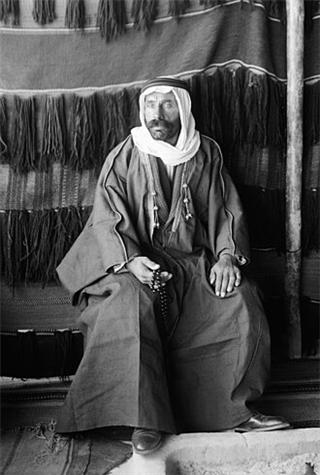
The Druze, between 800,000 and a million people, are one of the major religious groups of the Levant: 5.5% of Lebanon’s population, 3% of Syria’s and 1.6% of Israel’s, with smaller communities in Jordan. The oldest and densest communities are in Mount Lebanon and around the Jabal al-Druze in southern Syria. Arabic is their language and Arab culture part of their identity, and their political weight in the region has long exceeded their numbers.
The Ma’an and Shihab emirs ruled Mount Lebanon, and after the civil conflict of 1860, which cost the Maronites some ten thousand lives, the Maronite-Druze dualism of the autonomous Mutasarrifate brought one of Lebanon’s calmest periods. In Syria Sultan Pasha al-Atrash led the Druze in the Syrian Revolution of 1925–27, Adib Shishakli’s government attacked the Jabal al-Druze in the early 1950s, and in 2018 an ISIS-affiliated attack on Suwayda killed at least 258 people. In Lebanon most Druze supported Kamal Jumblatt’s Progressive Socialist Party. Israel has recognised the Druze as a distinct community since 1957 and its Druze men serve in the army, though the Druze scholars Kais Firro and Rabah Halabi call the “covenant of blood” between Druze and Jews a myth.
Abroad, Venezuela has about 60,000 Druze and the United States 30,000 to 50,000, where finding a Druze partner and keeping the faith alive are pressing concerns.
In the Research Series
The Druze faith arose in Cairo in 1017, when Hamza ibn Ali preached a strict Unitarian doctrine under the Fatimid caliph al-Hakim, and it has accepted no converts since 1043. Its followers, al-Muwaḥḥidūn, believe in one God, theophany and reincarnation, keep their scripture, the Epistles of Wisdom, among initiates, and live mainly in Syria, Lebanon, Israel and Jordan.
Test yourself
5 questions on this page, from its key events and facts.
The questions open here once the page has loaded.
References
- Hugh Chisholm (ed.), “Druses”, Encyclopædia Britannica, 11th ed., vol. 8 (Cambridge University Press, 1911)
- B. Destani (ed.), Minorities in the Middle East: Druze Communities 1840–1974, 4 vols (Archive Editions, 2006)
- Jean-Marc Aractingi and Christian Lochon, Secrets initiatiques en Islam et rituels maçonniques: Ismaéliens, Druzes, Alaouites, Confréries soufies (L’Harmattan, 2008)
- Sakr Abu Fakhr, “Voices from the Golan”, Journal of Palestine Studies 29 (4) (2000)