Religion · Europe
Celtic religion
At a glance
- Celtic religion was polytheistic: the names of over two hundred deities survive, among them Lugus, Toutatis, Taranis, Cernunnos, Epona and Belenos, and several gods were seen as threefold.
- Its priests were the druids, and its rites were held in sacred groves called nemetons, at springs and in timber temples, with offerings, often of weapons, thrown into rivers, lakes and bogs.
- Almost everything known of it comes from archaeology, from Greek and Roman writers who were often hostile, and from medieval Irish and Welsh tales written down by Christian monks.
Timeline
- 6th century BCEThe Warrior of Hirschlanden is made in what is now Germany, one of the rare Celtic monumental stone sculptures from before the Roman conquest
- late 4th century BCEThe Celts begin to strike coins, copying Greek and Roman models, with heads and horses that may have had religious meaning
- 58–51 BCERome conquers Gaul, and Celtic religion there blends with Roman religion into a syncretic Gallo-Roman faith
- 43Rome conquers southern Britain, where Iron Age sacred sites are reused for Roman temples
- 2nd centuryThe Coligny calendar, the oldest attested Celtic calendar, is made in Roman Gaul
- 3rd centuryThe Gauls begin gradually to convert to Christianity
- 5th centuryThe Celtic peoples of Britain and Ireland begin gradually to convert to Christianity
- early 7th centuryThe church in Ireland has relegated the druids to irrelevancy, while the filid keep much of their pre-Christian learning and status
Spread through the centuries
Where it began, how it spread, and where it was a main faith (a bright glow) or held communities (a faint one), century by century to its last places. Press Play or move the slider, turn the globe, and tap a glow or a mark to read about it.
The map opens here once the page has loaded.
Origins
Ancient Celtic religion, also called Celtic polytheism or Celtic paganism, was the religion of the ancient Celtic peoples of Europe, one of a larger group of polytheistic Indo-European religions of Iron Age Europe. It descended from Proto-Celtic paganism, itself derived from Proto-Indo-European religion, and many Celtic deities have cognates elsewhere: Brigantia with the Roman Aurora and the Vedic Ushas, the Welsh Arianrhod with the Greek Selene, and the Irish Danu with the Hindu Danu, whose name is shared by rivers such as the Danube, the Don and the Dnieper.
The gods worshipped varied by region and over time, but scholars find broad similarities among them and “a basic religious homogeneity” among the Celtic peoples. The earliest monumental stone sculptures, the Warrior of Hirschlanden and the “Glauberg Prince” from Germany, date to the 6th and 5th centuries BCE, though it is far from clear that they show deities. Such sculpture appears mostly where trade brought close contact with the classical world, and wooden figures may once have been more common.
Because the Celts wrote nothing down about their religion, it is pieced together from archaeology, Greek and Roman writers and early Christian literature. The archaeologist Barry Cunliffe, borrowing a phrase from Proinsias MacCana, called the evidence “fertile chaos”.
Beliefs & Practice
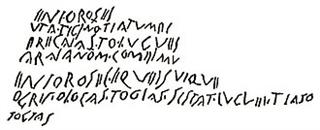
Celtic religion was polytheistic. Over two hundred names of deities survive, though many may be other names or titles of the same god, and some gods were worshipped only by one tribe or in one area. The Celts seem to have had a father god of the tribe and of the dead, Toutatis probably being one of his names, and a mother goddess of the land and fertility, perhaps called Matrona, who could also be a war goddess, as Andraste was. Taranis was a sky god of thunder, the wheel and the bull; Lugus a god of skill and craft; Sirona and Borvo healers tied to sacred springs. Cernunnos, the horned god, and Epona, goddess of horses, were widely known, and triplicity was common, as in the Three Mothers.
Offerings were made throughout the landscape: in sacred groves called nemeta, at springs and in timber temples. Weapons and treasures were thrown into rivers, lakes and bogs or buried in shafts. Animals, almost always livestock or working animals, were sacrificed, and Greek and Roman writers describe human sacrifice, accounts historians treat with caution.
Grave goods of food, weapons and ornaments suggest a belief in life after death; some scholars see the otherworld of later Celtic myth as the old afterlife, though there is no direct evidence. The Insular Celts kept four seasonal festivals: Beltaine, Lughnasadh, Samhain and Imbolc.
Texts & Teachers
No native religious texts survive. Julius Caesar, who led Rome’s armies against Gaul, wrote the earliest and fullest account of the druids and named the Gaulish gods by Roman equivalents: Mercury, he said, was the most widely venerated, followed by Apollo, Minerva, Mars and Jupiter, and the Gauls believed they descended from a god of the dead he likened to Dīs Pater. Pliny the Elder, Lucan, Strabo, Posidonius and Diodorus Siculus added rites and sacrifices, but such writers saw the Celts as “barbarians”, and the Romans had reason to make them seem uncivilised.
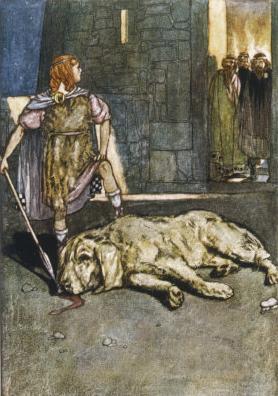
The Irish and Welsh tales were written down by Christian monks several centuries after Christianity became dominant, by writers who may have been hostile to the old paganism or ignorant of it. In them the gods become heroes with supernatural powers; in Ireland they are the Tuatha Dé Danann. The Irish evidence is thought older and less mixed with foreign material than the Welsh. Opinion is divided on whether the tales keep oral tradition preserved by bards or were created in the monasteries, and Ronald Hutton warned against treating every hero as a former god: “Cú Chulainn is no more a former god than Superman is.”
The oldest attested Celtic calendar is the Coligny calendar of the 2nd century, from Roman Gaul.
Spread
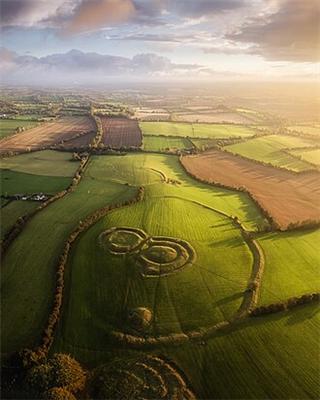
The Celtic peoples practised their religion across much of Iron Age Europe, from Ireland and Britain through Gaul and Belgica to southern Germany, Bohemia and Celtiberian Iberia. Their sanctuaries varied: timber temples within rectangular enclosures in Gaul, Belgica and Britain, ditched enclosures called viereckschanzen in southern Germany, and circular sites in Ireland, of which the Hill of Tara and Navan Fort are the most notable.
Roman conquest changed the religion wherever it reached. After the conquest of Gaul in 58–51 BCE and of southern Britain in 43 CE, Celtic religion there blended with Roman religion into a syncretic Gallo-Roman faith, with gods such as Lenus Mars, Apollo Grannus and Sulis Minerva, while Epona was taken into Roman worship. Iron Age sacred sites were often reused for Roman temples, and the Romano-Celtic temples of the northwest followed earlier Celtic plans.
The religion then gave way to Christianity. The Gauls converted gradually from the 3rd century. After Roman rule in Britain ended around 410, Anglo-Saxon paganism replaced Celtic paganism over much of what became England, and the Celtic peoples of Britain and Ireland converted gradually from the 5th century. In Ireland, the main Celtic land never conquered by Rome, the church had relegated the druids to irrelevancy by the early 7th century.
Community & Society
Greek and Roman writers, among them Caesar, Cicero, Tacitus and Pliny the Elder, describe the druids as magico-religious specialists held in high esteem in Gaul and Britain. Caesar says they were concerned with “divine worship, the due performance of sacrifices, private or public, and the interpretation of ritual questions”, and that they officiated at human sacrifices such as the wicker man burnings, a claim modern scholars have questioned. Pliny wrote of druids cutting mistletoe from a sacred oak with a golden sickle. Irish sources portray them as sorcerers who cursed, divined and opposed the coming of Christianity. Peter Berresford Ellis likened them to the Brahmin caste, Anne Ross to tribal shamans, and Ronald Hutton held that “we can know virtually nothing of certainty about the ancient Druids”.
Poets formed another learned order. In Ireland the filid were visionary poets, lorekeepers and magicians, above the lesser bards; poets of every grade composed eulogy and satire and kept the genealogies of their patrons. In Roman Gaul the bards disappeared, but in Ireland and Wales they survived into the Middle Ages.
Under Roman rule, Augustus and Tiberius suppressed the druidic hierarchies and replaced them with Roman-style priesthoods. Among the Insular Celts oaths were sworn by the tribal gods and by the land, the sea and the sky.
Legacy
Christianisation transformed Celtic society. In Ireland the church stamped out animal sacrifice, and Cormac’s Glossary (c. 900) says Saint Patrick banished the rites of the filid that involved offerings to “demons”. Yet the filid lived in easy harmony with the clergy and kept much of their tradition, status and privilege. The sacred marriage of the king with the goddess of sovereignty was purged early from royal inauguration but stayed in literature for centuries.
Much survived in folklore. The scholar Nagy noted that Gaelic oral tradition was remarkably conservative, with tales told in the 19th century almost as in the ancient manuscripts, and mythology based on the old traditions was still common knowledge in Celtic-speaking cultures then; the Celtic Revival collected it. Beltane is still kept, the Puck Fair at Killorglin seems to survive from Lughnasadh, and pilgrimages to holy wells, the clootie wells of Scotland, Ireland and Cornwall, and well dressing in the English Midlands continue. On the Inishkea Islands, Celtic pagan rituals were seemingly performed well into the 19th century.
In the 20th century Celtic paganism became the basis of Celtic neopaganism, from Reconstructionists who try to practise the ancient religion as accurately as possible to eclectic groups, the best known being Neo-Druidry. In Wales the bardic order, revived and codified by the poet and forger Iolo Morganwg, lives on in the eisteddfods.
Celtic religion was the polytheistic faith of the ancient Celtic peoples of Iron Age Europe, with gods such as Lugus, Taranis, Cernunnos and Epona, druid priests, sacred groves and offerings in water. Known only through archaeology, often hostile Greek and Roman writers and medieval Christian texts, it blended with Roman religion after the conquest and gave way to Christianity, from the 3rd century in Gaul and the 5th in Britain and Ireland.
References
- Clarke and Roberts, Twilight of the Celtic Gods (1996)
- Gerald of Wales, Topographia Hibernica (12th century)
- Cormac’s Glossary (c. 900)